Uncommon Descent Serving The Intelligent Design Community

Sorry Tin, Nature Does Not Do CSI.

Categories
Intelligent Design
Share
Facebook
Twitter/X
LinkedIn
Flipboard
Print
Email

tintinnid attempts to undermine the design inference by noting:

Just because something can be made by man does not mean that all occurrences in nature must have an intelligent origin.

Agreed. You have been one of our most vocal critics in recent weeks. But that you would write this statement indicates you have a seriously flawed understanding of the ID project. I recommend that before you spend further hours on this website criticizing ID, that perhaps you might try to understand it first. Then, when you go to criticize it, you will be actually criticizing ID, and not some distorted caricature of ID you’ve made up.

You see, Tin, it does no good to criticize a distorted caricature of ID. Say you were in a gunfight and opposing you down the street were a life-sized cardboard image of the bad guy and the actual bad guy. Which one would you shoot at? I hope you see my point. Go study ID Tin until you actually understand it. Then, if after your studies you still want to criticize it, by all means do so. But if you continue to shoot at the cardboard image, don’t be surprised when you look down and find your arguments are lying on the ground bleeding. For example:

Humans can make diamonds, but not all diamonds are of intelligent origin.

This statement is certainly true as far as it goes but it misses the point. Here are pictures of two diamonds. One is “rough,” i.e., it was shaped by natural forces. The other one was is “finished,” i.e., it was shaped by intelligent forces. Can you tell which is which?
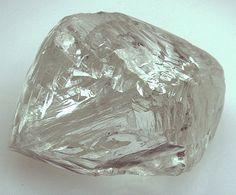
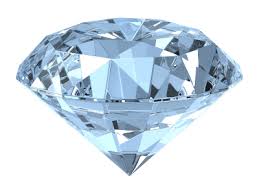
d78824bad5e0e1fbbf1ba1048fed847e

finished

Just because DNA carries information does not mean that it must be of intelligent origin.

You are certainly correct that natural forces (chance/law) can create tiny strings of information. For example, the famous Shakespeare monkey simulator after simulating monkeys typing 10^35 pages, got this string (the longest it ever got) from Act I, Scene I of Timon of Athens:

Poet. Good day Sir

For comparison purposes, here are the first few lines from that scence.

Poet. Good day, sir.
Painter. I am glad you’re well.
Poet. I have not seen you long: how goes the world?
Painter. It wears, sir, as it grows.
Poet. Ay, that’s well known:
But what particular rarity? what strange,
Which manifold record not matches? See,
Magic of bounty! all these spirits thy power
Hath conjured to attend. I know the merchant.
Painter. I know them both; th’ other’s a jeweller.

Take a good look at this number: 10^35. It is unimaginably huge. Yet in all of those pages a blind search was able to come up with only a snippet of Shakespeare.

Now, here’s my question for you. Is the DNA code more like the snippet within the reach of a blind search or is it more like the complete works of Shakespeare?

Comments
@ E.Seigner
Don’t you see that the whole case for ID rests on equivocations like this?
I didn't, but I think I am rapidly coming to that conclusion. A few of weeks reading this blog has been a real eye-opener.Tamara Knight
October 24, 2014
October
10
Oct
24
24
2014
09:48 AM
9
09
48
AM
PST
Tamara, The NCSE is a cry-baby propaganda site. Why don't you tell us how you determined what makes an organism what it is is the DNA (genome)? What does the NCSE have to say about it? As for the book, well it is full of science and could easily be refuted. Attacking the author is chicken-sh!t. Get to the evidence or shut up. Pathetic people.Joe
October 24, 2014
October
10
Oct
24
24
2014
09:46 AM
9
09
46
AM
PST
Wow, the code has been explained ad nauseam. And you can even search on the term "genetic code" and read all about it. The point is the genetic code is a real code, there isn't any metaphor. It is arbitrary which means there isn't any law or physical necessity by which the code is determined. Yet it exists and its existence requires an explanation. ID says that seeing that all known codes require intelligent design, this is no different. So we have something that is inexplicable by law, regularity, accidents, errors or mistakes AND it is something we know requires an intelligent designer. And yes, it matters.Joe
October 24, 2014
October
10
Oct
24
24
2014
09:43 AM
9
09
43
AM
PST
@Joe
Read “Why Is A Fly Not A Horse?” by geneticist giuseppe sermonti.
I did a quick Google search for that book. Top of the list was a review on a website called ncse.com. Let's just say they don't recommend it. I might read their review fully later if I have a spare minute, but after a quick glance it seems the author is not only a Creationist, but claims that "evolution contradicts the Second Law of Thermodynamics". I'm afraid anybody who makes a claim like that is not worth reading without first establishing that he means only macro evolution. As I understand it, even Creationists accept micro evolution. If he has discovered a quantifiable Thermo-dynamic Barrier between the two that is a major step forward for biological research.Tamara Knight
October 24, 2014
October
10
Oct
24
24
2014
09:41 AM
9
09
41
AM
PST
Tamara Knight
And I’m still not clear what Barry means by “The DNA code” in the context of his question. Is it the encoding scheme or the “information” it encodes. If he similarly referred to “The Enigma code”, would he mean the workings of an Enigma machine, or the content of the intelligently designed messages sent using it?
Don't you see that the whole case for ID rests on equivocations like this? Therefore you get answers like you are using darwinian debate tactics and you're exposed as an obfuscation master.E.Seigner
October 24, 2014
October
10
Oct
24
24
2014
09:27 AM
9
09
27
AM
PST
For Tamara:
To understand the challenge to the “superwatch” model by the erosion of the gene-centric view of nature, it is necessary to recall August Weismann’s seminal insight more than a century ago regarding the need for genetic determinants to specify organic form. As Weismann saw so clearly, in order to account for the unerring transmission through time with precise reduplication, for each generation of “complex contingent assemblages of matter” (superwatches), it is necessary to propose the existence of stable abstract genetic blueprints or programs in the genes- he called them “determinants”- sequestered safely in the germ plasm, away from the ever varying and destabilizing influences of the extra-genetic environment. Such carefully isolated determinants would theoretically be capable of reliably transmitting contingent order through time and specifying it reliably each generation. Thus, the modern “gene-centric” view of life was born, and with it the heroic twentieth century effort to identify Weismann’s determinants, supposed to be capable of reliably specifying in precise detail all the contingent order of the phenotype. Weismann was correct in this: the contingent view of form and indeed the entire mechanistic conception of life- the superwatch model- is critically dependent on showing that all or at least the vast majority of organic form is specified in precise detail in the genes. Yet by the late 1980s it was becoming obvious to most genetic researchers, including myself, since my own main research interest in the ‘80s and ‘90s was human genetics, that the heroic effort to find information specifying life’s order in the genes had failed. There was no longer the slightest justification for believing there exists anything in the genome remotely resembling a program capable of specifying in detail all the complex order of the phenotype. The emerging picture made it increasingly difficult to see genes as Weismann’s “unambiguous bearers of information” or view them as the sole source of the durability and stability of organic form. It is true that genes influence every aspect of development, but influencing something is not the same as determining it. Only a small fraction of all known genes, such as the developmental fate switching genes, can be imputed to have any sort of directing or controlling influence on form generation. From being “isolated directors” of a one-way game of life, genes are now considered to be interactive players in a dynamic two-way dance of almost unfathomable complexity, as described by Keller in The Century of The Gene- Michael Denton “An Anti-Darwinian Intellectual Journey”, Uncommon Dissent (2004), pages 171-2
Joe
October 24, 2014
October
10
Oct
24
24
2014
09:12 AM
9
09
12
AM
PST
BTW the information to build an organism does not appear to be in the DNA. Tamara Knight:
Perhaps it wasn’t meant to be humourous?
It is a fact. Read "Why Is A Fly Not A Horse?" by geneticist giuseppe sermonti. You have no clue, do you?
Thanks, thats clear now. Like Knit one or Pearl one until you run out of wool!
No, not at allJoe
October 24, 2014
October
10
Oct
24
24
2014
09:11 AM
9
09
11
AM
PST
The only error is yours. All codes designed to pass messages use symbols that are arbitrarily selected. A simple substitution code uses an arbitrarily chosen letter B-Z to represent “A”. If you get fancy you could use any of 127 unicode symbols, or you could arbitrarily make your own squiggles to represent “A”. You can also use arbitrarily chosen symbols to represent whole words or phrases. Paul Revere’s famous lanterns “one if by land, two if by sea” is a good example.
Yes, symbols can be arbitrarily selected. That doesn't necessarily make the symbol arbitrary. A symbol cannot be "arbitrary", otherwise it isn't a symbol. Which was what I was objecting to in your first definition. In your examples, you list well specified symbols (not arbitrary) such as the English alphabet. Even the use of lanterns was specified (1 lantern by land, 2 lanterns by sea).
In the dictionary. Are you really claiming starlight doesn’t contain information about the star and that tree rings don’t contain information about the tree’s past? Wow.
What dictionary? I've made no such claims about starlight and tree rings. I am claiming that neither starlight nor tree rings are "codes".ciphertext
October 24, 2014
October
10
Oct
24
24
2014
08:50 AM
8
08
50
AM
PST
Correction #78: "I’m fairly confident that your friend was not talking about ‘our’ Joe"Box
October 24, 2014
October
10
Oct
24
24
2014
08:42 AM
8
08
42
AM
PST
Tamara,
TM #75: somebody else’s recollections (...) magic scaffolding (...) totally undectable by scientific observation (...)
Reading all this, I'm fairly confident that your friend was talking not talking about 'our' Joe - it should be no surprise, after all Joe is a common name.Box
October 24, 2014
October
10
Oct
24
24
2014
08:41 AM
8
08
41
AM
PST
Barry: TN @ 69. Just stop it. You’ve been exposed as an obscurantist. And here’s the thing about that. Once you are exposed, your obscurantism loses its bite. Further attempts are just sad. Again, stop it.
I don't see a comment by tin and 69. And you declaring that someone is an obscurantist is not the same as proving it. Again, can you please point out the comments that led tintinnid to moderation and why they were so offensive.Acartia_bogart
October 24, 2014
October
10
Oct
24
24
2014
08:40 AM
8
08
40
AM
PST
@57
Ciphertext, even if you can’t find a definition, the modern world of electronics is totally dependant on physical examples. Three simple ones spring to mind; 1)Gray code: n bits in mapped to n bits out such that any increment to the n-bit digital number at the input changes the logic state of only one output. 2) Hamming code: n bits in mapped to (n+m) bits out to enable the correction of single bit errors and the detection of two bit errors. 3) Parity code: n bits in mapped to (n+1) bits out to enable the detection of a single bit error.
I've found several definitions for the word code, just not one that is defined as Thorton put forth. He indicated in a later post that he found it in a dictionary, but did not share which one. The three examples you provided, are good examples of codes. I like them. Their development is what enables me to trust the fidelity of information on my hard drive, insures that what I type into my text box in this reply is what you (and others) will be reading, and makes calling my family on my cellphone a possible event. Being a code, by definition, they have an explicit purpose. They convey a specific meaning (error detection and/or error correction) to the receiver of the code.ciphertext
October 24, 2014
October
10
Oct
24
24
2014
08:20 AM
8
08
20
AM
PST
Box, I'm only reporting somebody else's recollections, but I doubt it was even as recent as that paper. This Joe was proposing something so way out it would not have made PubMed. Some sort of magic scaffolding, around which the organism could apparently build itself, despite it being totally undectable by scientific observation.Tamara Knight
October 24, 2014
October
10
Oct
24
24
2014
08:17 AM
8
08
17
AM
PST
TM: I’m told it is some sort of “morpho-genetic field” (...)
Tamara, are you by any chance referring to research on bio-electric signals in the membrane ; see e.g. this paper?Box
October 24, 2014
October
10
Oct
24
24
2014
08:04 AM
8
08
04
AM
PST
Box, would that not just tell me that "not ALL the information to build an organism is directly encoded in it's DNA"? I am more than happy to accept that position. Joe seemed to be proposing something completely different. If it is the same Joe, I'm told it is some sort of "morpho-genetic field" which allows supernatural forces to control the development of an organism. Sound like ID-max to me.Tamara Knight
October 24, 2014
October
10
Oct
24
24
2014
07:54 AM
7
07
54
AM
PST
Tamara Knight #71, tell your friend - and yourself - to read up on epigenetics.Box
October 24, 2014
October
10
Oct
24
24
2014
07:35 AM
7
07
35
AM
PST
@Joe
BTW the information to build an organism does not appear to be in the DNA.
Perhaps it wasn't meant to be humourous? I just mentioned your comment to a friend who has been an amusued observer of US Creationism for many years. He says the last time he heard that idea expressed by somebody calling himself Joe, the same guy was proposing that the best way to convince mainstream science about his theories was to plant a large bomb at a major international conference of Evolutionary Biologists. Would that be you?Tamara Knight
October 24, 2014
October
10
Oct
24
24
2014
07:25 AM
7
07
25
AM
PST
TN @ 69. Just stop it. You've been exposed as an obscurantist. And here's the thing about that. Once you are exposed, your obscurantism loses its bite. Further attempts are just sad. Again, stop it.Barry Arrington
October 24, 2014
October
10
Oct
24
24
2014
07:17 AM
7
07
17
AM
PST
Barry I'm a little puzzled by your reponse. Not only is the clarification I asked for fundamental to further discussion, but I would also have expected you to regard it as being at the centre of the ID concept, specifically separating any CSI you see as encoded in the DNA from the origins of the method of transcribing it.Tamara Knight
October 24, 2014
October
10
Oct
24
24
2014
07:14 AM
7
07
14
AM
PST
@Joe
The genetic code is what it is- it is the code by which information in the DNA is converted to the information of proteins.
Thanks, thats clear now. Like Knit one or Pearl one until you run out of wool!
BTW the information to build an organism does not appear to be in the DNA.
Sorry, but your humour is lost on me.Tamara Knight
October 24, 2014
October
10
Oct
24
24
2014
06:50 AM
6
06
50
AM
PST
Tamara Knight over and over again uses DDD # 7: Definition Deficit Disorder. Like all users of DDD tactics her purpose is not to elucidate or discuss fairly. Her purpose is to obfuscate, muddle and distort. Tarmara, you are exposed. Barry Arrington
October 24, 2014
October
10
Oct
24
24
2014
06:45 AM
6
06
45
AM
PST
thorton:
The physical mapping of DNA isn’t arbitrary.
The genetic code is arbitrary as there isn't any law that determines which codons represent which amino acids. IOW the genetic code is not just chemistry.Joe
October 24, 2014
October
10
Oct
24
24
2014
06:21 AM
6
06
21
AM
PST
The genetic code is what it is- it is the code by which information in the DNA is converted to the information of proteins. BTW the information to build an organism does not appear to be in the DNA.Joe
October 24, 2014
October
10
Oct
24
24
2014
06:19 AM
6
06
19
AM
PST
Joe, saying "DNA code is genetic code" does not clarify your position. Is the "genetic code" the method used to encode information within DNA, or the actual instructions on how to to build an organism that the DNA thereby contains? These are totally different concepts.Tamara Knight
October 24, 2014
October
10
Oct
24
24
2014
06:17 AM
6
06
17
AM
PST
Ciphertext @ 57
Your first definition contains an error. In no “code” would you ever find an arbitrary symbol.
The only error is yours. All codes designed to pass messages use symbols that are arbitrarily selected. A simple substitution code uses an arbitrarily chosen letter B-Z to represent "A". If you get fancy you could use any of 127 unicode symbols, or you could arbitrarily make your own squiggles to represent "A". You can also use arbitrarily chosen symbols to represent whole words or phrases. Paul Revere's famous lanterns "one if by land, two if by sea" is a good example. The physical mapping of DNA isn't arbitrary. You can't decide one day that CGA will produce glycine instead of alanine. There is no message passed, so sender or receiver making up the arbitrary rules. It's just chemistry.
Where did you obtain that definition?
In the dictionary. Are you really claiming starlight doesn't contain information about the star and that tree rings don't contain information about the tree's past? Wow.Thorton
October 24, 2014
October
10
Oct
24
24
2014
06:12 AM
6
06
12
AM
PST
Tamara Knight- The point is nature cannot construct codes as codes are arbitrary, meaning they are not reducible to law nor regularity. The "DNA code" is actually the genetic code. And the genetic code is an actual code.Joe
October 24, 2014
October
10
Oct
24
24
2014
04:09 AM
4
04
09
AM
PST
Cipher I just had Cloudflare eat a response to
Thorton, 41: One of the favorite and rather dishonest tactics of ID proponents is to equivocate over the different definitions of code. Human languages like English are intelligently designed codes where arbitrary symbols are used as abstractions to pass meanings. The sender and receiver have to agree beforehand on the arbitrary symbols and the abstractions. However, code can also mean merely any physical process where the outputs are mapped to the inputs. Such processes don’t use arbitrary symbols or abstractions. They don’t pass meaning, don’t require agreement between a sender and receiver. When scientists speak of the DNA code they are using the second definition, not the first.
I will substitute a snip and comment, >> One of the favorite and rather dishonest tactics of ID proponents is to equivocate over the different definitions of code.>> a --> Well poisoning, turnabout accusation based on strawman tactics coming up and attempting to drive a wedge between true scotsmen and fake IDiots b --> Wiki, speaking against interest, on what a code is:
In communications and information processing, code is system of rules to convert information—such as a letter, word, sound, image, or gesture—into another, sometimes shortened or secret, form or representation for communication through a channel or storage in a medium. An early example is the invention of language, which enabled a person, through speech, to communicate what he or she saw, heard, felt, or thought to others. But speech limits the range of communication to the distance a voice can carry, and limits the audience to those present when the speech is uttered. The invention of writing, which converted spoken language into visual symbols, extended the range of communication across space and time. The process of encoding converts information from a source into symbols for communication or storage. Decoding is the reverse process, converting code symbols back into a form that the recipient understands.
c --> Wiki, on the genetic code used in ribosomes to assemble protein chains, and thus also at the heart of cell based life and many chicken egg challenges that evo mat advocats and fellow travellers prefer to skip over; note just how strongly this echoes the above:
The genetic code is the set of rules by which information encoded within genetic material (DNA or mRNA sequences) is translated into proteins by living cells. Biological decoding is accomplished by the ribosome, which links amino acids in an order specified by mRNA, using transfer RNA (tRNA) molecules to carry amino acids and to read the mRNA three nucleotides at a time. The genetic code is highly similar among all organisms and can be expressed in a simple table with 64 entries. The code defines how sequences of these nucleotide triplets, called codons, specify which amino acid will be added next during protein synthesis. With some exceptions,[1] a three-nucleotide codon in a nucleic acid sequence specifies a single amino acid. Because the vast majority of genes are encoded with exactly the same code (see the RNA codon table), this particular code is often referred to as the canonical or standard genetic code, or simply the genetic code, though in fact some variant codes have evolved. For example, protein synthesis in human mitochondria relies on a genetic code that differs from the standard genetic code.
d --> The D/RNA code is similar tot he prong height code used in Yale type locks, which are mechanical passwords. they are informational and show how we have encoding, transmission and storage, receiving, decoding and application in a destination. e --> They are meaningful, and based on conventions and comms protocols, i.e. rules that co-ordinate communication of meaning. f --> And, these are at the level of machine code similar to the hierarchy of abstractions: machine language resting on hardware, assembly language that symbolises in ways we can read, then higher level languages. >> Human languages like English are intelligently designed codes where arbitrary symbols are used as abstractions to pass meanings.>> g --> Actually, we are members of language comunities, which have ever evolving conventions or rules, e.g of spelling punctuation, grammar etc, all of which can be expressed in text form and fed into machines, e.g. ASCII. >> The sender and receiver have to agree beforehand on the arbitrary symbols and the abstractions.>> h --> We are members of a common community and no one person can arbitrarily change it or chaos results. >> However, code can also mean merely any physical process where the outputs are mapped to the inputs.>> i --> Artfully strawmannised to leave out the context of meaning, rules, agreements, co-ordination, information carrying capacity and functional specificity. >> Such processes don’t use arbitrary symbols or abstractions.>> j --> if human language phonemes and textual elements or braille elements are arbitrary and conventional in relevant senses, so are these, just they are not going to be consciously processed. k --> That is of course the key twisting point. >> They don’t pass meaning,>> l --> False, the distinctions used in code systems are profoundly meaningful, that is how they make a functional difference. m --> Load AA X is different from load AA Y, based on specifically the difference in codon and prong height match to appropriate tRMA's loaded on their universal CCA tool tips with different AAs, X and Y. (As Thorton knows or full well should know. Cf the post on DDD 16 yesterday, here, noting the first diagram, from Wiki.) >>don’t require agreement between a sender and receiver.>> n --> equivocates conscious agreement and conventions expressed in rules embedded in teh fucntional organisation of a system. o --> To deal with a common side track, note the chaining chemistry that assembles the D/RNA base string or the protein AA string does not block any base form following any other of A/G/C/Tor U or any of the 20 main AAs form following any other, and the relevant functional and/or informational side chains or branches are at 90 degrees to the chemistry of chaining. p --> I repeat, the coded info, which is algorithmic in the case of D/RNA, is in three letter codons that use prong height patterns similar to a Yale type lock's key, just pull one form your pocket. >>When scientists speak of the DNA code they are using the second definition, not the first.>> q --> a case of trying to drive a wedge between senses that have far more in common than in difference in teh relvant sense. r --> No significant ID proponent has suggested that DNA is equivalent of a human community language, but rather to a technical community's conventions used to effect a machine language, but with prong height and with molecules not holes in punched paper tape etc. s --> To deal with another side track, ASCII text uses 128 state elements, 7 bits of info cap per letter. DNA uses 4-state elements in triplets, or 2 bits per string element, six bits per codon. t --> With a typical protein of 250 AAs that means 750 bases, or 1500 bits of info cap, in an obviously functionally specific context, so we know at first level I = 1500 bits and S = 1: Chi_500 = 1500 * 1 - 500, 1,000 bits beyond the solar system threshold, so designed. u --> I leave it as an exercise to the onlooker to count characters in Thorton's clipped comment, and use 7 bits per character, where also S = 1. The answer will be the same, designed -- which we separately know. And on trillions of test cases, FSCO/I is a reliable index of design. v --> Of course this answers to the talking point being pushed just now as to how FSCO/I ( the material subset of CSI) is hopelessly confused and not able to be quantified etc. Rubbish. w --> Of course, real codes will have redundancies that will affect precise values [that's what Durston et al address] but this makes no material difference in aggregate, you have to account for hundreds of proteins, the ribosome assembly system and the chicken-egg dilemma involved in accounting for OOL with metabolising cells that use code based von Neumann kinematic self replicators. x --> Where, when we see that the FSCO/I deeply and abundantly present in the living cell is known to have just one empirically observed and needle in haystack analysis credible cause, intelligently directed configuration aka design, this puts design at the table of serious scientific explanations of the tree of life from the root up. y --> Which of course, evo mat ideologues and fellow travellers are loath to admit. Even, desperate. KF PS: On the strength of the tactics in use, maybe we should read DD as Darwinists' desperate devices . . . :-)kairosfocus
October 24, 2014
October
10
Oct
24
24
2014
04:09 AM
4
04
09
AM
PST
@57 Ciphertext, even if you can't find a definition, the modern world of electronics is totally dependant on physical examples. Three simple ones spring to mind; 1)Gray code: n bits in mapped to n bits out such that any increment to the n-bit digital number at the input changes the logic state of only one output. 2) Hamming code: n bits in mapped to (n+m) bits out to enable the correction of single bit errors and the detection of two bit errors. 3) Parity code: n bits in mapped to (n+1) bits out to enable the detection of a single bit error. And I'm still not clear what Barry means by "The DNA code" in the context of his question. Is it the encoding scheme or the "information" it encodes. If he similarly referred to "The Enigma code", would he mean the workings of an Enigma machine, or the content of the intelligently designed messages sent using it?Tamara Knight
October 24, 2014
October
10
Oct
24
24
2014
03:40 AM
3
03
40
AM
PST
Acartia_boagart, tintinnid- doesn't matter as it has all been a bunch of BS, lies and misrepresentations.Joe
October 24, 2014
October
10
Oct
24
24
2014
03:23 AM
3
03
23
AM
PST
thorton:
Any chemical reaction. The spectral lines in starlight that map to their constituent elements. The width of tree rings that map to the amount of precipitation in the corresponding year. Those are three off the top of my head.
Not one code is on your list. It's as if you think your ignorance and stupidity mean something. Strange.Joe
October 24, 2014
October
10
Oct
24
24
2014
03:21 AM
3
03
21
AM
PST
1 2 3 4