Uncommon Descent Serving The Intelligent Design Community

Distant Starlight, the thorn in the side of YEC — can there be a middle ground?

Categories
Astronomy
Creationism
Physics
Share
Facebook
Twitter/X
LinkedIn
Flipboard
Print
Email

There are many devout Jews and Christians who believe the universe is old. Unlike Darwinism, the presumption of an old universe has real support from science. Philosophically, something as grand and as powerful as the entire universe would reasonably seem to be eternal. Standard thermodynamics and the Big Bang hypothesis changed all that, and the age of the universe is no longer viewed as eternal. Perhaps God did not want us to believe the Cosmos is all powerful and eternal, but rather transient and passing. Thermodynamics tells us the stars cannot burn forever, and thus thermodynamics has left us evidence that the known cosmos is not eternal…

As much as Young Earth Creationists (YECs) hate the Big Bang, the Big Bang was a step in the YEC direction in that the universe became a lot younger in the view of mainstream science (from eternal to finite age). But to this day, YEC cannot be believed with the same level of conviction as other creationist ideas. Old Earth Creationists (OECs) would gladly accept YEC if science supported it, but the problem is the evidence in hand does not make a convincing case. The ID community has a very large OEC component.

So how is distant starlight a thorn in the side of YEC? The farthest we can use parallax to estimate the distance to stars is on the order of 400 light years. Beyond parallax, we can estimate distances based on the apparent brightness of stars. Dimmer stars are presumed farther away, and using some math and distances estimated using this method, we estimate some stars are on the order of several million light years away. See: http://en.wikipedia.org/wiki/Cosmic_distance_ladder

If the speed of light is constant over the age of the universe and constant at every location in the universe, then a straight forward calculation says the universe must be several million years old at least (if not billions).

Some will say, “the speed of light might have been faster in the past or have different speeds in various locations in the universe or both.” That’s all well and good, but where is the convincing evidence of this? There are only small threads of evidence for this. Here are some:

1. distant galaxies structurally look about the same age as galaxies close to us. If the speed of light were constant, we should see an evolutionary sequence of galaxies as we compare the farthest ones to the closest ones. The evolutionary sequence is missing. The distant galaxies look a little bluer, but structurally they look distressingly fully formed! This anomaly helps the YEC case but is not a slam dunk by any means.

2. The galaxies have preserved spirals that should have been erased by now because of rotation based on standard gravitational dynamics. Exotic solutions like dark matter and modified Newtonian dynamics (MOND) and even Carmeli cosmology have tried to resolve this, but they all suffer from difficulties of direct testability. Many YECs accept dark matter, but if the dark matter isn’t properly distributed, it won’t solve the erasure problem of spiral galaxies. This anomaly also helps the YEC case but is not a slam dunk by any means.

So, based purely on empirical observations, the YECs have a faint hope of resolving the distant starlight problem. But to have credibility, they will have to re-write the equations that govern the behavior of light. These equations were assembled by a creationist physicist, James Clerk Maxwell. These equations are called Maxwell’s equations which provide a classical description of the relation of light to magnetism and electricity.

Of these equations, Feynman said:

From a long view of the history of mankind – seen from, say, ten thousand years from now – there can be little doubt that the most significant event of the 19th century will be judged as Maxwell’s discovery of the laws of electrodynamics. The American Civil War will pale into provincial insignificance in comparison with this important scientific event of the same decade.

If God said, “let there be light” it also implies God must have said something like “let there be Maxwell’s equations”:
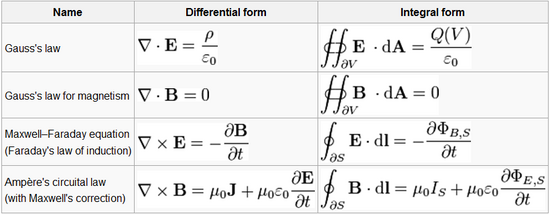
euclidean maxwell

or the updated version where Maxwell’s equations are incorporated into Quantum Electro Dynamics:

qed maxwell

or the updated version where Maxwell’s equations are incorporated into non-Euclidean spacetime under General Relativity:


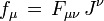
maxwell 1
mawxwell 2
maxwell 3
maxwell 4

These equations define the ability to build generators, motors, radars, radios, microwave ovens, fiber optic cables, cell phones, televisions, GPS, computers, space probes, satellites,… One might ask, “what devices don’t owe some debt to the above equations?” But these equations, combined with the fact of distant stars, imply the universe is old. The irony then is that it is the work of a creationist that has been the source of major rejection of YEC not just by the mainstream, but by other creationists.

How can we revise these sets of equations in a way that can be reconciled with current observations while simultaneously accounting for the ability to see distant stars in only six-thousand years? Unlike Darwinism, or paleontological ages, the problem of distant starlight is several orders of magnitude more difficult to deal with. The above equations were provided to give the reader an idea of the magnitude of difficulties YECs face with the distant starlight problem. One should not take the problem lightly! Hence, I’ve said I don’t find the YEC case convincing even though privately I hope it is true…

With such problems in mind, is there a scientific (not theological) middle ground for the YECs. I’ve suggested, YECs can make a good case by accepting for the sake of argument the universe is old, but arguing vigorously the geological timescales for the Phanerzoic era (about the last 500 million years) are wrong, and that emergence of life is relatively recent. Mainstream science can support such a view without re-writing Maxwell’s equations (and other theories tied to it, like special relativity). In fact mainstream physics and chemistry would support the view that the fossil record is recent if institutional imperatives were not causing such prejudicial interpretations. But too many mortgages rely on the old fossil narrative.

But unlike Darwinist paleontology which is supported by an institutional imperative, the distant starlight problem is rooted in data and some of the most solid theories in physics which make the modern high-tech world possible. YECs only have some sporadic anomalies like those mentioned above to cling to. Hence, I suggest there can be middle ground of accepting irresolution on some topics (like distant starlight) while vigorously arguing other topics like ID, criticism of evolution from population genetics, criticism of OOL, criticism of evolution from irreducible complexity, and criticism of the mainstream paleontological dates. At this time, however, the distant starlight problem remains a thorn in the side of YEC.

NOTES

1. There is some controversy over supposed 12% error in parallax measurements. See Pleiades controversy.

2. YEC have proposed solutions to the distant starlight problem. There are about 5 cosmologies proposed.

A. Last Thursday solution. Light was created in transit to make the universe look old even though it is young. Advocated by Duane Gish and Josh McDowell. I find this solution the most revolting, even though I revere Gish, I think he was wrong on this one.

B. Decaying speed of light, suggested by Barry Setterfield. The problem is then we have to vary Planck’s constant to agree with the famous formula for energy of a photon

E = h ν

Varying planck’s constant? Planck’s constant governs thing like the atomic radius, so maybe we don’t want to go there! Changing the speed of light over time — affects atomic processes like radioactivity and stellar fusion. The Earth could be incinerated as a result of fast decay. Painful for me to say all this because Setterfield is a dear friend, but this is tough love criticism…

There are modern secular cosmologies that invoke decaying speed of light, but that won’t necessarily help YEC at this time.

C. White hole solution to General Relativity by Humphrey’s. No comment, yet.

D. Carmeli cosmology by Hartnett. No comment yet, save to say Hartnett is very sharp, is a professional physicist, and is highly respected in his field.

E. Revised Maxwell’s equations by Lucas. Lucas cites Hooper’s experiments which are refuted, and then he referred me to developments by Lutec as “proof” of his new electromagnetism.

But Lutec looks like a fraud! 😯
http://beforeitsnews.com/free-energy/2011/08/lutec-waning-in-free-energy-drive-961089.html

As you are aware there are still question marks over Lutec who are still advertising for investors with no discernible or proven results of their device despite 11 years having passed since they first announced their “success” with their magnetic motor.

A friend of a close colleague of mine who is an electronics expert, visits them from time to time but despite their claims, has so far has been unable to verify the capability of the device. They have attracted a few investors but after 12 years, there is no confirmation that it actually works.

They are still advertising for money and one of our friends was approached to put in $100,000 and he said he would, if they will allow him to test it but they won’t allow him to use independent witnesses with their own instruments.

😯

Lucas then criticized the photoelectric effect, and then I countered with, “what about the Balmer an Lyman series or any other observation that suggests quantized energy levels in atoms?”

After Lucas’ referral to Lutec, I promptly ceased seriously considering anything he’s had to say. Neither Lucas nor his followers appeared at ICC 2013. Creationist Danny Faulkner and John Hartnett went ballistic at ICC 2008 when Lucas work was presented. Anyway, for what it’s worth here is Lucas’ ideas:
http://www.commonsensescience.org/survey/popups/universal_force_law.html

for constant velocity frames

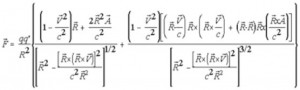
constant velocity

and for accelerating frames

accelerating frames

3. photo credits
http://scitechdaily.com/images/new-view-of-spiral-galaxy-IC-342.jpg

http://upload.wikimedia.org/math/0/e/f/0ef7214b5093dbe29546f6ae93f97e51.png

http://upload.wikimedia.org/math/0/e/f/0ef7214b5093dbe29546f6ae93f97e51.png

http://upload.wikimedia.org/math/d/3/a/d3a412c7fdfe97360840f4d1a90ba478.png
http://upload.wikimedia.org/math/0/8/7/08700e68e7624be4a3d99d01f8c7610c.png
http://upload.wikimedia.org/math/0/5/b/05b356cc7d3b744a83d437d76b428d0a.png
http://upload.wikimedia.org/math/0/e/5/0e5c19ac003480b6a55d4aa1e385165d.png

http://www.commonsensescience.org/survey/images/force_relativistic(verysmall).jpg
http://www.commonsensescience.org/survey/images/force_radiation(verysmall).jpg

Comments
Sal, once a star explodes it doesn't send out light after that. So once the original stars exploded to seed the universe their light would have stopped being sent out.Joe
August 12, 2013
August
08
Aug
12
12
2013
09:07 AM
9
09
07
AM
PST
Sal, What if the light from those original galaxies/ stars came and went before we arrived? Meaning all we see is the light from the second or third generations of stars/ galaxies.
The light from them is always coming and going just like the light from the sun is coming and going. We see photons that were made in the sun 8 minutes ago, and those photons are now gone (by us absorbing them) and others go off to space never to be seen by us again. In the same way, the light from distant stars is also coming and going, but because we see a steady stream of photons, the photons that pass by us or are seen by us are replaced by the next set of photons in line, hence it seems the stars have constant light and never disappear from the sky just like our sun never disappears from the sky.scordova
August 12, 2013
August
08
Aug
12
12
2013
08:58 AM
8
08
58
AM
PST
Sal, since you have thought quite a bit about these matters, if you ever have thoughts about the critical review, The Unraveling of Starlight and Time, by Samuel R. Conner and Dr. Hugh Ross, I hope you will share them. Thanks in advance.
Despite all the math thrown around, the arguments are very much like the shouting matches on the evolution debates where there is lots of miscommunication about what someone is saying. A more technical argument between Connor and Humprhey's is here: http://www.trueorigin.org/rh_connpage3.pdf First off, both sides jumped into the red herring issue of universal center. To understand what's being argued, consider if you are a pilot flying around the 2D surface of the Earth. Is there a center of the 2D surface? What is the lat/long of the center of the surface of the Earth? Is the center the North pole, the south pole, the equator? It's sort of a meaningless statement. There is no lat/long that defines the center of the surface of the Earth. The notion of center is meaningful if we go to a Euclidean 3D space instead of a non-Euclidean 2D surface of a sphere (actually ellipsoid in the case of the Earth)... Both sides argue at length about the lack of center of the universe, and each side agrees, but tries to make the other look bad and claim the other side doesn't understand! There is a very speculative part of Humprhey's model that involves "the sign change". Here is a situation where both sides of the debate could be wrong. Not every solution to the Einstain Field equations is physically valid even though it might make mathematical sense. To illustrate, take Newton's 2nd law: F = ma where F = force m = mass a = acceleration I could invoke negative mass (like -5 kg) and come up with solutions, but does negative mass exist? :shock: Likewise both sides assume an expanding universe (the reference to Friedman-Lemaitre-Robertson-Walker metric solutions to the Einstein field equations). I criticized these solutions here: https://uncommondescent.com/intelligent-design/what-qualifies-as-science-in-the-the-wonderful-world-of-disney/ So all of them could be wrong! They are more knowledgeable than me, but all that fancy math may not line up with observation (such as those observations I posted above). The expanding solution to Einstein's field equations and the arguments may be moot. FWIW, there are other YECs that don't endorse Humphrey's model. 1. Danny Faulkner (distinguished professor emeritus University South Caroline), former chair 2. Jason Lisle (ICR head of research), physicst 3. John Hartnett. Curiously Jonathan Sarfati supported Humphreys, and then when I was arguing with Sarfati here at UD, he supported Hartnett, then DaveScot banned Sarfati from UD after Sarfati likened DaveScot to an idiot.... :shock: Then DaveScot banned me, and then Barry Arrington banned DaveScot a few years later, and then Clive Hayden unbanned me, etc. :-) 4. Steve Miller, Mark Amunrud, Bill Lucas, Barry Setterfield, Walter Brown, others So not every YEC endorses Humphreys cosmology, but I can say, pretty much every YEC reveres Humphreys for his other contributions. I will say Hugh Ross raised a point about the Cepheid variables or any other clocked phenomenon. If Humphrey's is right, we ought to be seeing "clocks" run faster the farther we look out, i.e. Cepheid variables, the rotation of spiral arms of galaxies. I read somewhere we can get Doppler returns on some arms of galaxies to estimate rotation speeds. If we can do this, Humphrey's model could be falsified if we don't see increase in spiral arm rotation speeds the farther we look out. This would also falsify Hartnett's model. The opposite is true for Setterfield. It the spiral arms look slower the farther we look out then Setterfield's model is affirmed. If there is no change, then Humphrey's, Hartnett, and Setterfield models are falsified. And the anomalies I mentioned above suggest the Big Bang and standard cosmology may have also been falsified. We may be in position that everyone is wrong and no one is right! PS I tried to defend Setterfield by looking at spectroscopic binaries in globular clusters of the milky way. It look promising, but Danny Faulner pounced all over it when I talked to him at ICC 2008. It didn't have the expertise to pursue it further. Suffice to say, lots of anomalies abound in the globular clusters.scordova
August 12, 2013
August
08
Aug
12
12
2013
08:54 AM
8
08
54
AM
PST
Sal, What if the light from those original galaxies/ stars came and went before we arrived? Meaning all we see is the light from the second or third generations of stars/ galaxies.Joe
August 12, 2013
August
08
Aug
12
12
2013
08:34 AM
8
08
34
AM
PST
Joe: 1- Wouldn’t that also be an issue for the big bang?
Dang right!
2- It could be that those galaxies are relatively new because they are descended from the originals, which are now gone, ie as part of the universe building process. Original galaxies of super stars seeded the universe with their massive supernovae.
If the speed of light is constant in space and time, then the farther out we look, the farther back in history we see. For example when we look at mars, we're actually seeing it the way it look 3 hours ago, pluto 5 hours ago, the pioneer probes 11 hours ago, alpha centauri 4 years ago, Andromeda a few million years ago, distant galaxies several billion years ago. So even if the galaxies disappeared by now, we are seeing what the looked like before they disappeared. Problematic then, is why all the galaxies (except for their blueness) look structurally about the same. See: http://www.eurekalert.org/pub_releases/2011-03/e-tmd030711.php
"We have measured the distance to the most distant mature cluster of galaxies ever found", says the lead author of the study in which the observations from ESO's VLT have been used, Raphael Gobat (CEA, Paris). "The surprising thing is that when we look closely at this galaxy cluster it doesn't look young -- many of the galaxies have settled down and don't resemble the usual star-forming galaxies seen in the early Universe." Clusters of galaxies are the largest structures in the Universe that are held together by gravity. Astronomers expect these clusters to grow through time and hence that massive clusters would be rare in the early Universe. Although even more distant clusters have been seen, they appear to be young clusters in the process of formation and are not settled mature systems. The international team of astronomers used the powerful VIMOS and FORS2 instruments on ESO's Very Large Telescope (VLT) to measure the distances to some of the blobs in a curious patch of very faint red objects first observed with the Spitzer space telescope. This grouping, named CL J1449+0856 [1], had all the hallmarks of being a very remote cluster of galaxies [2]. The results showed that we are indeed seeing a galaxy cluster as it was when the Universe was about three billion years old -- less than one quarter of its current age [3]. Once the team knew the distance to this very rare object they looked carefully at the component galaxies using both the NASA/ESA Hubble Space Telescope and ground-based telescopes, including the VLT. They found evidence suggesting that most of the galaxies in the cluster were not forming stars, but were composed of stars that were already about one billion years old. This makes the cluster a mature object, similar in mass to the Virgo Cluster, the nearest rich galaxy cluster to the Milky Way. Further evidence that this is a mature cluster comes from observations of X-rays coming from CL J1449+0856 made with ESA's XMM-Newton space observatory. The cluster is giving off X-rays that must be coming from a very hot cloud of tenuous gas filling the space between the galaxies and concentrated towards the centre of the cluster. This is another sign of a mature galaxy cluster, held firmly together by its own gravity, as very young clusters have not had time to trap hot gas in this way. As Gobat concludes: "These new results support the idea that mature clusters existed when the Universe was less than one quarter of its current age. Such clusters are expected to be very rare according to current theory, and we have been very lucky to spot one. But if further observations find many more then this may mean that our understanding of the early Universe needs to be revised."
Er, "revise the understanding of the early universe", or maybe revise the understanding of the speed of distant light!scordova
August 12, 2013
August
08
Aug
12
12
2013
08:26 AM
8
08
26
AM
PST
Sal:
Distant galaxies structurally look about the same age as galaxies close to us. If the speed of light were constant, we should see an evolutionary sequence of galaxies as we compare the farthest ones to the closest ones. The evolutionary sequence is missing. The distant galaxies look a little bluer, but structurally they look distressingly fully formed
1- Wouldn't that also be an issue for the big bang? 2- It could be that those galaxies are relatively new because they are descended from the originals, which are now gone, ie as part of the universe building process. Original galaxies of super stars seeded the universe with their massive supernovae.Joe
August 12, 2013
August
08
Aug
12
12
2013
06:38 AM
6
06
38
AM
PST
Sal, since you have thought quite a bit about these matters, if you ever have thoughts about the critical review, The Unraveling of Starlight and Time, by Samuel R. Conner and Dr. Hugh Ross, I hope you will share them. Thanks in advance.ericB
August 12, 2013
August
08
Aug
12
12
2013
05:32 AM
5
05
32
AM
PST
first part of my last was suppose to be quoted from the OPJGuy
August 12, 2013
August
08
Aug
12
12
2013
12:58 AM
12
12
58
AM
PST
How can we revise these sets of equations in a way that can be reconciled with current observations while simultaneously accounting for the ability to see distant stars in only six-thousand years? This is years as measured on Earth, and not by the same kinds of clocks if located at the farthest reaches of the universe.JGuy
August 12, 2013
August
08
Aug
12
12
2013
12:57 AM
12
12
57
AM
PST
Some relevant resources: Regarding Humphreys’ Startlight and Time, I’d like to know whether there has ever been a satisfactory response to the devastating critical review, The Unraveling of Starlight and Time, by Samuel R. Conner and Dr. Hugh Ross. For example, it seems even Humphreys himself later abandoned key features of that earlier work in his subsequent attempts. Regarding a “middle way”, YECs who are convinced that life on Earth is recent should give sincere consideration to Gorman Gray’s case for Young Biosphere Creationism. Gray points out that even if we take Genesis as describing six literal days of transformation in the recent past, the Bible does not specify the age of the heavens and the earth.
Thanks ericB!scordova
August 11, 2013
August
08
Aug
11
11
2013
11:30 PM
11
11
30
PM
PST
Here is the best discussion of secular (not YEC) hypothesis of the speed of light being much faster in the past by John Barrow: http://www.geosoc.org/schools/adult/docs/lightspeed.html
Last year, with a view to providing some alternative to inflation, Andreas Albrecht of the University of California at Davis, and João Magueijo of Imperial College, London, investigated an idea first suggested by John Moffat, a physicist at the University of Toronto. Moffat had proposed that the speed of light might not be such a sacrosanct quantity after all. What are the cosmological consequences if the speed of light changed in the early life of the Universe? This could happen either suddenly, as Albrecht, Magueijo and Moffat first proposed, or steadily at a rate proportional to the Universe's expansion rate, as I suggested in a subsequent paper. The idea is simple to state but not so easy to formulate in a rigorous theory, because the constancy of the speed of light is woven into the warp and weft of physics in so many ways. However, when this is done in the simplest possible way, so that the standard theory of cosmology with constant light speed is recovered if the variation in light speed is turned off, some remarkable consequences follow. If light initially moved much faster than it does today and then decelerated sufficiently rapidly early in the history of the Universe, then all three cosmological problems--the horizon, flatness and lambda problems--can be solved at once. Moreover, Magueijo and I then found that there are also a range of light-slowing rates which allow the quasi-flatness and quasi-lambda problems to be solved too.
Barrow won the Templeton prize in religion, is a quasi-ID proponent (having authored a book with ID proponent Frank Tipler), and is a very respected physicist. Barrow famously said to Richard Dawkins, "You have a problem with these ideas, Richard, because you're not really a scientist."scordova
August 11, 2013
August
08
Aug
11
11
2013
11:29 PM
11
11
29
PM
PST
What if there is an aether, how might that affect things?butifnot
August 11, 2013
August
08
Aug
11
11
2013
11:27 PM
11
11
27
PM
PST
This is the sort of probe we need to find out what is going on….
We need to move cosmology into the modern age. Right now it's built on an archaic system of gravity only, particles bumping together and heating up - born from a history of being 'in the dark', literally, to the entire universe save the small visible spectrum.butifnot
August 11, 2013
August
08
Aug
11
11
2013
11:17 PM
11
11
17
PM
PST
The Distant Starlight Problem might, in the end, have to be chalked up to another creation miracle.
One reason I'm reluctant to invoke a miracle in this case is that we would be saying the universe is young but then it was miraculously made to look old. Why would God do such a thing? That is in effect the Last Thursday cosmology... Romans 1:20 suggests nature is constructed in a way to point humanity to the God of the Bible. What better way than to point the laws of physics to support a literal interpretation of Genesis. For that reason, I hold out hope for a solution whereby distant starlight reaches us in a way that can be understood by science. Science is also a gift from God. If God chooses to reveal knowledge through physics, it is still from God. and even beyond that, we have legitimate reason on scientific grounds to suspect something is up:
1. distant galaxies structurally look about the same age as galaxies close to us. If the speed of light were constant, we should see an evolutionary sequence of galaxies as we compare the farthest ones to the closest ones. The evolutionary sequence is missing. The distant galaxies look a little bluer, but structurally they look distressingly fully formed!
By the way, it was really good hearing from Dr. Cheesman. We need data to solve the problem. One such device to answer the question would be something like this: http://en.wikipedia.org/wiki/Starwisp
"Starwisp" is a concept for an ultra-low-mass interstellar probe pushed by a microwave beam. It was proposed by scientist and author Robert L. Forward in 1985,[1] and further work was published by Landis in 2000.[2] The proposed device uses beam-powered propulsion in the form of a high-power microwave antenna pushing a sail. The probe itself would consist of a mesh of extremely fine carbon wires about 100 m across, with the wires spaced the same distance apart as the 3-mm wavelength of the microwaves that will be used to push it. .... the probe is designed to have an extremely high acceleration of 24 m/s², so that it can reach a significant fraction of the speed of light within a very short distance, before passing out of range. The antenna uses a microwave lens 560 km in diameter, would transmit 56 GW of power, and would accelerate the probe to 10% of the speed of light.
This is the sort of probe we need to find out what is going on.... Although a 560 km diameter microwave transmitter would be a bit pricey.scordova
August 11, 2013
August
08
Aug
11
11
2013
10:59 PM
10
10
59
PM
PST
Hey Sal, One of the problems with light traveling faster in the past is that c is coupled to too many things that would be disastrous for life. But according to Scripture, the sin event somehow changed the creation. We assume that all the physics was the same before sin as it was after, but how do we know? What if nature and all of it's laws were different. The sin event was a singularity. We know how nature acts now, but not necessarily before sin took hold. What if, before sin, c was totally independent and not coupled to anything? C could have been nearly infinite and Adam could have seen the heavens in real time. Its all speculation, but no more than dealing with any other singularity. The slowing down of light at the sin event is still a problem. Cheeseman wrote an article on your old blog showing it wasn't workable. The Distant Starlight Problem might, in the end, have to be chalked up to another creation miracle.DaRook
August 11, 2013
August
08
Aug
11
11
2013
09:31 PM
9
09
31
PM
PST
Sal I am gathering that for yourself and many here, getting 'flushed out of the matrix' of evolution has led to a healthier skepticism and openness and an appreciation that 'science' and scientist can have a hopelessly wrong interpretation of the evidence , which is of course the history of science. Mainstream cosmology of today will go that way. To be replaced with the 'electric universe'. A reexamination of the solar bodies and surface features is what finally got me. The implications for age and decay rates are very interesting.butifnot
August 11, 2013
August
08
Aug
11
11
2013
03:33 PM
3
03
33
PM
PST
Some relevant resources: Regarding Humphreys' Startlight and Time, I'd like to know whether there has ever been a satisfactory response to the devastating critical review, The Unraveling of Starlight and Time, by Samuel R. Conner and Dr. Hugh Ross. For example, it seems even Humphreys himself later abandoned key features of that earlier work in his subsequent attempts. Regarding a "middle way", YECs who are convinced that life on Earth is recent should give sincere consideration to Gorman Gray's case for Young Biosphere Creationism. Gray points out that even if we take Genesis as describing six literal days of transformation in the recent past, the Bible does not specify the age of the heavens and the earth. Thus, there is no issue even if they are indeed old. The claim the heavens and earth must be young is an error of interpretation. Gray has written The Age of the Universe: What are the Biblical Limits?, and has made the preface and first chapter available to read online at his web site. ageoftheuniverse.com For any who are at all concerned about the interpretation of Genesis, I would suggest a minimal exploration should include serious consideration of the book, Seven Days That Divide the World: The Beginning According to Genesis and Science, by John C. Lennox NOTE: I am not implying agreement with everything in the positions of any of these sources. I pass them along as potentially helpful resources to consider and evaluate.ericB
August 11, 2013
August
08
Aug
11
11
2013
12:59 PM
12
12
59
PM
PST
I would like your opinion on the space-stretching concept in regards to starlight.
If the redshifts in the stars are due to expansion of space, then even in secular terms the space is being stretched -- that's the heart of the Big Bang theory acutally! The Big Bang however is on a different timescale than YEC, but the Big Bang assumes space is being "stretched". The reason billions of years are still invoked for the Big Bang despite the assumption of stretching is the degree of red shifting involved is not consistent with young ages. Jesus prophesied near the end of the world, we would see disturbances in the heavens including the stars. That means there has to be some close-to-real time mechanism for distant starlight to travel. The problem is that even if such a mechanism exists, that mechanism is inaccessible to us and our best space probes, and there is almost no reason to think it exists except for theology and some of the considerations laid out in the OP. The Pioneer space probe launched almost 30 years ago is now 11 light hours (12 billion kilometers) from us. We are not seeing substantial evidence the speed of light is faster out there. There are controversial hints that it is faster the farther one is from earth, but it is way too early to tell. From wiki: Pioneer Anomaly
The Pioneer anomaly or Pioneer effect is the observed deviation from predicted accelerations of the Pioneer 10 and Pioneer 11 spacecraft after they passed about 20 astronomical units (3×10⁹ km; 2×10⁹ mi) on their trajectories out of the Solar System. The apparent anomaly was a matter of tremendous interest for many years. Both Pioneer spacecraft are escaping the Solar System, but are slowing under the influence of the Sun's gravity. Upon very close examination of navigational data, the spacecraft were found to be slowing slightly more than expected. The effect is an extremely small acceleration towards the Sun, of 8.74±1.33×10?10 m/s2, which is equivalent to slowly accelerating to a velocity of one kilometer per hour (0.6 mph) over a period of ten years. The two spacecraft were launched in 1972 and 1973 and the anomalous acceleration was first noticed as early as 1980, but not seriously investigated until 1994.[1] The last communication with either spacecraft was in 2003, but analysis of recorded data continues. Various theories, both of spacecraft behavior and of gravitation itself, were proposed to explain the anomaly. Over the period 1998–2012, one particular explanation became accepted. The spacecraft, which are surrounded by an ultra-high vacuum and are each powered by a radioisotope thermoelectric generator (RTG), can shed heat only via thermal radiation. If, due to the design of the spacecraft, more heat is emitted in a particular direction—what is known as a radiative anisotropy—then the spacecraft would exhibit a small acceleration in the direction opposite that of the excess emitted radiation due to radiation pressure. Since this force is due to the recoil of thermal photons, it is also called the thermal recoil force. If the excess radiation and attendant radiation pressure were pointed in a general direction opposite the Sun, the spacecrafts’ velocity away from the Sun would be decelerating at very slightly greater rate than could be explained by previously recognized forces such as gravity and trace friction due to the interplanetary medium (imperfect vacuum). By 2012 several papers by different groups, all reanalyzing the thermal radiation pressure forces inherent in the spacecraft, showed that a careful accounting of this could account for the entire anomaly, and thus the cause was mundane and did not point to any new phenomena or need for a different physical paradigm.[2][3] The most detailed analysis to date, by some of the original investigators, explicitly looks at two methods of estimating thermal forces, then states "We find no statistically significant difference between the two estimates and conclude that once the thermal recoil force is properly accounted for, no anomalous acceleration remains."[4]
on the other hand from Russell Humphrey's
1.Back-of-envelope calculations I’ve done on the heat radiated make it seem unlikely. I’ve acquired a detailed report on the Pioneer physical structure, and I hope I can find enough details related to heat emission from various parts to do a better calculation. To have ‘heat’ accidentally give a number with such cosmic significance seems highly unlikely to me. 2.A graph of radar data in their paper shows the anomalous deceleration leveling out, not steadily declining (as they interpreted the graph). The value it levels out at is almost exactly the presently-observed/accepted value of the Hubble constant H times the speed of light c, even closer than in the earlier reports of the deceleration. To have “heat” accidentally give a number with such cosmic significance seems highly unlikely to me. 3.Pioneers 10 and 11 were not the only spacecraft to show the anomaly. Galileo and Ulysses also showed about the same deceleration, but less clearly because they didn’t get as far from the Sun. Their structures were quite different from each other and from the Pioneers. How likely is it that they would accidentally radiate the right amounts of forward heat necessary to give decelerations also on the close order of Hc? http://creation.com/pioneer-anomaly-heat
We'll see, it's too early to say much about anything right now, imho. To settle the issue, we need a speedy space probe to get way out there and really really far. We also need to improve our parallax measurements which may happen with the Gaia space probe. We actually are not quite sure how far some stars really are and whether the inverse square law of brightness holds at long distances. Too many unanswered questions.... I don't expect we'll have any solutions by the end of this thread! I will say this, if there is an anomaly whereby light travels fast the farther we are from Earth or the center of the galaxy, we might have access to some exciting adventures in space since we can travel faster than we ever dreamed. In that case, YEC would totally be cool! :cool:scordova
August 11, 2013
August
08
Aug
11
11
2013
12:14 PM
12
12
14
PM
PST
Sal, what do you think of Humphrey’s “Starlight and Time”?
Humphrey's is a super guy and contributed a lot to creationisms. We spoke to each other at ICC 2013... He is often right, but this time around, I have my doubts. 1. John Hartnett has some disagreements 2. Humphrey's model of white hole time dilation is at variance with a point I mentioned above, namely:
Distant galaxies structurally look about the same age as galaxies close to us. If the speed of light were constant, we should see an evolutionary sequence of galaxies as we compare the farthest ones to the closest ones. The evolutionary sequence is missing. The distant galaxies look a little bluer, but structurally they look distressingly fully formed
This seems at variance with Humprhey's model which basically says the distant stars are billions of years old because the clocks out there run faster. Also, it if there is no dark matter in the proper configuration, that would be a challenge to Humprhey's model. The alternatives? I will suggest one in subsequent comments and it may address vh's question too.scordova
August 11, 2013
August
08
Aug
11
11
2013
11:35 AM
11
11
35
AM
PST
Sal, Interesting. Thanks for answering.CentralScrutinizer
August 11, 2013
August
08
Aug
11
11
2013
11:24 AM
11
11
24
AM
PST
Why do you hope it’s true?
1. because that would be really cool :cool: 2. it will finally settle the proper way to interpret the Genesis account 3. it will make the Bible even more believable to me personally...I'm a Doubting Thomas on many levels. Doubting means wanting and hoping that something is true, but yet having a part that isn't fully trusting. My participation in UD and the creation industry is my search for and against what I profess to believe to be true. I'm skeptical by nature, and the skepticism begins with my own fallibility...I sort of identify with accounts of people in the Bible who wrestled with doubt (Gideon, John the Baptist, Thomas, the man with a son who was dying and ask the Lord to help his faith...) By and large over the last 11 years: 1. believed more in ID and ID claims 2. believed in special creation of planets in the solar system 3. disbelieved in decaying speed of light as the best explanation for distant starlight 4. believe more in the recent special creation of humans according to the genealogy of Christ in Luke Chapter 3, particularly because of the work of ReMine, Sanford, Carter, Brewer, Gibson, and others. 5. rejected Duane Gish's use of the 2nd law as an argument in favor of ID or creation, my dissent from the traditional line got me in some hot water, but those are my views to this day... 6. recommended simpler approaches to CSI 7. convinced the problem of distant starlight and radio-isotopes is more difficult than I previously thoughtscordova
August 11, 2013
August
08
Aug
11
11
2013
11:15 AM
11
11
15
AM
PST
To maybe help put things in perspective, here's an interesting statement signed by hundreds of astronomers, scientists, and engineers, concerning Big-Bang cosmology.
An Open Letter to the Scientific Community (Published in New Scientist, May 22, 2004) The big bang today relies on a growing number of hypothetical entities, things that we have never observed-- inflation, dark matter and dark energy are the most prominent examples. Without them, there would be a fatal contradiction between the observations made by astronomers and the predictions of the big bang theory. In no other field of physics would this continual recourse to new hypothetical objects be accepted as a way of bridging the gap between theory and observation. It would, at the least, raise serious questions about the validity of the underlying theory. But the big bang theory can't survive without these fudge factors. ....Even observations are now interpreted through this biased filter, judged right or wrong depending on whether or not they support the big bang. So discordant data on red shifts, lithium and helium abundances, and galaxy distribution, among other topics, are ignored or ridiculed. This reflects a growing dogmatic mindset that is alien to the spirit of free scientific inquiry. ....Today, virtually all financial and experimental resources in cosmology are devoted to big bang studies. Funding comes from only a few sources, and all the peer-review committees that control them are dominated by supporters of the big bang. As a result, the dominance of the big bang within the field has become self-sustaining, irrespective of the scientific validity of the theory. http://cosmologystatement.org/
Bob Enyart (the YEC who called Jack Horner), interviewed atheist-priest Lawrence Krauss, and brought the above cosmology statement up in discussion, to which Krauss basically flew off the handle and started calling them all nutjobs, or something to that effect. The whole interview is very entertaining. http://kgov.com/lawrence-krauss-debates-a-creationistlifepsy
August 11, 2013
August
08
Aug
11
11
2013
09:16 AM
9
09
16
AM
PST
Thanks for the post I curious about this statement:
I’ve said I don’t find the YEC case convincing even though privately I hope it is true…
Why do you hope it's true?CentralScrutinizer
August 11, 2013
August
08
Aug
11
11
2013
09:07 AM
9
09
07
AM
PST
scordova, I appreciate your overview of the issue. But what am I missing about the possibility that starlight's travel time could indeed be decreased dramatically by the stretching of the heavens? Another interesting tidbit is that the ancients somehow seemed to know a whole lot about the heavens above them, despite not having high-powered telescopes...many have wondered if the heavens were more accessible to them (aka closer).....Ancient peoples also used to talk about how the sun was closer in the "old days" then it was at the present, and how the seasons flew by, like in weeks rather than months. Venus was also considered to be a comet and was described as the brightest light in the night sky. And I realize that it's speculation to consider these as reliable sources but it is indeed true that the further back on investigates, the stranger and weirder everything seems to get. Ancient peoples in the New World used to claim to be able to talk to communicate with animals.....anyway.......I would like your opinion on the space-stretching concept in regards to starlight.vh
August 11, 2013
August
08
Aug
11
11
2013
08:14 AM
8
08
14
AM
PST
An interesting, informative and fair article. I'll keep it book marked. Also, I think you are right to put Old Earth/Old Universe theory into a different category to "Darwinism".Timothy V Reeves
August 11, 2013
August
08
Aug
11
11
2013
07:06 AM
7
07
06
AM
PST
Sal, what do you think of Humphrey's "Starlight and Time"?Joe
August 11, 2013
August
08
Aug
11
11
2013
06:37 AM
6
06
37
AM
PST
Alan Fox:
Yes, those pesky facts, observations, measurements that get in the way of a good idea. What can you do?
Well evos just ignore them and prattle on. :razz:Joe
August 11, 2013
August
08
Aug
11
11
2013
06:36 AM
6
06
36
AM
PST
I've been part of the International Creation Conference (ICC) 2008 and 2013 where I've gotten to meet and interact with the world's top YEC scientists. What I've conveyed in this thread are some of the problems which YECs themselves acknowledge. Generally every YEC feels YECs can defend the following ideas well 1. Intelligent Design of life 2. Origin of Life via intelligence 3. special creation of humanity in the recent past that accords with the genealogy of Christ 4. special creation of the planets in the solar system(that's deep enough topic it deserves a separate thread) 5. fine tuning 6. special creation of the created kinds 7. one or more global cataclysms including a great flood 8. the tower of babel scenario for the origin of language 9. C-14, racemization, depurination dating demonstrating the recency of the fossil record (dino tissue, insects in amber, bacteria in amber, the entire carboniferous layer!). So the YEC case looks at least defensible there. The YEC scientists freely acknowledge the remaining outstanding problems: 1. Distant Starlight. I've talked to almost every YEC scientist working on the problem including John Hartnett who invited me to be his PhD student in Australia. The problem is not yet convincingly solved -- there are at least 5 YEC cosmologies on the table and which means at least 4 have to be wrong! At ICC 2013 a sixth YEC cosmology was offered, and one I'm sympathetic to, but it needs a lot of work ( developed by Steve Miller and Mark Amunrud who are not physicists, but I think they have the right idea). More on that in a later comment. 2. Long term radioactive isotopes and missing intermediate isotopes. C14 is friendly to YEC, but it is the other isotopes that are a thorn in YEC theories. I raised the question of the incineration of the Earth if radioactive decay is fast, and I could sense it caused discomfort and it is acknowledge as an unresolved problem (unless Humphrey's white hole cosmology solves it, and the white hole cosmology has been criticized by Hartnett). 3. Cratering of the Moon and Earth and planets. There was a mild argument over the question whether God created the moon and planets smooth or created it with craters at ICC 2013. 4. we can acknowledge recency of many things, including the fossil record, but there is disagreement as to whether the entire geological column formed during the great flood or whether it actually represents a sequence of events in compressed time over history. We can't deny the fossils group together as the evolutionists say they do (i.e. we don't find pre-Cambrian rabbits). YECs don't agree on this. Solving the long term radio active decay problem might help. What was encouraging about ICC 2013 is that about 1/3 of the YEC I met were like me, they grew up accepting the mainstream view but upon examination of the evidence they changed their mind. I'm self-identify as a YEC, but I'm a Doubting Thomas YEC...scordova
August 11, 2013
August
08
Aug
11
11
2013
06:24 AM
6
06
24
AM
PST
Querius makes a great point and it's one I'm surprised isn't brought up more often as a real possibility. Everyone on both sides seems to agree that the heavens were stretched. The question is how fast was the stretching in the past. And going back to what Robert said, if you were an all-powerful God and you wanted to both proclaim your Glory in the heavens, and make it visible from earth, wouldn't you devise a system of physics to make it happen? Just because humans don't know or understand the physics does not mean that they don't (didn't) exist. There are lots of things about existence that humans don't know. I believe that God created this mind-blowing universe so that mystery and awe are always to be found, no matter which direction one looks. This is so humans will maintain their sense of wonder and amazement, which will ultimately help lead them to glorify and thank the only One who could have created it.vh
August 11, 2013
August
08
Aug
11
11
2013
05:40 AM
5
05
40
AM
PST
From OP
but if the dark matter isn’t properly distributed, it won’t solve the erasure problem of spiral galaxies.
Exactly. How is this taken seriously? 'Dark matter' where it's needed, in the amount needed?? Dark matter because "these galaxies are not behaving the way WE say they should" This is one of many points at which to look objectively into a theory that has taken a long leave of reality!butifnot
August 11, 2013
August
08
Aug
11
11
2013
02:16 AM
2
02
16
AM
PST
1 2 3 4 5

Leave a Reply