Uncommon Descent Serving The Intelligent Design Community

Evolution driven by laws? Not random mutations?

Categories
Evolutionary biology
Intelligent Design
News
Share
Facebook
Twitter/X
LinkedIn
Flipboard
Print
Email

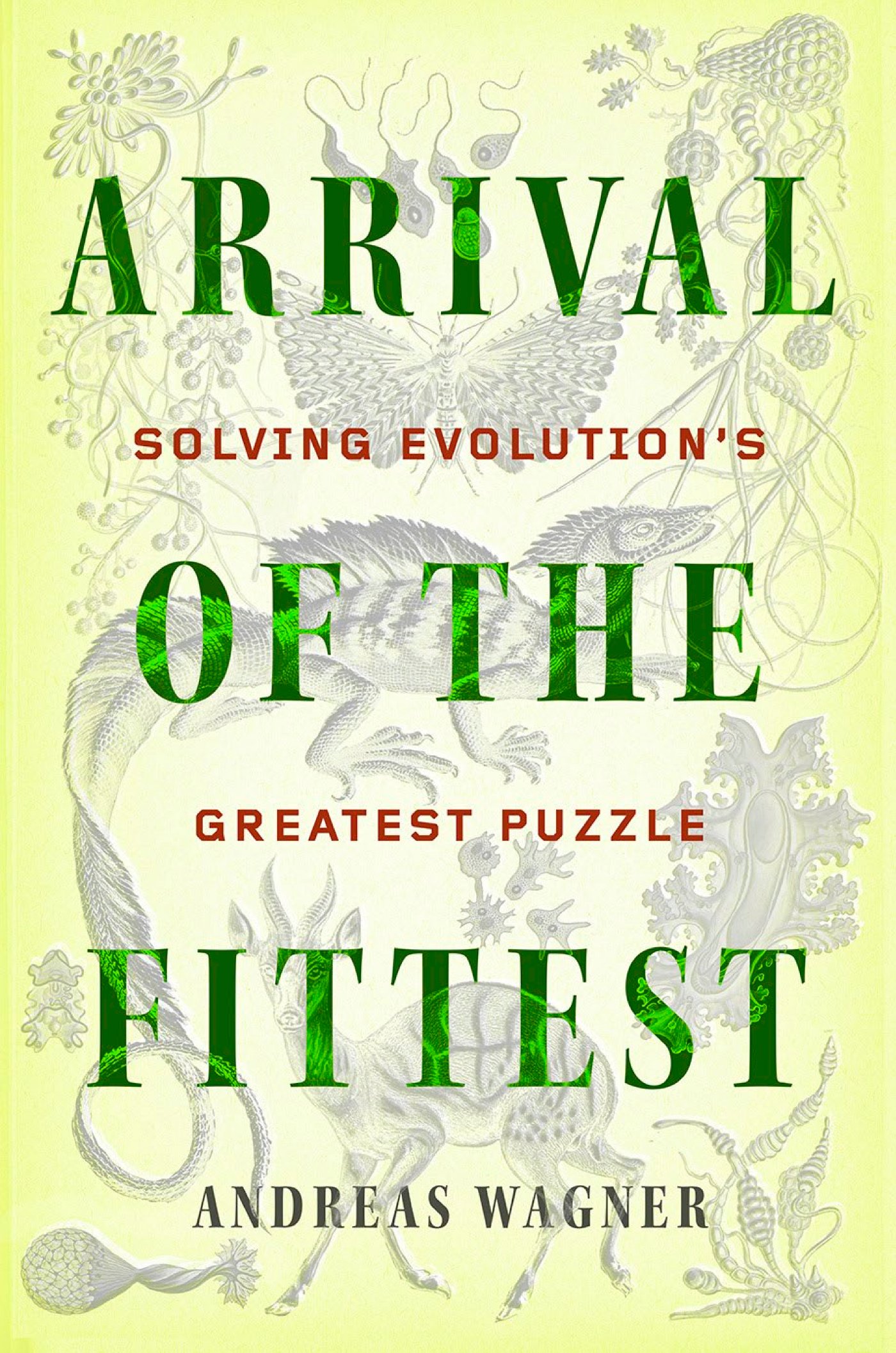
So claims a recent book, Arrival of the Fittest, by Andreas Wagner, professor of evolutionary biology at U Zurich in Switzerland (also associated with the Santa Fe Institute). He lectures worldwide and is a fellow of the American Association for the Advancement of Sciences.

From the book announcement:

Can random mutations over a mere 3.8 billion years solely be responsible for wings, eyeballs, knees, camouflage, lactose digestion, photosynthesis, and the rest of nature’s creative marvels? And if the answer is no, what is the mechanism that explains evolution’s speed and efficiency?

In Arrival of the Fittest, renowned evolutionary biologist Andreas Wagner draws on over fifteen years of research to present the missing piece in Darwin’s theory. Using experimental and computational technologies that were heretofore unimagined, he has found that adaptations are not just driven by chance, but by a set of laws that allow nature to discover new molecules and mechanisms in a fraction of the time that random variation would take.

From a review (which is careful to note that it is not a religious argument):

The question “how does nature innovate?” often elicits a succinct but unsatisfying response – random mutations. Andreas Wagner first illustrates why random mutations alone cannot be the cause of innovations – the search space for innovations, be it at the level of genes, protein, or metabolic reactions is too large that makes the probability of stumbling upon all the innovations needed to make a little fly (let alone humans) too low to have occurred within the time span the universe has been around.

He then shows some of the fundamental hidden principles that can actually make innovations possible for natural selection to then select and preserve those innovations.

Like interacting parallel worlds, this would be momentous news if it is true. But someone is going to have to read the book and assess the strength of the laws advanced.

One thing for sure, if an establishment figure can safely write this kind of thing, Darwin’s theory is coming under more serious fire than ever. But we knew, of course, when Nature published an article on the growing dissent within the ranks about Darwinism.

In origin of life research, there has long been a law vs. chance controversy. For example, Does nature just “naturally” produce life? vs. Maybe if we throw enough models at the origin of life… some of them will stick?

Note: You may have to apprise your old schoolmarm that Darwin’s theory* is “natural selection acting on random mutations,” not “evolution” in general. It is the only theory that claims sheer randomness can lead to creativity, in conflict with information theory. See also: Being as Communion.

*(or neo-Darwinism, or whatever you call what the Darwin-in-the-schools lobby is promoting or Evolution Sunday is celebrating).*

Follow UD News at Twitter!

Comments
Rich: Think harder, Vishnu. Think about what domains this test now can’t work in.
If you have a point to make, make it.Vishnu
November 5, 2014
November
11
Nov
5
05
2014
07:05 AM
7
07
05
AM
PDT
Learned Hand: I don't like rudeness, but I can tolerate it, if it comes with detectable arguments. If it is only rudeness, without any content, I usually simply ignore it. I am less good (although I try) in tolerating tricky arguments and statements. For example, defining CSI and its subsets as "infinitely elusive and mutable" is really unfair: it is a very strong and clear concept. It has obviously some aspects which require more detailed discussion, but the concept itself is simple, beautiful and consistent. If Alan Fox, who is usually a good commenter, can write to me: "Saying some things clearly exhibit CSI without explaining which things and how this is established is not saying much." when he knows perfectly well how many tons of posts I have dedicated to this issue, is really strange. I can understand that he does not agree with my explanations, but how can he even suggest that I have not given them? So, you can say that CSI is a wrong concept: you are entitled to your own opinion, like anyone else. You can say that there are slightly different definitions and slightly different explicit procedures. That is true of practically everything in science. However, the basic concepts that we can find in Dembski's explanatory filter are essentially always the same. But saying that CSI and its subsets are "infinitely elusive and mutable" is simply false and unfair.gpuccio
November 5, 2014
November
11
Nov
5
05
2014
12:23 AM
12
12
23
AM
PDT
He basically claimed I was lying because… because I told him something he hadn’t heard before I guess. I didn't read his comment that way. I think he was saying that you made up a new aspect of the infinitely elusive and mutable [CSI | FSCO/I | dFSCI]. I’m not claiming that other pro-ID commenters aren’t being insulting and rude, but I don’t speak for them, and they don’t speak for me. Alright. I thought you were making a broader statement when you asked, "why do you think [sneers and mud-slinging] have any place here?"Learned Hand
November 4, 2014
November
11
Nov
4
04
2014
11:41 PM
11
11
41
PM
PDT
Those who have been silently banned or moderated -- please post a comment on this thread at TSZ so that we will know the extent of the problem. Thanks.keith s
November 4, 2014
November
11
Nov
4
04
2014
11:03 PM
11
11
03
PM
PDT
Learned Hand: Rich wasn't talking to Mapou or Joe or even Barry when he claimed I just making stuff up. Do you think that because someone else was rude to him it justifies his being rude to anyone else? He basically claimed I was lying because... because I told him something he hadn't heard before I guess. I'm not claiming that other pro-ID commenters aren't being insulting and rude, but I don't speak for them, and they don't speak for me. I do ask that the people that are rude to me do justify their behavior. Feel free to ask the same of anyone you speak to.StephenA
November 4, 2014
November
11
Nov
4
04
2014
10:58 PM
10
10
58
PM
PDT
Rich and william spearshake:: As I am in a generous mood, I will explain you why I am so certain of my statement in the previous post. How many known languages are there? I have no idea. But let's suppose there are a billion. So, if the functional specification is "having perfect sense in any known language", instead of ""having perfect sense in any English", how bigger becomes the target space? The answer is simple: 30 bits bigger. In my example, the search space is 3000 bits. The difference is irrelevant.gpuccio
November 4, 2014
November
11
Nov
4
04
2014
10:36 PM
10
10
36
PM
PDT
Rich and william spearshake: "What about an encrypted Sonnet?" It's specified just the same. StephenA's answer is perfectly correct. I must remind you that any function can be defined for an object, and the dFSCI is computed for the specified function. The concept is that is a function, any function, can be defined for an object which implies a very high specific complexity, we can infer design. That statement is true, and it could be easily falsified in a Popperian sense: just give me a 600 character long string, encrypted if you prefer, which has a perfect sense in any known language, and which has been generated by a random character generating software (with the evidence, I will not believe you on your word alone! :) ).gpuccio
November 4, 2014
November
11
Nov
4
04
2014
10:16 PM
10
10
16
PM
PDT
If not, why do you think they have any place here? Why would a reader, having seen Barry Arrington's snide posts or the abusive comments that pour out from UD regulars like Mapou and Joe, conclude that sneers don't have a place at Uncommon Descent? It would be nice if commenters on both sides ratcheted the rhetoric down a notch (or, in some cases, many notches). I don't know how anyone could pretend that "sneers and mud slinging" come from only one side.Learned Hand
November 4, 2014
November
11
Nov
4
04
2014
10:12 PM
10
10
12
PM
PDT
Rich's comments are disappearing, so he won't be able to respond to you, StephenA. Moderators, which one of you is responsible? Why are you so frightened of open discussion?keith s
November 4, 2014
November
11
Nov
4
04
2014
10:12 PM
10
10
12
PM
PDT
Rich: Why do you feel the need to add sneers and mud slinging to your comments? Were insults instrumental in your acceptance of evolution? Were you shamed into accepting it? If not, why do you think they have any place here?StephenA
November 4, 2014
November
11
Nov
4
04
2014
09:15 PM
9
09
15
PM
PDT
A new concept - HIDDEN FIASCO. Making stuff up is easier than science. StevenA, there are many languages. Are they somewhat arbitrary?Rich
November 4, 2014
November
11
Nov
4
04
2014
07:37 PM
7
07
37
PM
PDT
And then if you run the zero-FCSI string through a decryption program, out pops a high-FCSI string. Did the decryption program produce FCSI? Or was the FCSI calculation wrong when it returned 0?
If you have both the string and the method to decrypt it, then you know that the string does have a specific function (i.e. can be decrypted into english text), and therefore the FCSI calculation should return a much higher value. The FCSI was hidden, not absent. Basically, the FCSI calulation was wrong when it returned 0.
How do you test the claim that nature cannot produce CSI if you have no way of determining whether the initial state of no-CSI is a false negative or not?
We can't be absolutely sure that the initial state of any test does not already contain hidden FCSI. This is the nature of science. All conclusions are held provisionally, with the understanding that we might be wrong and that new knowledge may upend our theories. That said, would you like to offer an example of such a test so that we don't accidentally talk past each other?StephenA
November 4, 2014
November
11
Nov
4
04
2014
07:33 PM
7
07
33
PM
PDT
StephenA:
Unless you know ‘decryption method X’ you will not know of any specification that the new text matches so the FCSI calculation will return 0.
And then if you run the zero-FCSI string through a decryption program, out pops a high-FCSI string. Did the decryption program produce FCSI? Or was the FCSI calculation wrong when it returned 0?
This is fine, since we already know that the design inference often gives false negatives.
How do you test the claim that nature cannot produce CSI if you have no way of determining whether the initial state of no-CSI is a false negative or not?R0bb
November 4, 2014
November
11
Nov
4
04
2014
06:40 PM
6
06
40
PM
PDT
Ladies, Ladies, no need to fight. Keith S has read it. Mung hasn't read it, nor all the thread (Funny that you driveby even when at home, Mung). Keith S has provided some choice quotes that make the OP look silly. Mung has Butthurt.Rich
November 4, 2014
November
11
Nov
4
04
2014
06:31 PM
6
06
31
PM
PDT
keiths:
You have read it, haven’t you?
What part of no, i have not read it, do you not understand? But I did read the book announcement, and according to you, I cannot tell the difference between the book and the book announcement, so why do you ask?Mung
November 4, 2014
November
11
Nov
4
04
2014
06:26 PM
6
06
26
PM
PDT
Rich,
And I do love Keith. Did you know I once wrote a limerick about him and Hempel’s Paradox?
Yeah, and it didn't even scan properly.keith s
November 4, 2014
November
11
Nov
4
04
2014
06:25 PM
6
06
25
PM
PDT
Think harder, Vishnu. Think about what domains this test now can't work in.Rich
November 4, 2014
November
11
Nov
4
04
2014
06:05 PM
6
06
05
PM
PDT
Mung, I understand how now, with egg on your face (again), you'd like to change the subject. Your Butthurt is delightful. And I do love Keith. Did you know I once wrote a limerick about him and Hempel's Paradox?Rich
November 4, 2014
November
11
Nov
4
04
2014
06:03 PM
6
06
03
PM
PDT
Mung, I have read the book, and it confirms what I gleaned from the interviews. Wagner's research is bad news for ID. Now, for laughs, let's see you try to spin Wagner's book into good news for ID. You have read it, haven't you?keith s
November 4, 2014
November
11
Nov
4
04
2014
05:58 PM
5
05
58
PM
PDT
It's simply endearing how Rich genuflects to keiths.Mung
November 4, 2014
November
11
Nov
4
04
2014
05:57 PM
5
05
57
PM
PDT
Rich: "So what are the implications for ID, Vishnu?"
None.Vishnu
November 4, 2014
November
11
Nov
4
04
2014
05:56 PM
5
05
56
PM
PDT
Alan Fox:
It’s my contention [whatever] cannot be quantified until it is operationally defined.
Alan Fox doesn't know what it means to be a skeptic. Alan, please provide us with the operational definition of a "skeptic." What are the operation boundaries of "the skeptical zone" and how do you know?Mung
November 4, 2014
November
11
Nov
4
04
2014
05:55 PM
5
05
55
PM
PDT
Mung: "This is simply hilarious. keiths has not read the book!" This is simply hilarious. Mung has not read the Thread! "217 keith s November 1, 2014 at 11:59 pm I downloaded the book onto my Kindle, and sure enough, it confirms what I gathered from the interview." Have you read it? Then perhaps you should be quiet and listen to those that have.Rich
November 4, 2014
November
11
Nov
4
04
2014
05:52 PM
5
05
52
PM
PDT
"to test our methodologies" Oh good, you're ready to test 10 data sets that I give you then, some of which will be designed, some not.Rich
November 4, 2014
November
11
Nov
4
04
2014
05:48 PM
5
05
48
PM
PDT
keiths:
Also, since it doesn’t appear to have dawned on any of the IDers here, Wagner’s ideas do not bolster the ID position at all. They undermine it.
This is simply hilarious. keiths has not read the book! His argument consists of, I don't need to read the book, I read an interview! Well congratulations keiths, you can't tell the difference between a book an an interview.Mung
November 4, 2014
November
11
Nov
4
04
2014
05:46 PM
5
05
46
PM
PDT
The implications for ID? For one, that there is more to living organisms than matter, energy and what emerges from their interactions. For another that there is a purpose to our existence beyond the mundane.Joe
November 4, 2014
November
11
Nov
4
04
2014
05:33 PM
5
05
33
PM
PDT
Rich, you are confused, as usual. We use English language prose to test our methodologies and to provide examples to our simpleton opponents.Joe
November 4, 2014
November
11
Nov
4
04
2014
05:31 PM
5
05
31
PM
PDT
StephenA, it seems ID is remarkably useful in detecting the design of English language prose that we can read and understand. Its also useful for... no wait... that's all. And you've made "specification" so soft and squishy and arbitrary. Great stuff.Rich
November 4, 2014
November
11
Nov
4
04
2014
04:27 PM
4
04
27
PM
PDT
Encryption hides the design in a string by changing the text so that it no longer matches a well known specification (the English language). Instead it now matches the specification of "text that can be decoded into English text by decryption method X". Unless you know 'decryption method X' you will not know of any specification that the new text matches so the FCSI calculation will return 0. This is fine, since we already know that the design inference often gives false negatives. However, we never see false positives. If you can give an example of a false positive, that would be a falsification of ID.StephenA
November 4, 2014
November
11
Nov
4
04
2014
03:56 PM
3
03
56
PM
PDT
So what are the implications for ID, Vishnu?Rich
November 4, 2014
November
11
Nov
4
04
2014
03:22 PM
3
03
22
PM
PDT
1 8 9 10 11 12 24

Leave a Reply