Readers may recall Siegel arguing against the Big Bang and for the multiverse/parallel universes in recent days.
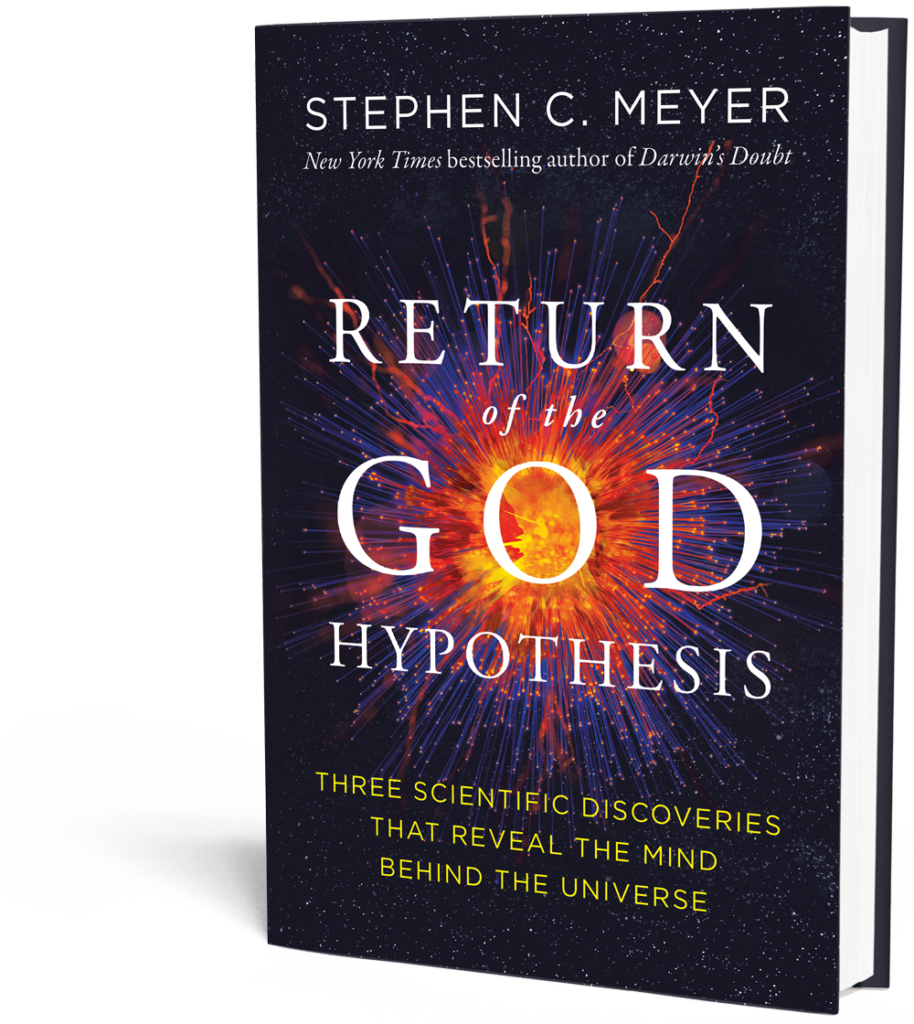
At Evolution News and Science Today, Brian Miller suggests he is arguing around Steve Meyer’s new book, The Return of the God Hypothesis without wanting to mention or engage with it:
The website Big Think recently published an article by Ethan Siegel titled “Surprise: the Big Bang isn’t the beginning of the universe anymore.” Siegel is a theoretical astrophysicist and a science writer. He is also an atheist, so he understandably does not like the implications of the universe requiring a beginning. He does not mention Stephen Meyer by name, but he seems to directly engage Meyer’s recent book Return of the God Hypothesis, arguing that modern theories of cosmology suggest the universe did not have a beginning but is eternal.
Brian Miller, “Critics Respond to Stephen Meyer’s New Book (Without Mentioning Him by Name)” at Evolution News and Science Today (October 16, 2021)
And, Miller thinks, Siegel isn’t alone:
Since the book’s release, many stories have appeared in varied publications challenging his claims. The articles often do not mention Meyer by name, but their content suggests that they are attempting to disprove his design thesis. A similar phenomenon occurred after the publication of his previous books, especially Darwin’s Doubt. The critics appear to see Meyer much like Voldemort in the Harry Potter series. He is ever present in their minds, but Meyer is “he who shall not be named.”
Brian Miller, “Critics Respond to Stephen Meyer’s New Book (Without Mentioning Him by Name)” at Evolution News and Science Today (October 16, 2021)
Now that Miller mentions it, several other anti-Big Bang tales have appeared recently. Here’s one, come to think of it: Another shot in the campaign against the Big Bang: Bento’s theory sounds convincing — compared to the Easter Bunny. The question we should be asking is, why is the Big Bang so unpopular with these people?
Perhaps the reason that all these stories seem extra-silly is that the authors are rattled.
You may also wish to read: Ethan Siegel makes another paper assault on the Big Bang. Is the Big Bang the least popular widely accepted science theory? Theoretical astrophysicist Ethan Siegel wishes it out of existence by positing a cosmic inflation that wipes out all possibility of knowledge.
and
Ethan Siegel: The multiverse (and another you) are “all but inevitable” Granting some things he’d like to believe. Essentially, Siegel, the person who has Big Problems with something as widely accepted as the Big Bang, is quite prepared to accept all this far out stuff. That is where the naturalist project is just now.