Uncommon Descent Serving The Intelligent Design Community

Should we recognise that “laws of nature” extend to laws of our human nature? (Which, would then frame civil law.)

Categories
Academic Freedom
Control vs Anarchy
Defending our Civilization
Laws
Lessons of History
Logic and Reason
Share
Facebook
Twitter/X
LinkedIn
Flipboard
Print
Email

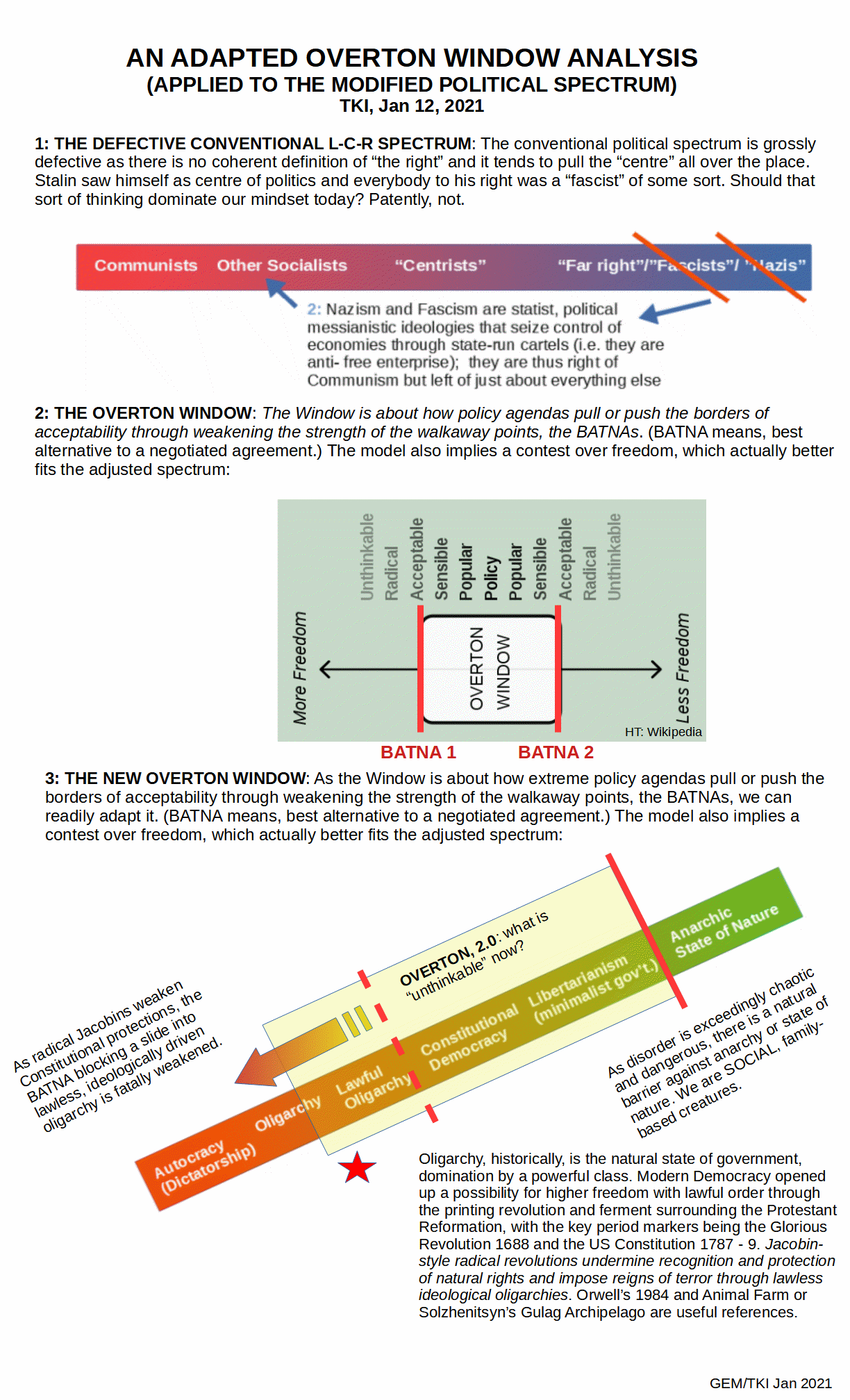
Laws of Nature are a key part of the foundation of modern science. This reflects not only natural, law-like regularities such as the Law of Gravitation that promotes the Earth to the heavens (from being the sump of the cosmos) but also the perspective of many founders that they were thinking God’s creative, ordering providential and world-sustaining thoughts after him. The focal topic asks us whether our civil law is effectively an accident of power balances, or else, could it be accountable to a built in law that pivots on first duties coeval with our humanity.

The issue becomes pivotal, once we ponder the premise that the typical, “natural” tendency of government is to open or veiled lawless oligarchy:
So, let us hear Cicero in his On The Republic, Bk 3 [c. 55 – 54 BC]:

{22.} [33] L . . . True law is right reason in agreement with nature , it is of universal application, unchanging and everlasting; it summons to duty by its commands, and averts from wrongdoing by its prohibitions. And it does not lay its commands or prohibitions upon good men in vain, though neither have any effect on the wicked. It is a sin to try to alter this law, nor is it allowable to attempt to repeal any part of it, and it is impossible to abolish it entirely. We cannot be freed from its obligations by senate or people, and we need not look outside ourselves for an expounder or interpreter of it. And there will not be different laws at Rome and at Athens, or different laws now and in the future, but one eternal and unchangeable law will be valid for all nations and all times, and there will be one master and ruler, that is, God, over us all, for he is the author of this law, its promulgator, and its enforcing judge. Whoever is disobedient is fleeing from himself and denying his human nature, and by reason of this very fact he will suffer the worst penalties, even if he escapes what is commonly considered punishment. . . . – Marcus Tullius Cicero, On the Republic, Bk 3

This, of course, is further reflected in his De Legibus, which lays out a framework:

With respect to the true principle of justice, many learned men have maintained that it springs from Law. I hardly know if their opinion be not correct, at least, according to their own definition; for “Law (say they) is the highest reason, implanted in nature, which prescribes those things which ought to be done, and forbids the contrary.” This, they think, is apparent from the converse of the proposition; because this same reason, when it [37]is confirmed and established in men’s minds, is the law of all their actions.

They therefore conceive that the voice of conscience is a law, that moral prudence is a law, whose operation is to urge us to good actions, and restrain us from evil ones.

We see in the Angelic Doctor, a broadening of the framework, elaborating four domains of law:

Thus, following Aquinas, we can see that arguably there is an intelligible core of law coeval with our responsible, rational, significantly free nature. This built-in law turns on inescapable, thus self-evident truths of justice and moral government, which rightly govern what courts may rule or parliaments legislate, per the premise of justice moderated by requisites of feasible order in a world that must reckon with the hardness of men’s hearts. Where, we are thus duty bound, morally governed creatures.

Hence, we come to the sense of duty attested to by sound conscience [“conscience is a law”], that breathes fire into what would otherwise be inert statements in dusty tomes. We may term these, by extension, the Ciceronian First Duties of Reason:

FIRST DUTIES OF RESPONSIBLE REASON

We can readily identify at least seven inescapable first duties of reason. “Inescapable,” as they are so antecedent to reasoning that even the objector implicitly appeals to them; i.e. they are self-evident. Namely, duties,

1 – to truth, 

2 – to right reason

3 – to prudence, 

4 – to sound conscience, 

5 – to neighbour; so also, 

6 – to fairness and

7 – justice 

x – etc.

[I add, Mar 12, for clarity:] {Of course, there is a linked but not equivalent pattern: bounded, error-prone rationality often tied to ill will and stubbornness or even closed mindedness; that’s why the study of right reason has a sub-study on fallacies and errors. That we seek to evade duties or may make errors does not overthrow the first duties of reason, which instead help us to detect and correct errors, as well as to expose our follies.}

Such built-in . . . thus, universal . . . law is not invented by parliaments, kings or courts, nor can these principles and duties be abolished by such; they are recognised, often implicitly as an indelible part of our evident nature. Hence, natural law,” coeval with our humanity, famously phrased in terms of “self-evident . . . rights . . . endowed by our Creator” in the US Declaration of Independence, 1776. (Cf. Cicero in De Legibus, c. 50 BC.) Indeed, it is on this framework that we can set out to soundly understand and duly balance rights, freedoms and duties; which is justice, the pivot of law.

The legitimate main task of government, then, is to uphold and defend the civil peace of justice through sound community order reflecting the built in, intelligible law of our nature. Where, as my right implies your duty a true right is a binding moral claim to be respected in life, liberty, honestly acquired property, innocent reputation etc. To so justly claim a right, one must therefore demonstrably be in the right.

Where, prudence can also be seen via Aristotle’s summary:  “. . . [who aptly] defined prudence as recta ratio agibilium, ‘right reason applied to practice.’ The emphasis on ‘right’ is important . . .  Prudence requires us to distinguish between what is right and what is wrong . . . If we mistake the evil for the good, we are not exercising prudence—in fact, we are showing our lack of it.”

Of course, we just saw a 400+ comment thread that saw objectors insistently, studiously evading the force of inescapability, where their objections consistently show that they cannot evade appealing to the same first duties that they would dismiss or suggest were so obscure and abstract that they cannot serve as a practical guide. The history of the modern civil rights movement once the print revolution, the civilisational ferment surrounding the reformation and the rise of newspapers, bills, coffee houses etc had unleashed democratising forces speaks to the contrary. The absurdity of appealing to what one seeks to overthrow simply underscores its self evidence. But free, morally governed creatures are just that, free. Even, free to cling to manifest absurdities.

This approach, of course, sharply contrasts with the idea that law is in effect whatever those who control the legal presses issue under that heading; based on power balances and so in effect might and/or manipulation. Aquinas’ corrective should suffice to show that not all that is issued under colour of law is lawful, or even simply prudent towards preserving order in a world of the hardness of men’s hearts.

Yes, obviously, if we are governed by built-in law, that raises the question that there is a cosmic law-giver, qualified to do so not by mere sheer power but also by being inherently good and utterly wise. Such a root of reality also answers the Hume Guillotine and the Euthyphro dilemma: an inherently good and utterly wise, necessary and maximally great being root of reality would bridge IS and OUGHT in the source of all reality and would issue good and wise, intelligible built-in law.

What of Mathematics? The answer is, of course, that a core of Math is inherent in the framework of any possible world. So, this would extend that core of Math tied to sets, structures and quantities expressed in N,Z,Q,R,C,R* etc to any actual world. That answers Wigner’s puzzlement on the universal power of Math and it points to, who has power to create an actual world in which we have fine tuning towards C-Chemistry, aqueous medium, cell based life? Likewise, it is suggestive on the source of the language and algorithms found in D/RNA etc.

Lest we forget, here is Crick, to his son, March 19, 1953:
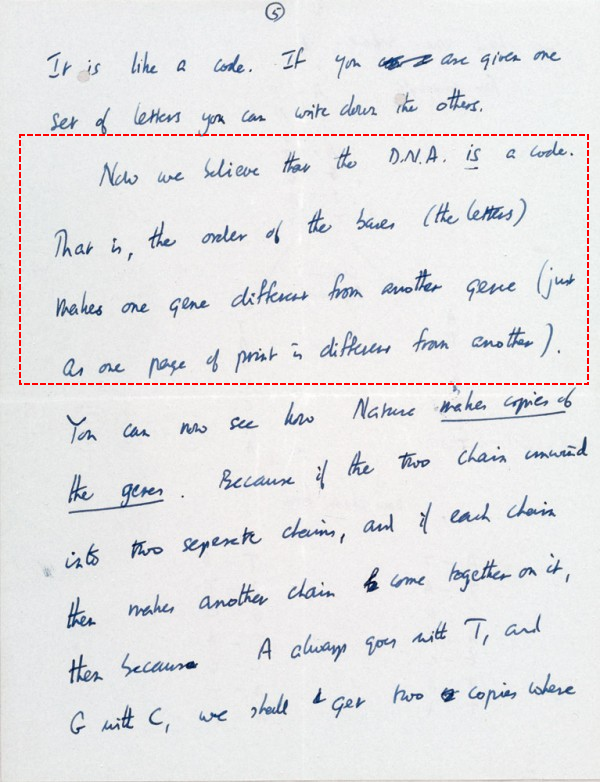
So, we have come full circle, to law as expressing ordering principles of the dynamic-stochastic physical world and those of the world of intelligent, rational, morally governed creatures. Surprise — NOT — the design thesis is central to both. END

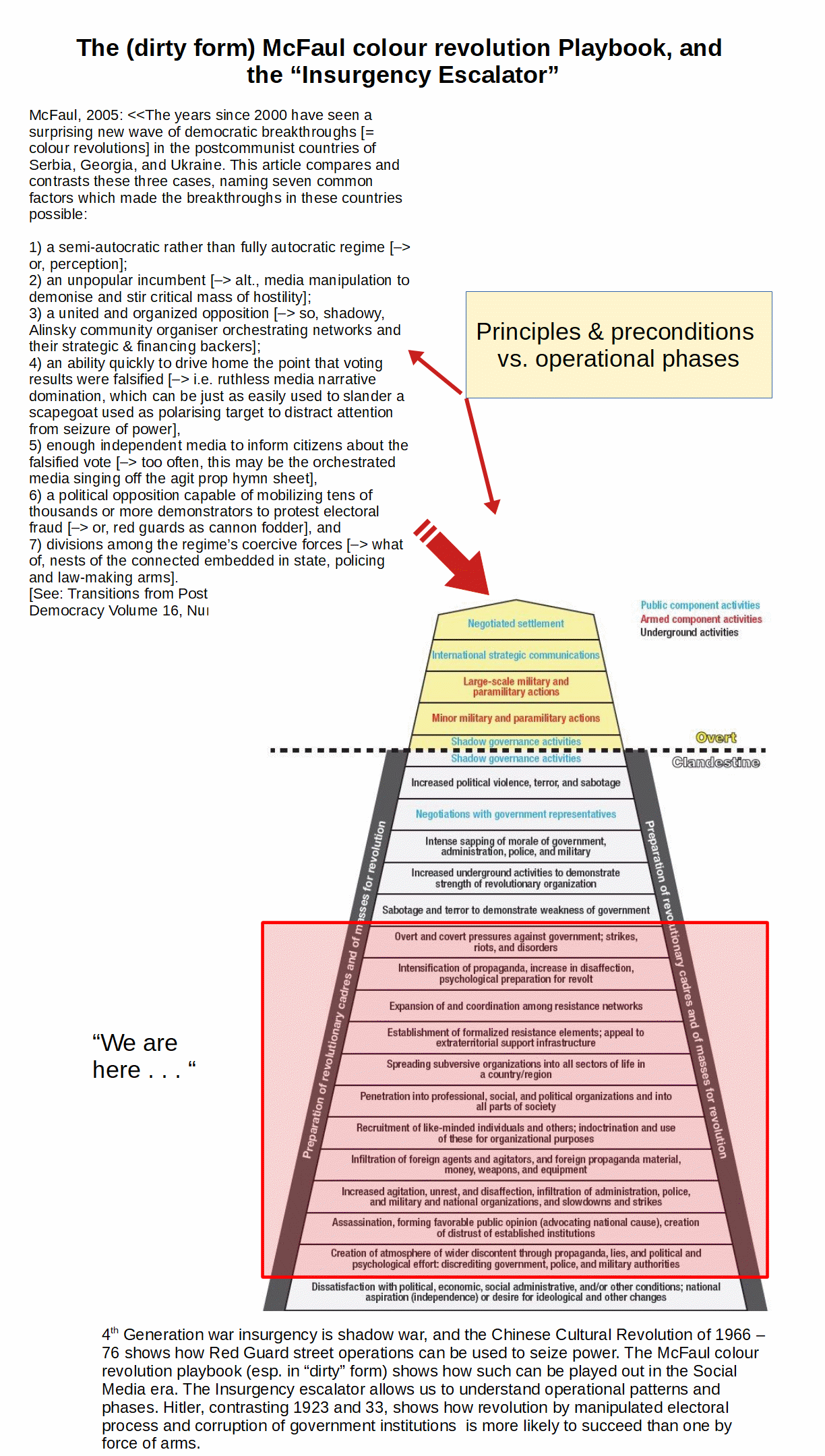
PS: As a reminder, the McFaul dirty form colour revolution framework and SOCOM insurgency escalator
U/D Feb 14: Outlines on first principles of right reason:
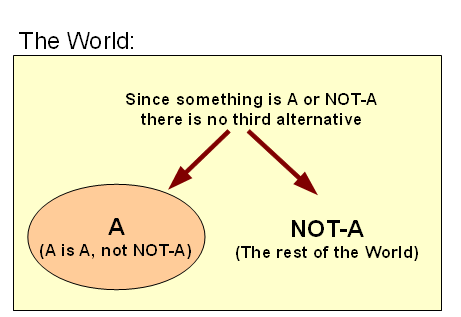
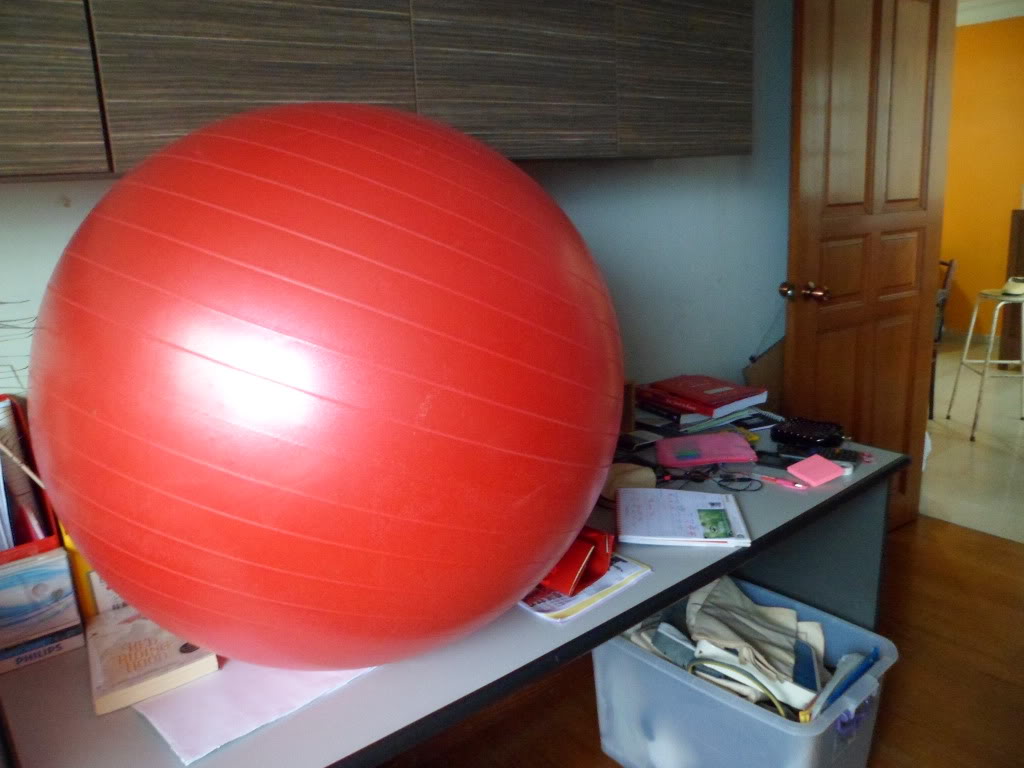
Here, we see that a distinct A — I usually use a bright red ball on a table:
and contrast a red near-ball in the sky, Betelgeuse as it went through a surprise darkening (something we observed separately and independently, it was not a figment of imagination):
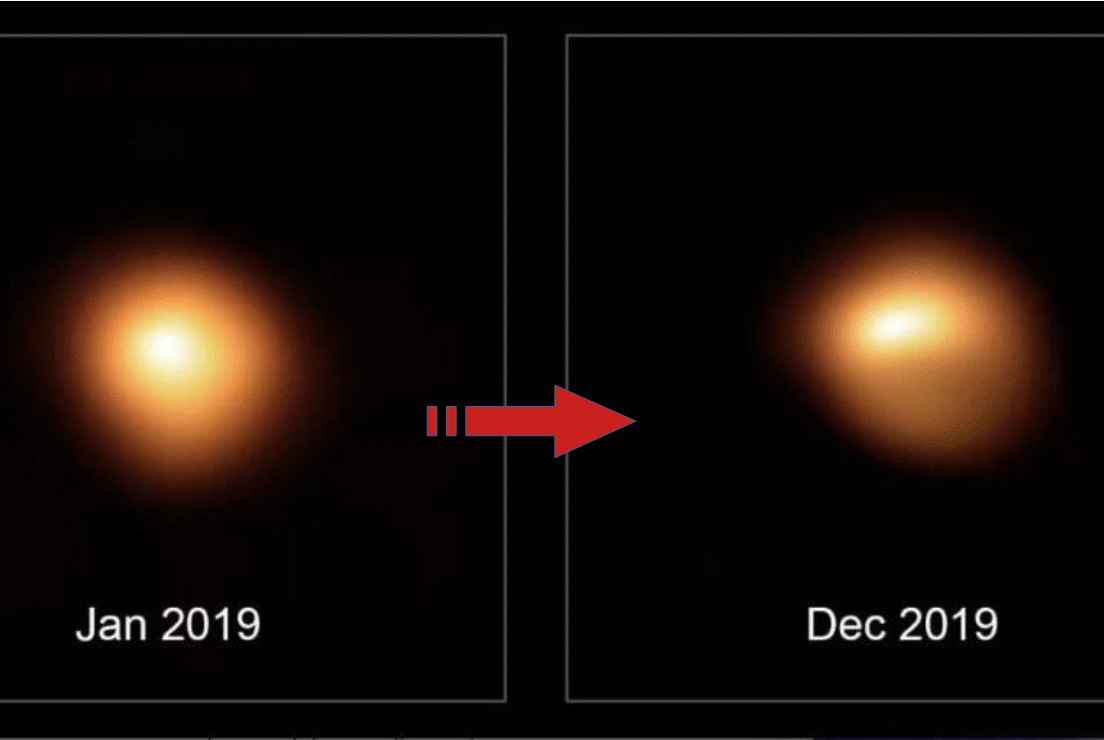
. . . is distinct from the rest of the world. A is itself i/l/o its characteristics of being, and it is distinct from whatever else is not A, hence we see that in w there is no x that is A and ~A and any y that is in W will either be A or not A but not both or neither. These three are core to logic: P/LOI, LNC, LEM.

We may extend to governing principles that we have duties toward — never mind whoever may disregard such (and thereby cause chaos):
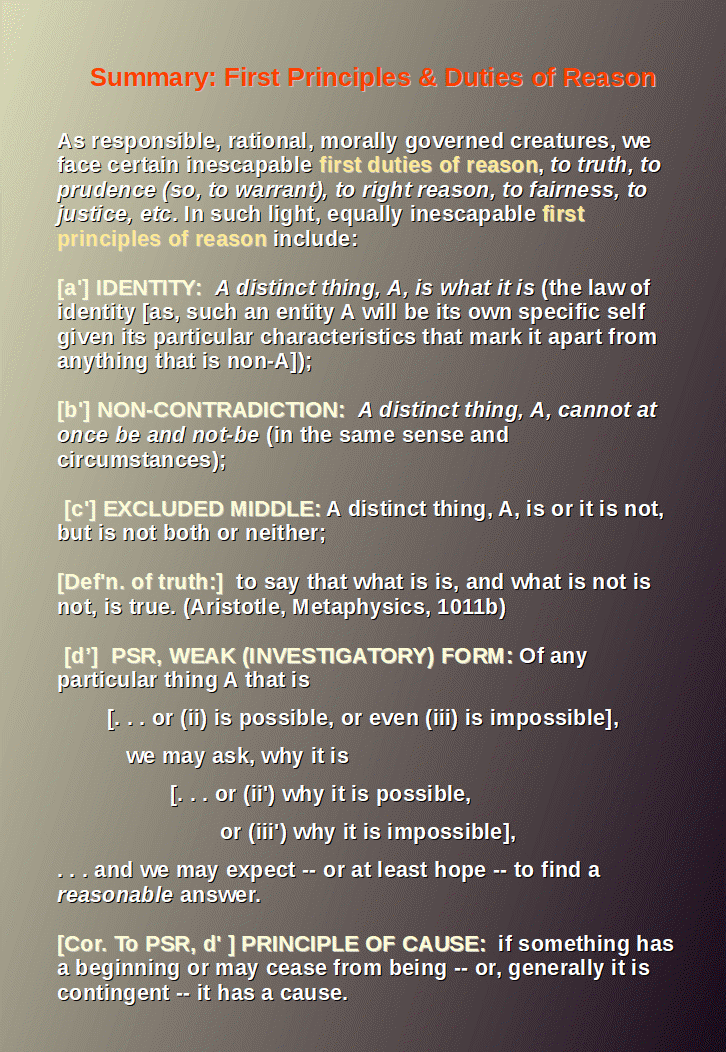
U/D March 13: The challenge of building a worldview i/l/o the infinite regress issue:
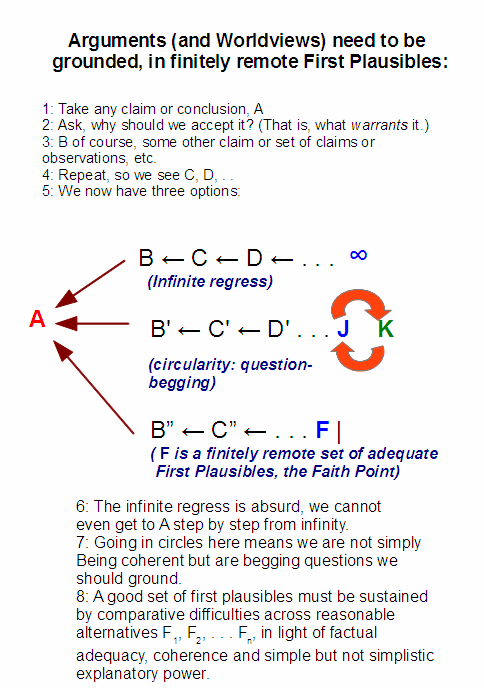
A summary of why we end up with foundations for our worldviews, whether or not we would phrase the matter that way}

Framing a ship:

. . . compare a wooden model aircraft:

. . . or a full scale, metal framework jet:
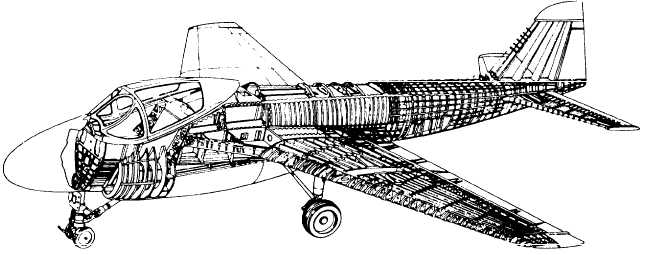
In short, there is always a foundational framework for any serious structure.

Comments
VL “Upon continued thought, I think what WJM is calling a preference I am called a choice, perhaps???” Don’t think so. The preference precedes choice. My definition of free will, which BTW is a term I hate, I prefer “free choice” Anyway I digress. Free choice is the ability to choose what I MOST WANT ( prefer) given the options available to me at the time the choice is made. Vividvividbleau
February 27, 2021
February
02
Feb
27
27
2021
02:18 PM
2
02
18
PM
PDT
Why is repugnant if evil doesn’t exist?
You clearly don’t understand the discussion that is going on. I’m sure many others are in the same boat. But the proper response is to read everything, ask questions and not hurl insults. There were links to some past discussions. You just equated someone with Hitler. That is repugnant. Especially since you don’t seem to understand what is being said.jerry
February 27, 2021
February
02
Feb
27
27
2021
02:10 PM
2
02
10
PM
PDT
Irrespective of this will-preference issue I think this discussion has been useful to me. I'm clearer about my own position, and clearer about both what KF is saying and about what the continued deficiencies in his position are. Upon continued thought, I think what WJM is calling a preference I am called a choice, perhaps???Viola Lee
February 27, 2021
February
02
Feb
27
27
2021
01:52 PM
1
01
52
PM
PDT
Hitler sent you friend request.
Jerry This is remarkably repugnant. I am defending the concept of the Judeo Christian God, and someone posts this. About as un-Christian as one can get.
Why is repugnant if evil doesn't exist?Sandy
February 27, 2021
February
02
Feb
27
27
2021
12:51 PM
12
12
51
PM
PDT
Hitler sent you friend request.
This is remarkably repugnant. I am defending the concept of the Judeo Christian God, and someone posts this. About as un-Christian as one can get.jerry
February 27, 2021
February
02
Feb
27
27
2021
11:50 AM
11
11
50
AM
PDT
KF said:
WJM, kindly reconsider the gap between your reconstruction and what I have actually argued. KF
I prefer not to. I have made a good effort to understand your argument; apparently, it is incomprehensible to the way my mind works. However, I do appreciate the conversation, because it led to my making a connection I had never made before: free will is always about preference. That works very well in my current worldview!William J Murray
February 27, 2021
February
02
Feb
27
27
2021
11:28 AM
11
11
28
AM
PDT
VL said:
Ultimately what we choose to say and do defines what our preferences are. Choosing is an existential, in the moment, act. We may consult our self by turning our awareness inward upon our feelings and thoughts, and that might feel at times like trying to determine what we prefer, but ultimately what we choose defines what it is that we actually prefer.
That makes zero sense to me whatsoever. Looks like classic cart before the horse. You cannot make a decision without it being rooted in preference.William J Murray
February 27, 2021
February
02
Feb
27
27
2021
11:24 AM
11
11
24
AM
PDT
Jerry
Kairosfocus The massive reality of evil and the pain and chaos it causes speak for themselves
No it doesn’t. You are just making assertions. Define, then defend that definition. So far no one has. The defense of any definition quickly descends into absurdity. I have asked this question dozens of times. Always same scenario plays out.
Hitler sent you friend request.
William J Murray Let’s say I decided to make my choices by flipping a coin.
Well you practically tell us that a coin is more trustworthy than yourself. I believe you. That explain why you came with MRT ,you flipped a coin. :))))Sandy
February 27, 2021
February
02
Feb
27
27
2021
10:53 AM
10
10
53
AM
PDT
An observation from several years ago
Discussing issues which border on science or philosophy led me to a conclusion I have held since first reading about this issue and which I see on this forum. If ID wins as Dave Scott says he hopes for and which I hope for too then the real food fight begins. It will be the Reformation all over again except with more variants and nearly unlimited methods of communication. Most of the people here don’t really care for ID other than it is a useful tool to support a worldview. If a better tool appeared tomorrow this forum would go extinct. Similarly the Darwinist doesn’t care about random mutations and natural selection as the basis for life, only that it is the best tool to support their world view. The current Darwinist would abandon Neo Darwinism very quickly if there was another purely mechanistic explanation that had better data behind it.
https://uncommondescent.com/intelligent-design/gwu-prof-weighs-in-on-id/#comment-22536 I found it while trying to find different discussions of the "evil" concept. Over 15 years ago on UD. Notice it was comment #22536 while this comment is 725123 or over 700 thousand comments later. So what is being discussed on this site is really different philosophical world-views and rarely science. The science is so one sided that the anti ID people prefer not to address it. Essentially nothing has changed in over 700,000 comments.jerry
February 27, 2021
February
02
Feb
27
27
2021
09:11 AM
9
09
11
AM
PDT
The big issue for KF is that despite people's common nature concerning rationality and our concern for others, he can't address the issue of people reaching different moral judgments about various situations. He tries to dismiss this as the result of unsound reasoning on some people's part, but when pressed on this question,
if we use our rationality et al correctly we will all reach the same conclusion [regarding moral decisions], just as 2 + 2 does not have multiple correct answers?",
his answer is, "we can and often do reach a similar conclusion", which obviously answers the question with, "No". This leaves the question of how to evaluate different moral views unanswered. WJM proposes a view which I can relate to my existentialist stance. Due to our free will (constrained as it is by the nature of the physical world of which we are a part), ultimately we have to use our rationality and compassion to choose our moral positions, and to take responsibility for those choices. This lies within us: there are no single "correct" objective answers to moral questions. To KF and others, this "subjectivist" position takes ones directly over the cliff and into the abyss of nihilism, but I don't believe that is true for the vast, vast majority of human beings: we do have a common nature that leads to some basic core starting points that we all respond to within ourselves and incorporate into our choices. However, I take issue with WJM couching this in terms of "preferences". Back at 575, I wrote,
WJM writes, "4. We always utilize our free will to seek out and instantiate, if possible, that which we prefer." This doesn't seem meaningful. How do we know what we prefer? By looking at what we will. This seems circular.
Ultimately what we choose to say and do defines what our preferences are. Choosing is an existential, in the moment, act. We may consult our self by turning our awareness inward upon our feelings and thoughts, and that might feel at times like trying to determine what we prefer, but ultimately what we choose defines what it is that we actually prefer. I don't think there is a gap here where first we determine our preference and then we choose a stance based on that preference. The choosing creates the preference, not the other way around. Sartre, who I read decades ago and haven't looked at since, has some relevant things to say. A quick google search for an article found this:
"Man is condemned to be free; because once thrown into the world, he is responsible for everything he does." ... While the circumstances of our birth and upbringing are beyond our control, he reasons that once we become self-aware (and we all do eventually), we have to make choices — choices that define our very 'essence'. Sartre's theory of existentialism states that “existence precedes essence”, that is only by existing and acting a certain way do we give meaning to our lives. According to him, there is no fixed design for how a human being should be and no God to give us a purpose. Therefore, the onus for defining ourselves, and by extension humanity, falls squarely on our shoulders. ...With nothing to restrict us, we have the choice to take actions to become who we want to be and lead the life we want to live. According to Sartre, each choice we make defines us while at the same time revealing to us what we think a human being should be.
Viola Lee
February 27, 2021
February
02
Feb
27
27
2021
06:45 AM
6
06
45
AM
PDT
Choosing necessarily requires preference. It’s unavoidable.
He chose the perfect one. If you want to say this is a preference, then so be it. God prefers the perfect choice.jerry
February 27, 2021
February
02
Feb
27
27
2021
06:31 AM
6
06
31
AM
PDT
The massive reality of evil and the pain and chaos it causes speak for themselves
No it doesn’t. You are just making assertions. Define, then defend that definition. So far no one has. The defense of any definition quickly descends into absurdity. I have asked this question dozens of times. Always same scenario plays out. This is not the place to debate this. I suggested at #366 https://uncommondescent.com/intelligent-design/the-argument-from-evil-is-absurd/#comment-724230jerry
February 27, 2021
February
02
Feb
27
27
2021
06:29 AM
6
06
29
AM
PDT
Jerry, I responded to a claim I saw in passing above, whether you or another I do not know for the moment. That does not matter. The massive reality of evil and the pain and chaos it causes speak for themselves. The simple identification of cases of note such as the specific murder of a child as described, or the mass murders of the past century suffices to show yardstick cases. That allows for definition by key case and family resemblance, ostensive definition. Beyond, even if there can be no precising definition, as happens with the case of life, that suffices to show that the term is meaningful. As it is, evil is a worldviews level concept and the ability to address the reality of evil is a test, tied to the question of the good. Worldviews that assign evil to meaninglessness invariably also cannot address the good, and end up as amoral. This is because, fundamentally, evil is not the mirror image opposite of the good but instead a parasite upon it: the twisting, perversion, frustration, blocking of the good and beneficial from its proper end, an end which in many key yardstick cases is naturally intelligible and manifest. A key test has long been the Kantian Categorical imperative: the good acts on a principle that is universalisable, the evil on what cannot be the global norm. The classic illustration is lying vs the good of verbal communication. Verbal communication is a great good with huge benefits, and speaking truthfully is universalisable. Were lying to become the norm, trust and community would disintegrate, creating chaos. Lying is a destructive parasite on verbal communication. KFkairosfocus
February 27, 2021
February
02
Feb
27
27
2021
06:02 AM
6
06
02
AM
PDT
Let's say I decided to make my choices by flipping a coin. That is the methodology I prefer - for whatever reason - by which to make my choices. Let's say I make my choices according to the scientific evidence; that is the methodology I prefer. If I guide every choice by strict adherence to logic, that is my preferred method. Every choice comes out of a literal reading of the Bible or Koran? Again, that is my preference. Ultimately all actualized choices are rooted in preference. There is no escaping that fact, just as ther is no escaping the fact of gravity, A=A and 2+2=4.William J Murray
February 27, 2021
February
02
Feb
27
27
2021
05:47 AM
5
05
47
AM
PDT
WJM, kindly reconsider the gap between your reconstruction and what I have actually argued. KFkairosfocus
February 27, 2021
February
02
Feb
27
27
2021
05:38 AM
5
05
38
AM
PDT
If so, then God chose to create the perfect world not just prefer one to another.
Choosing necessarily requires preference. It's unavoidable.William J Murray
February 27, 2021
February
02
Feb
27
27
2021
05:34 AM
5
05
34
AM
PDT
Here's the thing folks, it's hilarious that any of you think you know anything at all about Ultimate Reality. You don't. Not while you're on the Roller Coaster of Life. You'll have to wait until you die to get the joke. Hehe. Hehehehehe.Concealed Citizen
February 27, 2021
February
02
Feb
27
27
2021
05:14 AM
5
05
14
AM
PDT
Leibniz’s term was “the best of all possible worlds.” If so, then God chose to create the perfect world not just prefer one to another.
The claim that the actual world is the best of all possible worlds is the central argument in Leibniz's theodicy, or his attempt to solve the problem of evil.
jerry
February 27, 2021
February
02
Feb
27
27
2021
05:08 AM
5
05
08
AM
PDT
If one believes God deliberately created this specific world out of all possible worlds, it necessarily means that God preferred this world over all other possibilities. This makes "preference" a root aspect of God. Yet, KF dismisses preference as "mere preference!" It is the inescapable, God-rooted, existential nature of the original free will choice behind the instantiation of this particular world under that worldview. "Mere" preference, indeed. Under KF's view, it was "mere" preference that created this world and not any other.William J Murray
February 27, 2021
February
02
Feb
27
27
2021
04:49 AM
4
04
49
AM
PDT
My individual "moral duty," then, is clear. Since pursuing my preferences is unavoidable at every level, and my preferences represent the only necessary goal available to me, the only available moral application of truth and right reason is using them to instantiate my preferential goals. That is, in fact, what every single one of us is doing right now to the degree we can. So, morality has both objective and subjective qualities. At the existential necessity level, they are objective, or universal to all sentient experience. Since available free will choices are always guided by individual preference, the individual behavior aspect of morality is, objectively speaking, subjective. It is necessarily so. It cannot be anything else.William J Murray
February 27, 2021
February
02
Feb
27
27
2021
04:30 AM
4
04
30
AM
PDT
I again see the “evil is a meaningless term” claim somewhere above.
I constantly make this claim here and other places. So far no one has disputed my claim with definition and logic. There are long threads on it here in the past. It is a term that has no definition. People use it to refer to unwanted unpleasant things. I am mainly referring to what is called natural evil and Kf immediately goes into moral evil. And even with moral evil it immediately degenerates into something that is relative in nature. Frustration is used above. So that anything that is frustrated is then evil.? Then there a zillion things every day that are frustrating and thus evil. So if evil is everywhere we look, it then becomes meaningless. This is not the place to discuss it. It has been done dozens of times here in the past. I linked above to a thread from a year ago. See #366.jerry
February 27, 2021
February
02
Feb
27
27
2021
04:28 AM
4
04
28
AM
PDT
Sorry KF. You built the house. Now you have to live in it. You don't get to brush off an inescapable aspect of the nature of our existence as "mere preference." Once you understand it, it is self-evidently true that every single act of free will below the "inescapable" root level of our other "inescapable duties" is necessarily, absolutely made by preference. It may be a preference to make decisions based on extrapolations of duty to truth and right reason beyond what is existentially unavoidable, or it may be the preference to make irrational decisions and lie to other people. Every choice we can make, we make according to our preference. That is self-evidently true. Since our duty to free will preference cannot be avoided at any level, since it is inescapable at every level in any decision, since it is the very nature of free will choice, we cannot act immorally because acting on preference is an unavoidable aspect of our existential nature. It is as universal and as inescapable as gravity.William J Murray
February 27, 2021
February
02
Feb
27
27
2021
04:09 AM
4
04
09
AM
PDT
Later . . .kairosfocus
February 27, 2021
February
02
Feb
27
27
2021
01:09 AM
1
01
09
AM
PDT
PPPS: I again see the "evil is a meaningless term" claim somewhere above. Instantly, as a great many profound thinkers have found -- and too often suffered under -- the opposite, such is likely to be idiosyncratic. And in fact there is a longstanding understanding that evil is the state of affairs or action of frustration, perversion or blocking of the fulfillment of due purpose for that which is a good in itself. Where, often, that due end is naturally intelligible. Something, that can be better understood through an accumulation of case studies. Arguably, a worldview that cannot acknowledge much less discern between good and evil shows itself to be conducive to the latter. The good, in turn, is more fundamental, and can be seen through the yardstick 1 case. A child has in him/her self potential to be a thriving educated, productive, responsible person, part of a family and community that are likewise thriving. Indeed, we want many well brought up children to sustain such a community. School, is a means of promoting such thriving. It is an undeniable evil to kidnap, bind, gag, sexually torture and murder such a child on its way home from school, for one's pleasure, a pleasure that here shows a preference for destructive domination of the victimised other. From this sadly actual study, extend by inductive inference to other cases.kairosfocus
February 27, 2021
February
02
Feb
27
27
2021
01:03 AM
1
01
03
AM
PDT
PPS: Freedom, thus first appears as an aspect of our nature, part of why we are morally governed, including in our rationality. Therefore, part of the due balance of rights, freedoms and responsibilities that frames the civil peace of justice is respect for that freedom. Yes, for prudential reasons, the sub-society of a family or a school may need to restrain the freedoms of a child, under the supervision of parents and teachers in loco parentis, but this is for protective and nurturing reasons. Where, of course the child often chafes under restrictions of discipline, pivot of say the parable of the prodigal son. Freedom is to be exercised with prudence, charioteer of the virtues. This specific case shows why mere preferences are not sufficient to characterise duties as it is easy to prefer what is detrimental, with children as a paradigm case of immaturity. I may prefer cheesecake to vegetables, but a balanced diet points more to the latter than the former. Where the prudent person will reserve a small bit of the former for a very occasional treat. The latter, will be a daily, significant proportion of a healthy diet. And veggies, notoriously, are an acquired taste. One, that requires discipline under prudence to acquire. Something, that too many are disinclined to heed today. This simple, toy case, extends to many other issues in a spoiled brat, suicidally self-destructive but willful civilisation hell-bent on marches of folly.kairosfocus
February 27, 2021
February
02
Feb
27
27
2021
12:34 AM
12
12
34
AM
PDT
WJM, it seems there is, "arguendo," some progress. I do not list free will as a first duty as duty obtains only for beings with responsible, rational freedom. Freedom is the premise of duty, the context where the is is potentially separated from an ought to have been that was once open but now has been foreclosed, to detriment. I have repeatedly highlighted that objects driven by dynamic-stochastic processes do not exhibit freedom to choose, they are cause-effect chain bound, including specifically computing substrates driven by mechanisms, programming and chance influences. By contrast we are self-moved, reflexive, choosing creatures -- agents -- that initiate as first causes, with power to actually choose. That is why our rational inference has credibility, it is why our judgements have credibility, it is why bodies of knowledge on warrant are more than conditioned internalised mouth noises. If one, as agent A, is not able to actively choose Ci or Cj, on evaluation from the range C1 to Cn, then one cannot genuinely face the issue of which ought to be chosen, or even whether an overlooked Ck is better than either. Where, better may imply least of bad choices. Only those able to freely choose can face duties. And, duty can be refused. Of course, that may have consequences and Kant's CI is sometimes helpful to discern the consequences, informed by the premise that society rises above the state of anarchic nature by making compromises that are mutually binding and work to promote human thriving. KF PS: Of course, it is hard to discern the right in chaotic and confused, conflict riddled environments. Why do you think that for 3000 years we have had on record from one of the wisest ever Kings, an entire book of wisdom sayings, with this preface [likely, written later, by Ezra]:
Prov 1:1 The proverbs of Solomon, son of David, king of Israel: 2 To know wisdom and instruction, to understand words of insight, 3 to receive instruction in wise dealing, in righteousness, justice, and equity; 4 to give prudence to the simple, knowledge and discretion to the youth— 5 Let the wise hear and increase in learning, and the one who understands obtain guidance, 6 to understand a proverb and a saying, the words of the wise and their riddles. 7 The fear of the Lord is the beginning of knowledge; fools despise wisdom and instruction. [ESV]
Prudence is a lifetime study and acquired taste.kairosfocus
February 27, 2021
February
02
Feb
27
27
2021
12:25 AM
12
12
25
AM
PDT
I actually listed it earlier in the thread. You got it right earlier, VL, and Seversky also just nailed it. Free will is an inescapable aspect of the nature of our existence and, as you pointed out VL when I asked about it, free will inescapably means making choices according to one's preference. That is as necessary as when KF says even when we deny truth or logic we are still appealing to it (you can't speak coherently without it); there is no denying that every free will choice is inescapably one of preference. By KF's logic, it is a moral first duty to make choices according to our preference because that is the only thing by which we can make a choice. It is sewn into the very nature of free will. What moral first duty can be applied with ease in any situation? The moral duty to choose that which one prefers, and it is the equal of the duties to reason and truth.William J Murray
February 26, 2021
February
02
Feb
26
26
2021
07:57 PM
7
07
57
PM
PDT
Our first "moral duty" is to ourselves?Seversky
February 26, 2021
February
02
Feb
26
26
2021
07:21 PM
7
07
21
PM
PDT
Am I reading you correctly, WJM: you are not actually telling us what this third "first moral duty" is? I'm interested in the "murkiness" issue: how does one apply right reason to the vast array of real-world situations with moral elements. This is the question that I have been pressing KF on, so I'll be interested in what you have to say.Viola Lee
February 26, 2021
February
02
Feb
26
26
2021
04:54 PM
4
04
54
PM
PDT
I think I'm finally understanding what KF is talking about. What he is calling "moral first duties" are inescapable qualities of our existence as "responsibly free rational beings," such as the inescapable qualities of identity, reasoning and true statements indicated by the principles of logic. As per the common definition of "duty," we have a duties imposed on us by the society we are born into, whether we like it or not; and we have duties assigned to us by the inescapable aspects of the nature of our existence. I'm going to give all that to KF arguendo; he's established what a first duty is by definition, what imposed them on us, and it's clear there are dire ramifications for being derelict in one's first duties. As those duties extrapolate further out, those duties can become, as Jerry might say, more murky. KF might say that the way to parse these out would be using "right reason" and various forms of evidence. There's still the issue of whether or not it's sound to consider these duties moral duties, but heck, I'm going to give that to KF arguendo as well, at least for now. Existential duties = first moral duties by definition, for the sake of further discussion. The problem here is that while KF has identified two moral first duties - truth and right reason - he has entirely left out a third moral first duty also imposed on us by the nature of our existence (and no, this has nothing to do with MRT.) In fact, this third existentially necessary first duty tells us exactly how to parse ALL "murky" moral issues; further, it tells us exactly how to make any decision that is not inescapably dictated by the other first duties. KF, are you just not addressing the other first duty for some reason, or have you missed it? I'd hate to think you missed it, because your whole worldview depends on understanding and correctly fulfilling your duties and employing right reason. Kinda hard to correctly reason these things out if that fundamental a piece is missing from your equation.William J Murray
February 26, 2021
February
02
Feb
26
26
2021
04:08 PM
4
04
08
PM
PDT
1 16 17 18 19 20 41

Leave a Reply