Resources for Jonathan Wells’ “Myth of Junk DNA”, including free excerpt
Here’s the Web site for Jonathan Wells’ The Myth of Junk DNA . You can read an excerpt here, and articles here Here’s the Uncommon Descent interview with Wells. Here’s the vid.
Here’s the Web site for Jonathan Wells’ The Myth of Junk DNA . You can read an excerpt here, and articles here Here’s the Uncommon Descent interview with Wells. Here’s the vid.
Maybe: ScienceDaily (Apr. 16, 2011) – A sky with two suns is a favourite image for science fiction films, but how would a binary star system affect life evolving on an orbiting planet? Jack O’Malley-James of the University of St Andrews has studied what plants might be like on an Earth-like planet with two or three suns and found that they may appear black or grey. [ … ] “If a planet were found in a system with two or more stars, there would potentially be multiple sources of energy available to drive photosynthesis. The temperature of a star determines its colour and, hence, the colour of light used for photosynthesis. Depending on the colours of their star-light, plants Read More ›

And the French react the way they do to British cuisine …
New Zealand journalist Suzan Mazur interviews French scientist Vincent Fleury, who investigates origin of form with experiments involving cellular flow. The topic of P.Z. Myers, dean of American Darwinism and darling of Nature, came up:
Suzan Mazur: PZ Myers, the Howard Stern of sciencebloggers, recently reviewed your paper Clarifying tetrapod embryogenesis, a physicist’s point of view, which was published in The European Physical Journal: Applied Physics. It appears Myers is increasingly doing a pas de deux with the physical approach to evolutionary science, trying to reposition himself now that a paradigm shift is afoot. In essence, so he can maybe say, well I knew it all the time.
[ … ]
Vincent Fleury: There are several issues. First of all, it’s the style of the man. When you read his blog, you read things like I’m a professor and if I had a student, I would have asked him to rewrite the paper in this and that way. Who is this man?
Suzan Mazur: Think Animal House and pimply adolescence. His audience, incidentally, includes some prominent evolutionary scientists — one of whom commented on your paper in the Pharyngula blog.
Vincent Fleury: Myers’ blog is constructed in a certain way. He writes reviews that are not that bad but then he opens it up to his hounds, half of whom are mad. Crazed! They finish the job. Read More ›
Blogger Wintery Knight, a programmer by day, comments on neo-Darwinism’s view of how information gets encoded: Imagine a materialist CIO who thought that code was written by large numbers of monkeys pounding at keyboards instead of by engineers. He would be firing all the software engineers and replacing them with monkeys in order to generate better code. And he would call this method of generating new code “science”. It’s the scientific way of generating new information, he would say, and using software engineers to generate new code isn’t “science”. It’s what he learned at UC Berkeley and UW Madison! His professors of biology swear that it is true! It seems to me that there are incentives in Read More ›
“…liberals, when you mention Christ, they will bring up’Darwin.” True? False? No fair? On to something? Hat tip: Five Feet of Fury (“A blog. A lawsuit. A way of life. Posting daily since 2000. ‘Kathy Shaidle is one of the great virtuoso polemicists of our day’ – Mark Steyn.”)
We were all taught to look up to E. O. Wilson as the eminent, gentlemanly, Dear Pastor … Darwinist, not the “secular bigot” kind. And some were duly grateful.
So Wilson disowning his own kin selection theory was an almost incredible development. That theory – that caring for others can be explained by a desire to pass on our selfish genes – is the heart and soul of the “evolutionary” psychology he founded.* Which in turn is the heart and soul of pop science coverage of human psychology.
Leon Neyfakh offers a look at what happened:
What Wilson is trying to do, late in his influential career, is nothing less than overturn a central plank of established evolutionary theory: the origins of altruism. His position is provoking ferocious criticism from other scientists. Last month, the leading scientific journal Nature published five strongly worded letters saying, more or less, that Wilson has misunderstood the theory of evolution and generally doesn’t know what he’s talking about. One of these carried the signatures of an eye-popping 137 scientists, including two of Wilson’s colleagues at Harvard.
– “Where does good come from?: Harvard’s Edward O. Wilson tries to upend biology, again” (Boston Globe, April 17, 2011)
The cause of their dismay and anger is spelled out:
The puzzle of altruism is more than just a technical curiosity for evolutionary theorists. It amounts to a high-stakes inquiry into the nature of good. By identifying the mechanisms through which altruism and other advanced social behaviors have evolved in all kinds of living creatures — like ants, wasps, termites, and mole rats — we stand to gain a better understanding of the human race, and the evolutionary processes that helped us develop the capacity for collaboration, loyalty, and even morality. Figure out where altruism comes from, you might say, and you’ve figured out the magic ingredient that makes human civilization the wondrous, complex thing that it is. And perhaps this is the reason that the debate between Wilson and his critics, actually somewhat esoteric in substance, has become so heated.
It’s heated because the commander of the beachhead of materialist atheism into human psychology has abandoned the battle … Read More ›
On the other hand, … modern medicine owes nothing to Darwinism. For one thing, mortality from infectious diseases in the West began declining before 1859, due in large part to public health measures such as the provision of sewage disposal systems and safe water supplies.10 It also included personal hygiene, as the story of Hungarian obstetrician Ignác Semmelweis illustrates.While working in an Austrian hospital in 1847, Semmelweis noticed that the death rate of mothers from puerperal fever was much higher in wards run by medical students than in wards run by midwives. He also noticed that the medical students would go directly from the morgue tothe obstetric ward without washing their hands. By simply requiring the medical students to wash Read More ›
No, not here. Trolls are currently on the Ecosphere Critically Endangered list at UD – and if you know of an inhabited cave, snitch. But look here: Christian Apologetics and Research Ministry offers this discussion forum: “The most snaky Christian theologian/philosopher I know of today is … ” is never mind who. Someone we’ve discussed here, as it happens. Yes, it’s just as bad when the ID guys are discussed and maybe worse. Hack journo asks (serious question): How do Christian sponsored apologetics sites (assuming this is actually one, and not a front) fall into the hands of “no intelligence required” trolls? Just askin’ is all.
New Scientist aims to prove it with this animation. You need the illusion of free ill but that’s all it is. Any idea why so many people need you and me to believe that? What follows? Denyse O’Leary is co-author of The Spiritual Brain.
Christian Darwinism is the ultimate oxymoron. Its thesis is: accidentally on purpose, and intentionally designed with no intention or design. Let’s face it, either the Christian worldview is correct or the Darwinian worldview is correct in this particular debate. The two views are completely, irrevocably, and catastrophically irreconcilable on many levels. The big problem for Christian Darwinists is that rigorous scientific investigation, empirical evidence, basic combinatorial mathematics, and what is now known from cutting-edge information theory, renders the Darwinian mechanism completely impotent to produce anything but the utterly trivial in the history of life. I ask myself, Where does this bizarre Christian Darwinism self-contradictory reasoning come from? I think I have an answer. The Darwinian establishment has been remarkably successful Read More ›
… we hope readers will agree with us that the relevant part of our origins is not the story of how we acquired the specific details of our body plan – ten fingers, two ears, one nose – or how we lack a marsupial pouch to carry our newborns, or why potty-training takes so long. Nothing about these details is critical to what makes us human. Our humanness is embedded more holistically in our less tangible aspects and could certainly be embodied in creatures that looked nothing like us. [ … ] Many may find this thought unsettling and strangely at odds with their understanding of creation, which celebrates that God created us “in his image.”We suggest that this is Read More ›
This paper in RNA argues the case:
Pseudogenes: Pseudo-functional or key regulators in health and disease? Read More ›
Strangely enough, “wimpy” was early 20th century British slang for a hamburger, which somewhere in the 1930’s became American slang for an ineffectual person, to the consternation of the OED. My kids, courtesy of Dollar Tree, have been exposed to pre-WWII Popeye cartoons, in which a character named “Wimpy” has a British accent and an addiction to hamburgers. He also accomplishes a lot while appearing quite ineffectual, getting Popeye to do all the hard work for him. If we view Popeye as a stereotype for the US, many of these pre-WWII cartoons can be reinterpreted as complex political commentary. Commentary that now extends to cosmology and astrophysics. When cosmologists could not explain why galaxies formed out of the the hot Read More ›
|

|

|

|
UPDATE:
Professor Feser has drawn my attention to a remark he made in a recent post:
The dispute between Thomism on the one hand and Paley (and ID theory) on the other is not over whether God is in some sense the “designer” of the universe and of living things – both sides agree that He is – but rather over what exactly it means to say that He is, and in particular over the metaphysics of life and of creation.
In the interests of truthfulness and accuracy, I shall place this remark at the top of my post. I find it immensely heartening, as it means that the gap between Professors Dembski and Feser is much narrower than I had imagined. I would also like to assure Professor Feser that I have no intention of mis-representing his views, and I apologize for any implication on my part that Feser does not regard God as the designer of living things.
===================================================
I have written this post in the hope of achieving a rapprochement of sorts between the Thomistic philosopher Professor Edward Feser and the Intelligent Design movement, which Feser has criticized in his books, The Last Superstition and Aquinas, and also in his blog posts (see here for a round-up of Feser’s online writings on Intelligent Design).
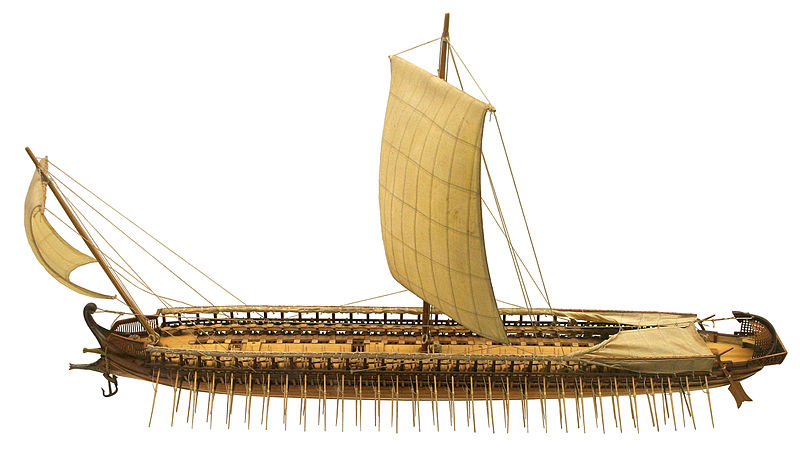
To be specific: Feser has frequently accused the Intelligent Design movement of holding the same mechanistic view of life as the neo-Darwinian evolutionists whose views they criticize – a view which Feser, as an Aristotelian Thomist, rejects as radically mistaken, as it ignores the fact that a living thing possesses certain built-in goals which are wholly contained within it and which benefit it. Now, Intelligent Design proponents have a wide range of views, and I have previously argued, on several occasions, that the Intelligent Design movement is not tied to any mechanistic philosophy. Feser insists, however, that the whole case for ID, which Professor William Dembski makes in his book, The Design Revolution, is based on a faulty analogy between living organisms (such as oak trees) and human artifacts (such as ships). Feser argues that on the contrary, the teleology of an oak tree is fundamentally different from that of a ship (as indeed it is) and that therefore the analogy is a bad one (which it is not). Hence the title of this post. In this essay, I will be arguing that Feser has in fact innocently misread Professor Dembski’s views on teleology. The misreading is a pardonable one, but I would like to propose a more charitable and (I believe) more sensible construal of Dembski’s views on the subject. In particular, the point which Feser thinks Dembski was making about ships and oak trees is quite a different one from the point he was actually making. I shall also argue that a living thing’s being designed is perfectly compatible with it having built-in, goal-directed processes that terminate in and benefit the living thing itself (i.e. immanent final causation, in Aristotelian terminology).
The concession I’m seeking from Professor Feser is an acknowledgment that there is in fact nothing in Dembski’s writings that ties the Intelligent Design movement to the philosophy of mechanism, and that Professor Dembski’s writings, properly understood, are perfectly compatible with an Aristotelian-Thomistic view of what it means for something to be alive.
Read More ›
David Tyler reports that “The earliest pterobranch reveals stasis”: A modern-day pterobranch genus is Rhabdopleura. An informative description is provided here. Comparing the new fossil and Rhabdopleura leads to the exclamation: “You don’t look a day over 500 million years. You and Rhabdopleura could be sisters”. The detail has led to comments such as this from co-author Professor David Siveter: “Amazingly, it has exceptionally preserved soft tissues — including arms and tentacles used for feeding — giving unrivalled insight into the ancient biology of the group.” The significant finding is that the earliest fossil hemichordate zooid looks remarkably similar to Rhabdopleura.”Galeaplumosus abilus demonstrates stasis in pterobranch morphology, mode of coenecium construction, and probable feeding mechanism over 525 million years.” The Read More ›