Uncommon Descent Serving The Intelligent Design Community
Author

vjtorley

Of Pegasus and Pangloss: Two Recurring Fallacies of Skeptics

(This is a sequel to my previous post in response to Professor Anthony Grayling, entitled Is the notion of God logically contradictory?)

In a recent short essay, entitled God and Disaster, Professor Anthony Grayling, a leading atheist philosopher and Professor of Philosophy at Birkbeck College, University of London, lamented the loss of life from the recent earthquake in Japan and the tsunami that followed it. He then went on to voice his perplexity at television reports of people going to church after the massive earthquake which hit Christchurch, New Zealand, on February 22, killing over 200 people. Grayling concluded by wondering how such people could believe in such an “incoherent fiction” as the idea of a Deity. “This,” he wrote, “is a perennial puzzle.”

Before I address the substance of Professor Grayling’s essay, I’d like readers to keep one simple question uppermost in their minds: exactly what does Grayling want God to do, in order to prevent human suffering?

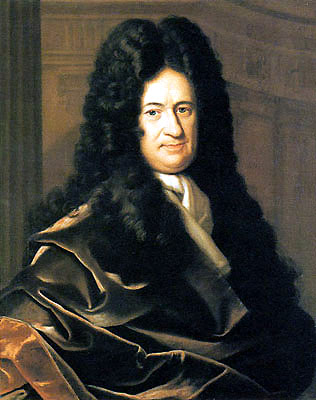
Let me begin with a short word about myself. Like Professor Grayling, I possess a Ph.D. in philosophy. Unlike him, I live and work in Japan, and I was working in Yokohama, Japan, when the earthquake struck on Friday, March 11th at 2:46 p.m. local time. After the quake hit, I spent the night with several hundred people in a shopping mall near Yokohama station, as the trains had stopped running. On the Sunday after the quake, I also attended my local church, where the congregation is almost entirely Japanese. Despite the tragic loss of life – the death toll is expected to exceed 20,000 – the earthquake did not weaken my belief in God. It did, however, reinforce my conviction that attempts to rationalize suffering – such as Leibniz’s optimistic assertion that we live in the best of all possible worlds, which Voltaire savagely satirized in his novel Candide – are fundamentally wrong-headed. Whole towns were swept away by the tsunami following the quake. The suffering that people experience in disasters is absurd and pointless; on this point, the atheists are surely right.

The views I present in this essay are mine, and I take sole responsibility for them. My aim is to show that two mistaken theological assumptions – the notion that God can do anything imaginable and the notion that God always does things for the best – lie at the heart of the contemporary “New Atheist” insistence that senseless suffering renders belief in God irrational. In passing, I also point out examples of invalid arguments for Darwinian evolution which rely on the assumption that that God can do anything imaginable. Read More ›
Is the notion of God logically contradictory?


Anthony Grayling is Professor of Philosophy at Birkbeck, University of London and a Supernumerary Fellow of St Anne’s College, Oxford. He has a Master of Arts and a Doctor of Philosophy from Oxford, and is a Fellow of the Royal Society of Literature and the Royal Society of Arts. Professor Grayling has written and edited over twenty books on philosophy and other subjects. In addition, he sits on the editorial boards of several academic journals, and for nearly ten years was the Honorary Secretary of the principal British philosophical association, the Aristotelian Society. One would therefore hope that if a man with such a distinguished background were to pen an attack on belief in God, it would be an intelligent critique. But one would be wrong.

In a recent email exchange with Professor Jerry Coyne (an atheist who, to his credit, is at least prepared to entertain the possibility of theism) over at Why Evolution Is True, Anthony Grayling contends that the notion of God is a logical absurdity:

[O]n the standard definition of an infinite, omniscient, omnipotent, benevolent etc being – on inspection such a concept collapses into contradiction and absurdity…

and again:

But ‘god’ is not like ‘yeti’ (which might – so to say: yet? – be found romping about the Himalayas), it is like ‘square circle’.

Now, if Grayling is right, then the implications for Intelligent Design are obvious: the notion of an infinite, omniscient, omnipotent, benevolent Designer can be automatically ruled out.

But has Grayling established his case? Not by a long shot. Read More ›

More Catholic than the Pope?

UPDATE: Since posting this article online, I have received an email from Professor Feser, in which he writes:

I have never accused any ID defender of heresy, and would never do so. To say to a theological opponent “Your views have implications you may not like, including ones that I believe are hard to reconcile with what we both agree to be definitive of orthodoxy” is simply not the same thing as saying “You are a heretic!” Rather, it’s what theologians do all the time in debate with their fellow orthodox believers.

I appreciate this clarification from Professor Feser, and I have therefore changed the title of this post, to make it less inflammatory. (I’ve removed one of the pictures, too.) I apologize for any pain I have caused Professor Feser; however, I should point out that in his latest article, Thomism versus the design argument, Professor Feser wrote: “ID is, from a Thomistic point of view, bad philosophy and bad theology.” Moreover, he approvingly cites Christopher Martin as writing that “The Being whose existence is revealed to us by the argument from design is not God but the Great Architect of the Deists and Freemasons, an impostor disguised as God,” and he later writes that “Paley’s ‘designer’ is really just the god of Deists and Freemasons and not the true God.” I hope the reader will pardon me for drawing the inference that Feser regards Intelligent Design as heretical. If that was not his intention, he really should have said so, very clearly, in his post. I have posted Professor Feser’s clarifying remarks in the interests of journalistic accuracy, and I welcome his statement that he regards the Intelligent Design movement as theologically orthodox.

===============================================

It’s been a long time since my last post at Uncommon Descent. The reason, for readers who may have been wondering, is that I’ve been working on a very long but interesting post aimed at showing, on scientific grounds alone, that a human embryo is just as important, morally speaking, as you or I. Uncommon Descent readers will find it especially interesting, because it employs a line of argument which will be familiar to people who accept Intelligent Design. I’ve nearly finished that post and it will be coming out soon. Several other posts are in the pipeline, so you’ll be hearing a lot from me in the next couple of weeks.

The topic of today’s post is Professor Edward Feser’s latest article, Thomism versus the design argument, over on his Website. The article makes a number of claims about Intelligent Design argument which are either irrelevant or demonstrably false.

Let’s start with Feser’s main beef with design arguments of any kind whatsoever: “The problem with these arguments is rather that they don’t get you even one millimeter toward the God of classical theism, and indeed they get you positively away from the God of classical theism.”

Here’s a simple question for Professor Feser. Which of the following is closest to the God of classical theism?
Read More ›

We hold these truths to be self-evident…

Can you spot the common theme in these historic statements?

“We hold these truths to be self-evident, that all men are created equal, that they are endowed by their Creator with certain unalienable Rights, that among these are Life, Liberty and the pursuit of Happiness.” – Excerpt from the American Declaration of Independence, which was ratified on July 4, 1776.

Men are born and remain free and equal in rights. Social distinctions may be founded only upon the general good.” – Declaration of the Rights of Man and of the Citizen (1789), article 1. The Declaration was approved by the National Constituent Assembly of France, on August 26, 1789.

“Four score and seven years ago our fathers brought forth on this continent a new nation, conceived in liberty and dedicated to the proposition that all men are created equal.” – Excerpt from President Lincoln’s Gettysburg Address, delivered on November 19, 1863.

All human beings are born free and equal in dignity and rights. They are endowed with reason and conscience and should act towards one another in a spirit of brotherhood.” – Universal Declaration of Human Rights (1948), article 1. The Declaration was adopted by the United Nations General Assembly on 10 December 1948 at the Palais de Chaillot, Paris.

“I have a dream that one day this nation will rise up and live out the true meaning of its creed: ‘We hold these truths to be self-evident: that all men are created equal.‘”- Excerpt from the famous ‘I Have a Dream’ speech by Martin Luther King, Jr., delivered on 28 August 1963, at the Lincoln Memorial, Washington D.C.

(Emphases mine – VJT.)

Belief in human equality is a vital part of our democratic heritage. Take this belief away, and the moral foundations of Western civilization immediately collapse, like a house of cards.

Atheists divided

Sad to say, many (perhaps most) of the world’s 25 most influential living atheists don’t seem to share this belief. Specifically, many of these atheists don’t believe that newborn babies have the same moral worth as human adults.
Read More ›

The death of fine-tuning?

The blogosphere is abuzz with reports about a physics paper, Evidence against fine-tuning for life, written by an evangelical Christian physicist named Don Page, professor of physics at the University of Alberta. The paper is surprisingly non-technical and very easy to read. Also worth reading is Dr. Don Page’s non-technical online presentation, Does God so love the multiverse? Professor Page has since rewritten this presentation as a 26-page scientific article, available here.

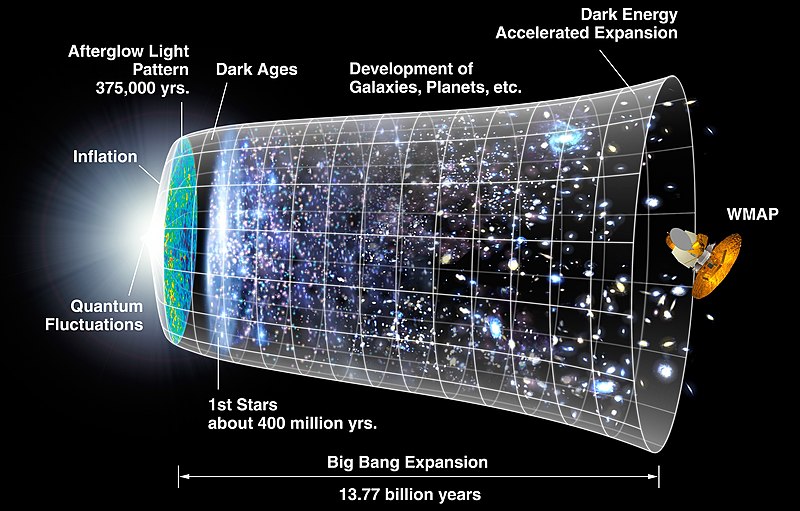
The gist of Professor Page’s latest paper is that in an optimally designed fine-tuned universe, we’d expect the fraction of baryons (particles composed of three quarks, such as protons and neutrons) that form organized structures (such as galaxies and eventually living things), to be maximized. However, the facts do not bear this out. In our universe, the observed value of the cosmological constant, lambda-0, is very slightly positive – about 3.5 x 10^(-122) – whereas in an optimally designed universe, the cosmological constant (lambda) should be very slightly negative – somewhere between zero and minus 3.5 x 10^(-122):
Read More ›

Newborn babies: not persons, and not fully human – P. Z. Myers

Please respond by 12:01 a.m. on Friday, 21 January 2011 (GMT)

P. Z. Myers is one of the 25 most influential living atheists. He is also on record as saying that he doesn’t believe that newborn babies are fully human, and he makes it clear that he doesn’t regard them as persons, either. Almost no-one noticed when P. Z. Myers made these utterances, because they were made in a comment on one of his recent posts. (See here for P.Z. Myers’ post, here for one reader’s comment and here for P. Z. Myers’ reply, in which he makes his own views plain.) So, what exactly did P. Z. say? In response to a reader who claimed that there is one very easily defined line between personhood and non-personhood – namely, birth – P. Z. Myers replied:

Nope, birth is also arbitrary, and it has not been even a cultural universal that newborns are regarded as fully human.

I’ve had a few. They weren’t.

Let me state at the outset that I have no doubt that P. Z. Myers is a good father; but that is not the issue here. His views on newborn babies are the issue.

For the benefit of readers, here is a list of the 25 most influential living atheists:

Richard Dawkins, Sam Harris, Christopher Hitchens, Daniel Dennett, Stephen Hawking, Steven Pinker, Michael Shermer, Peter Singer, Steven Weinberg, Paul Kurtz, Lawrence Krauss, Edward O. Wilson, P. Z. Myers, James Randi, Jennifer Michael Hecht, Peter Atkins, John Brockman, Philip Pullman, Barbara Forrest, David Sloan Wilson, Ray Kurzweil, William B. (“Will”) Provine, Kai Nielsen, Susan Blackmore and Richard Carrier.

The purpose of my post today is to ask each of the 25 most influential living atheists five simple questions:

(a) Do you believe that a newborn baby is fully human? Yes/No (please see Question 1 below if you find it difficult to give a clear answer to this question).

(b) Do you believe that a newborn baby is a person? Yes/No (please see Questions 1 and 2 below if you find it difficult to give a clear answer to this question).

(c) Do you believe that a newborn baby has a right to life? Yes/No (please see Questions 1 and 3 below if you find it difficult to give a clear answer to this question).

(d) Do you believe that every human person has a duty towards newborn babies, to refrain from killing them? Yes/No (please see Questions 1, 4, 5 and 6 below if you find it difficult to give a clear answer to this question).

(e) Do you believe that killing a newborn baby is just as wrong as killing an adult? Yes/No (please see Questions 1 and 7 below if you find it difficult to give a clear answer to this question).

I’m asking these questions, because I think the world has a right to know how the 25 most influential living atheists view newborn babies. The moral status of newborn babies is an ethical issue of vital importance, and I’d like to know what the world’s leading atheists think about this subject. Because I’m a generous person, I’m giving them four days to answer my five simple questions. The countdown ends at 12:01 a.m. (one minute past midnight) on Friday, 21 January, 2011, Greenwich Mean Time (UTC). I think that’s quite enough time for the word to get around, and for people to respond.

And in case some of these atheists object that they’re too busy to respond, let me state that I will happily accept, in good faith, responses written on their behalf by friends, acquaintances, personal assistants or people who have read their books and can quote relevant passages, complete with publication details and page numbers. If someone responding on behalf of an influential atheist wishes to preserve his/her anonymity, he/she is free to use a pseudonym. Please note, however, that I will not be imputing views to influential atheists on the basis of anonymous responses. That would be irresponsible.

To respond to my five questions, all you need to do is write a brief comment at the end of this post – for example:
(a) Yes. (b) No. (c) No. (d) No. (e) No.
Note: If you are replying on behalf of an influential atheist, please list his/her name, your name (if you are willing to give it) and your connection with the atheist in question.

Here are my answers to some questions which I anticipate that people will ask about my quiz: Read More ›

Why this universe? Good question. (Part Two of a reply to Professor Keith Parsons)

In my previous post, I drew readers’ attention to an online essay by Keith Parsons, Professor of Philosophy at the University of Houston-Clear-Lake, in which he outlined his reasons for rejecting the case for a Divine Creator. I thought Parsons’ essay, entitled No Creator Need Apply: A Reply to Roy Abraham Varghese (2006), merited special comment, because it’s one of the most thoughtful critiques of the cosmological argument that I’ve ever read. I was even more impressed by Professor Paul Herrick’s brilliant rebuttal, entitled, Job Opening: Creator of the Universe – A Reply to Keith Parsons (2009). I then announced that I would be addressing a few issues that Herrick did not have time to discuss in depth in his rebuttal of Parsons’ essay.

The topic of my last post, was the question, “Why isn’t the moon made of green cheese?” which Parsons put forward as an example of a ridiculous question. I argued that this question is in fact a perfectly reasonable one, and I proposed no less than three scientific answers to this question, each suited to a different level of understanding. In this post, I examine the question, “Why this universe?” or putting it another way, “Why doesn’t some other universe exist?” As we will see, Professor Parsons’ attempt to demonstrate that this question is an unreasonable one, fails.
Read More ›

Why the moon isn’t made of green cheese (Part One of a reply to Professor Keith Parsons)


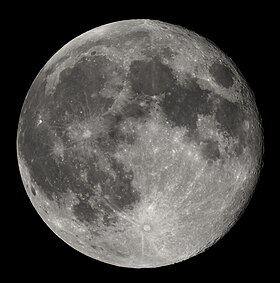
Wikipedia image of the full moon, taken from Belgium. Courtesy of Luc Viatour.

A few months ago, Keith Parsons, Professor of Philosophy at the University of Houston-Clear-Lake, announced that after having taught the philosophy of religion for a decade, during which time he managed to publish over twenty books and articles on the subject, he had decided that this particular field of philosophy was no longer worth teaching, as there was no good case to be made for the existence of God:

I have to confess that I now regard “the case for theism” as a fraud and I can no longer take it seriously enough to present it to a class as a respectable philosophical position – no more than I could present intelligent design as a legitimate biological theory. BTW, in saying that I now consider the case for theism to be a fraud, I do not mean to charge that the people making that case are frauds who aim to fool us with claims they know to be empty. No, theistic philosophers and apologists are almost painfully earnest and honest; I don’t think there is a Bernie Madoff in the bunch. I just cannot take their arguments seriously any more, and if you cannot take something seriously, you should not try to devote serious academic attention to it. I’ve turned the philosophy of religion courses over to a colleague. (Emphasis mine – VJT.)

Parsons’ choice of words – “I now regard ‘the case for theism’ as a fraud” – ignited a firestorm of controversy Read More ›

How FIRE can help in the fight for academic freedom on campus

“Congress shall make no law respecting an establishment of religion, or prohibiting the free exercise thereof; or abridging the freedom of speech, or of the press; or the right of the people peaceably to assemble, and to petition the Government for a redress of grievances.” (First Amendment to The United States Constitution.)

Did you know that two-thirds of public universities and private colleges in the United States have official policies that clearly violate the First Amendment? Some examples:
Read More ›

Neuro-politico-nonsense

Well, it seems that the silly season is upon us. A study conducted earlier this month by the University College of London’s Institute of Cognitive Neuroscience (directed by Professor Geraint Rees) reveals a startling correlation between between people’s political beliefs and the size of two specific regions of their brains: the amygdala and the anterior cingulate cortex. Among those who describe themselves as liberal, or left wing, the gray matter of the anterior cingulate cortex is significantly thicker; whereas for those who regard themselves as conservative, or right wing, the amygdala is relatively larger. The study has been widely reported in the press, but has yet to be published. Believe it or not, the study was commissioned by a British actor and comedian, Colin Firth, who wanted to know if it was possible to identify people’s political belief from the structure of their brains. For example, could scientists predict whether a person was left or right wing, just by looking at their brains?

The general standard of reporting in the media on Professor Rees’s study has been so poor that I thought readers would benefit from a more critical analysis. Read More ›

A better kind of beauty, or: Why some people mistakenly reject Intelligent Design as unaesthetic

This post is intended as a follow-up on the post, Children of a better god? by idnet.com.au.

I would like to suggest that the real reason why some people (including many Christians) dislike Intelligent Design is an aesthetic one. Their notion of beauty is overly influenced by mathematics: they define beauty as a delicate and interesting balance between variety (or plenitude) and simplicity (or economy). This kind of thinking goes back to Leibniz and beyond. Both qualities are needed: a very simple world containing just one object would be simple but intolerably boring, while a world lacking simple laws would appear messy and mathematically inelegant. It follows that according to this account of beauty, a beautiful world should contain many different kinds of things, governed by just a few underlying laws or principles. The variety of elements in the periodic table is a good example: it is aesthetically pleasing, because they can all be explained in terms of just a few underlying principles: the laws of physics and chemistry, whose underlying mathematical simplicity is evident in their regularity, symmetry and order. Many people would like to think that living things possess the same kind of beauty: an ideal balance between variety and underlying simplicity. Because the underlying laws are mathematically simple in this model of beauty, these people reason that the act of generating things that possess the attribute of beauty should be a simple one. Neo-Darwinism appeals to them as a scientific theory, because it purports to account for the variety of living things we see today, on the basis of a few simple underlying principles (natural selection acting on variation arising stochastically, without any foresight of long-term goals).

But living things aren’t like the periodic table. The phenomenon that characterizes them is not order but complexity – and complexity of a particular kind, at that. The beauty you see in a living cell is more like the beauty of a story than the beauty of crystals, which are highly ordered but still not very interesting, even when you contemplate them in all their variety. Read More ›

Professor Jerry Coyne on why Intelligent Design should be taught in public schools

For anyone who might have choked on their coffee while reading that headline, let me state up-front that Professor Coyne has not undergone an overnight conversion. Instead, what he has done is give the Intelligent Design movement a perfect Christmas gift. Santa Claus himself couldn’t have picked a better one. And here it is: an airtight legal argument for allowing Intelligent Design to be taught in public schools.

But wait, there’s more! A second present from Professor Coyne! An open admission that public schools should be teaching our kids that they are machines. Thank you, Professor Coyne!
Read More ›

Professor Raymond Tallis on good and bad arguments for atheism

I have often found that the best refutations of arguments for atheism are written by atheists. Raymond Tallis is a splendid example of this rule. In an article entitled “Why I am an atheist,” in Philosophy Now, May/June 2009, 73:47-48 (click here or here to read online), he manages to slay no less than three arguments for atheism, before advancing two much better arguments of his own. Interestingly, however, some of the best online refutations of Tallis’s own arguments for atheism have been written by …. you guessed it, atheists.

The relevance of all this to Intelligent Design should be obvious. Arguments for Intelligent Design are based not only on the existence of complex specified information in living organisms, but also on the fine-tuning of the cosmos. If there were a cosmic Creator, then it would have to be a God of some sort. But if there were compelling or even strong arguments against the existence of God, they would also be arguments against at least the cosmic version of Intelligent Design.

Without further ado, let’s have a look at what Tallis calls the bad arguments for atheism. Read More ›

Designed or not? You decide.

Sometimes a negative result in science is just as useful as a positive one. I believe that applies to Intelligent Design as well. Today I’m going to talk about a structure found in birds, which may or may not have been designed. Not being a biologist, I’d like to hear readers’ opinions before I make up my mind.

There are structures found in Nature which were obviously designed. I blogged recently about one recently in my post, The video that proves Intelligent Design: the ATP synthase enzyme. You can watch the 86-second video here.

There are also many structures in Nature which, we can confidently assume, were not designed. In his book, The Edge of Evolution (Free Press, 2007, pp. 78-80), Professor Michael Behe makes a convincing case that the antifreeze proteins found in Antarctic fish can be accounted for in terms of Darwinian evolution. No need to invoke design here.

And then there are the head scratchers that leave us all wondering. One such example is the syrinx. That’s the name for the vocal organ of birds, which enables them to produce sounds, despite the fact that they lack the vocal chords possessed by mammals. The syrinx comes in varying degrees of complexity, and the Australian lyrebird, which possesses an extraordinary ability to mimic sounds, has the most complex syrinx of any bird. How good is it? If you want to find out, I suggest that you click on this Absolutely Amazing BBC link and watch the two videos of the Superb lyrebird (the larger of the two species of lyrebird). One of these videos features the naturalist David Attenborough. And if you click here, you can also listen to Chook, a male lyrebird at Adelaide Zoo, imitating the sound of construction equipment. Here’s what Wikipedia has to say about the lyrebird’s ability for mimicry:
Read More ›

Taking Manhattan out of the Apple?

The Manhattan Declaration, a manifesto asserting the sanctity of life, traditional marriage, and liberty of conscience, has been discussed previously on Uncommon Descent (see here and here ). Well, it’s in the news again.

I expect many readers will have heard by now that Apple has removed the Manhattan Declaration iPhone/iPad application from the iTunes Store. The Declaration – a Christian statement drafted in 2009 that supports religious liberty, traditional marriage and right to life issues – now has 479,532 supporters. The Manhattan Declaration app was accepted by Apple and rated as a 4+, meaning that it contained no objectionable material.

Last month, around Thanksgiving, the Manhattan Declaration application for iPhones and iPads was suddenly dropped, after the activist group Change.org gathered more than 7,700 signatures for a petition, after claiming that the application promoted “anti-gay” bigotry and “homophobia,” and that it attacked both “equal rights and the right of women to control their own bodies.” Under a headline entitled, “Tell the Apple iTunes Store to remove anti-gay, anti-choice iPhone application,” the petition drive concluded with the words: “Let’s send a strong message to Apple that supporting homophobia and efforts to restrict choice is bad business.

The petition seems to have had the desired effect. Catholic News Agency contacted Apple on December 2 for the reason behind its decision to pull the Manhattan Declaration application. Spokesperson Trudy Muller said via phone that the company “removed the Manhattan Declaration app from the App Store because it violates our developer guidelines by being offensive to large groups of people.” Strange. Why the 4+ rating, then?

I believe in calling spade a spade, so I’ll just come right out and say it: Change.org lied to its readers and to Apple about the purpose of the Manhattan Declaration.
Read More ›