Uncommon Descent Serving The Intelligent Design Community

At Mind Matters News: 2. Infinity illustrates that the universe has a beginning

Categories
Big Bang
Intelligent Design
Logic and Reason
Mathematics
Share
Facebook
Twitter/X
LinkedIn
Flipboard
Print
Email
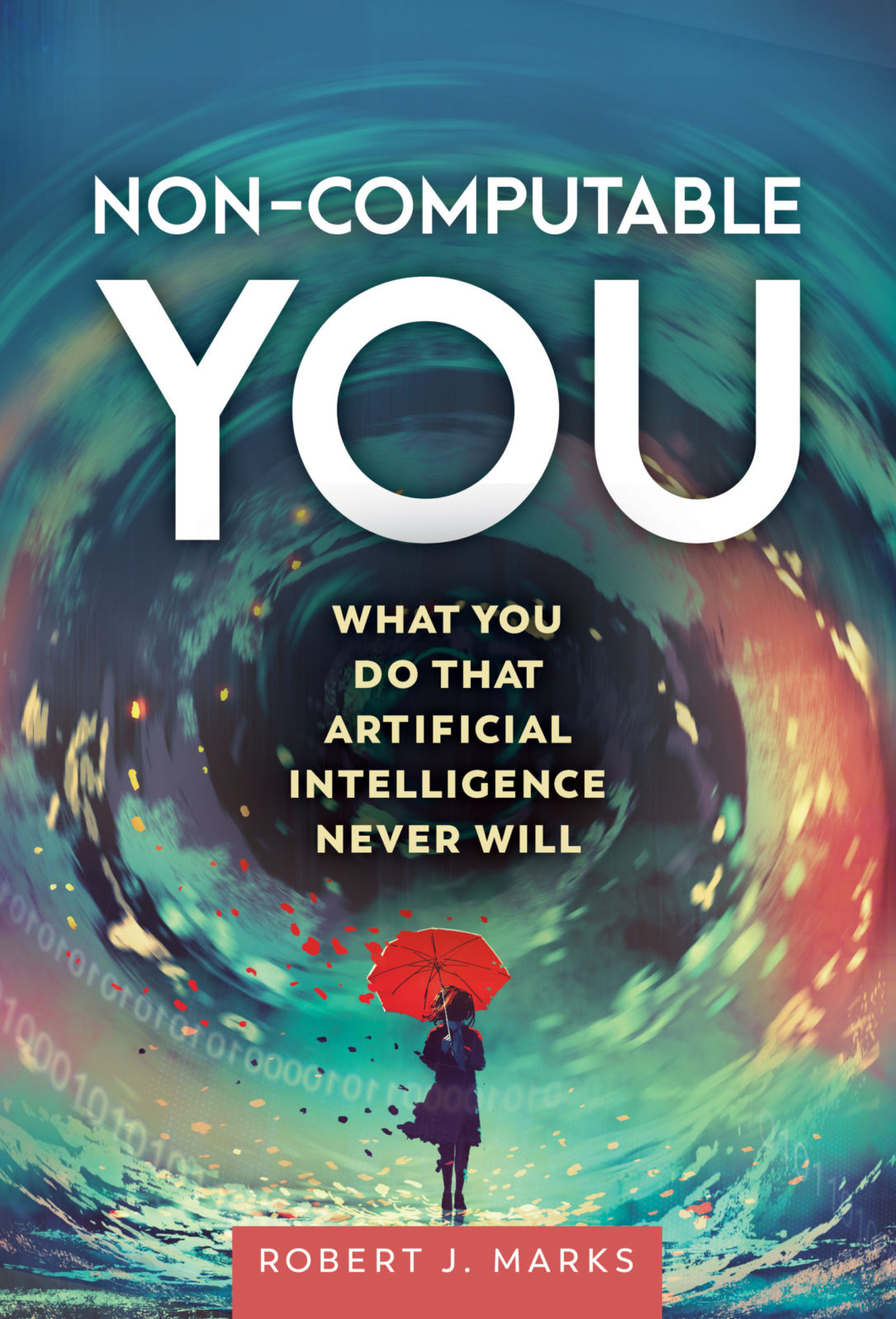
(Non-Computable You (Discovery Institute Press, 2022) by Robert J. Marks is available here.)

Robert J. Marks: The logical consequences of a literally infinite past are absurd, as a simple illustration will show:

The story starts with Slow Sam who is a very slow writer. Sam is writing his autobiography. But it takes Sam a week to write the account of a single day of his life. Poor Sam. He is falling further and further behind in his writing.

But in the world of infinities this need not be the case. If the universe has always been in existence and Slow Sam has been writing for this entire infinite time, then the number of days and number of weeks today — counting from an infinite time ago — are the same. The consequence of this is crazy. If he has been writing forever, Sam can have completed his autobiography if he dies today!

This conclusion is, of course, ludicrous. Although not a definitive mathematical proof that the universe was created a finite time ago, the observation is solid evidence that our universe had a beginning. Otherwise, we would have to deal with infinity weirdnesses like Slow Sam’s autobiography.

To avoid the ridiculousness of Slow Sam finishing his autobiography, we must conclude the universe had a beginning.

Robert J. Marks, “2. Infinity illustrates that the universe has a beginning” at Mind Matters News


Takehome: The absurdities that an infinite past time would create, while not a definitive mathematical proof, are solid evidence that our universe had a beginning.

Here’s Part 1: Why infinity does not exist in reality. A few examples will show the absurd results that come from assuming that infinity exists in the world around us as it does in math. In a series of five posts, I explain the difference between what infinity means — and doesn’t mean — as a concept.

You may also wish to read: Yes, you can manipulate infinity in math. The hyperreals are bigger (and smaller) than your average number — and better! (Jonathan Bartlett)

Comments
Perhaps Davies and Walker will help:
In physics, particularly in statistical mechanics, we base many of our calculations on the assumption of metric transitivity, which asserts that a system’s trajectory will eventually [--> given "enough time and search resources"] explore the entirety of its state space – thus everything that is phys-ically possible will eventually happen. [--> in quasi infinite time, quasi infinite processes filling the space of possibilities will happen] It should then be trivially true that one could choose an arbitrary “final state” (e.g., a living organism) and “explain” it by evolving the system backwards in time choosing an appropriate state at some ’start’ time t_0 (fine-tuning the initial state). In the case of a chaotic system the initial state must be specified to arbitrarily high precision. But this account amounts to no more than saying that the world is as it is because it was as it was, and our current narrative therefore scarcely constitutes an explanation in the true scientific sense. We are left in a bit of a conundrum with respect to the problem of specifying the initial conditions necessary to explain our world. A key point is that if we require specialness in our initial state (such that we observe the current state of the world and not any other state) metric transitivity cannot hold true, as it blurs any dependency on initial conditions – that is, it makes little sense for us to single out any particular state as special by calling it the ’initial’ state. If we instead relax the assumption of metric transitivity (which seems more realistic for many real world physical systems – including life), then our phase space will consist of isolated pocket regions and it is not necessarily possible to get to any other physically possible state (see e.g. Fig. 1 for a cellular automata example).
[--> or, there may not be "enough" time and/or resources for the relevant exploration, i.e. we see the 500 - 1,000 bit complexity threshold at work vs 10^57 - 10^80 atoms with fast rxn rates at about 10^-13 to 10^-15 s leading to inability to explore more than a vanishingly small fraction on the gamut of Sol system or observed cosmos . . . the only actually, credibly observed cosmos]
Thus the initial state must be tuned to be in the region of phase space in which we find ourselves [--> notice, fine tuning], and there are regions of the configuration space our physical universe would be excluded from accessing, even if those states may be equally consistent and permissible under the microscopic laws of physics (starting from a different initial state). Thus according to the standard picture, we require special initial conditions to explain the complexity of the world, but also have a sense that we should not be on a particularly special trajectory to get here (or anywhere else) as it would be a sign of fine–tuning of the initial conditions. [ --> notice, the "loading"] Stated most simply, a potential problem with the way we currently formulate physics is that you can’t necessarily get everywhere from anywhere (see Walker [31] for discussion). ["The “Hard Problem” of Life," June 23, 2016, a discussion by Sara Imari Walker and Paul C.W. Davies at Arxiv.]
That should clear up the point. KF PS, for more on the anthropic principle from Lewis and Barnes https://uncommondescent.com/intelligent-design/hitchhikers-guide-authors-puddle-argument-against-fine-tuning-and-a-response/#comment-729507kairosfocus
July 5, 2022
July
07
Jul
5
05
2022
03:52 PM
3
03
52
PM
PST
"Infinite past time does not in itself demand that everything possible happened" You don't understand infinity. You think you can just give it properties that are finite. Confusion. Andrewasauber
July 5, 2022
July
07
Jul
5
05
2022
03:32 PM
3
03
32
PM
PST
"Consider “one-bounce” cosmologies," We're right into full-blown fantasy . Yawn. It was inevitable. Andrewasauber
July 5, 2022
July
07
Jul
5
05
2022
03:14 PM
3
03
14
PM
PST
"If I have a car but there’s no gas in the tank, I can try to start it an infinite number of times and still get nothing." Relatd, Just keep trying till gas is put in the tank. You have an infinite amount of tries. In an infinity gas will be in the tank an infinite amount of times. Andrewasauber
July 5, 2022
July
07
Jul
5
05
2022
03:11 PM
3
03
11
PM
PST
Silver: "You cannot traverse an infinity and then expect something else to happen." Consider "one-bounce" cosmologies, where the present expansion of the universe was preceded by a single, infinitely long contraction. The present was preceded by an infinite past, but after that, there was only one bounce, one history of human life, etc. Infinite past time does not in itself demand that everything possible happened, let alone an infinite number of times.capalas
July 5, 2022
July
07
Jul
5
05
2022
03:10 PM
3
03
10
PM
PST
Capalas
An infinite number of attempts at A failed because the proper conditions were not (yet) present.
There's no "yet" in an infinity. You can't add anything to an infinity. In an infinite number of attempts, you can't add one more. If I tell you, "drive an infinite number of miles and then just add one more mile" you cannot do it. So, you can't wait for something that "hasn't happened yet". You cannot traverse an infinity and then expect something else to happen. Everything has already happened. You can't get to a present tense and then just add another day to a beginningless infinity. I notice by your phrasing you are confusing a mathematical conception of infinity with "actual infinity". The universe is real. It is something that exists. It's not just a mathematical construct. A universe without a beginning would require the movement across an infinite distance in time to arrive at today. No mathematical propositions can change that. It's just not possible in real life.Silver Asiatic
July 5, 2022
July
07
Jul
5
05
2022
02:25 PM
2
02
25
PM
PST
SA at 14, If I have a car but there's no gas in the tank, I can try to start it an infinite number of times and still get nothing.relatd
July 5, 2022
July
07
Jul
5
05
2022
02:08 PM
2
02
08
PM
PST
"Including this same internet thread." Jerry, Weird. Andrewasauber
July 5, 2022
July
07
Jul
5
05
2022
02:00 PM
2
02
00
PM
PST
Everything happened an infinite amount of times.
Including this same internet thread.jerry
July 5, 2022
July
07
Jul
5
05
2022
01:57 PM
1
01
57
PM
PST
See you can't invoke infinity and then say something didn't happen in it. Everything happened an infinite amount of times. Andrewasauber
July 5, 2022
July
07
Jul
5
05
2022
01:54 PM
1
01
54
PM
PST
"And suppose in the infinite past P was always less than 1" Couldn't be. In an infinite past there would be an infinite number of moments when P=1 and P>1 Andrewasauber
July 5, 2022
July
07
Jul
5
05
2022
01:37 PM
1
01
37
PM
PST
By definition if a thing does not happen in an infinite number of attempts, then it is “not possible”. Therefore, in an infinite number of attempts, everything that could possibly happen must happen.
This is a simple explanation of what I was trying to say. Now take this to the next step and try to understand what is then possible. The answer is that very shortly there will be an infinite number of unlikely scenarios. One of the most interesting conclusions will be that an infinite number of entities with infinite intelligence and power must exist. Again I highly recommend the Asimov short story, "The Final Question" which is about this very possibility. But with a twist. It was Asimov's favorite thing he wrote. https://www.physics.princeton.edu/ph115/LQ.pdfjerry
July 5, 2022
July
07
Jul
5
05
2022
01:25 PM
1
01
25
PM
PST
Silver at 14 "And why should an infinite universe entail that “everything possible must have happened”? "By definition, if a thing does not happen in an infinite number of attempts, then it is “not possible”. Therefore, in an infinite number of attempts, everything that could possibly happen must happen. Not so. Suppose event A can happen only if, say, some universal property P (mean density, or temperature, etc.) > 1. And suppose in the infinite past P was always less than 1 . Then simply because A is possible (i.e., P might become >1 in the future) does not entail A must have already happened. An infinite number of attempts at A failed because the proper conditions were not (yet) present.capalas
July 5, 2022
July
07
Jul
5
05
2022
01:22 PM
1
01
22
PM
PST
Capalas at 15, God has no beginning and no end. He is the same yesterday, today and tomorrow.relatd
July 5, 2022
July
07
Jul
5
05
2022
01:07 PM
1
01
07
PM
PST
Capalas, You are interpreting Bible passages in light of your own understanding. Yours might not be the correct interpretation. Andrewasauber
July 5, 2022
July
07
Jul
5
05
2022
12:59 PM
12
12
59
PM
PST
Asauber at 7. "God doesn’t have any kind of past or future. His creation does. Finite." The Biblical God has a present, past, and future ("who is, and who was, and who is to come" Rev.1:4), and, moreover, is "from everlasting to everlasting" (Ps.90.2), which means a beginningless past and an endless future. Infinite in time in both directions.capalas
July 5, 2022
July
07
Jul
5
05
2022
12:48 PM
12
12
48
PM
PST
And why should an infinite universe entail that “everything possible must have happened”?
By definition if a thing does not happen in an infinite number of attempts, then it is "not possible". Therefore, in an infinite number of attempts, everything that could possibly happen must happen.Silver Asiatic
July 5, 2022
July
07
Jul
5
05
2022
12:36 PM
12
12
36
PM
PST
"A journey of a thousand miles" Finite. "begins with a single step." Finite. Andrewasauber
July 5, 2022
July
07
Jul
5
05
2022
12:26 PM
12
12
26
PM
PST
CD at 11, 'A journey to infinity would take an infinite number of steps, so you can forget about that one.' -- The Me De Jingrelatd
July 5, 2022
July
07
Jul
5
05
2022
12:25 PM
12
12
25
PM
PST
"A journey of a thousand miles begins with a single step.” — The Dao De Jingchuckdarwin
July 5, 2022
July
07
Jul
5
05
2022
12:10 PM
12
12
10
PM
PST
"But why not N+1? or NxN? If you can’t specify a precise upper limit for N, does this not entail that N is infinite?" If the imagination is where these exercises exclusively take place, then it's all... well... imaginary, and you haven't demonstrated anything. Andrewasauber
July 5, 2022
July
07
Jul
5
05
2022
11:36 AM
11
11
36
AM
PST
Jerry at 8, Insufficient data. This is wild speculation at best. No actual answer is possible.relatd
July 5, 2022
July
07
Jul
5
05
2022
11:28 AM
11
11
28
AM
PST
And why should an infinite universe entail that “everything possible must have happened”?
Explain why something did not happen. At any point in time, there is an infinite past. This means every possible combination of matter and energy would at some time happen. If you disagree, then explain why it didn't happen? Remember one has postulated an infinite amount of time but has ruled out certain combination as possible.
Then there must a maximum possible past age, say N. But why not N+1?
You just answered your question. There is nothing larger because nothing existed then. Even if one could imagine a larger number, it does not relate to anything real. Similarly someone says give me an N and I will give you a larger N which N+1. The only problem is that while N may point to something, there comes a point where N+1 will not point to anything. Also if there is a finite amount of time, then one will run out of opportunities to say there is a N+1 thus, there will be no larger number than N. In other words in order to postulate an infinite number of numbers, there has to be infinite time to do it.jerry
July 5, 2022
July
07
Jul
5
05
2022
11:24 AM
11
11
24
AM
PST
"If actual infinity is to be banned, does this mean that God has a finite past?" God doesn't have any kind of past or future. His creation does. Finite. Andrewasauber
July 5, 2022
July
07
Jul
5
05
2022
11:11 AM
11
11
11
AM
PST
"I see no logical or mathematical problems with an actual infinite past." Then you aren't being consistently logical. Andrewasauber
July 5, 2022
July
07
Jul
5
05
2022
11:08 AM
11
11
08
AM
PST
There seems to be a lot of confusion about infinity. I see no logical or mathematical problems with an actual infinite past. Infinite sets that can be put into a 1-1 correspondence are not necessarily identical. Every week Sam runs 6 days behind, so if he has been writing from infinity, then he is infinitely far behind in his book. Of course, this assumes that the past had a specific beginning point, which an infinite past denies. And why should an infinite universe entail that "everything possible must have happened"? Suppose there were a proof that the past is finite . Then there must a maximum possible past age, say N. But why not N+1? or NxN? If you can't specify a precise upper limit for N, does this not entail that N is infinite? If actual infinity is to be banned, does this mean that God has a finite past? or a limited knowledge of the future?capalas
July 5, 2022
July
07
Jul
5
05
2022
10:58 AM
10
10
58
AM
PST
Infinity is what people who don't like the finite (reality) appeal to. It's a psychological reaction. Andrewasauber
July 5, 2022
July
07
Jul
5
05
2022
06:37 AM
6
06
37
AM
PST
Everyone misses the obvious. If the universe was infinite, or if there are/were an infinite number of universes, everything physically possible must have happened. If you disagree, please explain why? Then exploring the possibilities is what destroys this concept not absurd examples like Sam and his biography.jerry
July 5, 2022
July
07
Jul
5
05
2022
04:36 AM
4
04
36
AM
PST
You cannot get to the end of an infinite future. How can you possibly get to today from an infinite past?Latemarch
July 5, 2022
July
07
Jul
5
05
2022
04:16 AM
4
04
16
AM
PST
Traversal of a transfinite span in stepwise stages is an infeasible supertaskkairosfocus
July 5, 2022
July
07
Jul
5
05
2022
01:43 AM
1
01
43
AM
PST
1 2

Leave a Reply