Uncommon Descent Serving The Intelligent Design Community

Darwinism: Why its failed predictions don’t matter

Categories
Culture
Darwinism
Intelligent Design
Science
Share
Facebook
Twitter/X
LinkedIn
Flipboard
Print
Email

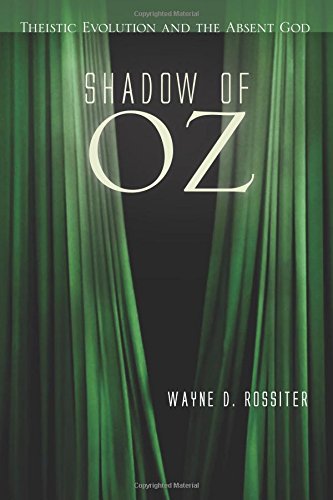
From Wayne Rossiter, author of Shadow of Oz: Theistic Evolution and the Absent God: at his book blog:

It’s an odd pattern. It was this problem that came to mind as I recently revisited Living with Darwin: Evolution, Design and the Future of Faith, by Philip Kitcher. Kitcher is a philosopher at Columbia University, and he specializes on biology. His book was published by Oxford University Press, and was the recipient of the 2008 Lannan Notable Book Award. We should take his views seriously.

His book begins with a forceful assertion: “From the perspective of almost the entire community of natural scientists world-wide, this continued resistance to Darwin is absurd. Biologists confidently proclaim that Darwin’s theory of evolution by natural selection is as well established as any of the major theories in contemporary science.”

This is not really a prediction. But, it is a statement that was wrong even before it was penned. More.

People who are committed to intellectual integrity in their own work often miss this central point: Once a bully pulpit like Darwinism has been established the occupant does not need to be correct, accurate or even useful. He can be a drag on the system. He can lead the march into degenerate science. He can, incidentally, fix you good if you try to offer an alternative view however grounded.

Bullies are not dislodged by being shown to be wrong, only by being successful opposed. Efforts so far have been commendable but quite honestly, more is needed.

See also: Biologist Wayne Rossiter on Joshua Swamidass’ claim that entropy = information

Follow UD News at Twitter!

Comments
Phinehas @403
But what is the probability that you and I are both crazy?
Infinitesimal, I would say. But then again "improbable things happen all the time." Or do they? :)Origenes
June 6, 2017
June
06
Jun
6
06
2017
09:48 AM
9
09
48
AM
PST
The simplest question that I can possibly imagine asking. I flip a coin, and get heads. Am I justified in saying "The probability of that having happened is 1/2?" Phinehas and Origenes, can you just focus on and answer that question, please.jdk
June 6, 2017
June
06
Jun
6
06
2017
09:46 AM
9
09
46
AM
PST
Origenes @374 Thanks! I appreciate your contribution as well. I feel like I totally grok where you are coming from and completely agree. It seems like a rather obvious perspective to me, and I would likely start doubting my own sanity if I were the only one who saw it. But what is the probability that you and I are both crazy? :)Phinehas
June 6, 2017
June
06
Jun
6
06
2017
09:42 AM
9
09
42
AM
PST
DaveS @398
DaveS: Do you accept the truth of the statement “All outcomes in the experiment of drawing a random 13-card permutation are equally likely”?
Yes of course. And "All outcomes" is, in fact, a (compressed) list of all sextillion possible specifications. Here is a snapshot:
..... Specification 200645: king of hearts, 10 of spades, 3 of clubs, jack of clubs, 9 of diamonds, queen of hearts, 4 of clubs, 8 of clubs, 10 of hearts, king of diamonds, 6 of diamonds, queen of diamonds, and an ace of spades Specification 200646: king of hearts, .....
See #401, Phinehas has nailed it.Origenes
June 6, 2017
June
06
Jun
6
06
2017
09:34 AM
9
09
34
AM
PST
jdk: This get's to the heart of the equivocation:
Then, when a hand was dealt, I could look at the hand and look at the list, find the match, and say “Oh yes, the probability was 1 in sextillion.” Is that true?
The question is: The probability of what was 1 in a sextillion? 1) The probability of matching that one particular specification? 2) The probability of matching one of the specifications on your list? The equivocation is in supposing that 2 is the same as 1. It is only 2 that has happened in reality (as opposed to theoretically, or in our imagination), unless one of the specifications on the list has been made "particular" before the random event. By writing out all sextillion possible specifications, you appear to be trying to say that a particular outcome has been specified, but in reality, you've only attempted to make all of the possible outcomes "particular" which tends to violate the meaning of the word a bit. In any case, when all possible specifications are "particular," then your probability of "particular" permutations over possible permutations becomes sextillion/sextillion, or 1/1.Phinehas
June 6, 2017
June
06
Jun
6
06
2017
08:47 AM
8
08
47
AM
PST
Origenes, I keep suggested we consider simpler situations. So I repeat, I actually asked the same question in the other thread, which I’ll repeat here: 1. If I study, in theory, what would happen if I create a random sequence by flipping a coin three times, I can figure out what the possible random sequences are (HHH, HHT, etc) and I can figure out the probability of each of those: P(HHH) = 1/8, P{HHT) = 1/8 etc. Is there anything wrong about that sentence? 2. Then, if I actually flip three coins and get HHT, I can say “the probability of that having happened is 1/8. Is there anything wrong about that sentence?jdk
June 6, 2017
June
06
Jun
6
06
2017
08:43 AM
8
08
43
AM
PST
DS:
Rather, he is saying that any time you do the card draw, you are essentially generating a random number between 1 and 4 x 10^21, each of which is expected to occur once every 4 x 10^21 trials.
Yes, but this is not all he is saying. He is equating the random number you generate with a particular number after the fact. But it was not a particular number before being generated. It was undefined. Then, after the random event, Kitcher tries to assign the value of the particular number back to the random number as though a particular number were generated rather than a random one. Generating a random number is not the same as generating a particular number. A random number can be any one of the possible specifications but a particular number can be only one of the specifications. At the time of the random event, it is only a random number that is matched by the event, not a particular number. The probability of matching a random (unspecified) number with a random generation is 1. The probability of matching a particular (specified) number with a random generation is 1/n.Phinehas
June 6, 2017
June
06
Jun
6
06
2017
08:30 AM
8
08
30
AM
PST
Origenes, Do you accept the truth of the statement "All outcomes in the experiment of drawing a random 13-card permutation are equally likely"?daveS
June 6, 2017
June
06
Jun
6
06
2017
08:07 AM
8
08
07
AM
PST
Jdk @395
If I listed all 4 sextillion hands, and wrote down that the probability of each was 1 in 4 sextillion, would that count as an independent specification?
Good question. In fact DaveS' "all permutations of 13 cards" (see #392) is also a 'list' of all 4 sextillion hands. To answer your question, yes it is a independent specification, or rather, it is a list of all possible independent specifications.
Then, when a hand was dealt, I could look at the hand and look at the list, find the match, and say “Oh yes, the probability was 1 in sextillion.”
The probability that you find a match on the list is 1. Try this with one independent specification, then, and only then, you have your 1 in sextillion probability.Origenes
June 6, 2017
June
06
Jun
6
06
2017
08:03 AM
8
08
03
AM
PST
Origenes,
Inexact word usage which fails to distinguish between the following two events:
I don't think I've ever heard of a requirement that this distinction be made. As far as I know, "everyone" accepts the truth of the statement "For every outcome E in the experiment of flipping a fair coin, E occurs about once in every two trials".daveS
June 6, 2017
June
06
Jun
6
06
2017
07:54 AM
7
07
54
AM
PST
I actually asked the same question in the other thread, which I'll repeat here: 1. If I study, in theory, what would happen if I create a random sequence by flipping a coin three times, I can figure out what the possible random sequences are (HHH, HHT, etc) and I can figure out the probability of each of those: P(HHH) = 1/8, P{HHT) = 1/8 etc. Is there anything wrong about that sentence? 2. Then, if I actually flip three coins and get HHT, I can say “the probability of that having happened is 1/8. Is there anything wrong about that sentence?jdk
June 6, 2017
June
06
Jun
6
06
2017
07:19 AM
7
07
19
AM
PST
If I listed all 4 sextillion hands, and wrote down that the probability of each was 1 in 4 sextillion, would that count as an independent specification? Then, when a hand was dealt, I could look at the hand and look at the list, find the match, and say "Oh yes, the probability was 1 in sextillion." Is that true?jdk
June 6, 2017
June
06
Jun
6
06
2017
07:18 AM
7
07
18
AM
PST
DaveS @392:
For all permutations of 13 cards E, E occurs about once in every 4 x 10^21 trials.
Inexact word usage which fails to distinguish between the following two events: (1) For all permutation of 13 cards E — with an independent specification —, E occurs about once in every 4 x 10^21 trials. (2) For all permutation of 13 cards E — with a specification informed by the outcome —, E occurs each and every time.Origenes
June 6, 2017
June
06
Jun
6
06
2017
06:59 AM
6
06
59
AM
PST
Rossiter says:
If your life depended on you dealing yourself a king of hearts, 10 of spades, 3 of clubs, jack of clubs, 9 of diamonds, queen of hearts, 4 of clubs, 8 of clubs, 10 of hearts, king of diamonds, 6 of diamonds, queen of diamonds, and an ace of spades—in that order—you are a dead man. If you dealt a hand every second for the next 1,000,000,000,000,000 years, you would (on average) get that hand once. That’s how the argument is supposed to work.
Since all outcomes in the experiment are equally likely, we can say:
For all permutations of 13 cards E, E occurs about once in every 4 x 10^21 trials.
So whether the experiment is performed in the past, present, or future, it is true that:
Every time the experiment is performed, the outcome is one which occurs about once in every 4 x 10^21 trials.
Therefore:
When I drew a 13-card permutation last week, the outcome was one that occurs about once in every 4 x 10^21 trials
Finally:
When I drew a 13-card permutation last week, the outcome that occurred was one that has probability about 1/(4 x 10^21)
daveS
June 6, 2017
June
06
Jun
6
06
2017
06:12 AM
6
06
12
AM
PST
Eric Anderson @388 Kitcher smuggles the specification in after the hand is being dealt. The specification is informed by the outcome. This is not how it is supposed to go. As Rossiter points out we need an independent specification and then try to match that with the outcome.
Rossiter: You can try that ‘til the cows come home. .... If your life depended on you dealing yourself a king of hearts, 10 of spades, 3 of clubs, jack of clubs, 9 of diamonds, queen of hearts, 4 of clubs, 8 of clubs, 10 of hearts, king of diamonds, 6 of diamonds, queen of diamonds, and an ace of spades—in that order—you are a dead man. If you dealt a hand every second for the next 1,000,000,000,000,000 years, you would (on average) get that hand once. That’s how the argument is supposed to work.
Origenes
June 6, 2017
June
06
Jun
6
06
2017
05:49 AM
5
05
49
AM
PST
Leaving aside Kitcher's mistake, Eric, i believe you agreed above that the probability of his having been dealt the exact, particular hand he was dealt is 1 in 4 sextillion. True?jdk
June 6, 2017
June
06
Jun
6
06
2017
05:17 AM
5
05
17
AM
PST
jdk @387
jdk: But do you agree that if you throw a 1, you are justified in saying “the probability of that happening was 1/6”?
We have to be very carefully about wording here. Throwing a die and the subsequent ‘automatic collapse’ into a particular outcome has no probability of 1/6. Instead it has a probability of 1. Similarly, dealing 13 cards, which automatically collapses into a particular 13 cards hand, has a probability of 1. So, in the context of throwing a die, what exactly has a probability of 1/6? The probability is 1/6 for an independent specification to match the outcome of the throw. The specification must originate independent from the outcome, because if the specification is informed by the outcome (a la Kitcher), then the overall probability remains 1. And here is why — the ‘Kitcher method’:
(1) throw of a die, which automatically collapses into a particular outcome — probability 1. (2) specification informed by the outcome — probability 1.
Both events have a probability of 1, so the overall probability is 1 — contrary to Kitcher’s claim. I argue that the only way to get to a 1/6 probability is to introduce an independent specification.Origenes
June 6, 2017
June
06
Jun
6
06
2017
05:15 AM
5
05
15
AM
PST
Origenes @386: Yes, part of the problem is that Kitcher completely ignores the critical aspect of specification (probably because he doesn't understand the design inference). So he tricks himself (and unfortunately others) into thinking that he is comparing apples and apples. He's not. He's comparing apples and oranges. Without taking into account specification his exercise is meaningless and amounts to nothing more than the pedestrian observation that if you are dealt a hand of cards you will get a hand of cards. He is falling victim to the two mistakes I outline in my new OP.Eric Anderson
June 5, 2017
June
06
Jun
5
05
2017
09:04 PM
9
09
04
PM
PST
But do you agree that if you throw a 1, you are justified in saying "the probability of that happening was 1/6"?jdk
June 5, 2017
June
06
Jun
5
05
2017
06:38 PM
6
06
38
PM
PST
jdk: ... I would say that “the probability of throwing a 1, 2, 3, 4, 5 or 6 = 1.
I agree. Kitcher's trick is this: he throws a die, getting 1, 2, 3, 4, 5 or 6 (probability = 1), and next claim that it is an 1/6 event. I know you (jdk) don't want to discuss Kitcher, but for those who do I think this is it. Kitcher deals a 13-card hand, and whether the outcome is X, Y or whatever he claims that we witnessed a 1 in 4 x 10^21 event. "Improbable things happen all the time". Not so.Origenes
June 5, 2017
June
06
Jun
5
05
2017
06:24 PM
6
06
24
PM
PST
Good. I never said (2). So you and I agree that "the probability of throwing a 1 is 1/6". Instead of (2) (which I did not say) I would say that "the probability of throwing a 1, 2, 3, 4, 5 or 6 = 1. This just means that when I throw a dice, the number that comes up must be one of the numbers in the sample space, which is the set {1 2 3 4 5 6}. This is a trivial result. Then when I state that all the elements in the sample space are equiprobable, which is the case, that means that the probability of throwing a 1 is 1/6 the probability of throwing a 2 is 1/6, etc. This is really some language ambiguity that ought to be easy to clean up. That is why I wrote " If a roll a die, each possibility (a 1 or 2 or 3 etc.) has a probability = 1/6", so that it would be clear that I wasn't merely saying what you wrote in (2).jdk
June 5, 2017
June
06
Jun
5
05
2017
04:59 PM
4
04
59
PM
PST
jdk @383
jdk: That is, the probability of throwing a 1 is 1/6 the probability of throwing a 2 is 1/6, etc.
What do you mean exactly? (1) the probability of throwing a 1 is 1/6. or (2) the probability of throwing a 1, 2, 3, 4, 5 or 6 is 1/6 - - - - I agree with (1) and disagree with (2).Origenes
June 5, 2017
June
06
Jun
5
05
2017
04:18 PM
4
04
18
PM
PST
Then why did you disagree when I wrote 1) above: 1. If a roll a die, each possibility (a 1 or 2 or 3 etc.) has a probability = 1/6 That is, the probability of throwing a 1 is 1/6 the probability of throwing a 2 is 1/6, etc. That's all I'm saying. Do you agree with the part following "That is," ...jdk
June 5, 2017
June
06
Jun
5
05
2017
03:58 PM
3
03
58
PM
PST
Jdk: I am not talking about Kirtcher or his argument.
But I am and guess what, it is the topic of this thread.
Jdk: If I roll a dice 600 times, I will get approximately 100 1’s, 100 2’s, 100 3’s, etc.
Yes of course.Origenes
June 5, 2017
June
06
Jun
5
05
2017
03:33 PM
3
03
33
PM
PST
I am not talking about Kirtcher or his argument. I am asking a simple question about probability. Is this statement true: If I roll a dice 600 times, I will get approximately 100 1's, 100 2's, 100 3's, etc.jdk
June 5, 2017
June
06
Jun
5
05
2017
03:19 PM
3
03
19
PM
PST
jdk @379 Good questions jdk. Regarding (1), rolling a die automatically collapses into having a particular number — this is guaranteed. Regarding (2), pre-specyfing a number and then rolling a die does not automatically collapse into a match. That is the difference between (1) and (2). This difference tells us that probabilities for both events are not the same. (1) is an event a la Kitcher and succeeds every time. Each time one rolls a die a particular number comes up and each time one can claim a hindsight probability of 1/6. Event (2) only succeeds 1/6 of the tries. Again, there is a difference.Origenes
June 5, 2017
June
06
Jun
5
05
2017
03:09 PM
3
03
09
PM
PST
Origenes, I'm asking you to think of simpler situation so we can understand the general situation better: Do you believe either or both of the following statements are true? 1. If a roll a die, each possibility (a 1 or 2 or 3 etc.) has a probability = 1/6 2. If you pre-specify a number, and then roll a die, the probability that the die will match your pre-specified number = 1/6jdk
June 5, 2017
June
06
Jun
5
05
2017
02:50 PM
2
02
50
PM
PST
Jdk @375 If I understand you correctly, you are saying that pre- or post-specification makes no difference wrt probabilities. That does not reflect reality. In the real world buying a lottery ticket is obviously not an improbable event. Subsequently looking at the number and calculating probabilities after the fact should not change that. What is (unfortunately) improbable in reality is winning a lottery. It cannot be the case that winning a lottery has the same probability as buying a ticket. Right? - - - - edit: Buying a ticket "collapses into" having a particular number. Having a ticket does not collapse into winning a lottery.Origenes
June 5, 2017
June
06
Jun
5
05
2017
02:24 PM
2
02
24
PM
PST
My argument is that Kitcher’s claim, “But you did, and you have witnesses to testify that your records are correct,” is akin to running Variant 2 or 3, but pretending you’ve run Variant 1.
I'm not sure that you have read Kitcher's quote in context. His whole point is that we should not be impressed by the fact you can calculate a very small probability for almost any observation. In other words, he is, more or less, saying don't confuse Variant 3 for Variant 1.wd400
June 5, 2017
June
06
Jun
5
05
2017
02:10 PM
2
02
10
PM
PST
Phinehas, Yes, 10^-9 is correct. I actually don't think what Kitcher says is analogous to any of these programs. There is no comparison of a randomly generated number with a particular number. Rather, he is saying that any time you do the card draw, you are essentially generating a random number between 1 and 4 x 10^21, each of which is expected to occur once every 4 x 10^21 trials. This is not a case of doing something and then pretending to have done something else.daveS
June 5, 2017
June
06
Jun
5
05
2017
02:09 PM
2
02
09
PM
PST
1 2 3 4 … 15