Uncommon Descent Serving The Intelligent Design Community

Darwinism: Why its failed predictions don’t matter

Categories
Culture
Darwinism
Intelligent Design
Science
Share
Facebook
Twitter/X
LinkedIn
Flipboard
Print
Email

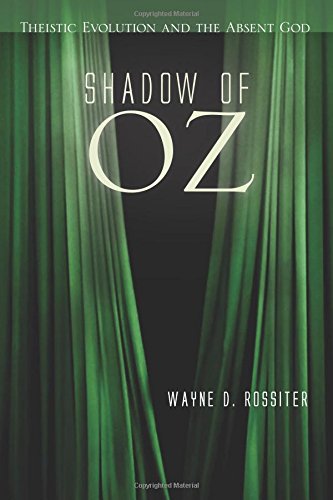
From Wayne Rossiter, author of Shadow of Oz: Theistic Evolution and the Absent God: at his book blog:

It’s an odd pattern. It was this problem that came to mind as I recently revisited Living with Darwin: Evolution, Design and the Future of Faith, by Philip Kitcher. Kitcher is a philosopher at Columbia University, and he specializes on biology. His book was published by Oxford University Press, and was the recipient of the 2008 Lannan Notable Book Award. We should take his views seriously.

His book begins with a forceful assertion: “From the perspective of almost the entire community of natural scientists world-wide, this continued resistance to Darwin is absurd. Biologists confidently proclaim that Darwin’s theory of evolution by natural selection is as well established as any of the major theories in contemporary science.”

This is not really a prediction. But, it is a statement that was wrong even before it was penned. More.

People who are committed to intellectual integrity in their own work often miss this central point: Once a bully pulpit like Darwinism has been established the occupant does not need to be correct, accurate or even useful. He can be a drag on the system. He can lead the march into degenerate science. He can, incidentally, fix you good if you try to offer an alternative view however grounded.

Bullies are not dislodged by being shown to be wrong, only by being successful opposed. Efforts so far have been commendable but quite honestly, more is needed.

See also: Biologist Wayne Rossiter on Joshua Swamidass’ claim that entropy = information

Follow UD News at Twitter!

Comments
Origenes, perhaps you will look at 364:
If there are n lottery tickets and all are sold, the probability that you got the particular number you did is 1/n. That is true whether you write anything down the week beforehand, or not. If you did write a number down the week before, the probability that the number you wrote down matches the actual ticket you bought is also 1/n.
I'll note I set up a spreadsheet (see 361) that demonstrates the above with dice.jdk
June 5, 2017
June
06
Jun
5
05
2017
02:05 PM
2
02
05
PM
PDT
Phinehas #371 #373 I very much appreciate your effort.
I don’t think the issue is in the mathematics but in the rhetoric of how the problem is set up. To avoid the ambiguity of the English language, perhaps the rigor of a computer language would help.
This may very well be the way forward.Origenes
June 5, 2017
June
06
Jun
5
05
2017
01:26 PM
1
01
26
PM
PDT
DS: That is what I would expect as well (10^-9 I think). My argument is that Kitcher's claim, "But you did, and you have witnesses to testify that your records are correct," is akin to running Variant 2 or 3, but pretending you've run Variant 1.Phinehas
June 5, 2017
June
06
Jun
5
05
2017
11:52 AM
11
11
52
AM
PDT
Phinehas, I think the probabilities are 10^-10, 1, and 0. I could be misreading something though.daveS
June 5, 2017
June
06
Jun
5
05
2017
11:44 AM
11
11
44
AM
PDT
jdk, DS: As I have been saying, I don't think the issue is in the mathematics but in the rhetoric of how the problem is set up. To avoid the ambiguity of the English language, perhaps the rigor of a computer language would help. I offer the following three variants of a program:
// Variant 1 int a_particular_integer; int a_random_integer; a_random_integer = RNG(); // Random number between 0 and 999999999 a_particular_integer = 123456789; // Int is pre-specified if (a_particular_integer == a_random_integer) { // What is the probability this executes? }
// Variant 2 int a_particular_integer; int a_random_integer; a_random_integer = RNG(); // Random number between 0 and 999999999 a_particular_integer = a_random_integer; // Int is defined by result of RNG if (a_particular_integer == a_random_integer) { // What is the probability this executes? }
// Variant 3 int a_particular_integer; // Int is unspecified int a_random_integer; a_random_integer = RNG(); // Random number between 0 and 999999999 if (a_particular_integer == a_random_integer) { // What is the probability this executes? } a_particular_integer = a_random_integer; // Int is post-specified
For each of the variants, what is the probability that the code inside the if block will execute? Where appropriate, please support your answer with an explanation.Phinehas
June 5, 2017
June
06
Jun
5
05
2017
11:39 AM
11
11
39
AM
PDT
PaV: FYI, my OP is up here: https://uncommondescent.com/intelligent-design/confusing-probability-the-every-sequence-is-equally-improbable-argument/Eric Anderson
June 4, 2017
June
06
Jun
4
04
2017
06:58 PM
6
06
58
PM
PDT
Origenes, do you agree with my statements in 364? Are you willing to look at the spreadsheet. This has nothing to do with magic, or whether someone is a creationist.jdk
June 4, 2017
June
06
Jun
4
04
2017
04:38 PM
4
04
38
PM
PDT
Origenes (and everyone), I have a suggestion. We can use the symbols P1, P2, ..., Pk to denote the 13-card permutations (so k is about 4 x 10^21). We all agree that for every i from 1 to k, P(Pi) = 1 in 4 x 10^21. (Or for notational purists, P({Pi}) = 1 in 4 x 10^21). P(guessing the next permutation) = 1 in 4 x 10^21 also. Furthermore, P({P1, P2, ..., Pk}) = 1. We could use this notation rather than the ambiguous phrase "getting any 13-card permutation", or even "getting any particular 13-card permutation". This or similar notation might eliminate some of the confusion and talking past one another.daveS
June 4, 2017
June
06
Jun
4
04
2017
04:36 PM
4
04
36
PM
PDT
I mean, there isn't, is there? If you assume the lottery is only drawn once all possible tickets are sold (and each is sold only once) then the sentence you reproduce above is true (right?) and not in conflict with anything I have said.wd400
June 4, 2017
June
06
Jun
4
04
2017
04:35 PM
4
04
35
PM
PDT
Wd400:
Origenes: So the chance of writing down the winning numbers of a lottery a week in advance is equal to having a particular lottery ticket?
There is no magic in writing down a hand.
If so, then there is also no magic in writing down the winning numbers of a lottery a week in advance. Perhaps one has to be a 'creationist' to see the magic in certain things.Origenes
June 4, 2017
June
06
Jun
4
04
2017
04:23 PM
4
04
23
PM
PDT
So, the probability of writing down a 13-card hand and subsequently getting it is equal to getting any 13-card hand? Don’t you guys see the problem here?
No. There is no magic in writing down a hand. The deck of cards doesn't change because you did so. So exactly one of the possible ordered hands matches the specification, so the odds are 1/S. If all you mean is that declaring a minute probability for a particular observed event after the fact isn't very impressive then you are making Kitcher's point for him. I'm not sure why this simple little point is so meeting such resistance.wd400
June 4, 2017
June
06
Jun
4
04
2017
04:08 PM
4
04
08
PM
PDT
I hope you look at my spreadsheet, Origenes. I think it addresses the exact issue you are thinking about. If there are n lottery tickets and all are sold, the probability that you got the particular number you did is 1/n. That is true whether you write anything down the week beforehand, or not. If you did write a number down the week before, the probability that the number you wrote down matches the actual ticket you bought is also 1/n. Please study my spreadsheet, where n = 6, because this is easier to see with real numbers that we can relate to.jdk
June 4, 2017
June
06
Jun
4
04
2017
04:04 PM
4
04
04
PM
PDT
Origenes,
So, the probability of writing down a 13-card hand and subsequently getting it is equal to getting any 13-card hand? Don’t you guys see the problem here?
I would say your statement is correct if you replace "any" by "any particular", as per PaV's suggestion. As written, I don't agree with it. Going back to your die example, the probability of matching a 5 is equal to the probability of {1}, and to the probability of {2}, and so on. No one is saying that the probability of matching the 5 is equal to the probability of {1, 2, 3, 4, 5, 6}. Have you thought about my question in #341? I've answered a whole string of your questions in the meantime.daveS
June 4, 2017
June
06
Jun
4
04
2017
03:56 PM
3
03
56
PM
PDT
Jdk:
Origenes: So, the probability of writing down a 13-card hand and subsequently getting it is equal to getting any 13-card hand?
Yes, if by “getting any 13-card hand?” you mean getting the particular hand you got out of all possible hands. If you mean what I think you mean, there is no problem.
So the chance of writing down the winning numbers of a lottery a week in advance is equal to having a particular lottery ticket? "There is no problem"? Really?Origenes
June 4, 2017
June
06
Jun
4
04
2017
03:54 PM
3
03
54
PM
PDT
Yes, if by "getting any 13-card hand?" you mean getting the particular hand you got out of all possible hands. If you mean what I think you mean, there is no problem. It would be much better to think about simpler situations, where we can visualize the events better. Here is a link to a shared google spreadsheet that illustrates these two scenarios we have been talking about, in terms of rolling a dice 720 times. Probability dice Refresh the page to get a new set of numbers so you can run multiple trials. The spreadsheet uses a random number generator to pick an random number from 1 to 6. It does this 720 times in order to get a fairly large sample. Column A just rolls 720 dice and counts the number of times each number shows up. These will be about 1/6 (17%) for each number. This is to be expected. Columns C and D picks a random pre-specification and then rolls the dice to see if the specification matches the roll. Column E has a 1 for a match and 0 for no match. This will also happen about 1/6 of the time. There isn't any way to let you make your own specification before each dice throw - you'll have to throw your own dice for that, but that would be equivalent to the second scenario. Note the scenario of making a specification and getting a match is exactly the same (1/6) as just getting a particular number, such as 5 or 2 or any one of the other numbers. Is there anything surprising about this?jdk
June 4, 2017
June
06
Jun
4
04
2017
03:45 PM
3
03
45
PM
PDT
Jdk #359
1) has a probability of 1/6 3) The probability of throwing any one of the numbers, irrespective of whether anyone pre-specifies it or not, is also 1/6.
So, the probability of writing down a 13-card hand and subsequently getting it is equal to getting any 13-card hand? Don't you guys see the problem here?Origenes
June 4, 2017
June
06
Jun
4
04
2017
03:16 PM
3
03
16
PM
PDT
Yes, Origenes is not clear. I think by 2 he means what is the probability that you will get one of the numbers in the sample space, which is 1, of course. However, I don't see why that situations contrasts with 1, which appears to be the probability of a roll matching a prior specification. 1) has a probability of 1/6 2) has a probability of 1 if he means what I think he means. but 3) The probability of throwing any one of the numbers, irrespective of whether anyone pre-specifies it or not, is also 1/6.jdk
June 4, 2017
June
06
Jun
4
04
2017
03:04 PM
3
03
04
PM
PDT
It is a very simple event really. Just throw a die, and see if you get a particular number.
Just cross posted. If you do mean the event {1, 2, 3, 4, 5, 6}, then they have different probabilities. The probability of that event, which is the entire sample space, is of course 1. If you mean one of the singleton events I listed, they each have probability 1/6, as does (1).daveS
June 4, 2017
June
06
Jun
4
04
2017
03:00 PM
3
03
00
PM
PDT
DaveS @356 It is a very simple event really :) Just throw a die, and see if you get a particular number.Origenes
June 4, 2017
June
06
Jun
4
04
2017
02:58 PM
2
02
58
PM
PDT
Origenes,
To be clear, do the following two events have equal probability: (1) writing down “5”, subsequently throwing a die, getting a “5”. (2) throwing a die, getting a particular number — which can be 1,2,3,4,5 or 6.
It's not clear to me what the last event is. Could you list the outcomes in this event? Edit: I'm not sure if in (2) you're talking about one of {1}, {2}, {3}, {4}, {5}, {6}, or if you mean {1, 2, 3, 4, 5, 6}. If you tell me which, I can answer the question.daveS
June 4, 2017
June
06
Jun
4
04
2017
02:45 PM
2
02
45
PM
PDT
DaveS, Jdk To be clear, do the following two events have equal probability: (1) writing down “5”, subsequently throwing a die, getting a “5”. (2) throwing a die, getting a particular number — which can be 1,2,3,4,5 or 6.Origenes
June 4, 2017
June
06
Jun
4
04
2017
02:34 PM
2
02
34
PM
PDT
I highly encourage people to run the following experiment: Pick a number (either the same one each time or a different one each time), roll the dice, and see if you have a match. Keep track of the number of matches. Do this enough times (I recommended 96) to get some good data. I predict you will get a match about 1/6 of the time. What do you predict? Am I wrong or right about what will happen? I highly encourage you to try it. Let's get some real world data to discuss.jdk
June 4, 2017
June
06
Jun
4
04
2017
02:20 PM
2
02
20
PM
PDT
jdk: [and others]
1) Write down a number between 1 and 6, throw a die, and see if the result matches the number you wrote down. Do this quite a few times, say 96, writing a new number down each time. Keep track of how many matches there are.
If you read @347, you'll see I make a big thing about "matches."PaV
June 4, 2017
June
06
Jun
4
04
2017
02:15 PM
2
02
15
PM
PDT
Origenes,
Wait a minute … Event (1) involves checking if my pre-specified “5” matches the outcome! This is different from “just rolling the die”.
Yes, certainly.
You tell me.
Well it's your experiment, so you have to tell us. I think you have in this last post, though, so all is well. The two events are equally likely as jdk said. You can test it. Write down "5", roll the die, and check whether it comes up "5". Repeat a large number of times, then divide the number of times the die did come up 5 by the number of trials. It will likely be close to 1/6 with a large number of trials.daveS
June 4, 2017
June
06
Jun
4
04
2017
02:14 PM
2
02
14
PM
PDT
DaveS @349
How is the 5 chosen? If it’s also chosen at random from the numbers 1 through 6 (so essentially another die roll), the events are not equally likely. (1) has probability 1/36 rather than 1/6.
Agreed. Let's suppose that the 5 is chosen by free will and that probability does not apply, IOWs the probability of choosing "5" is 1.
If you do simply write down a 5, and the experiment consists of just rolling the die, they are equally likely.
Wait a minute ... Event (1) involves checking if my pre-specified "5" matches the outcome! This is different from "just rolling the die".
You need to state exactly what the experiment is, what the sample space is, and what the probability distribution is.
You tell me. - - - - - Jdk @348
2) Select a number, such as 5. Throw the dice 96 times and count the number of 5’s.
As Phinehas said, this is not what I said.Origenes
June 4, 2017
June
06
Jun
4
04
2017
02:11 PM
2
02
11
PM
PDT
@358 No, (2) does not match what Origenes said. No number was selected first. The number was defined by the throw.Phinehas
June 4, 2017
June
06
Jun
4
04
2017
01:37 PM
1
01
37
PM
PDT
Origenes,
Tell me this. What is the difference wrt probability between (1) and (2): (1) writing down “5”, subsequently throwing a die, getting a “5”. (2) throwing a die, getting a “5”. Are both events supposed to be equally probable? If so, then there is something very wrong here.
Edited due to reading jdk's post: How is the 5 chosen? If it's also chosen at random from the numbers 1 through 6 (so essentially another die roll), the events are not equally likely. (1) has probability 1/36 rather than 1/6. If you do simply write down a 5, and the experiment consists of just rolling the die, they are equally likely. You need to state exactly what the experiment is, what the sample space is, and what the probability distribution is.daveS
June 4, 2017
June
06
Jun
4
04
2017
01:37 PM
1
01
37
PM
PDT
re 345. Yes, both are equally probably. Run an experiment with yourself. 1) Write down a number between 1 and 6, throw a die, and see if the result matches the number you wrote down. Do this quite a few times, say 96, writing a new number down each time. Keep track of how many matches there are. 2) Select a number, such as 5. Throw the dice 96 times and count the number of 5's. I predict you will get success about 1/6 of the time in both cases, proving that you are wrong when you say "Are both events supposed to be equally probable? If so, then there is something very wrong here." Both events are equally probable, and the experiment will show you are wrong.jdk
June 4, 2017
June
06
Jun
4
04
2017
01:30 PM
1
01
30
PM
PDT
If the probability of involved in selecting numbered balls in a lottery is, let's say 1 in 5 x 10^7, then according to what has been said here, EACH ticket has a probability of 1 in 5 x 10^7. Now the drawing of the balls, along with the selling of tickets with ordered arrangements of numbers constitutes what a lottery IS. One, without the other, is pointless. Now, we presume 50 million tickets are sold. The probability of a lottery is the combined of the 'events' associated with every lottery ticket sold, and the selection of the balls. Since the selling of individual tickets are independent events (sometimes there's multiple winners; hence, there's replacement), and the selection of the numbered balls is independent of the selling of tickets (or else there's fraud), then the probability of winning a lottery is the combined event wherein your ticket matches the numbers selected. Hence, two independent events. Hence the probability of winning . . . And, here, I stop. Because something is wrong in all of this. I now change my mind about several things: 1.) The probability of dealing a hand of cards, or being dealt a hand of cards, is 1.0. 2.) The probability of selecting thirteen cards from a deck of 52 cards face down on a table is also 1.0 3.) The probability of writing down an hypothetical hand of cards is 1.0 4.) The probability of selecting your own numbers for a lottery ticket, or receiving a machine-generated one, is 1.0 Now, where does all this come from? I'm not sure. But it seems to me that when we deal with 'probabilities,' we're dealing with a kind of 'dual space,' to borrow from vector calculus. The only REAL probabilities have to do with matching events. And, it is "matching" that is CRITICAL in all truly probabilistic events. From an ID perspective, this is exactly what a "specification" is: it is a "match" between one probabilistic event that is "dual" to another probabilistic event. So, e.g., I flip a coin, and if it's heads, I write down a 1, and if it's tails, I write down 0. If we enter "dual" space--or what is it's equivalent, "sample space"--then we can say that there is a "probabilty of 50% that the coin will be a heads on average." Now we can make all of this 'real' by writing down the outcomes. (But this only makes the numbers we're writing down "existential," and not truly REAL.) But wait a second: I flip a coin. The probability of it being either a heads or a tails is 1.0. I roll a die: the probability that it will be either a 1,2,3,4,5,6 is 1.0. Dealing cards: 1.0; selecting cards from a deck on a table: 1.0, etc. To try and close in on what I mean by "dual space" and the "match" this requires, let's look at a couple of things: 1.) The chance of selecting numbers for a lottery is 1.0. The chance of selecting numbered balls from some kind of vacuum chamber is 1.0. A true lottery consists in "matching" your sequence of numbers with the numbers that came up using the vacuum chamber. Your ticket, and the numbers from the vacuum chamber are "dual" to one another. The numbers from the vacuum chamber are "dual" to all the lottery tickets, and they are "dual" to the chosen numbers. 2.) The chance of getting a Bridge hand is 1.0. The chance of writing down an hypothetical Bridge hand is 1.0. The probability of "matching" these two "probabilities that exist in the 'dual space' of sample space;" that is, that the hand you received, and the hand you wrote down, are the SAME is 1 in 4 x 10^21. Other examples could be given, but I think we all see the main idea here. Probabilities, in, and of, themselves, do not exist in our world; rather, they exist in the world of "sample space." [Just as an aside, the Schrodinger Equation actually doesn't exist in the real world, but in the realm of 'configuration space' according to Schrodinger; and it is something is almost universally lost sight of, because, using the equation, you end up with the right results] For probabilities to become "real," something must be "dual" to it, and "match." So, e.g., I roll two dice and I come up with 10 7's in a row. Can I now go to Las Vegas and say, "Give me some money, I rolled 10 7's in a row"? Of course not. But when I do go to Las Vegas, I put money down before rolling the dice, and the casino "matches" the bet: I'm saying I'll roll a number, and then "match" it, before I roll a 7 or an 11; meanwhile, the casino says that I can't. Because of this "matching," the probability has now left "sample space," or "dual space," and is now REAL, since the numbers rolled by the dice must now "match" certain outcomes. I think this is where all the confusion exists. IOW, when we say things---about cards, dice, or lottery tickets---that "improbable things happen all the time," what we're really saying is that all kinds of "improbable" things happen in "sample space," or, better yet, "dual space" ["dual space" can be thought of as existential "sample space"]. The truly improbable events, or REAL events involving improbability is when two "improbable" events in "dual space" match up. This "matching" involves a one-to-one mapping of one event to another. And, so, unless something is "specified," all the events that are commonly called "improbable" are only events in "dual space." And this is what Dembski was getting at, and what is at the heart of ID. If we take these notions over to biology, then the "machinery of the cell" that produces proteins from DNA can be thought in much the same way as the machinery that is responsible for printing out a lottery ticket. There must be some kind of random number generator involved; there must be some kind of electronic communication taking place to validate the purchase; there's the printer, etc. So, based on what I've been saying, the chance of printing a lottery ticket is 1.0. And, so, the probability of DNA producing a protein is 1.0 (well, not exactly, just in the same way as a lottey ticket printer can break down, and then need to be fixed [by intelligent agents :) ]). Now, I said that producing a protein via cell machinery is 1.0, and then qualified it. Well, the probability of duplicating DNA is 1.0. Well, actually, it's not. It's more, as we know, like 0.9999999. And, so, real probabities occur. (that is: the 'actual' mutation rate of cells) Well, if there is no real improbabilities involved in cell machinery, then what is ID's argument? Well, ID's argument has ALWAYS been about the improbabities involved with one kind of 'pattern' "matching" another specified 'pattern,' which also includes improbablity. So, the probability of producing Protein A is 1.0 (roughly), and that of producing Protein B is 1.0 (roughly). That's been my argument concerning hands and lottery tickets. But we know that in the cell, somehow, Protein A has to MATCH Protein B in "sequence space" if they are to form a 'protein complex.' What is the minimum number of amino acids that need to form bonds in order for the 'complex' to form? I'll just guess 10 as a minimum. Well, we're dealing with a "match" in "amino acid sequence space." So, this is a REAL probability. And we know that the cell uses roughly 20 different amino acids. What, then, is the REAL (not in the "dual space" of "amino acid sequence space" since now we have a "match") probability of this "match" occuring (like a lottery ticket "matching" the numbers selected from a vacuum chamber, or like a hand "matching" the Bridge hand we wrote down right before the deal) ? It is: 20^10 = 1 in 10^13. And what if, as we know happens in cells, there are protein complexes made of several proteins, let's say 5? Then the probability is 1 in 10^65. I just googled this: "largest protein complex in yeast," yeast being the simplest example of a eukaryote. Here's one of the answers. It says that the largest complex is made of 11 proteins. Then, to be conservative in calculating the probabilities, let's say only 5 amino acids are needed for a valid binding site, and since 11 sites have been bound together independently of the others, we must multiply the individual probabilities togther. We then have: [20^5]^11. When I used an online calcaltor, it came back with this answer: "Infinity." Well, not quite. But it is 1 in [2^5]^11 x [10^5]^11 = 3.6 x 10^16 x 10^55 = 1 in 3.6 x 10^71. Can "errors" in the cell's machinery bring about this REAL improbable event? No, intelligent agency is needed. That's the argument ID makes.PaV
June 4, 2017
June
06
Jun
4
04
2017
01:23 PM
1
01
23
PM
PDT
jdk: I do not agree with this part:
Whichever one happens has a 1 in 4 x 10^21 probability of happening.
Whichever one happens has a 1 in 1 chance of happening. ***** I am not a programmer, but this is what comes to mind when thinking about this issue.
int a_particular_integer; int a_random_integer; a_random_integer = RNG(); if (a_particular_integer == a_random_integer) { \\ Kitcher's claim that something improbable happened is TRUE } a_particular_interger = a_random_integer;
Though a_particular_integer purports to be a particular integer (after all, that's what we've called it), it is in reality undefined at the time of the evaluation. The fact that it gets defined after the fact doesn't help. Assuming this would compile, once a_particular_integer is defined, we could then jump back up to the 3rd line and do a proper evaluation. Note that jumping back up to the 4th line is not the same as jumping to the 3rd line, but Kitcher acts as though it is! This is the equivocation.Phinehas
June 4, 2017
June
06
Jun
4
04
2017
12:31 PM
12
12
31
PM
PDT
1 2 3 4 5 … 15