Uncommon Descent Serving The Intelligent Design Community

Kevin Padian: The Archie Bunker Professor of Paleobiology at Cal Berkeley

Categories
Intelligent Design
Share
Facebook
Twitter/X
LinkedIn
Flipboard
Print
Email

Kevin Padian’s review in NATURE of several recent books on the Dover trial says more about Padian and NATURE than it does about the books under review. Indeed, the review and its inclusion in NATURE are emblematic of the new low to which the scientific community has sunk in discussing ID. Bigotry, cluelessness, and misrepresentation don’t matter so long as the case against ID is made with sufficient vigor and vitriol.

Judge Jones, who headed the Pennsylvania Liquor Control Board before assuming a federal judgeship, is now a towering intellectual worthy of multiple honorary doctorates on account of his Dover decision, which he largely cribbed from the ACLU’s and NCSE’s playbook. Kevin Padian, for his yeoman’s service in the cause of defeating ID, is no doubt looking at an endowed chair at Berkeley and membership in the National Academy of Sciences. And that for a man who betrays no more sophistication in critiquing ID than Archie Bunker.
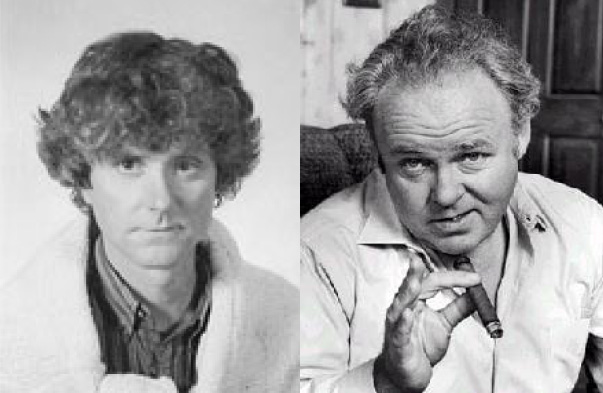
For Padian’s review, see NATURE 448, 253-254 (19 July 2007) | doi:10.1038/448253a; Published online 18 July 2007, available online here. For a response by David Tyler to Padian’s historical revisionism, go here.

One of the targets of Padian’s review is me. Here is Padian’s take on my work: “His [Dembski’s] notion of ‘specified complexity’, a probabilistic filter that allegedly allows one to tell whether an event is so impossible that it requires supernatural explanation, has never demonstrably received peer review, although its description in his popular books (such as No Free Lunch, Rowman & Littlefield, 2001) has come in for withering criticism from actual mathematicians.”

Well, actually, my work on the explanatory filter first appeared in my book THE DESIGN INFERENCE, which was a peer-reviewed monograph with Cambridge University Press (Cambridge Studies in Probability, Induction, and Decision Theory). This work was also the subject of my doctoral dissertation from the University of Illinois. So the pretense that this work was not properly vetted is nonsense.

As for “the withering criticism” of my work “from actual mathematicians,” which mathematicians does Padian have in mind? Does he mean Jeff Shallit, whose expertise is in computational number theory, not probability theory, and who, after writing up a hamfisted critique of my book NO FREE LUNCH, has explicitly notified me that he henceforth refuses to engage my subsequent technical work (see my technical papers on the mathematical foundations of ID at www.designinference.com as well as the papers at www.evolutionaryinformatics.org)? Does Padian mean Wesley Elsberry, Shallit’s sidekick, whose PhD is from the wildlife fisheries department at Texas A&M? Does Padian mean Richard Wein, whose 50,000 word response to my book NO FREE LUNCH is widely cited — Wein holds no more than a bachelors degree in statistics? Does Padian mean Elliott Sober, who is a philosopher and whose critique of my work along Bayesian lines is itself deeply problematic (for my response to Sober go here). Does he mean Thomas Schneider, who is a biologist who dabbles in information theory and not very well at that (see my “withering critique” with Bob Marks of his work on the evolution of nucleotide binding sites here). Does he mean David Wolpert, a co-discoverer of the NFL theorems? Wolpert had some nasty things to say about my book NO FREE LUNCH, but the upshot was that my ideas there were not sufficiently developed mathematically for him to critique them. But as I indicated in that book, it was about sketching an intellectual program rather than filling in the details, which would await further work (as is being done at Robert Marks’s Evolutionary Informatics Lab — www.evolutionaryinformatics.org).

The record of mathematical criticism of my work remains diffuse and unconvincing. On the flip side, there are plenty of mathematicians and mathematically competent scientists, who have found my work compelling and whose stature exceeds that of my critics:

John Lennox, who is a mathematician on the faculty of the University of Oxford and is debating Richard Dawkins in October on the topic of whether science has rendered God obsolete (see here for the debate), has this to say about my book NO FREE LUNCH: “In this important work Dembski applies to evolutionary theory the conceptual apparatus of the theory of intelligent design developed in his acclaimed book The Design Inference. He gives a penetrating critical analysis of the current attempt to underpin the neo-Darwinian synthesis by means of mathematics. Using recent information-theoretic “no free lunch” theorems, he shows in particular that evolutionary algorithms are by their very nature incapable of generating the complex specified information which lies at the heart of living systems. His results have such profound implications, not only for origin of life research and macroevolutionary theory, but also for the materialistic or naturalistic assumptions that often underlie them, that this book is essential reading for all interested in the leading edge of current thinking on the origin of information.”

Moshe Koppel, an Israeli mathematician at Bar-Ilan University, has this to say about the same book: “Dembski lays the foundations for a research project aimed at answering one of the most fundamental scientific questions of our time: what is the maximal specified complexity that can be reasonably expected to emerge (in a given time frame) with and without various design assumptions.”

Frank Tipler, who holds joint appointments in mathematics and physics at Tulane, has this to say about the book: “In No Free Lunch, William Dembski gives the most profound challenge to the Modern Synthetic Theory of Evolution since this theory was first formulated in the 1930s. I differ from Dembski on some points, mainly in ways which strengthen his conclusion.”

Paul Davies, a physicist with solid math skills, says this about my general project of detecting design: “Dembski’s attempt to quantify design, or provide mathematical criteria for design, is extremely useful. I’m concerned that the suspicion of a hidden agenda is going to prevent that sort of work from receiving the recognition it deserves. Strictly speaking, you see, science should be judged purely on the science and not on the scientist.” Apparently Padian disagrees.

Finally, Texas A&M awarded me the Trotter Prize jointly with Stuart Kauffman in 2005 for my work on design detection. The committee that recommended the award included individuals with mathematical competence. By the way, other recipients of this award include Charlie Townes, Francis Crick, Alan Guth, John Polkinghorne, Paul Davies, Robert Shapiro, Freeman Dyson, Bill Phillips, and Simon Conway Morris.

Do I expect a retraction from NATURE or an apology from Padian? I’m not holding my breath. It seems that the modus operandi of ID critics is this: Imagine what you would most like to be wrong with ID and its proponents and then simply, bald-facedly accuse ID and its proponents of being wrong in that way. It’s called wish-fulfillment. Would it help to derail ID to characterize Dembski as a mathematical klutz. Then characterize him as a mathematical klutz. As for providing evidence for that claim, don’t bother. If NATURE requires no evidence, then certainly the rest of the scientific community bears no such burden.

Comments
Nice to meet you, I saw you on TV the other night on C-Span!
Yes. That was me. Funny thing is I didn't watch the clip. Nice to meet you as well.
" I think the problems I point out are quite fundamental and not easy to fix"
I thought Bill's solution was quite good, as good as can be done. In math, it is hard to say the statistics of a physical phenoma are the result of intention or not. What we can say however is the degree of likelihood a particular distribution can be successful at resulting at a given pattern. I don't think this should be controversial... If there are other distributions than some simple equiprobable distribution, they can be ranked in order of their front-loaded information content relative to the equiprobable one. For example, if my reference distribution predicts a 99% chance of an event happening (say it is based on current knowledge of physical experiments), a different distribution, say one that allows only a 1% chance of this same thing happening, will have about 6.6 bits more information for that distribution based on the Radon-Nikodym derivative. [see: Information as a Measure of Variation] What this line of reasoning tells us is how much different the past must have been than today for evolution to happen. Darwin was arguing that observed mechanism today are adequate to explain the distant past. Dembski's line of argumentation shows how divergent Darwinian evolution must be from current reality to be sustainable as a theory. What does this mean. If there is a 99% chance of rain in a given location (say the rain forests), but maybe sometime in the past there was only a %1 chance, in terms of bits, it's only 6 bits going from one distribution to another. It is a believable step. It is a believable change in distributions even in the absence of physical knowledge of the details. However, when we start having to invoke distributions that are on the order of megabits from conditions we see to day, how believable can that be in the absence of empirical knowledge? By the standards of science, we certainly would be reluctant to ascribe to it the status of a scientific theory. One does not have to accept the ID part of Dembski's claim to see that his math adequately casts doubt on the adequacy of Darwinian mechanisms. I have asserted that his math, the form of the explanatory filter, demonstrates that Darwinian evolution essentially makes statements of the form: E = not-E Bill shows this in mathematical terms. The EF was not phrased in terms of Intelligence, but rather how well a phenomena can be claimed to be the result of a given distribution. Whether one thinks this implies intelligent causation is another matter. The motivation of the EF was to show that whatever distribution evolutionary biologist suggests, it will lead to a fatal contradiction of the form E = not-E The EF led to No Free Lunch arguments which both Bill and Bob Marks are now working on. It might be worthwhile to look at their more recent papers. It is quite different than the writings they offer for popular consumption... regards, Salvadorscordova
July 31, 2007
July
07
Jul
31
31
2007
08:39 PM
8
08
39
PM
PDT
Hi Salvador, Nice to meet you, I saw you on TV the other night on C-Span! I don't doubt that his ideas have evolved (or, should we say, have become better designed...?). I'd be glad to learn more. I think the problems I point out are quite fundamental and not easy to fix, but I keep an open mind. Cheers, pOolofsson
July 31, 2007
July
07
Jul
31
31
2007
06:42 PM
6
06
42
PM
PDT
Vivid, I doubt evolutionary biologists use probabilistic models, but that's not really the point, nor an important point of my argument. POolofsson
July 31, 2007
July
07
Jul
31
31
2007
06:20 PM
6
06
20
PM
PDT
The fundamental problem with Dembski's application to the flagellum is that he has previously stated that he must rule out all chance hypotheses, yet, he tests only one. PO
The one that he tests has the least information content relative to all other possible "chance" distributions, namely, some sort of rote equiprobable one. The other distributions which have a stronger chance of creating a pattern can be ranked in terms of their information content via the Radon-Nikodym derivative.... This ranking of distributions then says nothing of intention, merely information content with equiprobable at the bottom and one equal to the pattern itself at the top. By your comments here, your assessment is out of sync with his latest work. He is not ruling out that there are other possible distributions, but rather points out the information content those "improved" distributions would have relative to the equiprobable one. It then remains to be seen how believable a distribution is based on: 1. its existence from physical first principles 2. the fact an information rich distribution is suggestive of front loading I'm afraid Dembski has outrun his critics and they are shooting at the earlier form of his ideas some 15 years ago. He has since evolved his ideas, and they are more virulent and resistant to what the critics can throw at him these days. Salvadorscordova
July 31, 2007
July
07
Jul
31
31
2007
06:01 PM
6
06
01
PM
PDT
PO, "I have no expertise in evolutionary biology, not arguing from that point of view" But you are assuming that evolutionary biologists have a more realistic probabilistic model...what is that model and how do they know that the formation of the flagellum is not probalisticly negligible. This assumption is an important part of your critique. "The fundamental problem with Dembski's application to the flagellum is that he has previously stated that he must rule out all chance hypotheses, yet, he tests only one." What are the other ones? Vividvividblue
July 31, 2007
July
07
Jul
31
31
2007
05:46 PM
5
05
46
PM
PDT
Vivid, Good point! I think such probailities are very difficult to compute, hard to know what assumptions to make etc. A biologist would not agree with the "random assembly" model though and, at least qualitatively, argue that evolution of some particular feature is not that unlikely. I have no expertise in evolutionary biology, not arguing from that point of view. The fundamental problem with Dembski's application to the flagellum is that he has previously stated that he must rule out all chance hypotheses, yet, he tests only one. POolofsson
July 31, 2007
July
07
Jul
31
31
2007
05:32 PM
5
05
32
PM
PDT
Kairos, Well, as the onlookers can see, I have posted a few questions for you. Let me repeat: 1. Regarding the Caputo case, you claim that I “indulged a series of arguments and claims that would be very properly tossed out of court.” Can you please explain what you mean. What are my arguments? What are my claims? 2. What Bayesian issues do I have with specification? Already in the abstract I point out that my criticism is Fisherian, not Bayesian. Please answer the questions instead of just repeating that the "ball is in my court" and referring to writings by Dembski. I have patiently and repeatedly tried to answer your questions and points of criticism and pointed out that I identify two main problems (a) specification and (b) chance hypotheses (see the article for details). If you have any meaningful criticism against my arguments regarding (a) and (b), let's hear them now, succinctly and preferrably wihout referring to Plato, Dembski, and without calling me obfuscatory or dismissive. There are plenty of balls in your court, I see none over here! POolofsson
July 31, 2007
July
07
Jul
31
31
2007
05:03 PM
5
05
03
PM
PDT
"whereas biologists realistic models of millions of years of evolution , reproduction and natural selection." This should read "whereas biologists use realistic models.." Vividvividblue
July 31, 2007
July
07
Jul
31
31
2007
04:54 PM
4
04
54
PM
PDT
Onlookers: At one level, all of this is an apparently pointless distraction from Prof Dembski's point about Dr Padian and others of his critics. Dig deeper: at the next level, the exchange above, sadly, all too aptly illustrates EXACTLY how Dr Dembski is being mistreated by his critics of the ilk of Padian et al. (Critics who won't do him the basic courtesy of accurately representing and responding to what he has to say, and to the fact that there are many serious thinkers who have sophistication in Mathematics who respect a lot of what he has to say. That tells us more about such critics than it does about the merits of the case for the design filter, and/or the real challenges faced by design thought.) So, the ball is firmly in Prof Oloffsson's court. Let's see if he plays or is willing to forfeit the case by default. GEM of TKIkairosfocus
July 31, 2007
July
07
Jul
31
31
2007
04:53 PM
4
04
53
PM
PDT
PO, If I understand correctly one of the problema you point out is that in your opinion Dembskis filter uses unrealistic uniform probabilty distributions whereas biologists realistic models of millions of years of evolution , reproduction and natural selection. You also say that the evolutionary biologist would say that the formation of the flagellum is an event of probability that is far from negligible. But then you also say that it is unrealistic to expect biologists to calculate these probabilities. Well if they cannot calculate them how do they know they are far from negligible? Furthermore what scenarious are you referring to Vividvividblue
July 31, 2007
July
07
Jul
31
31
2007
04:53 PM
4
04
53
PM
PDT
Oh Captain, my Captain! POolofsson
July 31, 2007
July
07
Jul
31
31
2007
04:27 PM
4
04
27
PM
PDT
The good Ship of Knowledge :-)tribune7
July 31, 2007
July
07
Jul
31
31
2007
04:25 PM
4
04
25
PM
PDT
Kairos, While I wait for your answer to my previous questions, let me correct another of your misunderstandings. You say: "And, on my reading of your remarks, and his, your issues with the specification class etc are precisely those typically raised by Bayesians" Not sure how many times I've said it, but my entire criticism is from he point of view of hypothesis testing, that is, the Fisherian pont of view. There is nothing Bayesian in any of my arguments. But because you claim it is, perhaps you can point out exactly where? POolofsson
July 31, 2007
July
07
Jul
31
31
2007
04:23 PM
4
04
23
PM
PDT
tribune7, Thanks! Ehm...aboard what? ;) POolofsson
July 31, 2007
July
07
Jul
31
31
2007
04:15 PM
4
04
15
PM
PDT
Kairos, Regarding the Caputo case, you claim that I “indulged a series of arguments and claims that would be very properly tossed out of court.” Can you please explain what you mean. What are my arguments? What are my claims? POolofsson
July 31, 2007
July
07
Jul
31
31
2007
04:08 PM
4
04
08
PM
PDT
olofsson, welcome aboard :-)tribune7
July 31, 2007
July
07
Jul
31
31
2007
04:07 PM
4
04
07
PM
PDT
tribune7, Yes. POolofsson
July 31, 2007
July
07
Jul
31
31
2007
04:04 PM
4
04
04
PM
PDT
Prof Olofsson: I see you have now put up some points, including repeating that I am not addressing your point in the main. You will please observe that I have long since pointed to where you can profitably engage a serious level presentation of the Fisherian side of the debate, in a paper from Mr Dembski - first by reference to his site which is accessible in the sidebar, then now at length by emailing you a copy and by providing a direct link here. In short, the ball is in your court, not mine. In the above, I have pointed out by excerpting or summarising points that reflect the trend of your serious level paper, problems with the broader pattern of your argument, starting with a one sided and distorted presentation of the position of Mr Dembski and Mr Behe too. The general audience needs to know that, and those who are interested can easily enough read the two papers and make up their own mind in absence of your own serious interaction with Mr Dembski's points. Now, on further notes: 1] Filter issues As a reader can see by looking at the head of the thread and by exmaining the Fisher-Bayes paper just linked, there is a DEBATE on Fisher and Bayes in Statistics, which Mr Dembski presents and addresses making his own basic point, in 12 pp. In that context, he points out that, and how, the CSI filter helps to resolve the debate. (And, on my reading of your remarks, and his, your issues with the specification class etc are precisely those typically raised by Bayeians; which he aptly answers.] When you can show us that you have interacted seriously with what Dembski actually has to say,t hen we can profitably move the issue forward. 2] The Caputo case: Dembski answers precisely to several of your objections, in the linked. Let's see an accurate summary of what he said in the linked, and then your further response to that. (The case as he discusses will show just why your argument would have been tossed by a savvy judge as a clear case of selective hyper-skepticism in the teeth of what is well-received, reliable praxis in practical statistics.) 3] Laplacian indifference Onlookers: when we have no reason to prefer certain of the outcomes from a set of possible outcomes, the default position is to allocate as the default that outcomes are equiprobable. This is as common as assessing the odds of a six on tossing a presumably "fair" die: 1 of 6 or 1/6. It for instance commonly appears in managerial decision-making, as a precursor to "loading" the possible outcomes, e.g on the scenarios for the collapse or otherwise of the current volcanic dome here in Montserrat through expert elicitation. 4] Stat Mech: The core principle of statistical mechanics I was pointing to is the principle that for a given macroscopically observable state of a thermodynamic system, there are in general many microstates that are possible, and as a first option we take it that each microstate is equiprobable. From this base, much of modern physics was built. [The normal distribution is more relevant to the assessment of experimental errors of observation, due to many interacting and independent sources of error, e.g. in observing the location of a star through a telescope -- precisely what Gauss was doing.] My discussion in the always linked, appendix 1 will bring out the issues at stake in abiogenesis. GEM of TKIkairosfocus
July 31, 2007
July
07
Jul
31
31
2007
04:03 PM
4
04
03
PM
PDT
Olosfsson -- I mean the literal interpretation of Genesis: Earth is young, all species were created separately, and so on. OK, thanks. Then you agree ID is not creationism?tribune7
July 31, 2007
July
07
Jul
31
31
2007
03:59 PM
3
03
59
PM
PDT
Kairos, We may have overlapped. My response was posted 3 minutes before yours. So, look above your posting and you'll find more answers and, for a change, a question for you. POolofsson
July 31, 2007
July
07
Jul
31
31
2007
03:46 PM
3
03
46
PM
PDT
I agree with what you say about Sokal's hoax. Also, I don't view ID as creationist. In fact, I recently pointed out to Behe that he is scientifically much closer to Richard Dawkins than to Ken Ham. Anyway, I am sorry if you feel offended by my Coulter Hoax article. I can assure you that many, many more have felt offended by Ms Coulter's writings over the years. My piece was an attempt to show that one does not have to hate her or feel offended by her.olofsson
July 31, 2007
July
07
Jul
31
31
2007
03:39 PM
3
03
39
PM
PDT
Kairos, Have you read Ms Coulter's book? POolofsson
July 31, 2007
July
07
Jul
31
31
2007
03:33 PM
3
03
33
PM
PDT
PS. So "creationist" is now like the N-word. Any chance we can get Hitler into this as well...?olofsson
July 31, 2007
July
07
Jul
31
31
2007
03:31 PM
3
03
31
PM
PDT
Prof Olofsson: I await your substantial response. In the meanwhile, I find it necessary to say a few frank things: 1] "Circles" -- for that, read "movement." The problems with the rhetorical approach in the first article you linked and the one I subsequently found, reflect the patterns of a movement centring on Mr Padian and his ilk. Those patterns are damaging and misleading, and should be corrected forthwith. This holds for a one-sided presentation on Bayes vs Fisher, just as it holds for the sort of antics Judge Jones indulged when he more or less copied a post-trial submittal by the ACLU, misrepresentations, basic and easily corrected factual errors and all. 2] "Lighthearted"? Funny, but that is the same excuse currently being offered by the woman who thought it an excusable "lighthearted" action to deliberately mislocate books in a bookstore and boasted of it on the web. That sort of "fun and games" rather reminds me of the frog speaking back to the boy who had just thrown a couple of rocks at him: "Fun fe yuh is death to me!" . . . in my native dialect. In short, there are basic, well-known duties of care we owe to people on the other side of important issues. To try to make light of failing to live up to the duty to respect, to not distort and misrepresent [leading to setting up and knocking over a strawman caricature] and the like, are inexcusable. Period. BTW also, there is more than one side to the Sokal incident, as even the Wiki article on the affair will show. In sum -- and as one who objects to pomo thought for what I consider excellent reasons -- I must say this in fairness: there is serious reason to infer that Mr Sokal betrayed a trust put in him by the editors of the relevant experimental journal, then trumpeted it to the world as a triumph. _________ Sorry to have to be so direct, but the matter at stake is deeply important, and has already cost serious people on "my" side great and undue damage to their careers and reputations at the hands of some on "your" side. As the descendant of slaves and a relative of a man hanged by an oppressive state in 1865 for standing up for the rights of poor, oppressed people, I tend to take such things seriously indeed. I trust you will understand why, and will reconsider your "lighthearted" approach. GEM of TKI PS: Onlookers may wish to look up the "first level," relatively accessible Dembski paper I spoke of, on the debate between Fisher and Bayes, here. PPS: By your definition, the ID movement is NOT a creationist movement of thought [as I have already noted in outline], and many of its leading proponents are precisely not creationists [as I have also noted].kairosfocus
July 31, 2007
July
07
Jul
31
31
2007
03:29 PM
3
03
29
PM
PDT
Kairos and Vivid, I am afraid this does not promise to be a very interesting discussion. My article is a criticism of Dembski's filter from the point of view of mathematical statistics, no more and no less. The main points of criticism is the problems with (a) the rejection region ("specification") and (b)ruling out all chance hypotheses by only testing one (see the quotes in my article). I am truly interested in hearind how these would be addressed by a "filter supporter" (regardless of the ID/Darwinism debate). Kairos, you do not address my main points but keep picking on words and phrases and bringing in other arguments that have nothing to do with the filter per se. You don't seem to gasp the narrow focus of my criticism. I will again address a few points below, but I don't think this debate will lead much further. Vivid, I encourage you to read my article and ask me any questions you have. Email please, I agree that this thread ought to be saved for its initial purpose. I posted the link to my article in response to Dembski's list of mathematicians for and against the filter. There is no probabilist on either side so I thought the view of one would be appreciated. On to Kairos's points: 4. As I am criticising the filter, I list others who have done the same to point out that (a) I am aware of this and (b) I am presenting a different type of criticism. It is not a literature survey and there is no "appeal to authority." I certainly don't view some of these people as authorities. 5. Bayes vs Fisher is intersting in its own right but let's do that via email instead. As you notice, I accept the Fisherian approach in my filter criticism. 8. Again, I am using the Caputo case to illustrate hypothesis testing, just like Dembski uses it to illustrate his filter, and as you can see, I point out that the statistician and the design theorist would reach the same conclusion. Now, please, tell me how I "indulged a series of arguments and claims that would be very properly tossed out of court." 11. The space does not change, only the probability distribution. There is no such thing as a "basic standard null position." I have no expertise in statistical thermodynamics but I seem to recall that the normal distribution plays a prominent role.olofsson
July 31, 2007
July
07
Jul
31
31
2007
03:26 PM
3
03
26
PM
PDT
Tribune7, In the context of my article, I mean the literal interpretation of Genesis: Earth is young, all species were created separately, and so on. POolofsson
July 31, 2007
July
07
Jul
31
31
2007
02:51 PM
2
02
51
PM
PDT
olofsson, just curious but how do you define "creationism"?tribune7
July 31, 2007
July
07
Jul
31
31
2007
02:08 PM
2
02
08
PM
PDT
Kairosfocus, I'm not part of any circle hat I know of. My piece on Ms. Coulter was just a little lighthearted retort to her chapters on evolution in "Godless." Lighten up! POolofsson
July 31, 2007
July
07
Jul
31
31
2007
01:15 PM
1
01
15
PM
PDT
"Vivid, I bear in mind your concern for side-tracking the thread" kairos, I think you may have misinterpreted wha I was asking for. I was not concerned that the thread would be sidetracked I was expressing my desire that you and the professor continue to have the type of discussion you are having right here on this thread rather than through e mail. Hope that helps. BTW your site has been very helpfull to me Thanks Vividvividblue
July 31, 2007
July
07
Jul
31
31
2007
08:09 AM
8
08
09
AM
PDT
PPS: I meant the Sidebar's link to the Design Inference web site.kairosfocus
July 31, 2007
July
07
Jul
31
31
2007
02:49 AM
2
02
49
AM
PDT
1 10 11 12 13

Leave a Reply