Uncommon Descent Serving The Intelligent Design Community

The Ubiquitin System: Functional Complexity and Semiosis joined together.

Categories
Intelligent Design
Share
Facebook
Twitter/X
LinkedIn
Flipboard
Print
Email

This is a very complex subject, so as usual I will try to stick to the essentials to make things as clear as possible, while details can be dealt with in the discussion.

It is difficult to define exactly the role of the Ubiquitin System. It is usually considered mainly a pathway which regulates protein degradation, but in reality its functions are much wider than that.

In essence, the US is a complex biological system which targets many different types of proteins for different final fates.

The most common “fate” is degradation of the protein. In that sense, the Ubiquitin System works together with another extremely complex cellular system, the proteasome. In brief, the Ubiquitin System “marks” proteins for degradation, and the proteasome degrades them.

It seems simple. It is not.

Ubiquitination is essentially one of many Post-Translational modifications (PTMs): modifications of proteins after their synthesis by the ribosome (translation). But, while most PTMs use simpler biochemical groups that are usually added to the target protein (for example, acetylation), in ubiquitination a whole protein (ubiquitin) is used as a modifier of the target protein.


The tool: Ubiquitin

Ubiquitin is a small protein (76 AAs). Its name derives from the simple fact that it  is found in most tissues of eukaryotic organisms.

Here is its aminoacid sequence:

MQIFVKTLTGKTITLEVEPSDTIENVKAKIQDKEGIPPD

QQRLIFAGKQLEDGRTLSDYNIQKESTLHLVLRLRGG

Essentially, it has two important properties:

  1. As said, it is ubiquitous in eukaryotes
  2. It is also extremely conserved in eukaryotes

In mammals, ubiquitin is not present as a single gene. It is encoded by 4 different genes: UBB, a poliubiquitin (3 Ub sequences); UBC, a poliubiquitin (9 Ub sequences); UBA52, a mixed gene (1   Ub sequence + the ribosomal protein L40); and RPS27A, again a mixed gene (1 Ub sequence + the ribosomal protein S27A). However, the basic ubiquitin sequence is always the same in all those genes.

Its conservation is one of the highest in eukaryotes. The human sequence shows, in single celled eukaryotes:

Naegleria: 96% conservation;  Alveolata: 100% conservation;  Cellular slime molds: 99% conservation; Green algae: 100% conservation; Fungi: best hit 100% conservation (96% in yeast).

Ubiquitin and Ubiquitin like proteins (see later) are characterized by a special fold, called  β-grasp fold.


The semiosis: the ubiquitin code

The title of this OP makes explicit reference to semiosis. Let’s try to see why.

The simplest way to say it is: ubiquitin is a tag. The addition of ubiquitin to a substrate protein marks that protein for specific fates, the most common being degradation by the proteasome.

But not only that. See, for example, the following review:

Nonproteolytic Functions of Ubiquitin in Cell Signaling

Abstract:

The small protein ubiquitin is a central regulator of a cell’s life and death. Ubiquitin is best known for targeting protein destruction by the 26S proteasome. In the past few years, however, nonproteolytic functions of ubiquitin have been uncovered at a rapid pace. These functions include membrane trafficking, protein kinase activation, DNA repair, and chromatin dynamics. A common mechanism underlying these functions is that ubiquitin, or polyubiquitin chains, serves as a signal to recruit proteins harboring ubiquitin-binding domains, thereby bringing together ubiquitinated proteins and ubiquitin receptors to execute specific biological functions. Recent advances in understanding ubiquitination in protein kinase activation and DNA repair are discussed to illustrate the nonproteolytic functions of ubiquitin in cell signaling.

Another important aspect is that ubiquitin is not one tag, but rather a collection of different tags. IOWs, a tag based code.

See, for example, here:

The Ubiquitin Code in the Ubiquitin-Proteasome System and Autophagy

(Paywall).

Abstract:

The conjugation of the 76 amino acid protein ubiquitin to other proteins can alter the metabolic stability or non-proteolytic functions of the substrate. Once attached to a substrate (monoubiquitination), ubiquitin can itself be ubiquitinated on any of its seven lysine (Lys) residues or its N-terminal methionine (Met1). A single ubiquitin polymer may contain mixed linkages and/or two or more branches. In addition, ubiquitin can be conjugated with ubiquitin-like modifiers such as SUMO or small molecules such as phosphate. The diverse ways to assemble ubiquitin chains provide countless means to modulate biological processes. We overview here the complexity of the ubiquitin code, with an emphasis on the emerging role of linkage-specific degradation signals (degrons) in the ubiquitin-proteasome system (UPS) and the autophagy-lysosome system (hereafter autophagy).

A good review of the basics of the ubiquitin code can be found here:

The Ubiquitin Code 

(Paywall)

It is particularly relevant, from an ID point of view, to quote the starting paragraph of that paper:

When in 1532 Spanish conquistadores set foot on the Inca Empire, they found a highly organized society that did not utilize a system of writing. Instead, the Incas recorded tax payments or mythology with quipus, devices in which pieces of thread were connected through specific knots. Although the quipus have not been fully deciphered, it is thought that the knots between threads encode most of the quipus’ content. Intriguingly, cells use a regulatory mechanism—ubiquitylation—that is reminiscent of quipus: During this reaction, proteins are modified with polymeric chains in which the linkage between ubiquitin molecules encodes information about the substrate’s fate in the cell.

Now, ubiquitin is usually linked to the target protein in chains. The first ubiquitin molecule is covalently bound through its C-terminal carboxylate group to a particular lysine, cysteine, serine, threonine or N-terminus of the target protein.

Then, additional ubiquitins are added to form a chain, and the C-terminus of the new ubiquitin is linked to one of seven lysine residues or the first methionine residue on the previously added ubiquitin.

IOWs, each ubiquitin molecule has seven lysine residues:

K6, K11, K27, K29, K33, K48, K63

And one N terminal methionine residue:

M1

And a new ubiquitin molecule can be added at each of those 8 sites in the previous ubiquitin molecule. IOWs, those 8 sites in the molecule are configurable switches that can be used to build ubiquitin chains.

Her are the 8 sites, in red, in the ubiquitin molecule:

MQIFVKTLTGKTITLEVEPSDTIENVKAKIQDKEGIPPD

QQRLIFAGKQLEDGRTLSDYNIQKESTLHLVLRLRGG

Fig 1 shows two ubiquitin molecules joined at K48.
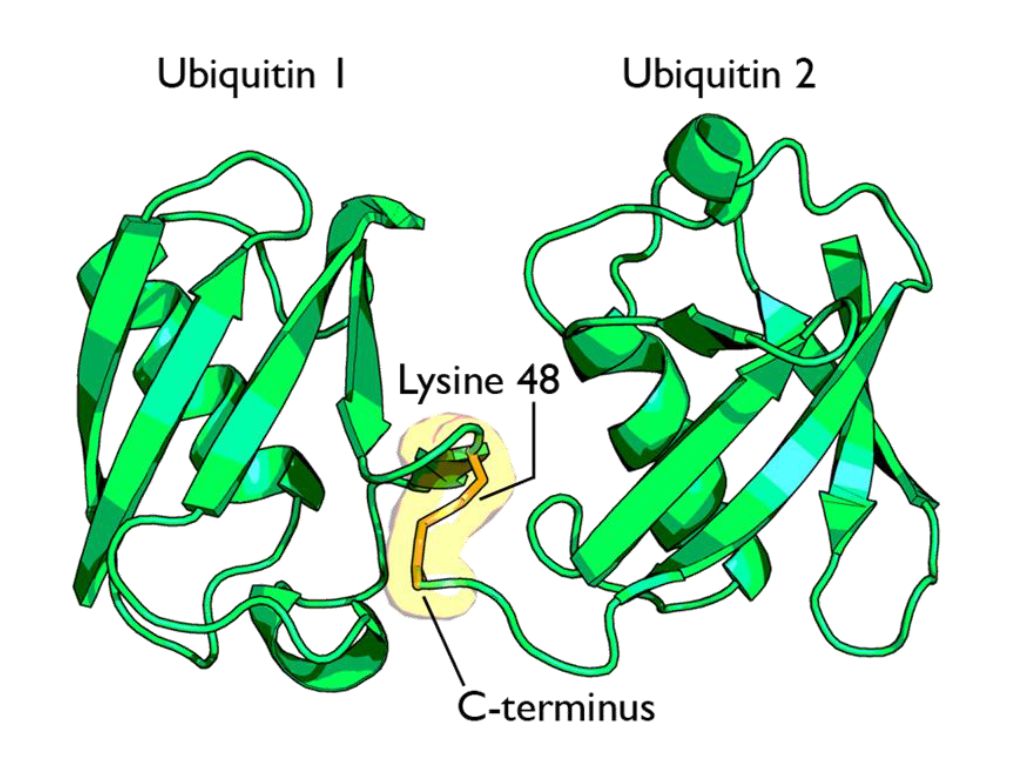
Fig 1 A cartoon representation of a lysine 48-linked diubiquitin molecule. The two ubiquitin chains are shown as green cartoons with each chain labelled. The components of the linkage are indicated and shown as orange sticks. By Rogerdodd (Own work) [CC BY-SA 3.0 (https://creativecommons.org/licenses/by-sa/3.0)], via Wikimedia Commons

The simplest type of chain is homogeneous (IOWs, ubiquitins are linked always at the same site). But many types of mixed and branched chains can also be found.

Let’s start with the most common situation: a poli-ubiquitination of (at least) 4 ubiqutins, linearly linked at K48. This is the common signal for proteasome degradation.

By the way, the 26S proteasome is another molecular machine of incredible complexity, made of more than 30 different proteins. However, its structure and function are not the object of this OP, and therefore I will not deal with them here.

The ubiquitin code is not completely understood, at present, but a few aspects have been well elucidated. Table 1 sums up the most important and well known modes:

Code

Meaning

Polyubiquitination (4 or more) with links at K48 or at K11 Proteasomal degradation
Monoubiqutination (single or multiple) Protein interactions, membrane trafficking, endocytosis
Polyubiquitination with links at K63 Endocytic trafficking, inflammation, translation, DNA repair.
Polyubiquitination with links at K63 (other links) Autophagic degradation of protein substrates
Polyubiquitination with links at K27, K29, K33 Non proteolytic processes
Rarer chain types (K6, K11) Under investigation


However, this is only a very partial approach. A recent bioinformatics paper:

An Interaction Landscape of Ubiquitin Signaling

(Paywall)

Has attempted for the first time a systematic approach to deciphering the whole code, using synthetic diubiquitins (all 8 possible variants) to identify the different interactors with those signals, and they identified, with two different methodologies,  111 and 53 selective interactors for linear polyUb chains, respectively. 46 of those interactors were identified by both methodologies.

The translation

But what “translates” the complex ubiquitin code, allowing ubiquinated proteins to met the right specific destiny? Again, we can refer to the diubiquitin paper quoted above.

How do cells decode this ubiquitin code into proper cellular responses? Recent studies have indicated that members of a protein family, ubiquitin-binding proteins (UBPs), mediate the recognition of ubiquitinated substrates. UBPs contain at least one of 20 ubiquitin-binding domains (UBDs) functioning as a signal adaptor to transmit the signal from ubiquitinated substrates to downstream effectors

But what are those “interactors” identified by the paper (at least 46 of them)? They are, indeed, complex proteins which recognize specific configurations of the “tag” (the ubiquitin chain), and link the tagged (ubiquinated) protein to other effector proteins which implement its final fate, or anyway contribute in deffrent forms to that final outcome.


The basic control of the procedure: the complexity of the ubiquitination process.

So, we have seen that ubiquitin chains work as tags, and that their coded signals are translated by specific interactors, so that the target protein may be linked to its final destiny, or contribute to the desired outcome. But we must still address one question: how is the ubiquitination of the different target proteins implemented? IOWs, what is the procedure that “writes” the specific codes associated to specific target proteins?

This is indeed the first step in the whole process. But it is also the most complex, and that’s why I have left it for the final part of the discussion.

Indeed, the ubiquitination process needs to realize the following aims:

  1. Identify the specific protein to be ubiquitinated
  2. Recognize the specific context in which that protein needs to be ubiquitinated
  3. Mark the target protein with the correct tag for the required fate or outcome

We have already seen that the ubiquitin system is involved in practically all different cellular paths and activities, and therefore we can expect that the implementation of the above functions must be a very complex thing.

And it is.

Now, we can certainly imagine that there are many different layers of regulation that may contribute to the general control of the procedure, specifically epigenetic levels, which are at present poorly understood. But there is one level that we can more easily explore and understand, and it is , as usual, the functional complexity of the proteins involved.

And, even at a first gross analysis, it is really easy to see that the functional complexity implied by this process is mind blowing.

Why? It is more than enough to consider the huge number of different proteins involved. Let’s see.

The ubiquitination process is well studied. It can be divided into three phases, each of which is implemented by a different kind of protein. The three steps, and the three kinds of proteins that implement them, take the name of E1, E2 and E3.
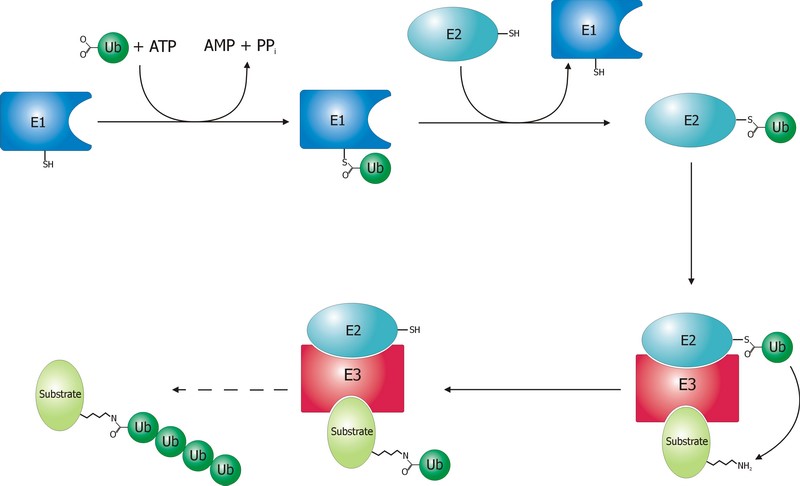
 

Fig. 2 Schematic diagram of the ubiquitylation system. Created by Roger B. Dodd: Rogerdodd at the English language Wikipedia [GFDL (http://www.gnu.org/copyleft/fdl.html) or CC-BY-SA-3.0 (http://creativecommons.org/licenses/by-sa/3.0/)], via Wikimedia Commons

 The E1 step of ubiquitination.

This is the first thing that happens, and it is also the simplest.

E1 is the process of activation of ubiquitin, and the E1 proteins is called E1 ubiquitin-activating enzyme. To put it simply, this enzyme “activates” the ubiquitin molecule in an ATP dependent process, preparing it for the following phases and attaching it to its active site cysteine residue. It is not really so simple, but for our purposes that can be enough.

This is a rather straightforward enzymatic reaction. In humans there are essentially two forms of E1 enzymes, UBA1 and UBA6, each of them about 1000 AAs long, and partially related at sequence level (42%).


The E2 step of ubiquitination.

The second step is ubiquitin conjugation. The activated ubiquitin is transferred from the E1 enzyme to the ubiquitin-conjugating enzyme, or E2 enzyme, where it is attached to a cysteine residue.

This apparently simple “transfer” is indeed a complex intermediate phase. Humans have about 40 different E2 molecules. The following paper:

E2 enzymes: more than just middle men

details some of the functional complexity existing at this level.

Abstract:

Ubiquitin-conjugating enzymes (E2s) are the central players in the trio of enzymes responsible for the attachment of ubiquitin (Ub) to cellular proteins. Humans have ∼40 E2s that are involved in the transfer of Ub or Ub-like (Ubl) proteins (e.g., SUMO and NEDD8). Although the majority of E2s are only twice the size of Ub, this remarkable family of enzymes performs a variety of functional roles. In this review, we summarize common functional and structural features that define unifying themes among E2s and highlight emerging concepts in the mechanism and regulation of E2s.

However, I will not go into details about these aspects, because we have better things to do: we still have to discuss the E3 phase!


The E3 step of ubiquitination.

This is the last phase of ubiquitination, where the ubiquitin tag is finally transferred to the target protein, as initial mono-ubiquitination, or to build an ubiquitin chain by following ubiqutination events. The proteins which implement this final passage are call E3 ubiquitin ligases. Here is the definition from Wikipedia:

A ubiquitin ligase (also called an E3 ubiquitin ligase) is a protein that recruits an E2 ubiquitin-conjugating enzyme that has been loaded with ubiquitin, recognizes a protein substrate, and assists or directly catalyzes the transfer of ubiquitin from the E2 to the protein substrate.

It is rather obvious that the role of the E3 protein is very important and delicate. Indeed it:

  1. Recognizes and links the E2-ubiquitin complex
  2. Recognizes and links some specific target protein
  3. Builds the appropriate tag for that protein (Monoubiquitination, mulptiple monoubiquitination, or poliubiquitination with the appropriate type of ubiquitin chain).
  4. And it does all those things at the right moment, in the right context, and for the right protein.

IOWs, the E3 protein writes the coded tag. It is, by all means, the central actor in our complex story.

So, here comes the really important point: how many different E3 ubiquitin ligases do we find in eukaryotic organisms? And the simple answer is: quite a lot!

Humans are supposed to have more than 600 different E3 ubiquitin ligases!

So, the human machinery for ubiquitination is about:

2 E1 proteins  –  40 E2 proteins – >600 E3 proteins

A real cascade of complexity!

OK, but even if we look at single celled eukaryotes we can already find an amazing level of complexity. In yeast, for example, we have:

1 or 2 E1 proteins  –  11 E2 proteins – 60-100 E3 proteins

See here:

The Ubiquitin–Proteasome System of Saccharomyces cerevisiae

Now, a very important point. Those 600+ E3 proteins that we find in humans are really different proteins. Of course, they have something in common: a specific domain.

From that point of view, they can be roughly classified in three groups according to the specific E3 domain:

  1. RING group: the RING finger domain ((Really Interesting New Gene) is a short domain of zinc finger type, usually 40 to 60 amino acids. This is the biggest group of E3s (about 600)
  2. HECT domain (homologous to the E6AP carboxyl terminus): this is a bigger domain (about 350 AAs). Located at the C terminus of the protein. It has a specific ligase activity, different from the RING   In humans we have approximately 30 proteins of this type.
  3. RBR domain (ring between ring fingers): this is a common domain (about 150 AAs) where two RING fingers are separated by a region called IBR, a cysteine-rich zinc finger. Only a subset of these proteins are E3 ligases, in humans we have about 12 of them.

See also here.

OK, so these proteins have one of these three domains in common, usually the RING domain. The function of the domain is specifically to interact with the E2-ubiquitin complex to implement the ligase activity. But the domain is only a part of the molecule, indeed a small part of it. E3 ligases are usually big proteins (hundreds, and up to thousands of AAs). Each of these proteins has a very specific non domain sequence, which is probably responsible for the most important part of the function: the recognition of the specific proteins that each E3 ligase processes.

This is a huge complexity, in terms of functional information at sequence level.

Our map of the ubiquinating system in humans could now be summarized as follows:

2 E1 proteins  –  40 E2 proteins – 600+ E3 proteins + thousands of specific substrates

IOWs, each of hundreds of different complex proteins recognizes its specific substrates, and marks them with a shared symbolic code based on uniquitin and its many possible chains. And the result of that process is that proteins are destined to degradation by the proteasome or other mechanisms, and that protein interactions and protein signaling are regulated and made possible, and that practically all cellular functions are allowed to flow correctly and smoothly.

Finally, here are two further compoments of the ubuquitination system, which I will barely mention, to avoid making this OP too long.

Ubiquitin like proteins (Ubl):

A number of ubiquitin like proteins add to the complexity of the system. Here is the abstract from a review:

The eukaryotic ubiquitin family encompasses nearly 20 proteins that are involved in the posttranslational modification of various macromolecules. The ubiquitin-like proteins (UBLs) that are part of this family adopt the β-grasp fold that is characteristic of its founding member ubiquitin (Ub). Although structurally related, UBLs regulate a strikingly diverse set of cellular processes, including nuclear transport, proteolysis, translation, autophagy, and antiviral pathways. New UBL substrates continue to be identified and further expand the functional diversity of UBL pathways in cellular homeostasis and physiology. Here, we review recent findings on such novel substrates, mechanisms, and functions of UBLs.

These proteins include SUMO, Nedd8, ISB15, and many others.

Deubiquitinating enzymes (DUBs):

The process of ubiquitination, complex as it already is, is additionally regulated by these enzymes which can cleave ubiquitin from proteins and other molecules. Doing so, they can reverse the effects of ubiquitination, creating a delicately balanced regulatory network. In humans there are nearly 100 DUB genes, which can be classified into two main classes: cysteine proteases and metalloproteases.


By the way, here is a beautiful animation of the basic working of the ubiquitin-proteasome system in degrading damaged proteins:


A summary:

So, let’s try a final graphic summary of the whole ubiquitin system in humans:
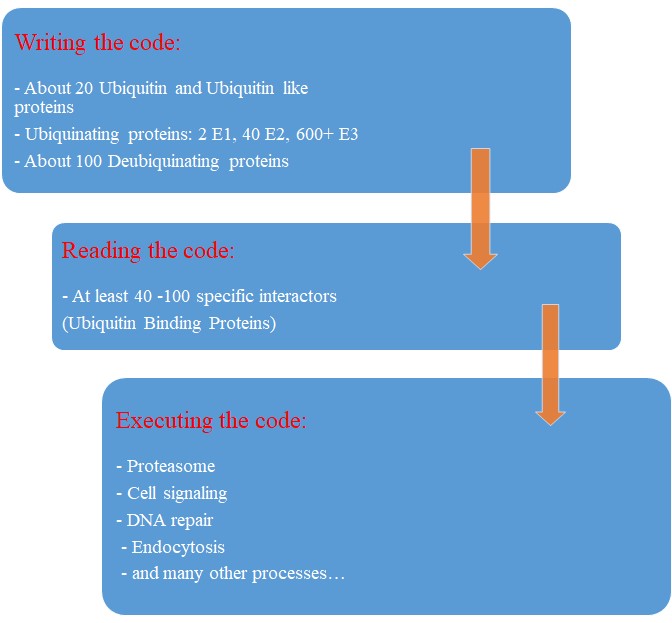
Fig 3 A graphic summary of the Ubiquitin System


Evolution of the Ubiquitin system?

The Ubiqutin system is essentially an eukaryotic tool. Of course, distant precursors for some of the main components have been “found” in prokaryotes. Here is the abstract from a paper that sums up what is known about the prokaryotic “origins” of the system:

Structure and evolution of ubiquitin and ubiquitin-related domains.

(Paywall)

Abstract:

Since its discovery over three decades ago, it has become abundantly clear that the ubiquitin (Ub) system is a quintessential feature of all aspects of eukaryotic biology. At the heart of the system lies the conjugation and deconjugation of Ub and Ub-like (Ubls) proteins to proteins or lipids drastically altering the biochemistry of the targeted molecules. In particular, it represents the primary mechanism by which protein stability is regulated in eukaryotes. Ub/Ubls are typified by the β-grasp fold (β-GF) that has additionally been recruited for a strikingly diverse range of biochemical functions. These include catalytic roles (e.g., NUDIX phosphohydrolases), scaffolding of iron-sulfur clusters, binding of RNA and other biomolecules such as co-factors, sulfur transfer in biosynthesis of diverse metabolites, and as mediators of key protein-protein interactions in practically every conceivable cellular context. In this chapter, we present a synthetic overview of the structure, evolution, and natural classification of Ub, Ubls, and other members of the β-GF. The β-GF appears to have differentiated into at least seven clades by the time of the last universal common ancestor of all extant organisms, encompassing much of the structural diversity observed in extant versions. The β-GF appears to have first emerged in the context of translation-related RNA-interactions and subsequently exploded to occupy various functional niches. Most biochemical diversification of the fold occurred in prokaryotes, with the eukaryotic phase of its evolution mainly marked by the expansion of the Ubl clade of the β-GF. Consequently, at least 70 distinct Ubl families are distributed across eukaryotes, of which nearly 20 families were already present in the eukaryotic common ancestor. These included multiple protein and one lipid conjugated forms and versions that functions as adapter domains in multimodule polypeptides. The early diversification of the Ubl families in eukaryotes played a major role in the emergence of characteristic eukaryotic cellular substructures and systems pertaining to nucleo-cytoplasmic compartmentalization, vesicular trafficking, lysosomal targeting, protein processing in the endoplasmic reticulum, and chromatin dynamics. Recent results from comparative genomics indicate that precursors of the eukaryotic Ub-system were already present in prokaryotes. The most basic versions are those combining an Ubl and an E1-like enzyme involved in metabolic pathways related to metallopterin, thiamine, cysteine, siderophore and perhaps modified base biosynthesis. Some of these versions also appear to have given rise to simple protein-tagging systems such as Sampylation in archaea and Urmylation in eukaryotes. However, other prokaryotic systems with Ubls of the YukD and other families, including one very close to Ub itself, developed additional elements that more closely resemble the eukaryotic state in possessing an E2, a RING-type E3, or both of these components. Additionally, prokaryotes have evolved conjugation systems that are independent of Ub ligases, such as the Pup system.


As usual, we are dealing here with distant similarities, but there is no doubt that the ubiquitin system as we know it appears in eukaryotes.

But what about its evolutionary history in eukaryotes?

We have already mentioned the extremely high conservation of ubiquitin itself.

UBA1, the main E1 enzyme, is rather well conserved from fungi to humans: 60% identity, 1282 bits, 1.21 bits per aminoacid (baa).

E2s are small enzymes, extremely conserved from fungi to humans: 86% identity, for example, for UB2D2, a 147 AAs molecule.

E3s, of course, are the most interesting issue. This big family of proteins behaves in different ways, consistently with its highly specific functions.

It is difficult to build a complete list of E3 proteins. I have downloaded from Uniprot a list of reviewed human proteins including “E3 ubiquitun ligase” in their name: a total of 223 proteins.

The mean evolutionary behavior of this group in metazoa is rather different from protein to protein. However, as a group these proteins exhibit an information jump in vertebrates which is significantly higher than the jump in all other proteins:
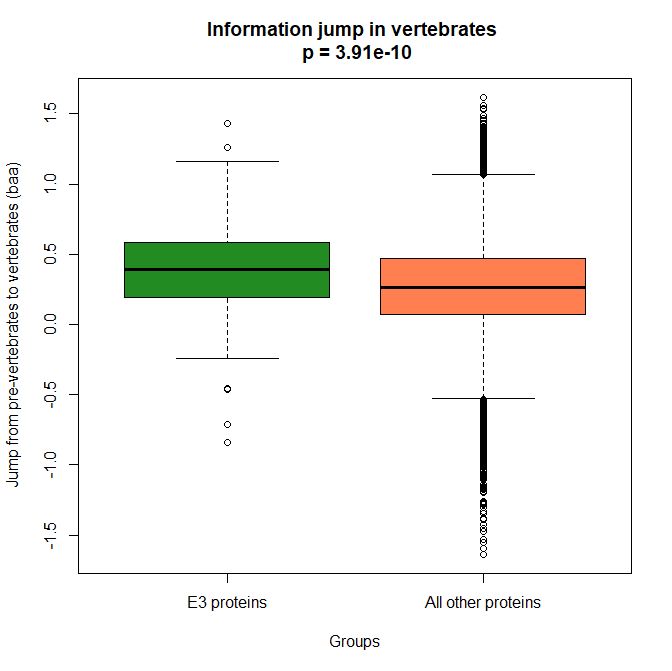
 

Fig. 4 Boxplots of the distribution of human conserved information jump from pre-vertebrates to vertebrates in 223 E3 ligase proteins and in all other human proteins. The difference is highly significant.


As we already know, this is evidence that this class of proteins is highly engineered in the transition to vertebrates. That is consistent with the need to finely regulate many cellular processes, most of which are certainly highly specific for different groups of organisms.

The highest vertebrate jump, in terms of bits per aminoacid, is shown in my group by the E3 ligase TRIM62. also known as DEAR1 (Q9BVG3), a 475 AAs long protein almost absent in pre-vertebrates (best hit 129 bits, 0.27 baa in Branchiostoma belcheri) and which flaunts an amazing jump of 1.433684 baa in cartilaginous fish (810 bits, 1.705263 baa).

But what is this protein? It is a master regulator tumor suppressor gene, implied in immunity, inflammation, tumor genesis.

See here:

TRIM Protein-Mediated Regulation of Inflammatory and Innate Immune Signaling and Its Association with Antiretroviral Activity

and here:

DEAR1 is a Chromosome 1p35 Tumor Suppressor and Master Regulator of TGFβ-Driven Epithelial-Mesenchymal Transition

This is just to show what a single E3 ligase can be involved in!

An opposite example, from the point of view of evolutionary history, is SIAH1, an E3 ligase implied in proteosomal degradation of proteins. It is a 282 AAs long protein, which already exhibits 1.787234 baa (504 bits) of homology in deuterostomes, indeed already 1.719858 baa in cnidaria. However, in fungi the best hit is only 50.8 bits (0.18 baa). So, this is a protein whose engineering takes place at the start of metazoa, and which exhibits only a minor further jump in vertebrates (0.29 baa), which brings the protein practically to its human form already in cartilaginous fish (280 identities out of 282, 99%). Practically a record.

So, we can see that E3 ligases are a good example of a class of proteins which perform different specific functions, and therefore exhibit different evolutionary histories: some, like TRIM62, are vertebrate quasi-novelties, others, like SIAH1, are metazoan quasi-novelties. And, of course, there are other behaviours, like for example BRCA1, Breast cancer type 1 susceptibility protein, a protein 1863 AAs long which only in mammals acquires part of its final sequence configuration in humans.

The following figure shows the evolutionary history of the three proteins mentioned above.
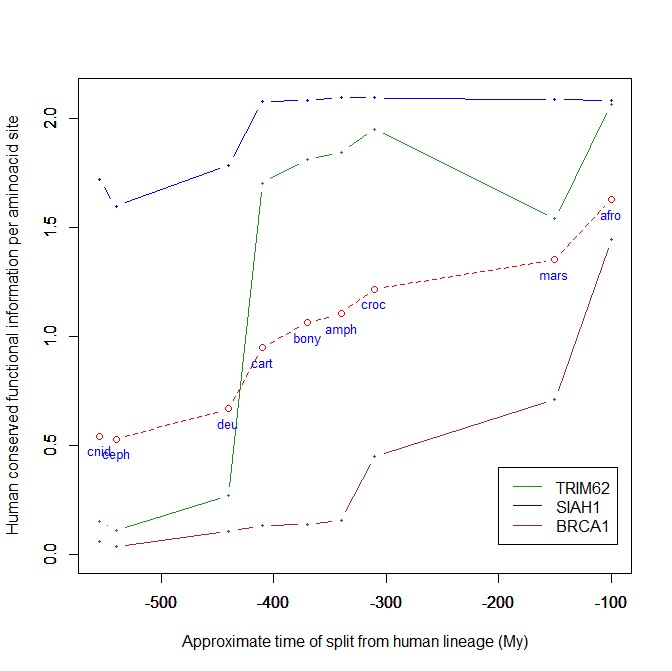
 

Fig. 5 Evolutionary history in metazoa of three E3 ligases (human conserved functional information)


An interesting example: NF-kB signaling

I will discuss briefly an example of how the Ubiquitin system interacts with some specific and complex final effector system. One of the best models for that is the NF-kB signaling.

NK-kB is a transcription factor family that is the final effector of a complex signaling pathway. I will rely mainly on the following recent free paper:

The Ubiquitination of NF-κB Subunits in the Control of Transcription

Here is the abstract:

Nuclear factor (NF)-κB has evolved as a latent, inducible family of transcription factors fundamental in the control of the inflammatory response. The transcription of hundreds of genes involved in inflammation and immune homeostasis require NF-κB, necessitating the need for its strict control. The inducible ubiquitination and proteasomal degradation of the cytoplasmic inhibitor of κB (IκB) proteins promotes the nuclear translocation and transcriptional activity of NF-κB. More recently, an additional role for ubiquitination in the regulation of NF-κB activity has been identified. In this case, the ubiquitination and degradation of the NF-κB subunits themselves plays a critical role in the termination of NF-κB activity and the associated transcriptional response. While there is still much to discover, a number of NF-κB ubiquitin ligases and deubiquitinases have now been identified which coordinate to regulate the NF-κB transcriptional response. This review will focus the regulation of NF-κB subunits by ubiquitination, the key regulatory components and their impact on NF-κB directed transcription.


The following figure sums up the main features of the canonical activation pathway:
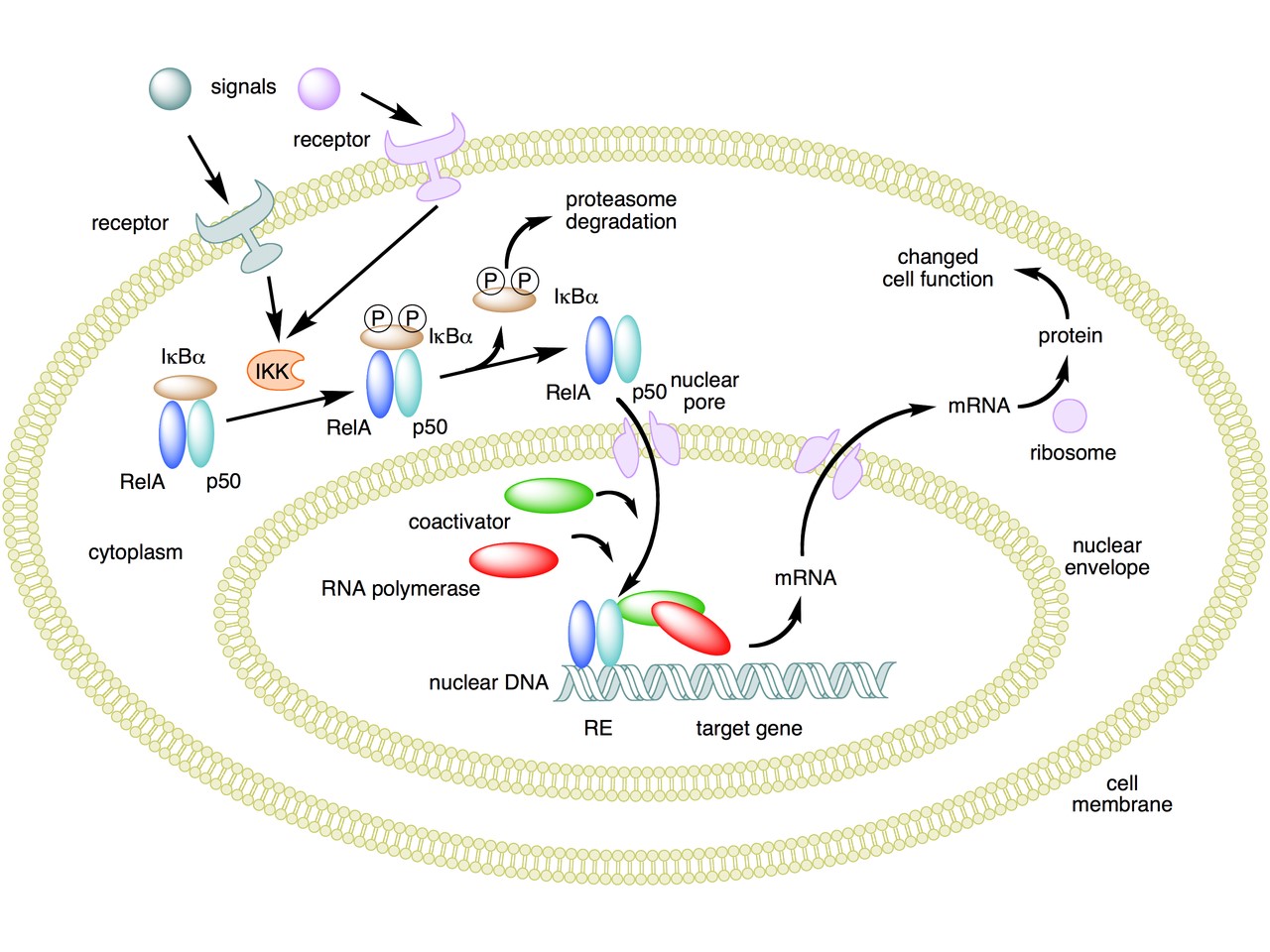
 

Fig. 6 A simple summary of the main steps in the canonical activayion pathway of NF-kB


Here the NF-κB TF is essentially the heterodimer RelA – p50. Before activation, the NF-κB (RelA – p50) dimer is kept in an inactive state and remains in the cytoplasm because it is linked to the IkB alpha protein, an inhibitor of its function.

Activation is mediated by a signal-receptor interaction, which starts the whole pathway. A lot of different signals can do that, adding to the complexity, but we will not discuss this part here.

As a consequence of receptor activation, another protein complex, IκB kinase (IKK), accomplishes the Phosphorylation of IκBα at serines 32 and 36. This is the signal for the ubiquitination of the IkB alpha inhibitor.

This ubiqutination targets IkB alpha for proteosomal degradation. But how is it achieved?

Well, things are not so simple. A whole protein complex is necessary, a complex which implements many different ubiquitinations in different contexts, including this one.

The complex is made by 3 basic proteins:

  • Cul1 (a scaffold protein, 776 AAs)
  • SKP1 (an adaptor protein, 163 AAs)
  • Rbx1 (a RING finger protein with E3 ligase activity, 108 AAs)

Plus:

  • An F-box protein (FBP) which changes in the different context, and confers specificity.

In our context, the F box protein is called beta TRC (605 AAs).
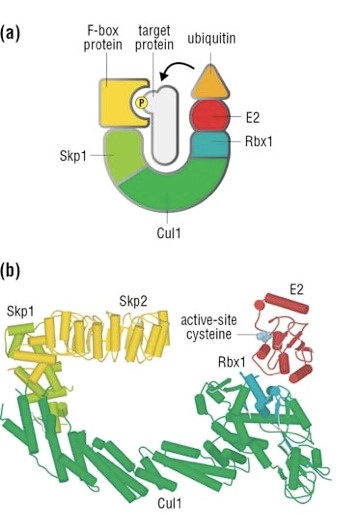
 

Fig. 7 A simple diagram of the SKP1 – beta TRC complex


Once the IkB alpha inhibitor is ubiquinated and degraded in the proteasome, the NF-κB dimer is free to translocate to the nucleus, and implement its function as a transcription factor (which is another complex issue, that we will not discuss).

OK, this is only the canonical activation of the pathway.

In the non canonical pathway (not shown in the figure) a different set of signals, receptors and activators acts on a different NF-κB dimer (RelB – p100). This dimer is not linked to any inhibitor, but is itself inactive in the cytoplasm. As a result of the signal, p100 is phosphorylated at serines 866 and 870. Again, this is the signal for ubiquitination.

This ubiquitination is performed by the same complex described above, but the result is different. P100 is only partially degraded in the proteasome, and is transformed into a smaller protein, p52, which remains linked to RelB. The RelB – p52 dimer is now an active NF-κB Transcription Factor, and it can relocate to the nucleus and act there.

But that’s not all.

  • You may remember that RelA (also called p 65) is one of the two components of NF-kB TF in the canonical pathway (the other being p 50). Well, RelA is heavily controlled by ubiquitination after it binds DNA in the nucleus to implement its TF activity. Ubiquitination (a very complex form of it) helps detachment of the TF from DNA, and its controlled degradation, avoiding sustained expression of NF-κB-dependent genes. For more details, see section 4 in the above quoted paper: “Ubiquitination of NF-κB”.
  • The activation of IKK in both the canonical and non canonical pathway after signal – receptor interaction is not so simple as depicted in Fig. 6. For more details, look at Fig. 1 in this paper: Ubiquitin Signaling in the NF-κB Pathway. You can see that, in the canonical pathway, the activation of IKK is mediated by many proteins, including TRAF2, TRAF6, TAK1, NEMO.
  • TRAF2 is a key regulator on many signaling pathways, including NF-kB. It is an E3 ubiquitin ligase. From Uniprot:  “Has E3 ubiquitin-protein ligase activity and promotes ‘Lys-63’-linked ubiquitination of target proteins, such as BIRC3, RIPK1 and TICAM1. Is an essential constituent of several E3 ubiquitin-protein ligase complexes, where it promotes the ubiquitination of target proteins by bringing them into contact with other E3 ubiquitin ligases.”
  • The same is true of TRAF6.
  • NEMO (NF-kappa-B essential modulator ) is also a key regulator. It is not an ubiquinating enzyme, but it is rather heavily regulated by ubiquitination. From Uniprot: “Regulatory subunit of the IKK core complex which phosphorylates inhibitors of NF-kappa-B thus leading to the dissociation of the inhibitor/NF-kappa-B complex and ultimately the degradation of the inhibitor. Its binding to scaffolding polyubiquitin seems to play a role in IKK activation by multiple signaling receptor pathways. However, the specific type of polyubiquitin recognized upon cell stimulation (either ‘Lys-63’-linked or linear polyubiquitin) and its functional importance is reported conflictingly.”
  • In the non canonical pathway, the activation of IKK alpha after signal – receptor interaction is mediated by other proteins, in particular one protein called NIK (see again Fig. 1 quoted above). Well, NIK is regulated by two different types of E3 ligases, with two different types of polyubiquitination:
    • cIAP E3 ligase inactivates it by constant degradation using a K48 chain
    • ZFP91 E3 ligase stabilizes it using a K63 chain

See here:

Non-canonical NF-κB signaling pathway.

In particular, Fig. 3

These are only some of the ways the ubiquitin system interacts with the very complex NF-kB signaling system. I hope that’s enough to show how two completely different and complex biological systems manage to cooperate by intricate multiple connections, and how the ubiquitin system can intervene at all levels of another process. What is true for the NF-kB signaling pathway is equally true for a lot of other biological systems, indeed for almost all basic cellular processes.

But this OP is already too long, and I have to stop here.

As usual, I want to close with a brief summary of the main points:

  1. The Ubiquitin system is a very important regulation network that shows two different signatures of design: amazing complexity and an articulated semiotic structure.
  2. The complexity is obvious at all levels of the network, but is especially amazing at the level of the hundreds of E3 ligases, that can recognize thousands of different substrates in different contexts.
  3. The semiosis is obvious in the Ubiquitin Code, a symbolic code of different ubiquitin configurations which serve as specific “tags” that point to different outcomes.
  4. The code is universally implemented and shared in eukaryotes, and allows control on almost all most important cellular processes.
  5. The code is written by the hundreds of E3 ligases. It is read by the many interactors with ubiquitin-binding domains (UBDs).
  6. The final outcome is of different types, including degradation, endocytosis, protein signaling, and so on.
  7. The interaction of the Ubiquitin System with other complex cellular pathways, like signaling pathways, is extremely complex and various, and happens at many different levels and by many different interacting proteins for each single pathway.

PS:

Thanks to DATCG for pointing to this video in three parts by Dr. Raymond Deshaies, was Professor of Biology at the California Institute of Technology and an Investigator of the Howard Hughes Medical Institute. On iBiology Youtube page:

A primer on the ubiquitin-proteasome system


Cullin-RING ubiquitin ligases: structure, structure, mechanism, and regulation


Targeting the ubiquitin-proteasome system in cancer

Comments
Corneel:
Not sure which one you would consider the core, but natural selection is certainly the idea that is most relevant to our discussions on ID, as it negates the need for the Designer.
Yes that was the intention. However reality got in the way and proved that natural selection is impotent in that regard.ET
April 7, 2018
April
04
Apr
7
07
2018
01:52 PM
1
01
52
PM
PDT
gpuccio Here is a post from Dazz at TSZ
gpuccio, you insist on affirming I have nothing, and I may not have much, but I think the challenge I presented you deserves some attention: You calculate your information based on conservation and functional constraints of certain protein sequences, right? so if you think you’ve found a protein that, being highly conserved in vertebrates grants the conclusion that such a sequence is functionally specified for vertebrates and there’s no gradual path to such protein from pre-vertebrates (what you call an informational jump), that means that there can’t be a gradual pathway from pre-vertebrates to vertebrates. I know you laughably claim you’re not interested in explaining life, just “functional information”) but if you were intellectually honest you would at least consider telling us how do you envision this weird scenario where hosts of pre-vertebrates are giving birth to vertebrates, and how can you possibly defend the existence of “barriers” to small gradual change while accepting stupidly large changes as perfectly feasible
I am interested in your thoughts here. This posts interests me as it shows the contrast between morphological and genetic evidence.bill cole
April 7, 2018
April
04
Apr
7
07
2018
11:20 AM
11
11
20
AM
PDT
dazz sez the following after it has been refuted thousands of times:
They don’t even try to make a positive case
The positive case for ID is summed up as: “Our ability to be confident of the design of the cilium or intracellular transport rests on the same principles to be confident of the design of anything: the ordering of separate components to achieve an identifiable function that depends sharply on the components.”- Dr. Behe DBB Now compare that to the positive case for evolutionism: It is not intelligently designed! PatheticET
April 7, 2018
April
04
Apr
7
07
2018
10:39 AM
10
10
39
AM
PDT
No news at TSZ: only dazz, GlenDavidson and Entropy telling nothing. Ah, some rest! :)gpuccio
April 7, 2018
April
04
Apr
7
07
2018
07:49 AM
7
07
49
AM
PDT
Origenes: "Larry Moran: … experts do not see a need to encode body plans and brain in our genome …" Yes. that's really discouraging. They really believe that no higher procedures, no higher control are necessary. And they definitely underestimate (a true euphemism) the problem of form. What do they believe in? Probably in what I sometimes call: "a very lucky, infinitely complex network of lucky feedbacks". IOWs, they believe that thousands of complex effectors cna interact in a varied, infinitely complex way without any general control.gpuccio
April 7, 2018
April
04
Apr
7
07
2018
07:44 AM
7
07
44
AM
PDT
DATCG at #765: How true. This thing of the code, or symbolic code, is a clear example of how people on the other side (see the many examples at TSZ in this discussion) are ready to equivocate instead of just trying to understand what is being said. I always feel the need to give explicit definitions for all the terms that could be ambiguous in a discussion, so that others can understand what I am saying and decide if they agree or not. In this discussion, I have recently given two explicit definitions: a) A definition of what a symbolic code is, for me. b) A definition of nature that is acceptable for me (the second of three different definitions proposed). In all my reasonings I have always been extremely careful to stick always to my definitions, to avoid any ambiguity. The result? I have been accused of redefining nature many times according to my convenience. I have been accused that I was implying wrong meanings with my reasonings about symbolic code, because a code is always a product of conscious design. I have even been accused of being trivial because I have defined a design system as a system where design interventions happen. And, of course, I am accused of not reading or understanding the non-arguments that they have proposed, where of course there is no definition, no explicit resoning, and therefore no argument. Is that necessarily what happens with all? I would say not. Corneel has demonstrated to be a reasonable and courteous discussant. DNA_Jock is competent and makes real arguments, even if he is rather self-satisfied and does not always understand the arguments I make. And, of course, there have been other good ones in the past, many of them: Mark Frank, Zachriel, Piotr, Elizabeth (and I apologize for those that I don't remember). I am not trying to make a classification of their intelligence or other human qualities. I leave that to the TSZ people. I am just remembering the good ones, because there are so few of them.gpuccio
April 7, 2018
April
04
Apr
7
07
2018
07:37 AM
7
07
37
AM
PDT
ET: Thank you for the kind words. "Is English even your native language?" No. Italian is my native language. "Your demeanor is that of a Saint" Of course not, but thank you just the same for the appreciation of my discussion style! :)gpuccio
April 7, 2018
April
04
Apr
7
07
2018
07:21 AM
7
07
21
AM
PDT
Larry Moran may be, what they call at TSZ, a “pseudoscientific sellout” for holding that the DNA code is real, but, of course, he holds that most of it is junk anyways. In order to unravel this 'Neutral theory' nonsense I once posed the following question to Larry:
If most of our genome is junk, then where is the information stored for the (adult) body plan? Where is the information stored for e.g. the brain? And where is the information stored for how to build all this?
His response:
Larry Moran: ... experts do not see a need to encode body plans and brain in our genome ... [source]
Origenes
April 7, 2018
April
04
Apr
7
07
2018
06:51 AM
6
06
51
AM
PDT
ET @740, "And yet they do- not all. Heck even Larry Moran accepts the genetic code is a real code. TSZ’s Allan Miller is famous for saying it isn’t a code. Glen Davidson says it isn’t a symbolic code" Then they disagree with other Evolutionist who are NOT Design theorist, but who do recogize the Genetic Code as Code. Maybe, a reason some refuse to recognize it as Code is a defense mechanism? If one recognizes Code within the cell, that the Genetic Code is authentic as are multiple other Codes, then fear creeps in that Design Theorist will be seen as logical in conclusions of Design in cellular processing of information. And that cannot be allowed in the market place of ideas or imagination. Only one kind of imagination is tolerated. That of blind, unguided, non-design. Yet, we know it takes great imagination, knowledge and insight to create nano-technology, especially manufacturing of such products like Qualcomm's snapdragon processor. Where Code is embedded in the CPU, connecting circuit processors and even memory. If memory was not encoded, address location of memory could not be utilized to retrieve stored data. Encoding in chemicals happens every day by design. In silicon based form. Encoding has happened in carbon-based life forms as well. We know information is encoded in our brain cells, otherwise we could not have these conversations, or know our way home without specific information, rules and syntax, as well as location, place and imaging information. And we know scientist have already stored programs, and large data in cells. And research scientist are working on how to information is stored in brain cells as well. Information is encoded in every single cell. If it were not, cells could not communicate and exchange information crucial to life's survival. In order to encode informational data onto paper, print, cpu processors or cells in life, there must be a Code to Write it, Read it, Update it, Repaire it and if needed Erase it. You simply cannot get around Code. Evolutionist who recognize this are not crazy, stupid, or dumb. And neither are Design Theorist. Where the two depart is on interpretation of how the Code was implemented. a) by Design b) by blind, unguided, non-designDATCG
April 7, 2018
April
04
Apr
7
07
2018
06:16 AM
6
06
16
AM
PDT
Morning, Gpuccio, you've been busy! ET @763, yes, he's doing great in answering specific questions. And I appreciate all the time he takes to respond to us and others at TSZ. Thanks Gpuccio for all the time you give in these post.DATCG
April 7, 2018
April
04
Apr
7
07
2018
05:45 AM
5
05
45
AM
PDT
Thank you very much gpuccio. You have managed a calm and reasonable argument in the face venom spewing cowardice. Your posts are very much appreciated here. Your demeanor is that of a Saint and also very much appreciated. Is English even your native language? (just curious- because if not then your posts are even more telling, ie that you care that much to post so eloquently in a foreign language)ET
April 7, 2018
April
04
Apr
7
07
2018
05:23 AM
5
05
23
AM
PDT
Joe Felsestein at TSZ: April 6, 2018 at 11:38 pm
He may have earned the insults, but they rally onlookers to his side. They permit him to concentrate on how unfairly he was treated, rather than on the weakness of his arguments.
False. Please, see my comment #751, in response to Alan Fox saying the same thing. And, as you can see, I have continued to answer Entropy's intelligible statements, for example at #757, without any reference to his conitnuing insults. So, if your only worry is the insults help me to dismiss your brilliant arguments, relax: that's not the case. If, on the other hand, you have other reasons to dislike insults in a discussion, why not simply say it?gpuccio
April 7, 2018
April
04
Apr
7
07
2018
03:22 AM
3
03
22
AM
PDT
DNA_Jock at TSZ: April 6, 2018 at 9:22 pm (to Bill Cole)
Because the fraction of total sequence space that is explored by mutations to an optimized protein is a tiny, tiny fraction of the total sequence space. You guys keep pointing out how effing yuge the sequence space is. Sampling an infinitesmial fraction of it tells you bugger all about the remainder. Do you guys not even pay attention to your own arguments? Imagine a 80aa protein motif. It’s optimized (this matters) so mutation can perhaps explore three steps away from the optimum, 1520 nearest neighbours, 2.3 million two steps away, 3.5 billion three steps away. but 1.2 x 10 ^104 members of the space, so you’re only explore one 10^95 th of the space.
I think this argumemt is in some way related to the TSS argument. Therefore, I will answer it in detail when I write about that issue.gpuccio
April 7, 2018
April
04
Apr
7
07
2018
03:15 AM
3
03
15
AM
PDT
DNA_Jock at TSZ:
In comment #583, in response to Entropy asking for a definition of functional information, you linked to the whole TSS debacle — “An attempt at computing dFSCI for English language.” I encourage UDites to read that conversation, and see if they can figure out who was right, who was wrong, and who, err, “went ballistic”.
Of course they can. You were wrong. You are wrong. I did not want to reopen the discussion, but I will. I will post on that, as soon as I have time. I hope you will answer.gpuccio
April 7, 2018
April
04
Apr
7
07
2018
01:31 AM
1
01
31
AM
PDT
dazz at TSZ points to the Yarus hypothesis (through Venema!). How original. Of course, that has been debated many times here, by me and others. Even dazz's final sum-up is almost reasonable in its tone, which is amazing: "So the “arbitrary” DNA “code” could have had a chemical origin after all" dazz, it is arbitrary. Its origin is all another matter. If you are convinced of Yarus'arguments, good for you. I am not.gpuccio
April 7, 2018
April
04
Apr
7
07
2018
01:27 AM
1
01
27
AM
PDT
Corneel at TSZ: April 6, 2018 at 1:48 pm Ah, what a pleasure to discuss with someone who is reasonable! :)
No, this is not what I meant. Having not worked with bit scores before, I have no intuition for them. I realise they are derived from raw alignment scores, but they receive some transformation. Another thing is: as you travel back in time the sequence similarity will not fall in a linear way, because there will be saturation of AA that were already substituted twice or more.
I am not sure what you mean. However, the BLAST bitscore is indeed based on transformations from the raw scores, and that's the reson why it assigns a maximum value of about 2.2 bits per aminoacid for identity, while the potential information value is about 4.3 bits. The reason for that is that the aim of the bitscore is to derive e values (the probability of observing that level of homology by chance, given the procedure that has been used in the alignment and the number of comparisons made).
Bottom line: I suspect that the plots you make will always produce an exponential phase, even if the substitution rate remains constant. But I cannot test that idea myself. So that’s the reason I asked you: If we were to plot a protein in your graph that evolves at a constant rate, might we not still observe “information jumps”?.
I am not sure what you mean by "an exponential phase". I will try to clarify. In my plots, you can see the homology between the protein in human form and the protein in sone other group of organisms (best hit). It is expressed in bits per aminoacid. If we blast a protein with itself (for example the human form with the human form) we gewt about 2,2 bits per aminoacid. Therefore, that's the value in the bitscore for absolute identity. So, the range of homology for any protein with the human form (that, as explained many times, I use as a probe here) is from 0 to about 2.2. OK? Now, in the x axis I put the approximate times of split of each group of organisms from the human line. So, if you look at Fig. 5 in the OP, you will see that I plot the evolutionary history (in terms of human conserved information) of three different proteins. Let's concentrate on the prevertebrate-vertebrate transition (shown in the plot as deuterostomes-cartilaginous fish). That takes place in about 30 million years, and it's where many important information jumps happen. But you can see that the behavious of the three proteins is completely different. SIAH1 is alredy very similar to the human form from the start of metazoa., so it does not show any big variation. BRCA1 is very different from the human form in almost all metazoa, and only in mammals it acquires part of the possible homology. TRIM62, finally, is completely different from the human form up to pre-vertebrates, and acquires most of the possible homology in the transition from pre-vertebrates to vertebrates (those famous 30 million years). Now, my plot shows how much human-conserved information is acquired at each step. I says nothing about the question if that information was acquires, say, in one day (one major step) or gradually during that time window (one AA at a time). The idea is: acquirine 500 or 1000 bits of functional information in 30 million years (indeed in any realistic time window) is well beyond the power of any model based on RV + NS. But that conclusion, of course, is based on many other reasonings. The plot just shows the amount of the jump at each step. I hope that's clear.
Not sure what you mean by “complex protein functions” seeing as you rejected Entropy’s example of substrate affinity. Could you provide a concrete example?
I mean, as I have always meant, the appearance of functional information linked to a new function beyond some appropriate threshold of complexity. In general, 500 bits will do for any scenario (that's Dembski's UPB). The above mentioned TRIM62 at the vertebrate transition is a very good example. It exhibits a jump of: 1.433684 baa x 475 (AA length of the protein) = 681 bits Another good example would be the alpha and beta chians of ATP synthase. See my comment #713. But there are thousands os such examples, and I have mentioned many in my different OPs, starting with Prickle1. Ubiquitin is a rather short protein, but highly conserved. Its maximum potential for functional information is (in bitscore) about 167 bits. And it acquire almoost all of it in eukaryotes. It's not the best example, but I would still make a design inference. But, as it's not the best example, I will not explain why here. The paper you link about archaea is interesting, but it would require a separate discussion. In brief, I would say that: a) It is a very isolated find, to be confirmed, and it could be in principle a case of HGT (the authors discuss that, and exclude it with good arguments, but I would not say that it is settled). b) It is, however, very different from the eukaryotic system: just as an example, it lacks an E3 ligase (alrhough it has a RING doamin), and the ubiquitin like protein has only 33% identity to ubiquitin (22 identities, 45.1 bits). But again, I would not make a case here for the ubiquitin molecule itself. But, as shown in my OP, the most amazing amount of specific functional information is to be found in the 600+ E3 ligases: each of them is highly specific for one or for a group of targets. I definitely make a case for them starting with TRIM62 as an example.
The evidence says that all complex stuff, including spliceosome and ubiquitination, started out simple.
I don't agree. There is no such evidence at all. Even the archaeal system you mentioned is complex, not simple. Only different. Of course, part of the functional information in older systems is reused in younger systems: that's very clear. But a lot of new functional information is constantly added, in jumps and without any evidence of graduality.gpuccio
April 7, 2018
April
04
Apr
7
07
2018
01:22 AM
1
01
22
AM
PDT
Entropy at TSZ: April 6, 2018 at 1:29 pm
By definition, an arbitrary mapping does not depend on “laws.” “Laws” are mathematical descriptions of deterministic phenomena in nature.
Correct. So you do understand what a definitions is. Good.
A symbolic code is not just an arbitrary mapping, but a consciously generated one.
Maybe according to your definition. I have always made it clear that I do not mean that, I only mean that it is a system that uses an arbitrary mapping. That's the only meaning that I have given to the term in all my reasonings. See for example my explicit definition at #719, in response to GenDavidson, in case you have not read it, and hoping that you still remember what a definition is. I quote here the relevant part, for your convenience:
Look, I don’t know how to explain it to you, but I will try just the same. In all my reasonings, I use the word “symbol”, and “symbolic code” exclusively to mean what I have included in my definition, that you can find in explicit form at comment #590. “A semiotic system is a system which uses some form of symbolic code. A symbolic code is a code where something represents something else by some arbitrary mapping.” It’s very simple, and objective, It has nothing to do with all your philosophical “arguments”.
I think that my definition is in perfect accord with the common use of the word, as shown by my Wikipedia quote, and especially with the use of the word in biology. You can disagree with that, but I hope that even you can see that I have never said that a symbolic code is "a consciously generated one". That's only what you say. I don't use the term in that sense. See also DATC's very good comment at #734, and the many references in it. The evidence that I don't use the term "symbolic code" in the sense of "a consciously generated one" is in the simple fact that I make the empiric argument that symbolic codes are venere observed in non design systems: perhaps even you can understand that what I mean is that they could be observed in non design systems (because they are not by definition "consciously generated", but they are not observed. Fact. You say:
Also, here he’s defining nature as being just about deterministic phenomena, while somewhere else he defines it as being just about stochastic events (so that nature alone would not be able to generate “functional” information).
Please, check my comment #620. I have given three explicit and clear possible definitions of nature, and I have said bvery clearly that I was choosing the second: 2) All that can be observed as the only definition I would use in all my scientific discussions. That's exactly what I have done. If you disagree, please quote any part of my discussions where I use another definition.
Of course, arbitrary “mappings” can appear in nature by the combination of “law-like” phenomena and stochastic events.
I have simply stated that it is never observed in non design systems. Have you any counter-example?
It’s equivocation by redefinition.
The only equivocation, of course, is in your faulty understanding of what I clearly say. As shown above.gpuccio
April 7, 2018
April
04
Apr
7
07
2018
12:29 AM
12
12
29
AM
PDT
Corneel at TSZ: April 6, 2018 at 1:09 pm Thank you for your clarification. You say:
Vice versa, if common descent were shown not to be true (hey, just a mental hypothesis) for example because all extant species were created independently in the past, then they could still be evolving by the neo-darwinian process of natural selection of beneficial genetic variants. Natural selection is a within-population process, see?
That's correct. But my point was simply that in that case (that neither you nor I believe to be true) the neo-darwinian process could certainly happen, but it would not be the explanation of the functional information that makes species different. OK, I think that's enough with mental experiments. We agree on common descent, so let's not waste time on that.gpuccio
April 7, 2018
April
04
Apr
7
07
2018
12:06 AM
12
12
06
AM
PDT
The scientifically illiterate OMagain posts:
Anyone who actually thinks there is something to ID seems to quickly run out of steam as far as actual science goes.
Then it is strange that IDists are the only ones discussing and presenting science. Why is that? You don't have a scientific theory. You don't have any testable hypotheses based on the posited mechanisms. You don't even have a methodology to test your claims. So clearly you are all just a bunch of deluded children. And your posts prove it. But hey you are providing evidence that you have chimps for relatives. Nicely done.ET
April 6, 2018
April
04
Apr
6
06
2018
06:45 PM
6
06
45
PM
PDT
DNA Jock posts:
Imagine a 80aa protein motif.
You have to as you don't have a mechanism capable of producing one. :razz: These people are soooooo clueless.ET
April 6, 2018
April
04
Apr
6
06
2018
06:40 PM
6
06
40
PM
PDT
Origenes: "So, again, we see a link with consciousness, or, perhaps, a specific aspect of consciousness." Interesting thoughts. I think that many things that happen in us have an intuitive source, at some level of consciousness. But this is a much wider discourse! :)gpuccio
April 6, 2018
April
04
Apr
6
06
2018
01:08 PM
1
01
08
PM
PDT
GPuccio:
“What we see, rather, is a continual mutual adaptation, interaction, and coordination that occurs from above.” [Talbott]
Absolutely!
I know it is very much off-topic, but I would like to run this thought by you: Would you agree with me when I say that this mysterious coordination from above, this 'mastery with parts' if you will, is comparable with how we use language? Or rather how one thinks? Here it is not proteins, but, instead, ideas, words and concepts which are constantly recombined into new contexts. And the mystery is the same: the coherence of it all and the effortlessness which accompanies it. How is it that we can talk, form coherent sentences, without carefully preparing them in advance? When I contemplate these matters I feel a similar awe as when I read about the goings on in the cell. So, again, we see a link with consciousness, or, perhaps, a specific aspect of consciousness.Origenes
April 6, 2018
April
04
Apr
6
06
2018
12:36 PM
12
12
36
PM
PDT
ET (and Alan Foz at TSZ): I have not the time, or the will, to read Alan Fox's comment now. So, I should not answer. However, from the simple phrase that you quote, I would like to say a couple of things. Alan Fox: a) I thought that adding insults should be discouraged for better reasons than pure strategy. Don't you agree? b) You may believe it or not, but I have always tried to answer anything that seemed intelligible or making a minimum of sense, even if it was part of a comment full of insults. See for example my comment #723, where i anwer as well as I can the human parts of GlenDavidson comment: April 5, 2018 at 9:37 pm and then, at the end, I list, just for reference, the 42 (I think) assorted insults that can be found in the same comment. So, as you can see and check, I am not at all "dismissing those comments as insulting". I answer what I can and what I consider worthwhile. The things that I do not asnwer are the things that I don't consider worthwhile. I hope you have the decency to leave me at least this basic freedom of thought. The insults, I just acknoweldge. There is not much to comment about them, they speak for themselves.gpuccio
April 6, 2018
April
04
Apr
6
06
2018
11:58 AM
11
11
58
AM
PDT
Upright Biped @737 You bet, wish I had more time to discuss, learn and contribute. But blind, unguided walking, talking mutation creations keep interrupting me ;-) Always wanted a Wookiee, but found out they aren't real "thanks for nothing George Lucas"DATCG
April 6, 2018
April
04
Apr
6
06
2018
11:51 AM
11
11
51
AM
PDT
Origenes at #747: Wonderful comment! :) I absolutely agree. That's more or less what I mean whne I say that we still missing the true procedures, IOWs the coordinating information, or maybe more than information, that makes everything run. "What we see, rather, is a continual mutual adaptation, interaction, and coordination that occurs from above." Absolutely!gpuccio
April 6, 2018
April
04
Apr
6
06
2018
11:48 AM
11
11
48
AM
PDT
Oh my- Alan Fox posts:
Probably too late but can I suggest that adding insults to otherwise cogent and convincing rebuttals is counter-productive, allowing gpuccio to dismiss those comments as insulting.
He actually believes they have "cogent and convincing rebuttals"- what a desperate fool Alan is.ET
April 6, 2018
April
04
Apr
6
06
2018
11:45 AM
11
11
45
AM
PDT
GPuccio: But what about ubiquitin itself? I mean the molecule? Is it regulated? Of course it is!
Which points to a well-known conundrum: decisions are made, but how? And by what?
When regulators are in turn regulated, what do we mean by “regulate” — and where within the web of regulation can we single out a master controller capable of dictating cellular fates? And if we can’t, what are reputable scientists doing when they claim to have identified such a controller, or, rather, various such controllers? If they really mean something like “influencers,” then that’s fine. But influence is not about mechanism and control; the factors at issue just don’t have controlling powers. What we see, rather, is a continual mutual adaptation, interaction, and coordination that occurs from above. What we see, that is — once we start following out all the interactions at a molecular level — is not some mechanism dictating the fate or controlling an activity of the organism, but simply an organism-wide coherence — a living, metamorphosing form of activity — within which the more or less distinct partial activities find their proper place. [S. Talbott]
GPuccio: Another point I would like to clarify: life is not the same thing as functional complexity. ID is about functional complexity, not about life.
Perhaps Talbott (above) points to one reason as to why this is justified.Origenes
April 6, 2018
April
04
Apr
6
06
2018
11:02 AM
11
11
02
AM
PDT
DATCG and all: And the recognition (translation) of the tags is not simple stuff. See here (March 2015): Structural Basis for Ubiquitin Recognition by Ubiquitin-Binding Zinc Finger of FAAP20 https://www.ncbi.nlm.nih.gov/pmc/articles/PMC4370504/
Abstract: Several ubiquitin-binding zinc fingers (UBZs) have been reported to preferentially bind K63-linked ubiquitin chains. In particular, the UBZ domain of FAAP20 (FAAP20-UBZ), a member of the Fanconi anemia core complex, seems to recognize K63-linked ubiquitin chains, in order to recruit the complex to DNA interstrand crosslinks and mediate DNA repair. By contrast, it is reported that the attachment of a single ubiquitin to Rev1, a translesion DNA polymerase, increases binding of Rev1 to FAAP20. To clarify the specificity of FAAP20-UBZ, we determined the crystal structure of FAAP20-UBZ in complex with K63-linked diubiquitin at 1.9 Å resolution. In this structure, FAAP20-UBZ interacts only with one of the two ubiquitin moieties. Consistently, binding assays using surface plasmon resonance spectrometry showed that FAAP20-UBZ binds ubiquitin and M1-, K48- and K63-linked diubiquitin chains with similar affinities. Residues in the vicinity of Ala168 within the ?-helix and the C-terminal Trp180 interact with the canonical Ile44-centered hydrophobic patch of ubiquitin. Asp164 within the ?-helix and the C-terminal loop mediate a hydrogen bond network, which reinforces ubiquitin-binding of FAAP20-UBZ. Mutations of the ubiquitin-interacting residues disrupted binding to ubiquitin in vitro and abolished the accumulation of FAAP20 to DNA damage sites in vivo. Finally, structural comparison among FAAP20-UBZ, WRNIP1-UBZ and RAD18-UBZ revealed distinct modes of ubiquitin binding. UBZ family proteins could be divided into at least three classes, according to their ubiquitin-binding modes.
gpuccio
April 6, 2018
April
04
Apr
6
06
2018
08:43 AM
8
08
43
AM
PDT
ET: Maybe Moran too is a "pseudoscientific sellout." :) I always advise my neo-darwinist friends: beware of neutralists! :)gpuccio
April 6, 2018
April
04
Apr
6
06
2018
08:21 AM
8
08
21
AM
PDT
DATCG and all: Let's go back to serious stuff. We have seen that ubiquitin and the ubiquitin system, does contribute to the regulation of almost everything that happens in the cell. That's beautiful, interesting and amazing. But what about ubiquitin itself? I mean the molecule? Is it regulated? Of course it is! :) See here (november 2017): Ubiquitin turnover and endocytic trafficking in yeast are regulated by Ser57 phosphorylation of ubiquitin https://www.ncbi.nlm.nih.gov/pmc/articles/PMC5706963/
Abstract: Despite its central role in protein degradation little is known about the molecular mechanisms that sense, maintain, and regulate steady state concentration of ubiquitin in the cell. Here, we describe a novel mechanism for regulation of ubiquitin homeostasis that is mediated by phosphorylation of ubiquitin at the Ser57 position. We find that loss of Ppz phosphatase activity leads to defects in ubiquitin homeostasis that are at least partially attributable to elevated levels of Ser57 phosphorylated ubiquitin. Phosphomimetic mutation at the Ser57 position of ubiquitin conferred increased rates of endocytic trafficking and ubiquitin turnover. These phenotypes are associated with bypass of recognition by endosome-localized deubiquitylases - including Doa4 which is critical for regulation of ubiquitin recycling. Thus, ubiquitin homeostasis is significantly impacted by the rate of ubiquitin flux through the endocytic pathway and by signaling pathways that converge on ubiquitin itself to determine whether it is recycled or degraded in the vacuole.
The following must certainly have been written by some “brain-damaged pseudoscientist”:
The ubiquitin code is highly complex, and modification by conjugation to ubiquitin can alter the fate of substrate proteins by promoting degradation, altering subcellular localization, or altering interactions with binding partners. The complexity of the ubiquitin code is underscored by the fact that ubiquitin can polymerize at any of seven internal lysines (or the N-terminus) leading to chains of different linkage types, each with a unique structure that can be interpreted differently, and that mixed-linkage or branched chains are also possible. More recent work has also led to a consensus that post-translational modifications of ubiquitin (other than polymerization) can alter its function (Herhaus and Dikic, 2015; Zheng and Hunter, 2014) - making the ubiquitin code as we know it even more complex than previously appreciated.
From the Discussion section:
For over a decade, post-translational modifications of ubiquitin have been detected in phospho-proteomic analysis of cells from multiple eukaryotic species (Olsen et al., 2006; Peng et al., 2003; Rikova et al., 2007; Swaney et al., 2013; Villén et al., 2007) but the functional significance of these modifications has only recently come into focus. Our data reveal that phosphorylation of ubiquitin at the Ser57 position is regulated by Ppz phosphatases in yeast, and elevated Ser57 phosphorylation in ppz mutants contributes to ubiquitin deficiency as well as other phenotypes. Furthermore, the data presented suggests that Ser57 phosphorylation of ubiquitin promotes both endocytic trafficking and ubiquitin degradation – two in vivo effects that can be explained by decreased susceptibility to cleavage by endosomal deubiquitylases as observed in vitro for Doa4. Finally, we show that vacuolar degradation is the primary pathway for ubiquitin turnover in yeast cells, underscoring the Doa4-mediated recycling of ubiquitin as a critical point of regulation for global ubiquitin metabolism. Thus, we propose that Ser57 phosphorylation of ubiquitin can function as a regulatory switch to control ubiquitin recycling along the endocytic route, although the low observed stoichiometry of this modification suggests that this mode of regulation may occur transiently and only affect limited pools of ubiquitin (e.g. on the endosome).
Who watches the Watchmen? (Juvenal, Alan Moore)gpuccio
April 6, 2018
April
04
Apr
6
06
2018
08:15 AM
8
08
15
AM
PDT
1 5 6 7 8 9 32

Leave a Reply