Uncommon Descent Serving The Intelligent Design Community

What are the speed limits of naturalistic evolution?

Categories
Intelligent Design
Share
Facebook
Twitter/X
LinkedIn
Flipboard
Print
Email

What are the speed limits of naturalistic evolution? We know from experience it takes time to evolve a species. Would naturalistic evolution be fast enough in geological time to turn a cow into a whale, an ape-like creature into a human? What are the speed limits of evolution?

To give an illustration of just how hard it might be to evolve a population, consider that there are about 6.5 billion people on the planet geographically dispersed. Suppose a single advantageous mutation (say a single point mutation or indel) occurred in a single individual in one of those 6.5 billion people. How long would it take for that mutation to propagate such that every human on the planet had this mutation? It would be a pretty long time. Sufficient numbers of people would have to have their descendants exchange genes for centuries. And this measly change is but one nucleotide in 3,500,000,000 base pairs!

The Darwinists will argue, “but that wasn’t the way it was in the past, it was easier to evolve things millions of years ago.” Perhaps. Evolving a large geographically dispersed population is a colossal problem for Darwinian evolution as you can see. Thus (using DarLogic) since Darwinian evolution is true (cough), we must assume this implies populations in the past were much smaller and “well-stirred” (meaning geographic barriers are dismissed and every individual has the same chance of mating with anyone else in the population). Bear in mind also, the population can’t be too small either, since evolution needs a certain number of individuals to be generating a sufficient number of beneficial mutations.
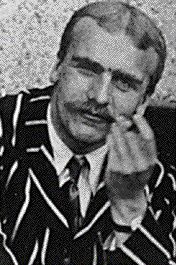
Haldane

So given optimal conditions, how fast could we evolve a population? Haldane (pictured above), suggested that on average, 1 “trait” per 300 generations could be fixed into a population of mammals. In the modern sense, we can take this “trait” to even be a single nucleotide [in the traditional sense we look for phenotypic traits, but the problem of evolving single nucleotide in the genome still remains, thus for the sake of analysis a single nucleotide can be considered something of a “trait”].

But such change is obviously too slow to account for 180,000,000 differences in base pairs between humans and chimps. [chimps have about 180,000,000 base pairs more DNA than humans, if anyone has better figures, please post]. This poses something of a dilemma for the evolutionary community, and this dilemma has been dubbed, “Haldane’s dilemma”. If Haldane’s dilemma seems overly pessimistic, ponder the example I gave above even for a smaller population (say 20,000 individuals within a 200 mile radius ). In light of this, 1 nucleotide per 300 generations might not seem like a stretch. If anything, Haldane’s dilemma (even by his own admission) seems a bit optimistic!

Various solutions have been explored to Haldane’s dilemma, such as multiple simultaneous nucleotide substitutions. But such “solutions” have their own set of fatal problems. One could make a good case, Haldane’s dilemma has never been solved, nor will it ever be….

Motoo Kimura
And if Haldane’s dilemma were not enough of a blow to Darwinian evolution, in the 1960’s several population geneticists like Motoo Kimura demonstrated mathematically that the overwhelming majority of molecular evolution was non-Darwinian and invisible to natural selection. Lest he be found guilty for blasphemy, Kimura made an obligatory salute to Darwin by saying his non-Darwinian neutral theory “does not deny the role of natural selection in determining the course of adaptive evolution”. That’s right, according to Kimura, adaptive evolution is visible to natural selection while simultaneously molecular evolution is invisible to natural selection. Is such a position logical? No. Is it politically and intellectually expedient? Absolutely….

The selectionist viewpoint is faced with Haldane’s dilemma. But does the neutralist viewpoint (Kimura) have an alternative mechanism that will get around Haldane’s selectionist dilemma? It seems not, as neutral theory has other sets of problems.

What has since resulted has been a never ending war between the selectionists and neutralists. The selectionists argue that natural selection shaped the majority of molecular evolution and the neutralists argue natural selection did not. Each warring camp finds fatal flaws in the ideas of their opponent. The neutralists rightly argue from first principles of population genetics that selection did not have enough resources to evolve billions of nucleotides, and the selectionists rightly point out that large amounts of conserved sequences fly in the face of neutralist theories. The net result is that both camps demonstrate that they are both dead wrong.

To make matters worse, there are even more dilemmas to deal with such as Nachman’s U-Paradox. Looming on the horizon, and even more problematic would be the fact DNA might only be a FRACTION of the actual information that is used to create living organisms. This idea of the organism (or at least a single cell) as being the totatlity of information versus only the DNA was suggested by one of the finest evolutionary biologist on the planet, Richard Sternberg. He argues his case in the peer-reviewed article Teleomorphic Recursivity. And by the way, these discussions of selectionist speed limits assumes the multitude of Irreducibly Complex structures in biology are somehow visible to natural selection….

What then will we conclude if we find functionality in those large regions of molecules which evolved independent of natural selection? How do we account for designs that cannot possibly be the result of natural selection? Can we attribute them to the random chance mechanisms of neutral theory? Unlikely. Evo-devo might offer some relief, but the proponents of Evo-Devo do not yet seem to realize that even if they are right, the ancestral life forms might have to be in a highly improbable, specified state, exactly the kind of state that suggests front-loaded intelligent design.

I’m opening this thread to continue a discussion of these and other topics which I also raised at PandasThumb in this thread. I found a commenter named Caligula who gave very substantive criticisms to my ideas in a precise and technical manner, and which I found worthy of giving a fair and civil hearing here at UD. I also invited the authors at PT to air their objections here (with the exception of PvM who has been banned). If Caligula and I must take the discussion outside of UD, we will be glad to, but I thought the topics would be of interest and educational to readers of both weblogs.

With that, I’ll just let the conversation continue in the comment section as we try to answer the question, “what are the speed limits of naturalistic evolution?”

Salvador
PS Two books relevant to this discussion by ID proponents are Genetic Entropy by respected Cornell geneticist John Sanford.
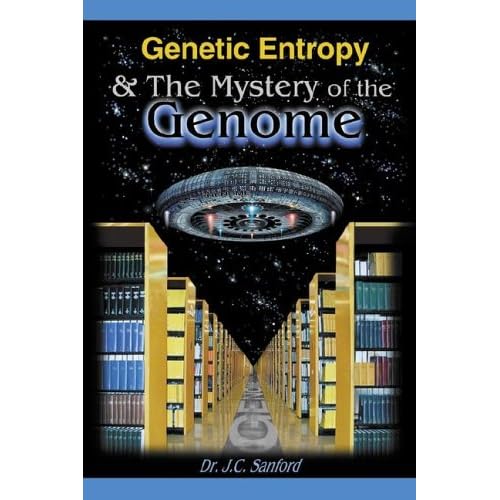
Genetic Entropy

and The Biotic Message by Electrical Engineer and pioneer of Discontinuity Systematics, Walter ReMine.

Biotic Message

Comments
geomor The wages of selection is death. Caligula points out that soft selection allows evolution to proceed faster. It does. But it doesn't eliminate or lower the cost of selection. It defers it. When times are good the population can grow and soft selection can speed up evolution. However, because times are good, mutations that would be deleterious in not so good times can also be soft selected. The deleterious mutations accumulate in the genome and then as soon as the environment becomes not so good the species quickly becomes extinct. Extinction without descendent species is the rule in the fossil record. Any theory of evolution must explain the facts surrounding extinctions.DaveScot
January 21, 2007
January
01
Jan
21
21
2007
04:34 PM
4
04
34
PM
PDT
GeMor: DaveScot, I didn't really follow the significance of this factoid, that 0.1% of species that ever lived are alive today. Could your clarify what this implies in this discussion? I inferred that he was talking about the fact that populations show up, stay for a while, and leave virtually unchanged. You know the basis for punctuated equilibrium- stasis, ie natural selection keeping the norm just as predicted and observed. But that is just me.Joseph
January 21, 2007
January
01
Jan
21
21
2007
01:20 PM
1
01
20
PM
PDT
DaveScot, I didn't really follow the significance of this factoid, that 0.1% of species that ever lived are alive today. Could your clarify what this implies in this discussion?GeoMor
January 21, 2007
January
01
Jan
21
21
2007
11:36 AM
11
11
36
AM
PDT
DaveScot: As I said, I fail to see how your discussion of fossils over geological timescale relates to my presentation of Nachman(2000). However, since you feel that I'm ignoring your argument, I will respond to it separately. You say that we know from fossils that 99,9% of all species have gone extinct and that (almost?) no speciations have occurred. If my memory serves me, the usual estimate is closer to 99%, but let us assume you have the correct number. I assume that the evidence for lack of speciation events is based on gaps in the fossil record below the family level. An obvious question follows. Assume 10 million species are living now; then 10 billion species would have existed in the history of Earth. Since only about 200-300 thousand morphological species have been identified, we are missing 10 billion fossil species. How can you know that none of these forms fits the gaps in the current fossil record, to better demonstrate speciation events?caligula
January 21, 2007
January
01
Jan
21
21
2007
06:54 AM
6
06
54
AM
PDT
DaveScot: As I said, I have not made an argument under geological timescale. Nachman's paradox is that we should observe the impact of his results in the here and now and in historic timescale, yet we do not and have not. Thank you for clarifying your point about soft selection. So you acknowledge that "background mortality" does serve as a buffer for natural selection. But you present a counter-argument that harmful mutations start fixing under soft selection. Can you present us a short mathematical example on such fixation?caligula
January 21, 2007
January
01
Jan
21
21
2007
06:23 AM
6
06
23
AM
PDT
Joseph Soft selection is a double edged sword. Yes, it allows beneficial mutations to fix faster in a growing population. It also allows neutral and deleterious mutations to fix faster in a growing population. The end result of the accumulation of neutral and deleterious mutations in a growing population is disaster when the environment turns ugly (and it WILL eventually turn ugly). This is why 999 of 1000 species with obligatory sexual reproduction go extinct without spawning any new species. Sermonti is absolutely correct.DaveScot
January 21, 2007
January
01
Jan
21
21
2007
06:06 AM
6
06
06
AM
PDT
Caligula: Many have suggested that harmful mutations “prevent evolution” or cause genetic degradation. Geneticist Giuseppe Sermonti tells us that sexual reproduction prevents evolution:
Sexuality has brought joy to the world, to the world of the wild beasts, and to the world of flowers, but it has brought an end to evolution. In the lineages of living beings, whenever absent-minded Venus has taken the upper hand, forms have forgotten to make progress. It is only the husbandman that has improved strains, and he has done so by bullying, enslaving, and segregating. All these methods, of course, have made for sad, alienated animals, but they have not resulted in new species. Left to themselves, domesticated breeds would either die out or revert to the wild state—scarcely a commendable model for nature's progress.
Joseph
January 21, 2007
January
01
Jan
21
21
2007
05:54 AM
5
05
54
AM
PDT
caligula I see you completely ignored the inconvenient fact that the indisputable testimony of the fossil record shows that 999 of 1000 species go extinct without spawning any new species with an average lifespan of 10 million years. Like I said, you don't let facts get in the way of your arguments... Soft selection solves nothing. Its effects are cumulative and the result IS indeed a reduction to a population size of zero (extinction). Your refusal to accept the facts surrounding extinctions makes it difficult to carry on a discussion. DaveScot
January 21, 2007
January
01
Jan
21
21
2007
05:09 AM
5
05
09
AM
PDT
DaveScot: 1. Let's all tune down rhetorics for a moment, please. 2. If you look at the context around your quote, you see how badly your argument fits here. According to Nachman(2000), our population should be dropping at an extremely nasty pace instead of increasing; which also means that we should have gone extinct during historic time, even if we had started with an absurdly huge population. So, clearly, I wasn't speaking of geological timescale here. 3. Do not worry. I have read a lot of ReMine's argumentation, including your link. But the fact that ReMine writes about a topic does not mean he has refuted it. When writing about Haldane's dilemma, I specifically keep ReMine's arguments in mind. And, for example, when commenting soft selection, ReMine is so busy discussing what it is not that he forgets to tell his reader what it is. Thus, he also fails to address the real issue and merely addresses strawmen of his choice. But if you have a link where ReMine actually does address the real impact of soft selection, please provide it as I am interested in it. I have asked him directly for such a treatment, however. 4. They are not my assertions. They are additions to Haldane(1957) made by current authorities in mathematical population genetics. I'm helpless against the fact that ReMine does not include them among his trusted authorities, although he does largely base his arguments on selected quotes from authorities.caligula
January 21, 2007
January
01
Jan
21
21
2007
03:40 AM
3
03
40
AM
PDT
caligula and we are not extinct Not yet at any rate. 999 of 1000 species that ever lived are extinct. The average lifetime of a species is 10 million years. We are the only surviving line of hominids. I see you, like most NeoDarwinists, are not letting facts get in the way of your arguments. All your assertions have been refuted by Remine. See the link on the sidebar.DaveScot
January 21, 2007
January
01
Jan
21
21
2007
03:15 AM
3
03
15
AM
PDT
Nachman's paradox Many have suggested that harmful mutations "prevent evolution" or cause genetic degradation. Such a claim is a serious misunderstanding. Selection and segregation prevent harmful mutations from fixing, even in a situation where every individual in the population is born with a harmful mutation or a few. If someone claims to have a simulation demonstrating otherwise, I'm very interested in seeing the source code. What a high rate of harmful mutations could cause is a lot of excess mortality, which could lead to extinction. That is what "Nachman's paradox" is about -- it is not about purifying selection somehow failing to work. (Just read Nachman(2000)!) And yes, the former could be a serious problem. But it is easy to see that the problem does not exist in reality. Consistent changes in population sizes are exponential. Apply, for example 10% decrement per generation and see how quickly the population would go extinct. Nachman(2000) estimates that the average human offspring suffers from (at least) 3 deletrious mutations. This results, using Haldane/Kimura's old models, in a remarkable mortality where a reproduction rate 20.0 is required to prevent extinction. Let us assume that we can do 10.0, and ignore all other costs except cost due to mutations. This would mean that our population size should be halved in each generation, instead of growing. It also means that even if our population numbered 300 billion some 35 generations (700 years) ago, we should be an extinct species now. Clearly, our population size was not 300 billion in the 1300s, and we are not extinct. I.e. a paradox. Now, the solution to this paradox is not that natural selection does not work, as many seem to suggest. If NS failed to work, and harmful mutations accumulated in our genome, the paradox would only become deeper. Nachman himself pretty much suggests that Haldane/Kimura's models require revision. He specifically suggests taking into account density-dependent factors. But I'm additionally interested whether Nachman's estimate for the average number of deletrious mutations can be considered accurate. It seems to me that nothing can compensate for his extreme fitness reduction -- except for the possibility that most deletrious mutations result in an early miscarriage and thus do not result in the kind of cost a "juvenile death" would. So, "Haldane's dilemma" and "Nachman's paradox" don't "add up". Rather, Nachman's paradox provides another strong argument for criticizing Haldane's overly simplified model resulting in his "dilemma".caligula
January 21, 2007
January
01
Jan
21
21
2007
12:21 AM
12
12
21
AM
PDT
Haldane's model Haldane's model deals solely with a scenario where a population is adapting to external environmental pressures. Haldane reasons, quite correctly, that before a population can adapt, it must initially be less-than-optimally adapted. And the quicker it adapts, the less well-adapted it is initially. Being badly adapted means a lower average fitness and, thus, a higher mortality. This, in turn, brings to table the risk of going extinct. Haldane estimated that in order to avoid extinction, the population can't tolerate more than combined selection coefficients worth 0.1, on average. Soft selection Haldane's limit 0.1 is quite small, isn't it? Surely, a population can compensate a much higher rate of mortality than 10% with reproductive excess? It is likely that Haldane (implicitly) assumed that many other reasons for mortality besides cost of selection are taking place most of the time, and that various costs simply add up. This is where soft selection comes in. It is assumed that the highest individual cause of mortality is population density. When a population has (a) filled the carrying capacity of its ecological niche and (b) has reproductive excess (i.e. produces more than 2 offspring per mating couple per generation), this reproductive excess simply dies: there just isn't viable room for it. When even the slowest breeders, such as elephants, are known to produce much more that 2 offspring per couple, there likely is a lot of mortality due to density. But note that if there are other reasons for mortality, such as selection, costs imposed by these sources reduce the cost due to density. If, say, predation (selection) harvests an individual before it has time to, say, starve to death (density), then costs due to density are reduced. It is said that unavoidable, density-dependent mortality acts as a "buffer" for natural selection: selection doesn't necessarily increase the total mortality, it merely makes survival non-random. Intraspecific competition Traditionally, adaptation is an "us against them" scenario. But not all beneficial alleles necessarily help a population to overcome external challenges in its environment. There is also competition between individuals within the population. Those who manage to hog more vital resources in their environment, such as territory, food and shelter, produce more offspring. For such alleles, we don't need to assume a corresponding external selection pressure causing excess mortality. It is simply about redistribution of vital resources within the population. In such a case, there is no cost in terms of excess mortality and, thus, no need for reproductive excess in terms of individuals. Yet allele frequencies do change, due to non-random survival and segregation.caligula
January 20, 2007
January
01
Jan
20
20
2007
10:54 PM
10
10
54
PM
PDT
Neutral mutations take even longer to spread through the population than beneficial mutations. The carriers of a neutral mutation have no gain or loss in differential reproduction as a result of that mutation. A beneficial mutation OTOH by definition increases the number of offspring of the carriers and thus spreads it around faster.DaveScot
January 20, 2007
January
01
Jan
20
20
2007
08:22 PM
8
08
22
PM
PDT
LudwigK:
Deleterious mutations do not spread, they die with the individual they originate with.
Eh? Unless you're defining "deleterious mutations" in a manner I'm unfamiliar with the first thing that came to mind was blind cave fish. Obviously lethal deleterious mutations are another matter but fixation of deleterious mutations can occur and can accumulate. All: http://www.nature.com/nature/journal/v445/n7123/abs/nature05388.html
The overall rate of occurrence of deleterious mutations in the genome each generation (U) appears in theories of nucleotide divergence and polymorphism, the evolution of sex and recombination, and the evolutionary consequences of inbreeding. However, estimates of U based on changes in allozymes4 or DNA sequences5 and fitness traits are discordant. Here we directly estimate u in Drosophila melanogaster by scanning 20 million bases of DNA from three sets of mutation accumulation lines by using denaturing high-performance liquid chromatography. From 37 mutation events that we detected, we obtained a mean estimate for u of 8.4 times 10-9 per generation. Moreover, we detected significant heterogeneity in u among the three mutation-accumulation-line genotypes. By multiplying u by an estimate of the fraction of mutations that are deleterious in natural populations of Drosophila10, we estimate that U is 1.2 per diploid genome.
http://www.pnas.org/cgi/content/abstract/0404125101v1
The tendency for genetic architectures to exhibit epistasis among mutations plays a central role in the modern synthesis of evolutionary biology and in theoretical descriptions of many evolutionary processes. Nevertheless, few studies unquestionably show whether, and how, mutations typically interact. Beneficial mutations are especially difficult to identify because of their scarcity. Consequently, epistasis among pairs of this important class of mutations has, to our knowledge, never before been explored. Interactions among genome components should be of special relevance in compacted genomes such as those of RNA viruses. To tackle these issues, we first generated 47 genotypes of vesicular stomatitis virus carrying pairs of nucleotide substitution mutations whose separated and combined deleterious effects on fitness were determined. Several pairs exhibited significant interactions for fitness, including antagonistic and synergistic epistasis. Synthetic lethals represented 50% of the latter. In a second set of experiments, 15 genotypes carrying pairs of beneficial mutations were also created. In this case, all significant interactions were antagonistic. Our results show that the architecture of the fitness depends on complex interactions among genome components.
On the chimp/human differences: http://www.eurekalert.org/pub_releases/2006-12/uob-wim122006.php
The researchers paid special attention to gene number changes between humans and chimps. Using a new statistical method developed by Tijl De Bie, University of Bristol, and Cristianini, the international team inferred humans have gained 689 genes (through the duplication of existing genes) and lost 86 genes since diverging from their most recent common ancestor with chimps. Including the 729 genes chimps appear to have lost since their divergence, the total gene differences between humans and chimps was estimated to be about 6 percent. The team included computational biologists from the University of Indiana and University of California, Berkeley. The results do not negate the commonly reported 1.5 percent nucleotide-by-nucleotide difference between humans and chimps. But they do illustrate there isn't a single, standard estimate of variation that incorporates all the ways humans, chimps and other animals can be genetically different from each other. Any measure of genetic difference between humans and chimps must therefore incorporate both variation at the nucleotide level among coding genes and large-scale differences in the structure of human and chimp genomes. Cristianini commented, "So the question biologists now face is not which measure is correct but rather which sets of differences have been more important in human evolution."
Patrick
January 20, 2007
January
01
Jan
20
20
2007
08:07 PM
8
08
07
PM
PDT
LudwigK: "And this is what is the greatest destroyer of peace today - abortion which brings people to such blindness." Technically speaking, neutral mutations don't "fixate", they just happen. "If we require that all the differences between chimps and humans arose by fixation through selection pressures, then they do seem too much. However, the vast majority of those were neutral mutations." This sort of tips your hand. It seems you're anxious to discuss the 100 to 300 neutral mutations as a way of getting from chimps to humans. I have no problems with that, as long as the discussion doesn't get bogged down with too many complications. But this does take the fixation of beneficial mutations off the table as a possible mechanism, which only seems to affirm Sal's distinction between "selectionist" and "neutralist" approach. I don't care what the rules are, as long as everyone agrees.PaV
January 20, 2007
January
01
Jan
20
20
2007
05:50 PM
5
05
50
PM
PDT
PaV, Those 100-300 mutations per generation that fixate are neutral mutations. Deleterious mutations do not spread, they die with the individual they originate with. Beneficial mutations fixate at much less than one per generation, probably. Note that in the early stages of embrionary development lots of genes are activated. If something is to go wrong, that's a likely place for it to happen. And it's at that stage that one half to two thirds of all humans die, often even before implantation. That's one powerful sieve to filter out deleterious mutations, but one which does nothing against neutral mutations (by definition). The maturation process of sperm cells and ova also can lead to filtering out harmful mutations while letting neutral mutations pass through. If we require that all the differences between chimps and humans arose by fixation through selection pressures, then they do seem too much. However, the vast majority of those were neutral mutations. Also Salvador's presentation of selection as being opposed to neutral evolution is not quite correct. Selection is what affects mutations that impact on reproductive success, neutral theory describes what happens to those mutations that have no impact on reproductive success. Just like ballistics and fluid dynamics describe different things in physics, but are not contradictory theories.LudwigK
January 20, 2007
January
01
Jan
20
20
2007
03:12 PM
3
03
12
PM
PDT
#44
Natural selection explains the formation of features like wings, eyes, legs, and such, and how species diverge in significant traits.
A little correction: NDE supporters claims, without any significant proofs, that Natural selection could explain the formation of features like wings, eyes, legs, and such, and how species diverge in significant traits.kairos
January 20, 2007
January
01
Jan
20
20
2007
02:30 PM
2
02
30
PM
PDT
I think there are tremendous cross-puposes going on. 1.) Is is 100 snp's or 300 per generation? But what about "error correction mechanisms"? As bFast points out, high deleterious mutation rates likely can't be tolerated. 2.) Are these 100?, or 300? SNP's spread out, consolidated, or connected to a highly-conserved loci ("hitchkiking")? 3.) Which proportion of the 100 (or 300) mutations are "neutral", and which proportion "selected" for? 4.) Do we, or do we not, consider "recombination" and lateral gene transfer, etc? Before this all starts, perhaps it would be good to whittle some of this stuff down to a precise scenario which could then be dealt with in some depth.PaV
January 20, 2007
January
01
Jan
20
20
2007
11:40 AM
11
11
40
AM
PDT
One of Sal's main questions is the maximum substitution rate allowed by Darwinistic mechanisms. I will do my best to at least shed some light on the question. In another post, I will also shortly describe Haldane's basic model, some of the later additions to it as well as the relationship between so-called "Haldane's dilemma" and "Nachman's paradox". 1. Haldane's model allows for one substitution per 300 generations on average, even when concurrency is involved. 2. Soft selection allows for much more. However, as I understand it, even soft selection can't increase the rate of substitution by an order of magnitude compared to Haldane's limit. 3. Intraspecific competition allows for a rate of substitution that is, at least in principle, orders of magnitude higher than Haldane's. The risk of extinction is not involved, so the key question becomes: what is the rate of beneficial mutations? 4. Further factors. For example, non-uniform selection pressures in the environment inhabited by the population can create interesting allele flows between subpopulations, and in principle lower the cost of selection. Of these, 3 is clearly the most interesting. How influental it has been in the historic evolution, I am not qualified to estimate. AFAIK no one currently knows the answer. In summary, I don't think anyone can give a definite limit for the speed of substitutions through natural selection. It should be measured, which is of course quite difficult. If a very high rate was measured, however, I think population genetics does readily have mathematical models to explain such a rate.caligula
January 20, 2007
January
01
Jan
20
20
2007
10:33 AM
10
10
33
AM
PDT
bFast However, in my simulation, when the mutation rate reaches an average of 1 deleterious mutation per generation, evolution comes to a grinding halt. If we are hit by 3 deleterious mutations per generation, we should be degrading. Interesting! Will you post this at some point? One question to indicate my interest: is a "deleterious mutation" one that changes a selected value into non-selected one? And then is a "beneficial mutation" one that changes a non-selected value to a selected one? And this is done at a random spot and with random result, correct? It sounds like you might be setting separate rates on deleterious and beneficial mutations, which does not seem properly random on the face of it.Tom Moore
January 20, 2007
January
01
Jan
20
20
2007
06:54 AM
6
06
54
AM
PDT
Salvador (scordova), I agree that modern evolution theory is not Darwinism. That's an understatement, like saying that modern physics is not Newtonism. Both Darwin and Newton did remarkable jobs, but their models are now just a small part of much bigger theories. But I think your distinction between selectionism and neutralism is not very useful nowadays. Scientists like to argue a lot, and it's in by splitting hairs that science progresses, but both models are part of modern evolutionary theory, addressing different levels of detail. Natural selection explains the formation of features like wings, eyes, legs, and such, and how species diverge in significant traits. So if you consider traits like brain size, body hair, teeth, jaws, height, built, and such you'll probably get some 1000 or so phenotipically significant differences between humans and chimps, which is what Haldane was talking about. If you focus on the DNA sequences, then at that level the vast majority of differences are insignificant. Different ways of coding the same protein, different proteins that do the same thing, slight changes in enzyme activity for some metabolite that affects eyelash colour and such. That's where Kimura's model is most useful, because at that level most changes are either eliminated outright or have no effect. And it is at that level that you get millions of differences between humans and chimps. Another issue is that eliminating rare harmful mutations is very different from increasing the frequency of a rare beneficial mutation until it removes all alternatives from the gene pool. Haldane's estimate of 300 generations was for the latter, not the former. Rare harmful mutations will remain rare even with moderate selection pressures.LudwigK
January 20, 2007
January
01
Jan
20
20
2007
06:14 AM
6
06
14
AM
PDT
Apologies about the delay. (Real life and GMT+2 timezone.) "Humans have 99.5% uniformity in their genomes ... Recall that Darwinism relies on the introduction of noise into the genome, the fact we have the antithesis of noise in the genome in these uniform regions is problematic for Darwinism in a big way." 1. How big a percentage of our genome should contain signs of ongoing fixation due to drift, in your opinion? 2. Is the human population a good test bench for this? On one hand, it has likely gone through a recent bottle-neck (near-extinction) -- on the other hand, the population has quickly become enormous and geographically complex (including political and cultural barriers) which is hardly compatible with random mating. 3. I believe only SNPs with higher than 1% frequency are included in that near-100% uniformity estimate. Most national phenomenoms do not fit in. If we considered, e.g. my home country Finland as a "population", perhaps we would find better examples of drift? And on the level of "noise" (e.g. individual variation), I think the uniformity estimate tells us hardly anything.caligula
January 20, 2007
January
01
Jan
20
20
2007
05:20 AM
5
05
20
AM
PDT
I will be gone for the weekend and back Monday or Tuesday. I'd like to thank Caligula, GeoMor, LuwigK and everyone else for their comments so far. This thread will probably fall of the front page, but I invite participants to keep posting their ideas and insights to this thread. I expect the discussion to be open for quite some time as the issues are technical and will take time to resolve. Let me take the opportunity to introduce Caligula (from his post at PandasThumb)
Oh, about myself. My real name is Esko Heimonen, and I use it in Finnish evo/crea debates openly. Although I use various callsigns at international servers, I have at least succeeded in creating the same nick at PT and UD, so that e.g. the mods of UD can associate my comments at PT to the person at UD. At ARN, I have written some stuff using the callsign Emuu. My professional background is modest concerning these topics: IT. As it happens, there are precious few professional scientists in evo/crea web debates! So “research” does not apply to e.g. my population genetics simulations. I have been in modest email exchange with e.g. Dr. Warren Ewens, and I intend to also contact Leonard Nunney concerning his simulation. But I certainly am not planning to publish anything, not even on a self-administered web site. I have followed the evo/crea debate for over a decade, so I know the various arguments quite well, and I have read quite a bit concerning the topic. But I'm perfectly aware that I'm no authority nor qualified to present strong arguments about scientific data. I do dare to present arguments concerning math, however. (GAs, neural networks, mathematical population genetics, “explanatory filter”, etc.)
Whatever the ID proponents may feel about Caligula, I hope we can keep the discussion focused on the central technical issue of Evolutionary Speed limits. If Caligula has some other issues (aside from speed limits) which he feels I neglected at PT thumb, he is invited to raise them in this thread as that was part of a courtesy I wished to extend to him in gratitude for his participation. So I'm giving him an opportunity to put issues on the table not directly related to the question of evolutionary speed limits. That said, everyone have a nice weekend, and thank you for an interesting discussion. I'll see you all next week. Salvador Cordovascordova
January 19, 2007
January
01
Jan
19
19
2007
05:48 PM
5
05
48
PM
PDT
I developed a software simulation a while back -- kinda along the lines of "me thinks..." I was planning to polish it up and do something with it, but haven't got around to it. However, in my simulation, when the mutation rate reaches an average of 1 deleterious mutation per generation, evolution comes to a grinding halt. If we are hit by 3 deleterious mutations per generation, we should be degrading.bFast
January 19, 2007
January
01
Jan
19
19
2007
04:50 PM
4
04
50
PM
PDT
Salvador: I'm not tracking this discussion closely yet. However, are you using Walters latest paper? I'd think you were. If not, I'm sure it may add to this discussion.
Thank you!!! It is interesting to note in the acknowledgments:
This research was supported in part by a grant from Discovery Institute.
ReMine gives an account of how his paper was treated: Haldane's Dilemma and Peer-Reviewscordova
January 19, 2007
January
01
Jan
19
19
2007
04:18 PM
4
04
18
PM
PDT
On the surface, Kimura offers what appears to be a convincing fix to the speed limit problem. [Kimura was brilliant, and his work is obviously admired by many ID proponents. If I weren't an ID proponent, I'd probably be a neutralist.] Kimura's fix seemed to do the trick. Simply have a fast enough mutation rate, and the problem is solved. If one needs to fix 300 nucleotides per generation, all one needs is a mutation rate of 300 nucleotides per individual per generation. With a mammal having about 3 giga base pairs, that seems easy enough. But we have the rather troubling example of what happens when we increase mutation rates. Let me recount something by respected geneticist Maciej Giertych on attempts to up mutation rates. This would have been a triumph for the claims of neutral evolution, but it wasn't:
Mutations figure prominently in the Evolution story. When in the early '60s I was starting breeding work on forest trees, everyone was very excited about the potential of artificial mutations. In many places around the world, special “cobalt bomb” centers were established to stimulate rates of mutations. What wonderful things were expected from increased variability by induced mutations. All of this work has long since been abandoned. It led nowhere. All that was obtained were deformed freaks, absolutely useless
One attempt to circumvent this problem was to suggest that 97% of the human genome was junk, thus neutral evoltuion could do it's thing and hopefully Natural Selection could take care of the remaining 3%. An uneasy truce was made between the selectionists and the neutralists. But what if our UD friend Dr. Pellionisz is right and the 97% of our genome isn't junk? This truce will be history. The neutralists were hoping the 97% would not be important to function, otherwise, given the example of the cobalt bomb labs, the results would be disastarous. But even if 97% is junk, there is still the problem of the remaining 3%. This leads to the 300 mutation rate LudwigK cited from page 34 of Sanford's book.
page 34, Genetic Entropy One of the most astounding recent findings in the world of genetics is that the human mutation rate (just within our reproductive cells) is at least 100 nucleotide substitutions (misspellings) per person per generation (Kondrashov, 2002). Other geneticists would place this number at 175 (Nachman and Crowell, 2000). These high numbers are now widely accepted within the genetics community. Furthermore, Dr. Kondrashov, the author of the most definitive publication, has indicated to me that 100 was only his lower estimate -- he believes the actual rate of point mutations (misspellings) per person may be as high as 300 (personal communication). Even the lower estimate, 100, is an amazing number, with profound implications. When an earlier study revealed that the human mutation rate might be as high as 30, the highly distinguished author of that study, concluded that such a number would have profound implications for evolutionary theory (Neel et al. 1986). But the acutal number is now known to be 100-300! Even if we were to accept the lowest estimate (100 mutations), and further assumed that 97% of the genome is perfectly neutral junk, this would still mean that at least 3 additional deleterious mutations are occrring per person per generation. So every one of us is a mutant, many times over! What type of selection scheme could possibly stop this type of loss of information? As we will see-- given these numbers, there is no realistic method to halt genomic degeneration. Since the portion of the genome that is recognized as being truly functional is rapidly increasing, the number of mutations recognized as being actually deleterious is also rapidly increasing. If all the genome proves functional, then everyone of these 100 mutations per person is actually deleterious. Yet even this number is too small, firstly because it is only the lowest estimate, and secondly because it only considers point muations (misspellings). Not included within this number aer the many other types of common mutations -- such as deletions, insertions, duplications, translocations, inversions, and all mitochondrial mutations.
scordova
January 19, 2007
January
01
Jan
19
19
2007
03:57 PM
3
03
57
PM
PDT
LudwigK wrote: As for my background, if you find it relevant here goes. I'm Portuguese, I graduated in chemistry, did my master's degree in computer science, and my PhD in structural biochemistry. I currently do research in bioinformatics and I'm an assistant professor in the computer science department at the New University of Lisbon. Here's my homepage: http://centria.di.fct.unl.pt/~ludi/
Thank you, I appreciate your participation. I sensed you were educated in a relevant field. For the readers benefit, let me point out what I think you meant by your earlier comment:
Population size is not an issue. A random mutation shows up with a given probability per organism, so the same fraction of the population will bear the mutation regardless of how large the population is.
I believe you were referring to Neutral Theory (Kimura), not Selectionist theory (Haldane). From my population genetics textbook by Hartl and Clark, page 316:
The steady-state rate at which neutral mutations are fixed in a population equals mu, where mu is the neutral mutation rate. It is noteworthy that the equilibrium rate of fixation does not involve the population size N. the reason is that N cancels out: The overalll rate is determined by the product of the probability of fixation of new neutral mutations (1/2N) and the average number of new neutral mutation in each generation (2Nmu), hence (1/2N)x (2Nmu) = mu
For the readers this seems extraordinarily counter intuitive. A relevant mathematical theorem which Michael Lynch's colleague, Allan Force, directed me to is the theory of gambler's ruin. See: Gambler's ruin. It is from that formula that the probability of fixation (1/2N) is computed. For the reader's benefit, this method of transforming a population via neutral evolution is defnitely NON-Darwinian. James Crow and his brilliant students (like Kimura) were so effective at pounding Haldane's dilemma and arguing equations like the above that non-Darwinian Neutral theory was able overcome the obvious resistance to its implications. But this "fix" by the neutralists to circumvent certain speed limits imposed by Haldane's dilemma comes at price, and that is the subject of the next post.scordova
January 19, 2007
January
01
Jan
19
19
2007
03:09 PM
3
03
09
PM
PDT
Salvador: I'm not tracking this discussion closely yet. However, are you using Walters latest paper? I'd think you were. If not, I'm sure it may add to this discussion. http://www.creationresearch.org/crsq/articles/43/43_2/cost_substitution.htmJGuy
January 19, 2007
January
01
Jan
19
19
2007
02:58 PM
2
02
58
PM
PDT
I do appreciate the informative and civil discussion here. For the reader's benefit let me try to frame the issues as far as the speed limits of evolution and possible avenues (highways) which evolution can take and the speed limits associated with each. 1. 1 nucleotide "trait" per every 300 generations (Haldane's dilemma for a single nucleotide). 2. 1 gene "trait", thus multiple nucleotides (say 720), per every 300 generations (Haldane's dilemma for a single gene), a bit more promising than #1 at first glance but some problems associated with it such as probability of gene activation and utility. Since this probability is remote (as in making a functional, activated, useful protein), it could effectively be slower than #1. Further discussion is invited on this issue of multi-nucleotide selection. This will not account however for multiple numerous single-nucleotide changes that get fixed in a species genome, or nucleotides in apparently selectively neutral regions that are non-coding. 3. neutral evolution (non-Darwinian) where the fixation rate is equal to the neutral mutation rate mu (see Hartl and Clark, Principles of Population Genetics page 316). This can be for single nucleotides or multiple nucleotides. This is far more promising than #1 or #2, but the problem of deep conservation and various statistical test may contradict the claim of neutral evolution. Much of the criticisms of neutral evoltion come from the selectionists. The neutralists in turn will confront the selectionists with Haldane's dilemma. More discussion is invited on the contradictions to neutral theory, and the speed limits it faces. I at least am sympathetic to neutral evolution as it demonstrate theoretically Darwin was wrong. However, its proposed alternate mechanism (neutrality instead of selectivity) has its own problems. 4. Evo Devo rapid evolution scenario. This scenario avoids some serious evolutionary speed limits, and accounts for the deep conservation. But the fast car of Evo-Devo may come at a cost. Some ID proponents (like the guys at Telic Thoughts) are sympathetic to Evo-Devo. But I point out, for Evo-Devo to have chance of working, front-loaded design is strongly indicated. Not any old architecture can evolve into the diversity of life we see today. The the burden then is how did all that complexity get packed in the ancestral organism? When GeoMor mentioned hitchike, it was on the back of my mind some Evo-Devo scenario where a superior organism overtakes a population in a few generations. This would be a good discussion,but because Evo-Devo is so deep, I would ask we postpone it till later in the thread or simply another thread altogether. 5. Special Creation. There would obviously be no speed limit here. Within the ID community are the advocates of front-loading vs. special creation. #4 is substantive enough, that for the sake of argument, I would support front loading as a working hypothesis (despite my personal views about special creation). But in brief, Paul Nelson poses good arguments from morphology that are serious problems for Evo-Devo. Supportive of special creation would be any empirical confirmation of ideas in Sanford's Genetic Entropy. It is also possible there is some combination of special creation with front loading. There is much sympathy in the ID community for this synergy between special creation of ancestral forms followed by front-loaded evolution, that is the modern view of the Baraminology Study group of which Richard Sternberg was a part.scordova
January 19, 2007
January
01
Jan
19
19
2007
02:38 PM
2
02
38
PM
PDT
[...] What are the speed limits of naturalistic evolution?. [...]Darwiniana » Random evolution?
January 19, 2007
January
01
Jan
19
19
2007
02:00 PM
2
02
00
PM
PDT
1 2 3 4 5

Leave a Reply