Uncommon Descent Serving The Intelligent Design Community

Should we recognise that “laws of nature” extend to laws of our human nature? (Which, would then frame civil law.)

Categories
Academic Freedom
Control vs Anarchy
Defending our Civilization
Laws
Lessons of History
Logic and Reason
Share
Facebook
Twitter/X
LinkedIn
Flipboard
Print
Email

Laws of Nature are a key part of the foundation of modern science. This reflects not only natural, law-like regularities such as the Law of Gravitation that promotes the Earth to the heavens (from being the sump of the cosmos) but also the perspective of many founders that they were thinking God’s creative, ordering providential and world-sustaining thoughts after him. The focal topic asks us whether our civil law is effectively an accident of power balances, or else, could it be accountable to a built in law that pivots on first duties coeval with our humanity.

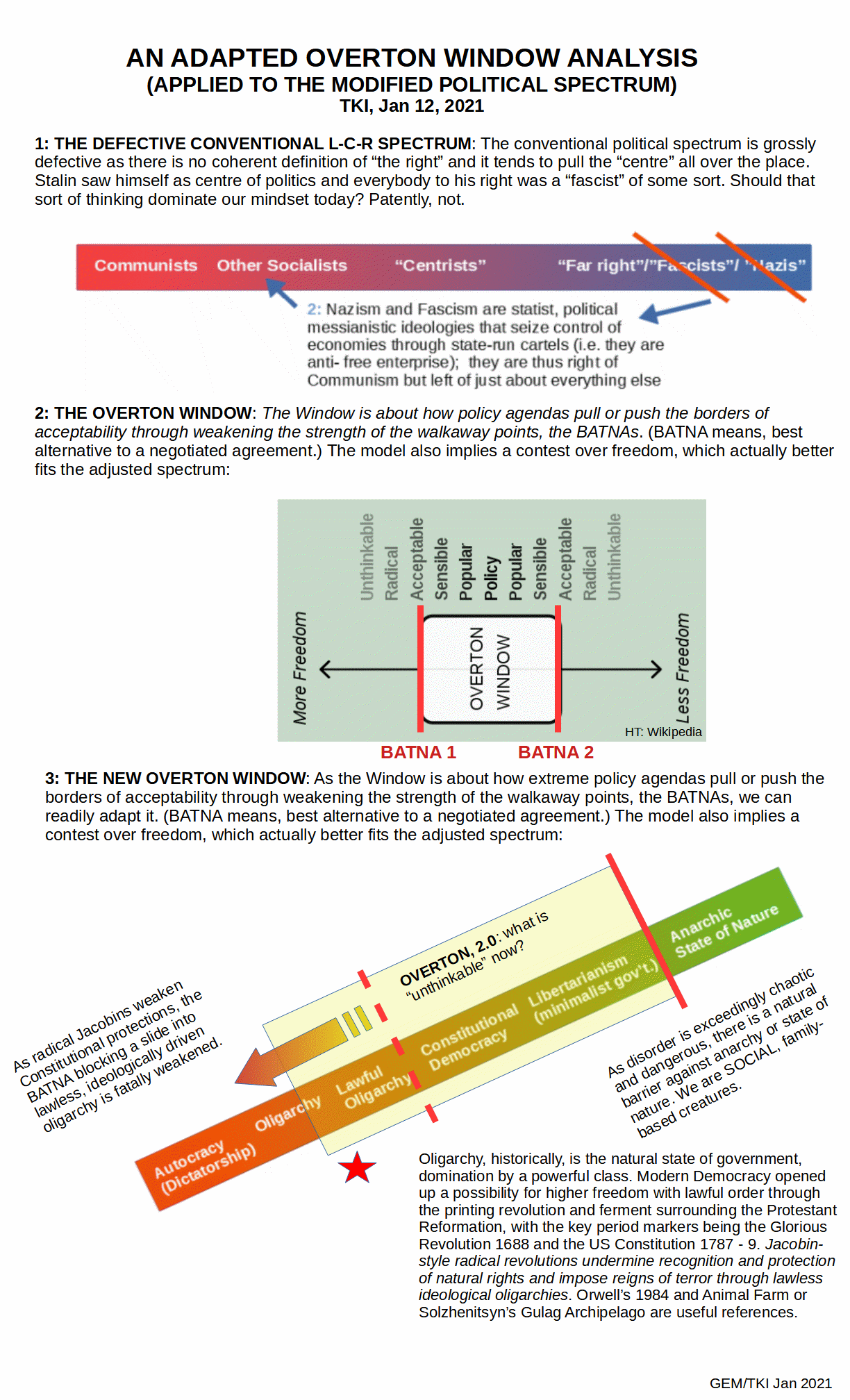
The issue becomes pivotal, once we ponder the premise that the typical, “natural” tendency of government is to open or veiled lawless oligarchy:
So, let us hear Cicero in his On The Republic, Bk 3 [c. 55 – 54 BC]:

{22.} [33] L . . . True law is right reason in agreement with nature , it is of universal application, unchanging and everlasting; it summons to duty by its commands, and averts from wrongdoing by its prohibitions. And it does not lay its commands or prohibitions upon good men in vain, though neither have any effect on the wicked. It is a sin to try to alter this law, nor is it allowable to attempt to repeal any part of it, and it is impossible to abolish it entirely. We cannot be freed from its obligations by senate or people, and we need not look outside ourselves for an expounder or interpreter of it. And there will not be different laws at Rome and at Athens, or different laws now and in the future, but one eternal and unchangeable law will be valid for all nations and all times, and there will be one master and ruler, that is, God, over us all, for he is the author of this law, its promulgator, and its enforcing judge. Whoever is disobedient is fleeing from himself and denying his human nature, and by reason of this very fact he will suffer the worst penalties, even if he escapes what is commonly considered punishment. . . . – Marcus Tullius Cicero, On the Republic, Bk 3

This, of course, is further reflected in his De Legibus, which lays out a framework:

With respect to the true principle of justice, many learned men have maintained that it springs from Law. I hardly know if their opinion be not correct, at least, according to their own definition; for “Law (say they) is the highest reason, implanted in nature, which prescribes those things which ought to be done, and forbids the contrary.” This, they think, is apparent from the converse of the proposition; because this same reason, when it [37]is confirmed and established in men’s minds, is the law of all their actions.

They therefore conceive that the voice of conscience is a law, that moral prudence is a law, whose operation is to urge us to good actions, and restrain us from evil ones.

We see in the Angelic Doctor, a broadening of the framework, elaborating four domains of law:

Thus, following Aquinas, we can see that arguably there is an intelligible core of law coeval with our responsible, rational, significantly free nature. This built-in law turns on inescapable, thus self-evident truths of justice and moral government, which rightly govern what courts may rule or parliaments legislate, per the premise of justice moderated by requisites of feasible order in a world that must reckon with the hardness of men’s hearts. Where, we are thus duty bound, morally governed creatures.

Hence, we come to the sense of duty attested to by sound conscience [“conscience is a law”], that breathes fire into what would otherwise be inert statements in dusty tomes. We may term these, by extension, the Ciceronian First Duties of Reason:

FIRST DUTIES OF RESPONSIBLE REASON

We can readily identify at least seven inescapable first duties of reason. “Inescapable,” as they are so antecedent to reasoning that even the objector implicitly appeals to them; i.e. they are self-evident. Namely, duties,

1 – to truth, 

2 – to right reason

3 – to prudence, 

4 – to sound conscience, 

5 – to neighbour; so also, 

6 – to fairness and

7 – justice 

x – etc.

[I add, Mar 12, for clarity:] {Of course, there is a linked but not equivalent pattern: bounded, error-prone rationality often tied to ill will and stubbornness or even closed mindedness; that’s why the study of right reason has a sub-study on fallacies and errors. That we seek to evade duties or may make errors does not overthrow the first duties of reason, which instead help us to detect and correct errors, as well as to expose our follies.}

Such built-in . . . thus, universal . . . law is not invented by parliaments, kings or courts, nor can these principles and duties be abolished by such; they are recognised, often implicitly as an indelible part of our evident nature. Hence, natural law,” coeval with our humanity, famously phrased in terms of “self-evident . . . rights . . . endowed by our Creator” in the US Declaration of Independence, 1776. (Cf. Cicero in De Legibus, c. 50 BC.) Indeed, it is on this framework that we can set out to soundly understand and duly balance rights, freedoms and duties; which is justice, the pivot of law.

The legitimate main task of government, then, is to uphold and defend the civil peace of justice through sound community order reflecting the built in, intelligible law of our nature. Where, as my right implies your duty a true right is a binding moral claim to be respected in life, liberty, honestly acquired property, innocent reputation etc. To so justly claim a right, one must therefore demonstrably be in the right.

Where, prudence can also be seen via Aristotle’s summary:  “. . . [who aptly] defined prudence as recta ratio agibilium, ‘right reason applied to practice.’ The emphasis on ‘right’ is important . . .  Prudence requires us to distinguish between what is right and what is wrong . . . If we mistake the evil for the good, we are not exercising prudence—in fact, we are showing our lack of it.”

Of course, we just saw a 400+ comment thread that saw objectors insistently, studiously evading the force of inescapability, where their objections consistently show that they cannot evade appealing to the same first duties that they would dismiss or suggest were so obscure and abstract that they cannot serve as a practical guide. The history of the modern civil rights movement once the print revolution, the civilisational ferment surrounding the reformation and the rise of newspapers, bills, coffee houses etc had unleashed democratising forces speaks to the contrary. The absurdity of appealing to what one seeks to overthrow simply underscores its self evidence. But free, morally governed creatures are just that, free. Even, free to cling to manifest absurdities.

This approach, of course, sharply contrasts with the idea that law is in effect whatever those who control the legal presses issue under that heading; based on power balances and so in effect might and/or manipulation. Aquinas’ corrective should suffice to show that not all that is issued under colour of law is lawful, or even simply prudent towards preserving order in a world of the hardness of men’s hearts.

Yes, obviously, if we are governed by built-in law, that raises the question that there is a cosmic law-giver, qualified to do so not by mere sheer power but also by being inherently good and utterly wise. Such a root of reality also answers the Hume Guillotine and the Euthyphro dilemma: an inherently good and utterly wise, necessary and maximally great being root of reality would bridge IS and OUGHT in the source of all reality and would issue good and wise, intelligible built-in law.

What of Mathematics? The answer is, of course, that a core of Math is inherent in the framework of any possible world. So, this would extend that core of Math tied to sets, structures and quantities expressed in N,Z,Q,R,C,R* etc to any actual world. That answers Wigner’s puzzlement on the universal power of Math and it points to, who has power to create an actual world in which we have fine tuning towards C-Chemistry, aqueous medium, cell based life? Likewise, it is suggestive on the source of the language and algorithms found in D/RNA etc.

Lest we forget, here is Crick, to his son, March 19, 1953:
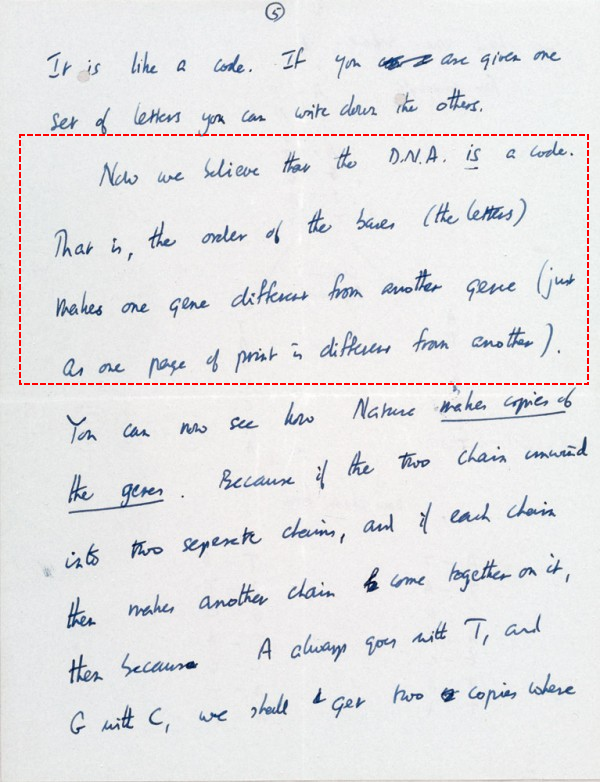
So, we have come full circle, to law as expressing ordering principles of the dynamic-stochastic physical world and those of the world of intelligent, rational, morally governed creatures. Surprise — NOT — the design thesis is central to both. END

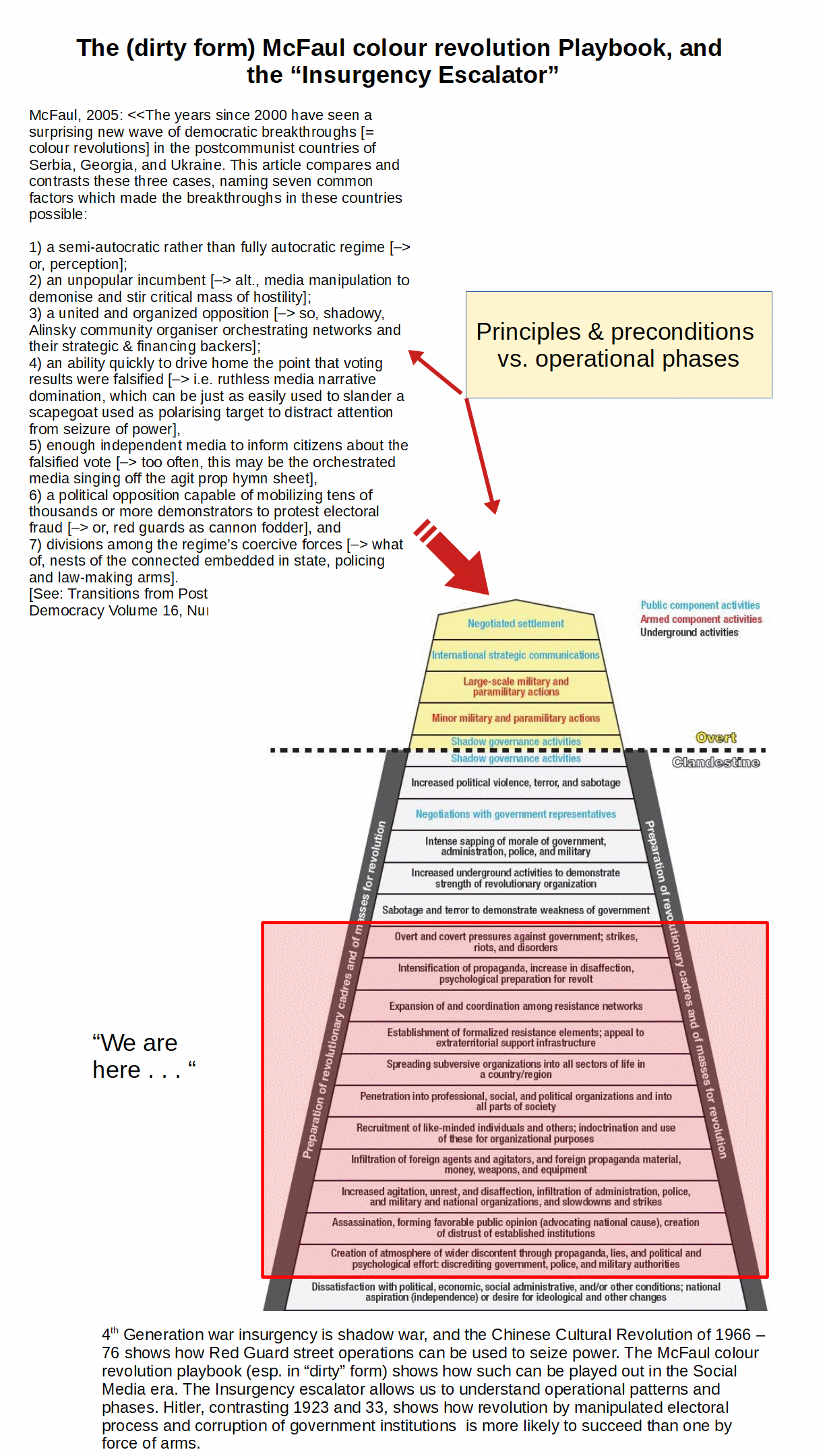
PS: As a reminder, the McFaul dirty form colour revolution framework and SOCOM insurgency escalator
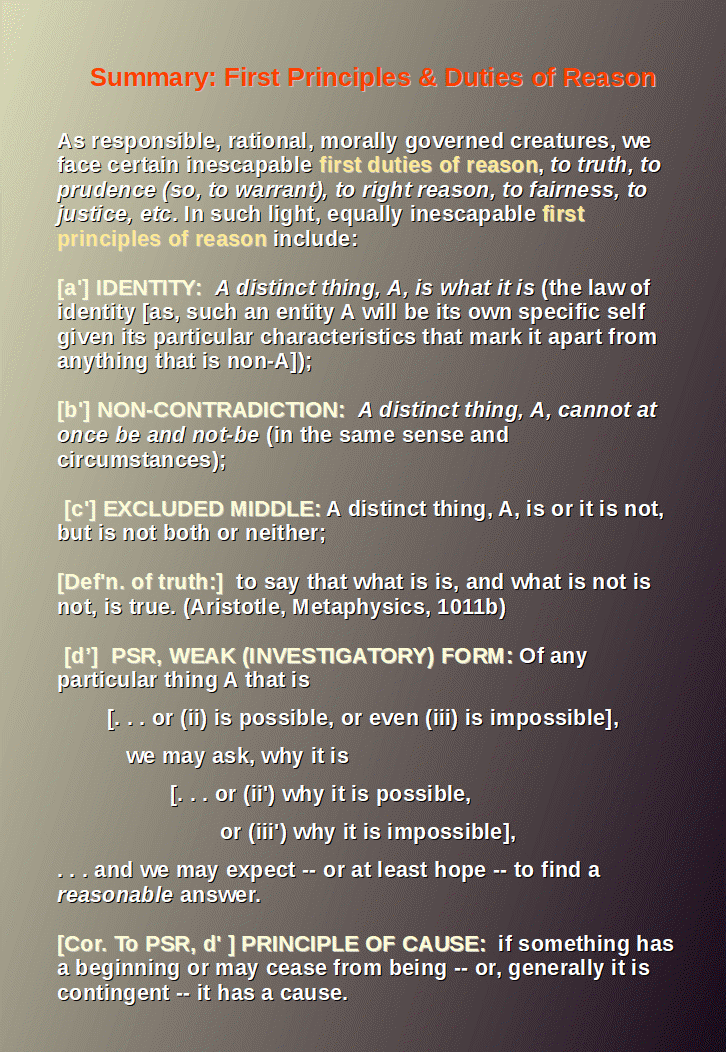
U/D Feb 14: Outlines on first principles of right reason:
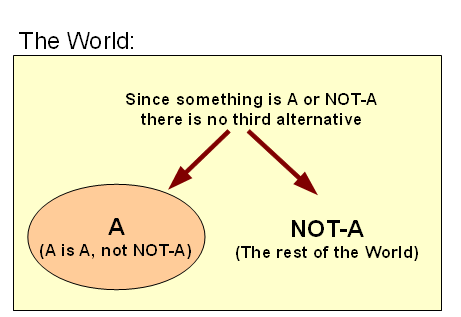
Here, we see that a distinct A — I usually use a bright red ball on a table:

and contrast a red near-ball in the sky, Betelgeuse as it went through a surprise darkening (something we observed separately and independently, it was not a figment of imagination):

. . . is distinct from the rest of the world. A is itself i/l/o its characteristics of being, and it is distinct from whatever else is not A, hence we see that in w there is no x that is A and ~A and any y that is in W will either be A or not A but not both or neither. These three are core to logic: P/LOI, LNC, LEM.

We may extend to governing principles that we have duties toward — never mind whoever may disregard such (and thereby cause chaos):
U/D March 13: The challenge of building a worldview i/l/o the infinite regress issue:
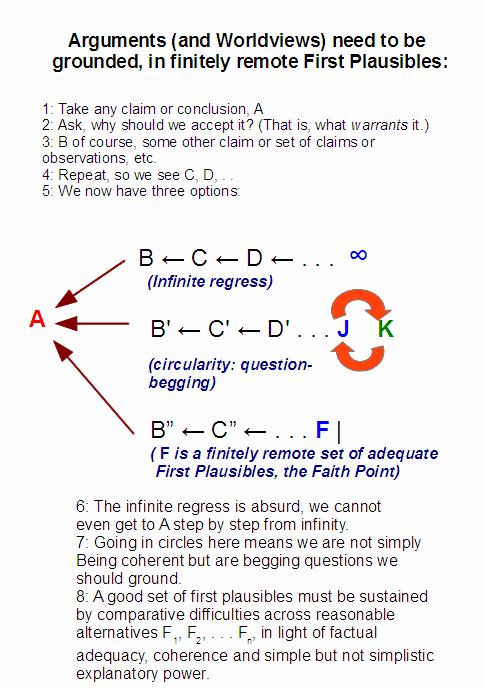
A summary of why we end up with foundations for our worldviews, whether or not we would phrase the matter that way}

Framing a ship:

. . . compare a wooden model aircraft:

. . . or a full scale, metal framework jet:

In short, there is always a foundational framework for any serious structure.

Comments
SA2, duties govern free creatures, they set out the ought, the wise, the good but inherently we may disregard such. They do not compel, or we would not be free, they guide, warn and even command but do not compel. Witness, the voice of sound conscience. Computers compute, on mechanical cause effect chains, with statistical injections, they do not freely infer from ground to consequent. We do. Similarly, a computer does not contemplate its duty, it simply carries out its programming, mechanically and/or stochastically. We contemplate duty and act one way or another by choice. That we have to go into this speaks volumes on where we are today. KFkairosfocus
February 14, 2021
February
02
Feb
14
14
2021
07:51 AM
7
07
51
AM
PDT
Does such help?
No. It is just a basic measure. It is not close to equivalent to what is correct behavior or how other people should be treated.jerry
February 14, 2021
February
02
Feb
14
14
2021
07:42 AM
7
07
42
AM
PDT
KF in 311 quotes an analogy as argument against subjective ending in,
"Therefore, there is no objective “truth” in astronomy. The size, shape and motion of the earth (e.g. whether the earth is flat), whether there are other planets, etc. are only matters of opinion which vary from culture to culture."
If you wish to go by science as determiner of objective truths, quantum experimentation has already disproved that the states and characteristics revealed by any measurement observation are objective facts of that which is being observed. The analogy fails. Indeed, quantum physics has disproved virtually all of your worldview and virtually all of your inferences and conclusions. QM has shown that the objective truth about existence is that it is entirely consciousness interpreting and processing information that can be interpreted and processed countless ways, even into simultaneously contradictory, factual states. Therefore, astronomical measurements cannot discern objective facts. I mean, if you want to go the science route in making claims about "objective facts."William J Murray
February 14, 2021
February
02
Feb
14
14
2021
07:39 AM
7
07
39
AM
PDT
I believe one of KF’s “first duties” is a duty to truth. Please correct me if I am wrong. Your writing is often very difficult to parse. If this is true then this would be a duty that we are born with. But anyone who has had experience with a small child knows, they lie all the time. We have to repeatedly reinforce the importance of telling the truth. And we do this by explaining the possible consequences of lying. Since Kairosfocus is fond of quoting long dead men as authorities, I thought I would give you this one: ” “Give me a child until he is seven and I will show you the man.”” That highlights the importance of education, reinforcement, feedback, etc in the development of our morality.Steve Alten2
February 14, 2021
February
02
Feb
14
14
2021
07:29 AM
7
07
29
AM
PDT
WJM, while I intend to follow up later, I put down as a marker on inescapably true and so self-evident first truths, this from Epictetus:
DISCOURSES CHAPTER XXV How is logic necessary? When someone in [Epictetus'] audience said, Convince me that logic is necessary, he answered: Do you wish me to demonstrate this to you?—Yes.—Well, then, must I use a demonstrative argument?—And when the questioner had agreed to that, Epictetus asked him. How, then, will you know if I impose upon you?—As the man had no answer to give, Epictetus said: Do you see how you yourself admit that all this instruction is necessary, if, without it, you cannot so much as know whether it is necessary or not? [Notice, inescapable, thus self evidently true and antecedent to the inferential reasoning that provides deductive proofs and frameworks, including axiomatic systems and propositional calculus etc. Cf J. C. Wright]
I do so, to establish the concept. There are first truths that are inescapable and antecedent to actual argument. They cannot actually be proved from more basic things, as to try inevitably uses them. Similarly, they cannot be successfully denied or dismissed as, likewise, the attempt inevitably rests on such. Indeed, onward argument is governed by such truths. Epictetus addresses first principles of right reason, and the duty to right reason lurks therein. These are not part of any particular world view, they are plumb lines antecedent to such elaborations. KF PS: Paul of Tarsus addresses the central first principle, distinct Identity:
1 Cor 14:7 If even lifeless instruments, such as the flute or the harp, do not give distinct notes, how will anyone know what is played? 8 And if the bugle gives an indistinct sound, who will get ready for battle?
In short, meaningful communication pivots on distinct identity, and that makes it absolutely antecedent, as we are communicative creatures. Where, non contradiction and excluded middle are close corollaries. PPS: I will now add to the OP, two small graphics on first principles of right reason.kairosfocus
February 14, 2021
February
02
Feb
14
14
2021
07:03 AM
7
07
03
AM
PDT
Jerry, in 254 I cited dictionaries in summary of morality: https://uncommondescent.com/laws/should-we-recognise-that-laws-of-nature-extend-to-laws-of-our-human-nature-which-would-then-frame-civil-law/#comment-724022
on morality and on objectivity. morality character or virtue; concern with the distinction between good and evil or right conduct; the right principles of human conduct: morality lessons Not to be confused with: mortality – the quality or state of being mortal; death rate; the ratio of deaths in a given area to the population of that area: mortality figures Abused, Confused, & Misused Words by Mary Embree Copyright © 2007, 2013 by Mary Embree mo·ral·i·ty (m?-r?l??-t?, mô-) n. pl. mo·ral·i·ties 1. The quality of being in accord with standards of right or good conduct: questioned the morality of my actions. 2. A system or collection of ideas of right and wrong conduct: religious morality; Christian morality. 3. Virtuous conduct: commended his morality. 4. A rule or lesson in moral conduct: sermons noted for their moralities. American Heritage® Dictionary of the English Language, Fifth Edition. Copyright © 2016 by Houghton Mifflin Harcourt Publishing Company. Published by Houghton Mifflin Harcourt Publishing Company. All rights reserved. ob·jec·tive (?b-j?k?t?v) adj. 1. a. Existing independent of or external to the mind; actual or real: objective reality. b. Based on observable phenomena; empirical: objective facts. 2. Uninfluenced by emotions or personal prejudices: an objective critic. See Synonyms at fair1. 3. Medicine Relating to or being an indicator of disease, such as a physical sign, laboratory test, or x-ray, that can be observed or verified by someone other than the person being evaluated. 4. Grammar a. Of, relating to, or being the case of a noun or pronoun that serves as the object of a verb. b. Of or relating to a noun or pronoun used in this case. n. 2. A thing or group of things existing independent of the mind. ob·jec?tive·ly adv. ob·jec?tive·ness n. American Heritage® Dictionary of the English Language, Fifth Edition. Copyright © 2016 by Houghton Mifflin Harcourt Publishing Company. Published by Houghton Mifflin Harcourt Publishing Company. All rights reserved. Truth, we know: accurate description of a relevant state of affairs. Here, moral truth would be truth regarding right, wrong and duty regarding same. Ironically, were relativists or subjectivists or emotivists able to establish that there are no objective moral truths, such would be self-defeating as that would be a moral truth. However, the material moral truth is that we find ourselves inescapably duty-bound to truth, to right reason, to prudence [including warrant], to sound conscience, to neighbour [see sev on atheists accepting that!], so to fairness and justice etc. Where justice is due balance of rights, freedoms and duties, especially in the context of a habitual disposition or a state of community affairs, the civil peace of justice. We can readily see (just scroll up) that even objectors are inescapably forced to appeal to same.
In 265 I followed up on objectivity, truth and relativism etc: https://uncommondescent.com/laws/should-we-recognise-that-laws-of-nature-extend-to-laws-of-our-human-nature-which-would-then-frame-civil-law/#comment-724042
On morality, it is a dominant view that we have such a diversity of opinions that there is no objective truth. But in fact, this is instantly self-defeating: it claims to be warranted, thus objective, truth regarding duty, precisely what it denies. It is self-defeating. Similarly, I clip: generally, we have: The Cultural Differences Argument 1. Different cultures have different moral codes. ________________________________________________________________ Therefore, there is no objective “truth” in morality. Right and wrong are only matters of opinion, and opinions vary from culture to culture. Is this a sound argument? No. It is not a sound argument because the conclusion does not follow from the premise (in other words, it is not valid). The fact that cultures have differing beliefs about what is moral does not imply that morality is culturally relative. It is easy to see this if we consider an analogous argument: 1. Historically, cultures have had a variety of different views about the size, shape and motion of the earth, its relation to celestial bodies, and astronomy generally. _________________________ Therefore, there is no objective “truth” in astronomy. The size, shape and motion of the earth (e.g. whether the earth is flat), whether there are other planets, etc. are only matters of opinion which vary from culture to culture. Not very convincing, is it? We are inclined to say that many cultures have simply been wrong on various points. The Medieval Europeans [–> not the educated, they knew their bEratosthenes, Ptolemy, Aristotle etc] believed that the earth was flat, that the planets were perfect spheres moving in perfect circles, and that the earth was stationary. We now reject all of these claims on the basis of well-supported scientific theory. The bottom line: mere disagreement does not imply relativism. This is not to say that we have shown Cultural Relativism to be false. The present point is just that the Cultural Differences Argument fails to establish Cultural Relativism. A distinction is made here, between a fallacy and warrant. A warranted conclusion may be erroneously argued on fallacies that fail but stronger arguments exist. This is highlighting the strawman fallacy. However, we have already seen that the cultural/institutional relativism argument (and its extension to the individual) fails by self referential incoherence. There is no objective moral truth that there are no objective moral truths. Where, a truth claim is a moral one just in case that it addresses, directly or indirectly, issues of duty so too right and wrong.
Does such help? KFkairosfocus
February 14, 2021
February
02
Feb
14
14
2021
06:56 AM
6
06
56
AM
PDT
A few years ago Ben Shapiro, who is an orthodox Jew, wrote about an incident that happened to some of the female members of the synagogue he attends.
a transgender woman — a biological male who suffers from gender dysphoria — came to the gym. This man, who retains his male biological characteristics, then entered the locker room and proceeded to disrobe. When told by management that he could use a private dressing room, he refused, announcing that he was a woman and could disrobe in front of all the other women. The predictable result: Many of the actual biological women began cancelling their memberships. When the management asked people higher in the chain, they were simply told that to require the man to use a private dressing room or to reject his membership would subject the company to litigation and possible boycott.
https://www.nationalreview.com/2018/11/transgender-politics-sympathy-cannot-trump-reality/ It appears to me that the secular progressive left over the past couple of decades has invented a new right, the right of universal affirmation and approval-- and a right not to be offended. For example, society as a whole needs to affirm and approve of transgender people because society has been guilty of oppressing them, or so the theory goes. However, how can this be considered a right unless everyone has that right? Aren’t rights supposed to be equal rights? Don’t the women attending the health club have any rights anymore? Or have their rights been trumped by a single transgender person? Where are my rights of affirmation and approval? Where are my rights not to be offended? If they are not offered to me-- a straight white male-- then they are not equal rights. Free and open democratic societies must be founded on the basis of equal rights. Civil rights leader Martin Luther King famously said, “I have a dream that my four little children will one day live in a nation where they will not be judged by the color of their skin, but by the content of their character.” Tragically the secular progressive left has gone in the opposite direction. Their pretension of being opposed to racism which is at itself racist. For example, on college campuses certain groups, blacks and Hispanics, are presented as victims while whites are presented as oppressors. Indeed, according to the left’s racial doctrine, there is no such thing as anti-white racism. Instead you have the “myth of white privilege,” which allows them vilify and demonize people based on the color of their skin. That’s no longer the mindset of a few radical professors and students, it’s the policy of the bureaucrats and it’s written into curriculum. However, it’s not actually a curriculum which students are taught, it’s an ideology into which they are indoctrinated. Notice what the secular progressive left’s ideology allows them to now do. In their minds they are now free to discriminate with impunity against those whom they disagree. In true 1984 style they have redefined tolerance. Tolerance has traditionally has been defined as tolerating those with whom you disagree… It has been redefined as championing the cause of the so-called oppressed. Therefore, they have no qualms about suppressing the rights of those whom they deem to be the oppressors-- their rights they have been CANCELLED… freedom of speech, freedom of the press, freedom of thought and conscience and freedom of religion. That’s the end of democracy.john_a_designer
February 14, 2021
February
02
Feb
14
14
2021
06:50 AM
6
06
50
AM
PDT
I'm going to snip WJM's personal stuff and highlight his analysis of KF's approach to this continual discussion about "duties to right reason". I have bolded WJM's statements about KF's fundamental flaw. This explains some things well.
I see this as your projection of your particular belief system onto the world and others. ... You’re interpreting everyone’s behavior and motivations (even going to the point of asserting their subconscious adherence to “duties”) from the lens of your religious beliefs, not pure logic extending from self-evidently true statements to necessarily true statements that extend from that source. There are very few self-evident truths, such as “I exist,” “I experience,” “2+2=4,” and A=A. Common behaviors do not make for a self-evident truth or a duty. Common subconscious patterns do not make something a self-evident or necessary truth, much less a behavioral obligation. .... However, I don’t think you’re capable of understanding people who think and operate outside of your worldview, and that is probably what drives you to repost the fundamentals of your worldview over and over, and interpret everyone according to your worldview, badgering them into accepting that your worldview applies to them, and that if they do not accept it, they are denying some essential moral obligation or duty of right reason, or deluding themselves. ... IMO, morality doesn’t rise to the level of providing self-evidently true statements about existence. It is, again IMO, a deep subconscious program perhaps most people here, in this world, share in terms of some very basic elements.
Viola Lee
February 14, 2021
February
02
Feb
14
14
2021
06:15 AM
6
06
15
AM
PDT
Jerry, people have responded. Seversky did. KF did. Your offering at 173 was a dictionary definition that seemed pretty standard and didn't seem to need a response. Therefore, I'm not sure I understand what your point is. Can you point out ways that you think people in this discussion are using different definition of morality?Viola Lee
February 14, 2021
February
02
Feb
14
14
2021
05:55 AM
5
05
55
AM
PDT
In #156 I asked for a definition of “morality” and provided a basis for moral behavior. No one responded. In #173, I provided a definition of morality. No one responded. Unless, one is willing to use common definitions and most here don’t, their comments will dissipate into vapidity. That is what most actually desire here because they don’t want to be held accountable for the coherence/relevance of their comments. They want to rant and accuse. Kf, rightly sees a once in history phenomenon under severe attack, and tries to explain why it is necessary to go down a certain path to maintain it. The modern world is a fluke that has provided relief for billions of people and originated in a small place in this world. When this world started to emerge, there was only a half billion on our planet. Now there are over 7 billion. It is this system of providing for these billions that is being challenged with no assurance that what replaces it will be anywhere as effective. So is morality the system that allowed this to happen? Nothing in the history of mankind has come even remotely close to providing material relief (goods, medical, education) for so many Few here or anywhere address the obvious. Instead they nitpick the good with irrelevancies.jerry
February 14, 2021
February
02
Feb
14
14
2021
04:54 AM
4
04
54
AM
PDT
As far as "natural laws" are concerned, IMO these are extrapolations of an inverted perspective of existence that cannot, even in principle, be supported. What most accept as "natural laws" are rooted in a hypothetical premise nobody can even potentially gather evidence to support.William J Murray
February 14, 2021
February
02
Feb
14
14
2021
04:54 AM
4
04
54
AM
PDT
KF said:
PS: As an example, it is self-evidently wrong, evil, wicked, to kidnap, bind, sexually assault and murder a young child for one’s pleasure.
And yet, people we call sociopaths don't think anything of it, even if they hide their activities to avoid being criminally charged and incarcerated. Just because most people share deep emotional programming in this world that makes them react with disgust to that example, doesn't mean everyone is programmed that way. There are without doubt people that enjoy such cruelty. IMO, morality doesn't rise to the level of providing self-evidently true statements about existence. It is, again IMO, a deep subconscious program perhaps most people here, in this world, share in terms of some very basic elements.William J Murray
February 14, 2021
February
02
Feb
14
14
2021
04:29 AM
4
04
29
AM
PDT
KF @293: I see this as your projection of your particular belief system onto the world and others. Personally, I don't hold anyone in contempt, and I see your warning of the eventual failure of systems not built on your model to be specious. IMO, any system regardless of what it is built on will fail when enough people become malcontent with the system. People have lived for extended periods of time under dictatorships, supposedly divine monarchies, communism, socialism and democracies, the longest running of which was almost 2000 years, the Pandya Dynasty, which I believes was a form of divine monarchies. Was the Pandya Dynasty a "failure?" 1850 years makes it the most successful civilization of all time, at least in terms of duration. Their culture, even through hundreds of years of the various rulers warring with each other over power and land, stayed largely intact for that long because of a deep, common religious/spiritual belief system that was largely unquestioned by the population. If reason and morality was applied, it was through the lens of their religious beliefs. Which, IMO, is what you are doing here. You're interpreting everyone's behavior and motivations (even going to the point of asserting their subconscious adherence to "duties") from the lens of your religious beliefs, not pure logic extending from self-evidently true statements to necessarily true statements that extend from that source. There are very few self-evident truths, such as "I exist," "I experience," "2+2=4," and A=A. Common behaviors do not make for a self-evident truth or a duty. Common subconscious patterns do not make something a self-evident or necessary truth, much less a behavioral obligation. I do not appeal to these things in every conversation I have because I recognize that not all situations or conversations are logical or are about truth or moral obligations. I usually fashion my side of conversations to fit the apparent psychological patterns of the person I am conversing with. My choices never proceed from a perspective of moral obligation or pursuit of truth; my choices entirely serve my personal enjoyment - not pleasure per se, but a broad and deep version of "enjoyment" that includes all sorts of varied experiences. I can argue both for or against most perspectives. I can choose to hold conditional beliefs, and choose to hold them as long as they serve my interests, and choose to ditch them if a different belief better serves my goals. Do I think my goals represent some "truth?" No, not outside of parsing between what I enjoy and what I do not. Whether or not my goals are morally "wrong" by some external or objective standard never enters my mind. However, I don't think you're capable of understanding people who think and operate outside of your worldview, and that is probably what drives you to repost the fundamentals of your worldview over and over, and interpret everyone according to your worldview, badgering them into accepting that your worldview applies to them, and that if they do not accept it, they are denying some essential moral obligation or duty of right reason, or deluding themselves.William J Murray
February 14, 2021
February
02
Feb
14
14
2021
03:32 AM
3
03
32
AM
PDT
@kairosfocus:
Speaking of, does your state have something like the 1914 vintage Official Secrets Act and the like, with effectively every document in the Civil Service defaulting to confidential, with inadequate disclosure in public interest and ombudsman laws?
Not that I know of.
What is the default in criminal court, is it innocent until proved guilty under due process and beyond reasonable doubt?
Of course. That's one of the most important principles.
Are your educators civil servants?
Some are, some aren't.
What happens in a state of emergency?
I thought there was a simple answer. Then I read up on it. And it's complicated. But as far as I understand in general it's similar to US in some aspects.
Is there a written Constitution with a bill of rights, or is the legislature supreme?
Yes, there's a written consitution listing rights.
What do your cyber crime, codes and ciphers, epidemic/public health, slander/defamation, hate speech etc laws provide?
That's a large topic. I know there is a troublesome cyber security law in making which could comprimise data privacy. Our company already migrated cloud data from the US servers to local servers (because our customers fear their data is not safe if it's located in the US), and now this. Hate speech laws do exist and are imo unfortunately harsh. Usually racists are targeted by those laws.AndyClue
February 14, 2021
February
02
Feb
14
14
2021
01:43 AM
1
01
43
AM
PDT
SA2, kindly note the just above. KFkairosfocus
February 14, 2021
February
02
Feb
14
14
2021
12:40 AM
12
12
40
AM
PDT
VL, we have shown any number of objective moral truths above, truths about duty to do the right and turn from wrong, error and folly. This discussion is about a core, coherent and governing cluster of such truths, considered as coeval with our humanness, i.e. general/ universal/ pervasive/ inescapable (so inescapably true and self-evident) laws of our human nature. So pervasive and inescapable in fact, that the attempt to deny or side-step, in trying to be persuasive, invariably appeals to the target audience's intuitive recognition of the force of said first duties. But, in an age given over to relativism etc, such is an unwelcome, bitter red pill. We want the blue one instead. KF PS: As an example, it is self-evidently wrong, evil, wicked, to kidnap, bind, sexually assault and murder a young child for one's pleasure. Sadly, this is a real world case. It answers to right to life and liberty, to duties to neighbour and to justice, to the nihilistic, self-refuting notion that might and/or manipulation make 'right,' 'rights,' 'duties,' 'truth,' 'warrant,' 'reason,' etc. (And no, it is not always personally advantageous to abide by principles, if one has power or cleverness, advantages can be had from exploiting others. Here, some murderer with perverse lusts got his thrills from subjecting a child to terror, pain, helpless victimisation, sexual torture and agonising death, in a murder that has never been solved. It is amazing what has to be spelled out these days. Stalin's show trials were advantageous to his further aggrandisement of sheer power and they worked. Oh, it's not sustainable is a disguised appeal to duty to neighbours of the future, and as Keynes said, in the long run we are all dead, i.e. why should I care about posterity? In short, the sustainability principle is at root an ethical one. The pervasiveness of duties is there yet again.)kairosfocus
February 14, 2021
February
02
Feb
14
14
2021
12:08 AM
12
12
08
AM
PDT
JaD, You have gone to the heart of the indoctrination we have been subjected to, with astonishing success. Let's go back to distinct identity, where a thing A is itself, i/l/o its distinguishing characteristics, x1,x2 . . . xn say. Where, were say xi and xj such that xi = ~xj, then it would be impossible of being, such as a square circle. [Notice, the heavy weather made of that, above. As for superposed entities, a square is a superposition of a rhombus and a right-angle vertex quadrilateral, i.e. a rectangle. Such is coherent and feasible. By contrast, as a circle is a particular curved form swept by a radius vector centred on a fixed point with all points on its perimeter equidistant from the centre, a square circle requires a contradiction in the superposition and is infeasible. As for quantum cases, superposition logic has not gone away, and note that the Mathematics and the observational science pivot on POI and close corollaries non contradiction and excluded middle. Without these, we cannot communicate or think in distinct terms.] Such extends to the complex entity, a possible world, W. Collectively, the entities in it and their attributes must be mutually possible. So, our actual world, as to its actual constituents, must be mutually consistent. Where, inject that truth is accurate description of reality; entities and states of affairs. A truthful description of a world must be coherent. We already know that once we embrace a contradiction, such can imply both true and false consequents, while a true antecedent implies only true consequents. This is in fact vat the heart of mathematical explorations and proofs. Starting from reliable axioms, we derive and trust then apply theorems, routinely. We know that if we suggest an assertion a and derive from it a contradiction, a is falsified and we freely conclude not-a, ~a. By contrast, models are known to be or to be prone to be false and unreliable beyond a tested range. So, while there are many opinions or perceptions or attempted world-models/explanations in the face of a common reality, there is just that, a common reality. Our perceptions, opinions etc are error prone, but reality is as it is. There is no good reason to allow opinion to gobble up truth. Truth is an important concept and actuality: to accurately describe reality, saying of what is, that it is and of what is not that it is not. Yes, our descriptions tend to have errors and our models have limited reliability. But we have means to test alternatives and we find ourselves duty-bound to seek truth, right reason and warrant, thus wider discernment and prudence. We are in a place to see some of the rot driving our civilisation towards shipwreck on current line of drift. KFkairosfocus
February 13, 2021
February
02
Feb
13
13
2021
11:48 PM
11
11
48
PM
PDT
I am pretty sure I have responded to the questions you ask in your last paragraph, JaD. I'd go over it again if I thought you would engage in discussion. Also, I have key questions that are related to what you write: 1. How do we know that objective transcendental moral standards exist? 2. How we know what moral standards apply to particular real-world moral questions?Viola Lee
February 13, 2021
February
02
Feb
13
13
2021
08:15 PM
8
08
15
PM
PDT
A few years ago student activists at Claremont Pamona College in California succeeded in shutting down a lecture by Manhattan Institute scholar and author Heather Mac Donald. In a letter to the school’s president they wrote:
The idea that there is a single truth — ‘the Truth’ — is a construct of the Euro-West that is deeply rooted in the Enlightenment, which was a movement that also described Black and Brown people as both subhuman and impervious to pain,” the students’ letter stated, according to The Claremont Independent. “This construction is a myth and white supremacy, imperialism, colonization, capitalism, and the United States of America are all of its progeny.”
The following article gives several more long excerpts from the letter: http://www.patheos.com/blogs/markmeckler/2017/04/letter-shows-exactly-campus-radicals-think-free-speech/ Libertarian writer, Kat Timf observes that…
“Once you start trying to argue that it’s bad to encourage people to seek the truth, you have officially reached peak idiot. For one thing, admitting that you find valuing the truth to be offensive hardly helps your case when you’re literally trying to convince others that something is true.”
Read more at: http://www.nationalreview.com/article/446862/pomona-students-truth-myth-and-white-supremacy Again, you can’t begin to make a moral argument unless it is based on moral TRUTH and that it is true that morality is really grounded in interpersonal moral obligation. It appears the Pomona students reject moral truth but still believe in some kind of interpersonal moral obligation. That is at best logically fallacious, at worse it is either hypocritical or absurd. Their beliefs and opinions are clearly based on passion not reason. When such idiotic thinking begins to spread through a democratic society it’s putting that society at risk. It will first lead to anarchy and then end up with tyranny or totalitarianism. Again, as I have asked before: From the standpoint of moral subjectivism, where by definition morals and ethics must be arbitrary, what basis do we have for universal human rights? Would a country like the US even be possible without a concept of universal human rights? Even though our concept of human rights at the founding of our country was very imperfect (slavery, mistreatment of native people, unequal rights for women) there is absolutely no basis for such universal rights from a moral subjectivist point of view.john_a_designer
February 13, 2021
February
02
Feb
13
13
2021
08:09 PM
8
08
09
PM
PDT
SA2, that expectation reflects the inescapability of first duties that are peeking through in your own arguments. KFkairosfocus
February 13, 2021
February
02
Feb
13
13
2021
05:30 PM
5
05
30
PM
PDT
Kairosfocus “ WJM (attn SA2), the pivot is that we expect others to know and implicitly acknowledge the duty, and often unconsciously show our own implicit knowledge.” Yes, I expect others to be able to reason for themselves that killing, violence, cheating, lying, etc is not in their best interests over the long run. As I have. Why is that so difficult for you to understand. More importantly, how do you use your principle of right reason etc to conclude that same sex marriage is wrong? I predict that you can’t do so without falling back on your religious beliefs.Steve Alten2
February 13, 2021
February
02
Feb
13
13
2021
04:18 PM
4
04
18
PM
PDT
JaD 1. How do we know that objective transcendental moral standards exist? 2. How we know what moral standards apply to particular real-world moral questions?Viola Lee
February 13, 2021
February
02
Feb
13
13
2021
02:53 PM
2
02
53
PM
PDT
I said @ #158 I am willing to answer honest questions. However, it looks like I have to clarify what an honest question is. https://uncommondescent.com/laws/should-we-recognise-that-laws-of-nature-extend-to-laws-of-our-human-nature-which-would-then-frame-civil-law/#comment-723851 *1. An honest ends with the question mark (?) If you say anything beyond that I am going to consider your question as being disingenuous. *2. If it looks like you have your mind made up, then you’re wasting my time. *3. If it looks like you want to be argumentative, then you’re not being honest. Again, I’m not going to waste my time. *4. If it looks like a “gotcha” question, I’m not going to reply.john_a_designer
February 13, 2021
February
02
Feb
13
13
2021
02:30 PM
2
02
30
PM
PDT
WJM (attn SA2), the pivot is that we expect others to know and implicitly acknowledge the duty, and often unconsciously show our own implicit knowledge. We appeal to duties to truth, reason and warrant all the time in these threads for example, and we expect others to acknowledge the force of such. Were such delusional, the self referential collapse would be fatal. Inescapable, inescapably true, self-evident. It is these duties that breathe fire into reason, warrant, wisdom. And those who habitually flout and manipulate the duties, for cause, we hold in contempt. KFkairosfocus
February 13, 2021
February
02
Feb
13
13
2021
01:44 PM
1
01
44
PM
PDT
SA2 @289, Appealing to what may or may not be the eventual effectiveness or consequences of such behavior is not an explanation of how the person involved is necessarily exhibiting a duty to those first principles, which is KF's oft-repeated reply - that no matter what we do or say, we *are* exhibiting acknowledgement of such duties. My question is much like your position - it's convenient to make that claim in an arena where we have agreed to behave that way. Agreement to present our thoughts and arguments in such a manner is not the same as an objective moral duty to do such. I can win any argument and impose my will with a gun without caring whether or not my goal represents the true or the morally good. What "first duty" am I by necessity operating under in that scenario? What enforces my "duty" to something other than doing whatever the heck I feel like?William J Murray
February 13, 2021
February
02
Feb
13
13
2021
10:47 AM
10
10
47
AM
PDT
JaD writes, "In other words, moral realism (objectivism) has been shown pragmatically to work." Then how come people had to fight hard to change things that we most Westerners now deem immoral, such as slavery, women not be allowed to vote and to have other rights, same-sex marriage, sex before marriage, birth control, in vitro fertilization, democracy, religious freedom, etc.? How come we don't have consensus on things like capital punishment; euthanasia and self-assisted death; the use of drugs such as alcohol, marijuana, and nicotine; war; manufacture of weapons of mass destruction, ... The list goes on and on. I'm not sure what evidence you might present to show that "realism (objectivism) has been shown pragmatically to work."Viola Lee
February 13, 2021
February
02
Feb
13
13
2021
10:40 AM
10
10
40
AM
PDT
As I have already written here and elsewhere when it comes to morality and human rights there is a long natural law tradition in the west that moral obligation and human rights are based on something objectively true and transcendent. Cicero understood this when he wrote, “Neither the senate nor the people can give us any dispensation for not obeying this universal law of justice. It needs no other expositor and interpreter than our own conscience. It is not one thing at Rome and another at Athens; one thing today and another tomorrow; but in all times and nations this universal law must forever reign, eternal and imperishable.” https://uncommondescent.com/intelligent-design/how-the-warren-debacle-demonstrates-the-insanity-of-the-progressive-war-on-reality/#comment-666474 Saint Paul and Aquinas also appealed to moral natural law. For example, in Romans 2:13-15 Paul writes, “For it is not the hearers of the law who are righteous before God, but the doers of the law who will be justified. 14 For when Gentiles, who do not have the law, by nature do what the law requires, they are a law to themselves, even though they do not have the law. 15 They show that the work of the law is written on their hearts, while their conscience also bears witness, and their conflicting thoughts accuse or even excuse them…” I couldn’t find a comprehensive Aquinas quote. However I did find a good summary of Aquinas’ thinking by someone who wrote his PhD dissertation on Natural Law.
I wrote my PhD dissertation on Natural Law (Titled: “Thomas Aquinas on Natural Law and the Twofold End of Humanity), and I hope to publish it in the next few years. Until then, here’s the short version in just 5 easy points: *God designed natural law so that humans participate in God’s eternal law. As rational creatures we can determine and seek that which is good and avoid that which is evil. *According to Thomas Aquinas, the first precept of natural law is “good is to be done and pursued, and evil is to be avoided.” Every subsequent moral precept is based on this “first precept of natural law.” (By the way, you should memorize the underlined quote and never forget it. It is very useful and it will strengthen your understanding of natural law). *The #1 mistake people make about natural law is that they assume that natural law is secular and non-religious. Not true according to Saint Thomas Aquinas. Saint Thomas teaches that the virtue of religion, sacrifice, holidays, and even a natural priesthood pertains to the natural law. Moreover, avoiding idols and worshipping the Creator are derived precepts of the natural law. *Natural law is common to all the nations. It doesn’t matter if you’re a Christian, Muslim, Jew, Hindu, Buddhist, Daoist, animist…natural law applies to you. This means that the testimony of natural law leads one to have a true religion. Thomas Aquinas would say that natural law in the heart of man would argue against idolatry, polytheism, atheism, etc. Hence, the idolatry of, say, Hinduism is banned under natural law. *Natural law is insufficient for human beatitude and salvation. Thomas Aquinas is really clear about this. He teaches that natural law is not enough. A human person can never erase natural law from his heart, but he can mitigate its force in his life. And even if a human person followed natural law perfectly, he would not attain to Heaven, because sanctifying grace is needed to enter the Beatific Vision (vision of God). So then, God gave “Divine Law” in the form of the Old Testament but perfectly in the New Testament. The New Law of the New Testament is really the Holy Spirit who communicates mercy, grace, and love to our souls and body. Hence, the human person after Adam and Eve needs Divine Law to perfect what natural law cannot do. (The heresy of Pelagianism holds that humans can be saved by perfectly following natural law – a big no-no for Catholics!)
https://search.proquest.com/openview/b0ae2ecddcddfdb392fb3580d4275e54/1?pq-origsite=gscholar&cbl=18750&diss=y In other words, morality and human rights are not something that were invented or made up by human beings. Moral thinking and beliefs are intrinsic to human nature. So somehow it just evolved accidently or (more logically IMO) human beings were purposely created with a moral nature. Several of our regular interlocutors have argued that morality is relative or subjective but can you name me one society or culture that started with such a view? I can’t think of any. However as I am also willing to concede, the natural law view of morality doesn’t mean there aren’t disagreements about natural law. There have been, there are and there will be disagreements. Nevertheless, it can’t be argued that the natural law view has not been foundational to western thinking about morality and human rights for the last 2500 years. And again, its roots go all the way back at least to Socrates, Plato and Aristotle. My point here, is that an inductive study of history shows that western society's view of morality and human rights was grounded in a realistic or objectivist view of morality and ethics. In other words, moral realism (objectivism) has been shown pragmatically to work.john_a_designer
February 13, 2021
February
02
Feb
13
13
2021
09:59 AM
9
09
59
AM
PDT
WJM “ What if a person is not trying to acquire or approach truth, but is rather trying to acquire some personal goal for their own benefit? What if they feel no moral obligation to present a rational case for their desired ends, but rather deliberately employ manipulative, emotive, coercive or rhetorical methods to gain the outcome they desire? How do the “first duties” apply in such a case? We have all experienced this. And, I would argue, we have all been guilty of this from time to time. This approach can be beneficial to those employing it only if they are reasonably good at hiding their motives from others, and if the majority of others are not taking this approach.Steve Alten2
February 13, 2021
February
02
Feb
13
13
2021
09:23 AM
9
09
23
AM
PDT
So, about the "appeal to first duties ..." thing. The "first duties" thing is, as far as I can tell, a reference to the how people think, act and interact. IOW, morality (right v wrong, truth v falsehood) and necessarily using logic/reason to approach what is right and true in thought, word, and action. IOW, it is the premise that we are functionally, fundamentally obligated (duty) and functionally restricted (even if used erroneously) to make our case in terms of the truth value of a thing using logic/reason. It is our essential, objective moral duty to proceed in this fashion. What if a person is not trying to acquire or approach truth, but is rather trying to acquire some personal goal for their own benefit? What if they feel no moral obligation to present a rational case for their desired ends, but rather deliberately employ manipulative, emotive, coercive or rhetorical methods to gain the outcome they desire? How do the "first duties" apply in such a case?William J Murray
February 13, 2021
February
02
Feb
13
13
2021
09:06 AM
9
09
06
AM
PDT
Kairosfocus “ SA2, again, the rules summarise the substance of the duties, and you yet again show that you cannot but appeal to them. KF” I am not appealing to any duty, I am simply following rules that have proven to be effective for humans living today’s society. That does not make any of this objective. In a different society, I would follow different rules.Steve Alten2
February 13, 2021
February
02
Feb
13
13
2021
09:04 AM
9
09
04
AM
PDT
1 29 30 31 32 33 41

Leave a Reply