Uncommon Descent Serving The Intelligent Design Community

[L&FP 39:] Implication logic is pivotal to understanding how we think as duty-bound rational creatures

Categories
Defending our Civilization
Logic and Reason
Mathematics
Share
Facebook
Twitter/X
LinkedIn
Flipboard
Print
Email

In recent months we have had several forum threads, which naturally tend to throw up onward topics worth headlining. Here, I will headline some observations on implication logic in deductive and in inductive reasoning.

However, first, the core of the logic of implication.
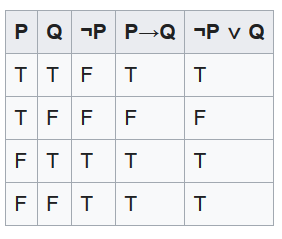
Implication Truth Table, notice how the only case where the implication is not true is if p is true and q false (HT Wiki)

Algebraically, p => q is analysed as ~[p AND ~q]. Interpreted, for whatever reason, p being so is sufficient for q to also be so. This compound proposition does NOT assert that p, only that p is sufficient for q. Similarly, q is NECESSARY for p, i.e. if q can be false and p true, q is not implied by p.

As a bare structure, this is termed material implication, fleshing out the why of the implication brings in issues of cause, logic of being, mathematical relations, semantics, imposed conditions in a process flow etc.

As a subtlety, if we apply this structure to the classic syllogism,

A: Socrates is a man
B: Men are mortal
_____________________
C: Socrates is mortal

. . . we will see that p = [A AND B] with p => q entails that

[A => q and/or B => q ]

It turns out, yes. The propositions in the syllogism overlap and interact, one draws out and applies a meaning implicit in the other. The set, men is a subset of the set, mortals. That Socrates is a man only stipulates that Socrates is a member of that subset of mortals. Socrates is a man is sufficient for his mortality, and Men are mortal is sufficient for any particular case of man to be mortal. Syllogisms and implications interact in unexpected ways, sometimes. But that is where insights surface.
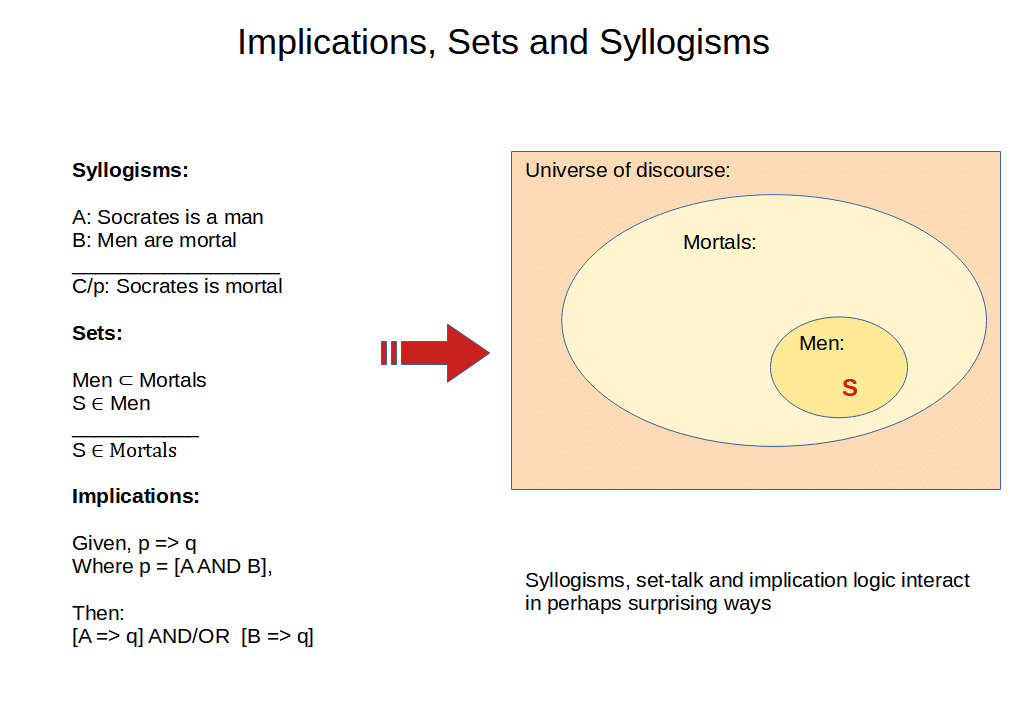
Yes, too, a similar analysis can be done on the truth table equivalent form, ~p AND/OR q; as is shown. (I here emphasise the inclusive or rather than the exclusive one [XOR], vel not aut as Latin distinguishes.)

The second form surfaces a hidden property, the principle of explosion.

A false antecedent, p, can and does often entail a true consequent q; however it is also prone to imply false ones. A true antecedent will only imply true consequents. That is a key property, truth preservation. Also, this is where ex falso quodlibet comes from: when p is [x AND ~x], it materially entails anything, becoming an expression of meaninglessness. That said, in modelling we often pose a “simplified” antecedent to derive correct results in a tested zone of reliability.

That becomes important in science and engineering. In the latter as models are a major design technique. In science as we see that hypotheses and theories are not shown to be strictly true by predictive success, only to be empirically reliable in a given domain of successful testing. Our confidence in theories ought to be tempered by the concept that a scientific law, hypothesis or theory boils down to being at best an empirically reliable, possibly true model. Sometimes, not even that. (The pessimistic induction that across times many grand theories generally taken as true failed empirically, beckons.)

With that in mind, we now may clip our comment of interest, to see how implication works out on the ground so to speak. Here, I assert that “[t]he role of implication logic is central, both as proof structure and explanation structure.” Expanding:

[Law/Duty thread, 1184;] Where, p => q, we are often tempted to reason
p => q but I reject q, so I reject p,
however, when p is self-evident, that rejection clings to absurdity:
I reject p, but p is self evident means ~p is absurd [in various ways]

However, we can arbitrarily redefine terms, manipulate opinion, play lawfare, build up corrupted systems and the like to support ~p, especially when entrenched interests and ideological agendas are at stake. History since 1789 and especially from 1917 speaks on this in rivers of blood and tears.

Such leads to a breakdown of rationality, organisations, societies and more.

Likewise, where q is a composite of observations o1, o2 . . . on
We may ask, which p currently best explains such of p1, p2 . . . pm
At an earlier stage, we may examine the set of observations to sketch out possible explanations.

This is abductive reasoning, a key form of modern sense inductive logic.

We propose criteria of ranking, typically tied to factual adequacy, coherence and balanced explanatory power [ elegantly simple, not simplistic or ad hoc]

This introduces issues of discernment and judgement as is typical of inductive reasoning

In this process, self evident first principles and duties are involved but are not generally sufficient to determine the overall decision. Prudence becomes pivotal and so the habitual discipline to build it up is vital to intellectual thriving.

Factual adequacy is an appeal to truth [and, when is a claimed fact so is material].

Coherence is an appeal to right reason and principles of logic including distinct identity and close corollaries non contradiction and excluded middle.

Explanatory balance involves discernment and the whole involves prudence including the judgement when a conclusion is well warranted.

So, when such are systematically undermined in a culture, the ability to think reliably and soundly is undermined.

For practical import, look all around.

We now see how first duties of reason pervade real world rational inference. First, in logic of implication, with p as a self-evident truth as a key special case. If you doubt the reality of self-evidence, let me add a further clip to show by example that self-evident truths do exist:
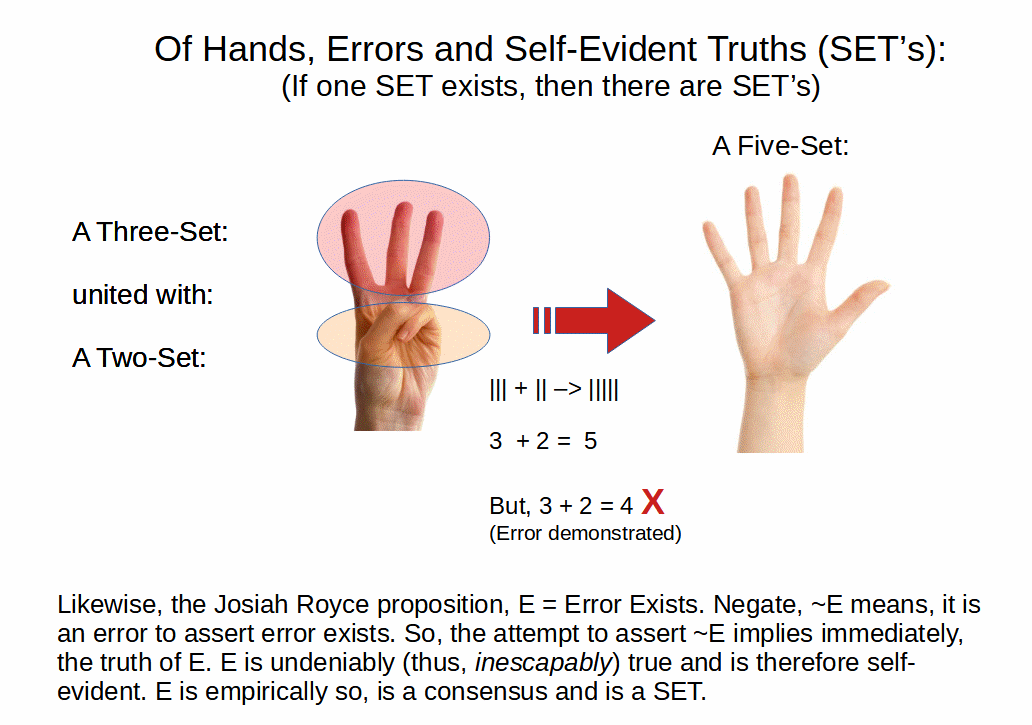
[Laws/duties, 1172:] 1] || + ||| –> |||||, symbolically, 2 + 3 = 5; undeniable on pain of absurdity and demonstrating that the class is non-empty. Split your fingers into a two set and a three set, join them as a five set.

2] The Josiah Royce proposition: E – error exists. This is manifestly familiar from sums exercises with red X’s. But it is not just a massively empirically supported truth and one that is a general consensus. It is undeniable. Let the denial be ~E. Already to assert ~E entails, it would be an error to assert E. So, undeniably, E. E is true, undeniably, necessarily, self evidently true. It is also warranted to incorrigible certainty. It is empirically discoverable and a widespread consensus. It is known truth. Accordingly, general skepticism denying possibility of knowledge, fails. So do radical relativism and subjectivism, which deny the possibility of objectively warranted and undeniably demonstrated knowledge.

3] Moral case study and yardstick I: it is self evidently wrong, willfully wicked, inherently criminal and evil to kidnap, bind, sexually torture and murder a young child for one’s pleasure. Those who deny or dismiss or evade this do not overthrow the truth, they simply reveal their absurdities or worse. This also shows that the weak and inarticulate have rights and are owed justice. Might does not make right, manipulation does not make rights out of thin air.

Next, in abductive form inductive reasoning. The evaluation of which candidate explanation best accounts for empirical observations draws on appeals to first duties of reason even more intensely than deductive forms that rely on our implicitly accepted duties to truth and rationality, prudence and so too warrant.

Yes, things are that dire. We need to go back to and start afresh from clarifying ABC first principles to sort out where we are; when as a civilisation we ought instead to have long since been a shining example and teacher to the world. END

PS: Just to make it crystal clear where this leads, first the plumb line test:

So, too, for example, we see the first truths of logic:
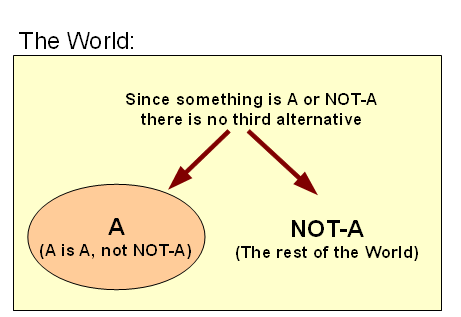
And, here are more, set in the context of first duties of reason . . . unlike a computer or a rock, we can choose to disregard logic, truth, prudence etc:
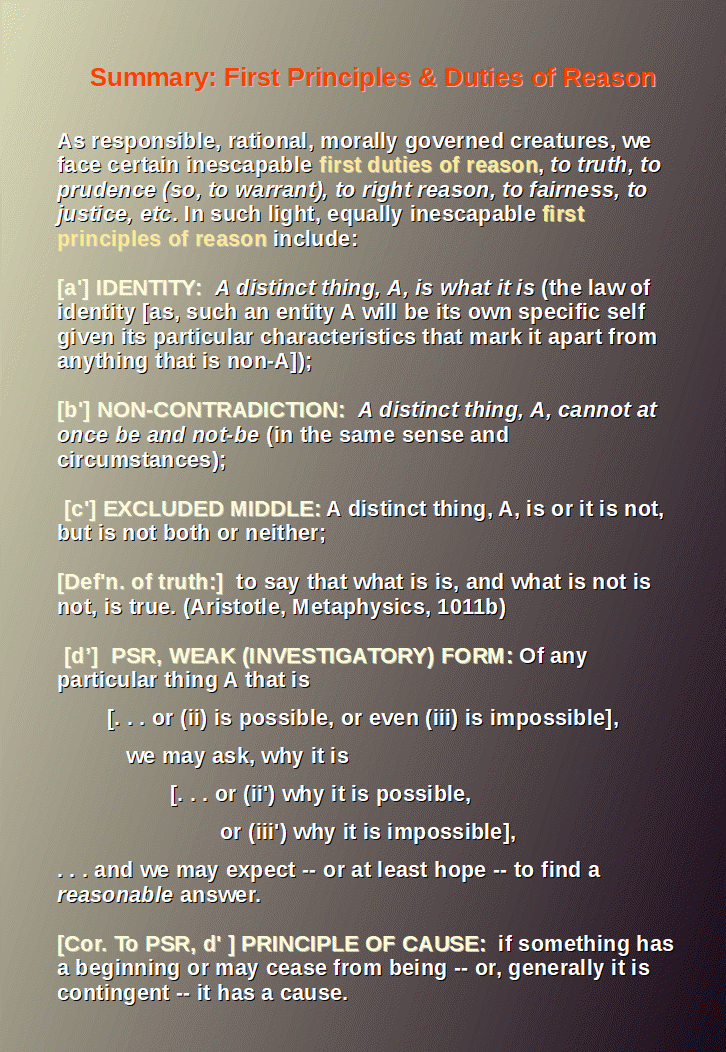
Inescapable? The objector, to gain rhetorical traction invariably appeals to our implicit recognition of the first duties, and the one who tries to prove them does so too. These are therefore first duties that pervade reasoning and by and large move us to acknowledge them (save when it is too inconvenient).

Comments
KF said:
I have already gone through my concerns point by point and see no good reason to conclude otherwise.
You haven't expressed any concerns about my worldview; you've only expressed concerns about what you imagine my worldview to be, and repeatedly insist that it is my worldview whether I agree or not. But that's okay, KF. I know you're busy saving the world (not meant facetiously,) and time for you is short and valuable. I'm just some guy saying crazy stuff on the internet; I can't hold any ill will against you for allocating your time and mental faculties in the manner you do. I hope you succeed in setting the world "right;" that will be a story worth hearing over a drink in the afterlife.William J Murray
March 26, 2021
March
03
Mar
26
26
2021
03:15 AM
3
03
15
AM
PDT
WJM, I have been busy locally on RW issues. I stand by the uncontroversial facets of implication logic highlighted in the OP and onward. As for your proposal for a worldview, I have already gone through my concerns point by point and see no good reason to conclude otherwise. The case of the moral self evidence of a case as given ties to the significance of attempted denial or dismissal, starting with, the implied pervasive grand delusion of conscience and self-referential discredit of mind. It makes far better, Reidian, common good sense, to take conscience seriously as a legitimate sense of mind, with typical limitations of such. That is, our sense of obligation under built in duties is real. From that, a successful framework of law linked to justice has been built and -- though widely unacknowledged today -- has made extraordinary contributions to advancement of government, law and civilisation. When we can move beyond hyperskeptical dismissiveness and year zero radicalism that dismisses the past, we can again begin to make sound progress. KFkairosfocus
March 26, 2021
March
03
Mar
26
26
2021
12:13 AM
12
12
13
AM
PDT
JVL said:
I going to stop asking questions because I don’t feel I’m getting my point across. I don’t see how I could prove that matter exists and not always have an out from an MRT proponent along the lines of: I don’t have to believe that because everything is just in my head and not reflected in reality at all. I don’t see what stops an MRT believer from discounting any ‘evidence’ as just a figment of their imagination . . . it’s all in your head, there is no physical reality at all.
The way you're using the terms "reality" and "physical reality" is wrt ERT. Of course there's a physical reality, but "physical reality" is characterized differently. MRT separates beliefs and imagination from what we experience as "physical reality." Physical evidence either supports or undermines MRT or ERT regardless of anyone's beliefs or imagination. People can just as easily deny physical evidence and use bad logic under ERT, and do so all the time. Perhaps you are misunderstanding MRT and are thinking of it in terms of solipsism, or "it's all in MY mind. That's not MRT. MRT fully embraces the scientific investigation of that set of common experiences we call "physical reality." MRT has a theory about what "physical reality" is and how it is generated, and that theory can be investigated and falsified independent of anyone's particular beliefs or imagination about it.
I don’t see that MRT helps us understand reality at all; nothing is real so any law or pattern you find might just be an echo or reverberation in your own mind.
Then you don't understand MRT.
It’s like the ultimate nihilistic view: nothing matters, nothing is real, there is no point to anything.
I really can't understand this perspective at all, but I'm guessing it's because you don't understand MRT, but are thinking more in terms of solipsism.
When I used to read Jane Robert’s Seth books (which supported the idea that you ‘create’ your own reality) there was still some idea that existence had a purpose and that it wasn’t all just in your head. There were other beings and people albeit all parts or areas of ‘all that is’.
All of that is true in under MRT, so I think you have misunderstood it.William J Murray
March 25, 2021
March
03
Mar
25
25
2021
05:18 AM
5
05
18
AM
PDT
The word "spirit" is meant to convey that it is inherently subjective. And the word material is meant to convey that it is inherently objective. But the meaning of words tends to be corrupted to make it all objective. So that spirit would mean some kind of energything that can go through walls, but can be readily objectively observed, in movies. The nazi's also objectified the meaning of spirit and soul, that it could be established as a matter of fact of biology. Even the word subjective is objectified, by many people. That a subjective opinion would be a statement of fact about what emotions exist in the brain. So then to state a subjective opinion that a painting is beautiful = a statement of fact that a love for the way the painting looks exists in the brain. Meaning that subjectivity becomes a subcategory of objectivity, namely objective facts about brainstates. So you have to be very precise about the logic that is used with words, because of this corruption. To choose means to make one of alternative futures the present. A subjective opinion is formed by choice and expresses what it is that makes a choice. The substance of a creator is called spiritual. The substance of a creation is called material. 1. Creator / chooses / spiritual / opinion 2. Creation / chosen / material / factmohammadnursyamsu
March 25, 2021
March
03
Mar
25
25
2021
05:04 AM
5
05
04
AM
PDT
William J Murray: BTW, I greatly appreciate you asking these questions, JVL, because it helped me coalesce the zero-point nature of existence as one of infinite potential that necessarily exists in the zero point. That's kind of you to say as I felt I might be a bit pesky. OR, the shadow of another person who exists only in your mind might have been getting a bit pesky. I going to stop asking questions because I don't feel I'm getting my point across. I don't see how I could prove that matter exists and not always have an out from an MRT proponent along the lines of: I don't have to believe that because everything is just in my head and not reflected in reality at all. I don't see what stops an MRT believer from discounting any 'evidence' as just a figment of their imagination . . . it's all in your head, there is no physical reality at all. I don't see that MRT helps us understand reality at all; nothing is real so any law or pattern you find might just be an echo or reverberation in your own mind. It's like the ultimate nihilistic view: nothing matters, nothing is real, there is no point to anything. When I used to read Jane Robert's Seth books (which supported the idea that you 'create' your own reality) there was still some idea that existence had a purpose and that it wasn't all just in your head. There were other beings and people albeit all parts or areas of 'all that is'. Perhaps I was just less cynical then.JVL
March 25, 2021
March
03
Mar
25
25
2021
04:26 AM
4
04
26
AM
PDT
BTW, I greatly appreciate you asking these questions, JVL, because it helped me coalesce the zero-point nature of existence as one of infinite potential that necessarily exists in the zero point. The zero-point can be characterized as "I" (or "I am" or "I exist" or "I experience.) "I" requires self-identification (the root of logic), which implies an experiential context of self and other. From that, every possible formation of self-and-other is implied as potential, which means every possible experience. "I" = 1, "other" = at least another 1, or 2; the root of mathematics. Everything possible cascades from the root zero-point of "I," which can also be characterized as "1" (one) or "Identity" or "point."William J Murray
March 25, 2021
March
03
Mar
25
25
2021
03:47 AM
3
03
47
AM
PDT
JVL said:
Firstly, you haven’t given me any kind of resources or explanations for how your viewpoint can be falsified.
I listed a couple of ways it could be falsified. Find matter. Find quantum local reality.
It’s convenient to have a view which happens always in the moment. Which means it’s not falsifiable. Which means you can’t have actual history or science.
I'm not sure what you're talking about here. If you find matter or quantum local reality, MRT has been falsified. I don't get to say "well, MRT accounts for that" or "that's just something that was in the potential." Some things are not possible under MRT; there is no potential for the actual existence of matter or, at the root level, for anything to have innate physical characteristics. MRT predicts that you'll find potential at the root of every universe if you examine it down to the level of "bit-code programming," and what extracts an experienceable "actuality" out of that potential is consciousness - and that's exactly what we see. Further, MRT predicts that "space" and "time" are not physical limitations when it comes to information processing of potential; this is exactly what we see in QM experimentation. There have been any number of experiments in the past 150 years or so that would have disproved MRT; and yet, they ALL fell on the side of MRT and against ERT.William J Murray
March 25, 2021
March
03
Mar
25
25
2021
03:04 AM
3
03
04
AM
PDT
CC, If by "my philosophy" you mean "how I live my life," then 102 boils it down to basics. Everything else could be said is essentially about those two things - how to employ #1 to serve #2, breaking #2 into various prioritized forms and systems of enjoyment, etc.William J Murray
March 25, 2021
March
03
Mar
25
25
2021
02:43 AM
2
02
43
AM
PDT
"Spirit" is an imprecise term that religionists and witches and 600 B.C Greeks use. Tighten it up.Concealed Citizen
March 24, 2021
March
03
Mar
24
24
2021
07:01 PM
7
07
01
PM
PDT
No, the spirit is primary, and then there is material. Consciousness, is already a complicated concept, not a primary concept. 1. Creator / chooses / spiritual / opinion 2.Creation / chosen / material / fact So from creationism you obtain the foundations of reasoning, which are the concepts of opinion and fact.mohammadnursyamsu
March 24, 2021
March
03
Mar
24
24
2021
05:47 PM
5
05
47
PM
PDT
WJM, Maybe it could be boiled down to this: 1. Consciousness is primary 2. Self interest Even though I am committed to the Blood of the Lamb in our current "space-time game", I can't think of any worldview where self-interest doesn't ultimately govern the "game." Your thoughts?Concealed Citizen
March 24, 2021
March
03
Mar
24
24
2021
04:20 PM
4
04
20
PM
PDT
William J Murray: How much space do potentials take up? Where are “potentials” stored? For instance, in a two slit experiment, how much space do all the potential landing points for a photon take up? I’m not talking about the actual landing points defined by the parameters of the experiment; I’m talking about the potentials before the first photon is fired. I don't think we're quite connected on what my questions are. Firstly, you haven't given me any kind of resources or explanations for how your viewpoint can be falsified. I'm interested so please don't brush it off. Secondly, this thing about potentials . . . If I 'say' to you: second grade teacher, you might think of some lovely matron spinster who had all the time in the world for her students. I might think of some creepy male figure who was strangely interested in us changing into our gym clothes. Saying 'second grade teacher' brings up potentials, I think. Correct me if I'm wrong. It opens up options and 'choices'. But then you and I might have completely different reactions to that input. We might realise completely different potentials. On the fly, not stored, not saved, just our basic reaction. BUT . . . if we have different reactions then there is something different between our use of the input. Which means we have different programming or basic reactions. Where is that basic difference between us kept? What differentiates us considering the zero-point data? Potential and mental experiences thereof don’t take up space nor does it need to be stored anywhere; it can be infinite within the zero-point. But they can't be recalled without storage. Your viewpoint asserts that everything is NOW and so you don't have to answer the historical question. But you say your view can be falsified which requires an historical view. Including you, me, our having this discussion, and your words trigging my memories of certain events. All of that can be derived from that zero point, and requires no “space” in which to occur. It's convenient to have a view which happens always in the moment. Which means it's not falsifiable. Which means you can't have actual history or science.JVL
March 24, 2021
March
03
Mar
24
24
2021
01:28 PM
1
01
28
PM
PDT
WJM, given what I've read over the last few months, your philosophy boils down to: 1. Consciousness is primary. 2. Rational inferences may or may not be true, which makes them untrustworthy. 3. Hedonism trumps any rational inferences. 4. Lying is okay in the service of hedonism. 5. It can't be proven there is any "objective" reality. 6. Maybe other conscious entities exist, but it doesn't matter, given hedonism, unless it supports your hedonism. (I'm not judging.) Did I miss anything?Concealed Citizen
March 24, 2021
March
03
Mar
24
24
2021
01:10 PM
1
01
10
PM
PDT
JVL, Don't confuse the analogy (computer data sets and processing programs) for the thing I'm talking about itself. Let me try to illustrate what I'm talking about another way. How much space do potentials take up? Where are "potentials" stored? For instance, in a two slit experiment, how much space do all the potential landing points for a photon take up? I'm not talking about the actual landing points defined by the parameters of the experiment; I'm talking about the potentials before the first photon is fired. Let's then look at the the "potential" landing spots of a photon that leaves the surface of distant sun; where are the hundreds of trillions of potential landing spots and trajectories stored? How much space does that take up? Imagine a galaxy; how much space would that imagined galaxy take up, not in the brain (this isn't Brain Reality Theory,) but in mind? Does it even make sense to think of a mental phenomena "taking up space," or in the potential for that imagined galaxy being "stored" somewhere? Asking "where" or "how much space" mental phenomena "take up" is attempting to understand mental phenomena in terms of external, physical reality concepts. The potential for all experiences like in a single zero point mind, as Parmenides might have argued: one single thing, let's call it "an experience," has the potential in it for all possible experiences, because any single experience points to an infinite cascade of possible variations and contexts. IOW, identifying one thing, A=A, requires the potential of an infinite number of "Not-A's." Thus, the zero-point has inherent infinite potential that requires no storage or space. Potential and mental experiences thereof don't take up space nor does it need to be stored anywhere; it can be infinite within the zero-point. "Where" it is, and "how much space it takes up" are nonsensical questions under MRT; they are using an ERT frame of reference for that which cannot be referenced that way. One thought, one experience in mind, the most rudimentary A=A or "I am" necessarily contains the potential for every possible thing, every possible experience. Including you, me, our having this discussion, and your words trigging my memories of certain events. All of that can be derived from that zero point, and requires no "space" in which to occur.William J Murray
March 24, 2021
March
03
Mar
24
24
2021
08:57 AM
8
08
57
AM
PDT
William J Murray: I think “wanting to dodge” a question is an unfair characterization of me; I’ll answer questions honestly even when they make me look like a crazy person. I’s just difficult to explain certain concepts without a a more comprehensive understanding of the greater context. But, in short, yes, this is what I’m saying. Energy and storage space are not necessary, those concepts are artefacts of a mechanical space-time continuum worldview. So . . . right now you've got certain things in your mind: a smell wafting through your abode, you're processing what I've written and checking it for spelling, grammatical errors and whether or not it makes sense, you might be feeling a bit peckish . . . you could have lots of sensations and thoughts in your 'mind's eye' at any given moment. BUT you won't have all your memories and past experiences (or an interpretation of them since they can change) in your immediate focus at any given time. So, for instance, if I mention something evocative like 'second grade teacher' or 'wedding day' a memory or sensation comes to your mind and it probably bears some resemblance to a memory or sensation that you would have had last year if I brought up the same topic. Before you chose to 'recall' that memory or sensation where was it? In the great heap of zero-point data? But where is that when you're not accessing it? I don't see how you can get away from some kind of data storage and a separate focusing process. If you can explain how that can work I'm all 'ears'. You’re conflating the way I personally conduct my life for the MRT I am arguing here. I’m not arguing that people conduct their lives the way I do (ignoring evidence if I feel like it.) I’m arguing about MRT, not “how I conduct my life personally using MRT when and where I feel like it.” No, I'm not. I'm asking how MRT can be falsified because any evidence COULD be dismissed as just a faulty interpretation of the zero-point data. So, how could MRT be falsified? Whether or not MRT is falsified by science is entirely irrelevant to me personally; but it can be falsified. Your post is conflating scientifically/empirically supporting/disproving MRT with convincing me of something. Sigh. IF our experiences are purely interpretations of some massive pile of zero-point data (stored how?) and I present some evidence or data which I think disproves MRT what's to stop ANYONE from saying: this is all just in my head and I think what I perceive as having come from you is just another distorted interpretation of the root-level zero-point data. Since memories and perceptions can be 'wrong'. I just don't get how you can falsify a view which says: everything is just in my head/focusing process. If you can point me to another resource which explains that I'll happily read it. I don't expect you to reproduce in a text box a complicated argument.JVL
March 24, 2021
March
03
Mar
24
24
2021
07:13 AM
7
07
13
AM
PDT
It is very obvious that enjoyment is subjective. Yet you are just putting it in together with what is objective, in one big mess. The root meaning of choice is to make one of alternative futures the present. Or, it can be defined as making a possible future the present, or not. Choosing is essentially spontaneous. Choosing is based on logic of anticipating a future of possibilities, it is not based on logic of cause and effect. What makes the choice is inherently subjective. So it means "joy", does the job of making choices. It does the job of making alternative future A the present, instead of alternative future B. As before, you are obviously just mashing up the parental advise to think about what is best, before making a choice, into the root definition of choice.mohammadnursyamsu
March 24, 2021
March
03
Mar
24
24
2021
07:04 AM
7
07
04
AM
PDT
KF @84 said:
F/N: notice how far afield we are of the intended focus on implication logic, deduction, explanation and linked duties in reasoning. I have become increasingly concerned that truly basic things are out of good order, leading to deep breakdowns. KF
In your OP, you said:
A true antecedent will only imply true consequents. .... I reject p, but p is self evident means ~p is absurd ... Moral case study and yardstick I: it is self evidently wrong, willfully wicked, inherently criminal and evil to kidnap, bind, sexually torture and murder a young child for one’s pleasure. Those who deny or dismiss or evade this do not overthrow the truth, they simply reveal their absurdities or worse.
As I've demonstrated, your supposedly "self-evidently true" moral statement is not self-evidently true. It relies not on self-referential existential absurdity if one denies it, but rather on an almost universally shared sentiment about the statement. Amoral people do not live in absurd self-contradiction, such as those that deny free will or that A=A. As you have pointed out, proper implication logic requires a true antecedent; the best antecedent is a self-evidently true antecedent. Some implications thereof are not only true, they are necessarily true given that antecedent. The problem is that your implications are not largely derived from self-evident or necessary truths; the are derived from a worldview structure built out of coherentism logic that largely utilizes appeals to "common experience," "good reasons," appeals to consequence and subtle appeals to a religious metaphysical foundation. Also, your implication logic simply ignores some self-evident and necessary truths, or arbitrarily redefines or reinterprets them to correspond to your worldview structure, such as: 1. All experience occurs in mind: self-evidently true. 2. Necessary truth from #1: all scientific investigation and logical argument is about mental experiences. 3. Necessarily true from the above: the existence of any world external of mind is hypothetical in nature and is not necessarily true. You also ignore or reinterpret: 1. We have free will. 2. Free will choices are necessarily individually preferential in nature. 3. Preferences are always about some form or system of personal enjoyment, or avoiding unejoyable situations or consequences. 4. Some systems of enjoyment place abstract (such as long term, group success, etc.) or metaphysical enjoyments preferentially above immediately accessed and direct enjoyments, but they are still about personal enjoyment, now or in the future. 5. Conscience can be implied from the above to be the tension between conflicting abstract and direct preferences 4. Morality, which is rooted in free will and thus preferential choices, and also rooted in the experience of conscience, is therefore always about a personally preferential system or balance of enjoyments in terms of direct vs abstract enjoyment conflicts. 5. Morality, while it can be called near-universal in the sense that almost all people experience conscience (the tension between the direct and the abstract,) it is still an entirely subjective arrangement. 6. Sociopaths do not have tensions between the direct and the abstract, so they do not experience "conscience." See, that's implication logic from self-evident and necessary truths, without any appeals to consequence, "common experience," "good reasons," or subtly implying a religious or spiritual foundation.William J Murray
March 24, 2021
March
03
Mar
24
24
2021
06:19 AM
6
06
19
AM
PDT
Origenes @88: I'm talking about my MRT. I haven't seen anything like it anywhere else, although there are countless "manifest your reality" or "reprogram your reality" sites and books out there, their scope is almost always about improving your life here. My MRT goes far beyond that because I follow the implications much further and bring in a much wider field of evidence. If you want to read more about my MRT, here is a collection of ongoing posts I've made about it elsewhere, for a more "spiritual" audience. Keep that in mind. I'm not a spiritual person myself, but I have to speak in the language of the audience - even though the last post (so far) actually indicts most "spirituality" as being essentially some form of materialism at their root. I'm in the process of examining various kinds of subconscious program modules that deeply dictate how we think and behave. You can find that ongoing collection here: https://docs.google.com/document/d/17_gHVhFYAvgdCD6kD4zkzVLkB0bNr9jFoe98cssnO20/edit?usp=sharing If you're interested in a more academic theory about a very basic MRT drawn from the evidence of several disciplines, I'd suggest reading Bernardo Kastrup's book, "Idea of the World." He doesn't really get into the implications or uses, and he often erroneously associates ERT concepts to MRT (like "evolution",) but it's nothing fatal - I think it's just habit and not thoroughly thinking out the ramifications of MRT. https://www.amazon.com/Idea-World-Multi-Disciplinary-Argument-Reality/dp/1785357395William J Murray
March 24, 2021
March
03
Mar
24
24
2021
05:21 AM
5
05
21
AM
PDT
Whether or not MRT is falsified by science is entirely irrelevant
What falsifies MRT is not eating or drinking for 8 days. All adherents disappear. I’m not sure that is science but it makes life better.jerry
March 24, 2021
March
03
Mar
24
24
2021
04:38 AM
4
04
38
AM
PDT
JVL, the design inference on tested reliable signs is the defining core of ID, so when you made that comparison you directly implied the design inference. KFkairosfocus
March 24, 2021
March
03
Mar
24
24
2021
03:59 AM
3
03
59
AM
PDT
JVL asks:
...are you saying reality, at its base, under any model, doesn’t require considerations of energy and storage?
I think "wanting to dodge" a question is an unfair characterization of me; I'll answer questions honestly even when they make me look like a crazy person. I's just difficult to explain certain concepts without a a more comprehensive understanding of the greater context. But, in short, yes, this is what I'm saying. Energy and storage space are not necessary, those concepts are artefacts of a mechanical space-time continuum worldview.
Again, what’s to stop you from just thinking: nah, that’s a story that’s based on my momentary interpretation of the zero-point data, my memory may change so I can disregard it? In other words: what evidence do you accept as definitive, i.e. beyond your ability to disregard?
You're conflating the way I personally conduct my life for the MRT I am arguing here. I'm not arguing that people conduct their lives the way I do (ignoring evidence if I feel like it.) I'm arguing about MRT, not "how I conduct my life personally using MRT when and where I feel like it." Whether or not MRT is falsified by science is entirely irrelevant to me personally; but it can be falsified. Your post is conflating scientifically/empirically supporting/disproving MRT with convincing me of something.William J Murray
March 24, 2021
March
03
Mar
24
24
2021
03:56 AM
3
03
56
AM
PDT
William J Murray/70
Let me throw down some clear logic here. IF what is “actual” or “real” is external of mind, the only thing we can possibly be experiencing is a mental simulation (or representation) of what is actual or real.
Exactly. That is my position.Seversky
March 23, 2021
March
03
Mar
23
23
2021
09:20 PM
9
09
20
PM
PDT
Jerry: I haven’t read too much of this thread but what I read is that games are being played on this thread in the comments and most posts are not serious. I would disagree with that characterisation. For the most part I think the participants have been extremely honest, albeit sometimes a bit obtuse.JVL
March 23, 2021
March
03
Mar
23
23
2021
01:45 PM
1
01
45
PM
PDT
I have become increasingly concerned that truly basic things are out of good order, leading to deep breakdowns.
I haven't read too much of this thread but what I read is that games are being played on this thread in the comments and most posts are not serious. So what else is new. As far as regular society, other games are being played and most who are playing them don't share your concerns about our society which I also share. It has nothing to do with logic though so I don't see the point of the OP. My assessment is that the high tech people who believe they are in charge, believe they can organize a command economy with some but definitely limited freedom to achieve some other goals such as a world wide governing fixing what they believe are serious problems. They have the financial world in with them. So two powerful entities are in bed to change the world and the rest will fall in because they are being bought off. The two groups in charge and their minions are currently well paid so do not feel any financial issues. And probably believe this will continue for the indefinite future. The next step is to come for the guns because that is the main threat they see to their hegemony.jerry
March 23, 2021
March
03
Mar
23
23
2021
01:07 PM
1
01
07
PM
PDT
W.J.Murray wrote:
It has been my experience, and is my view, that once a person understands this, they can reprogram themselves to experience any self/other arrangement they wish – as long as it is a possible arrangement. There are few things that are “not possible.”
Can you perhaps link to a post or website where I can find more information? I am very interested. And thank you for explaining MRT.Origenes
March 23, 2021
March
03
Mar
23
23
2021
10:59 AM
10
10
59
AM
PDT
Kairosfocus: JVL, the design inference is a limited, specific issue, what is on the table here is a worldview, an entirely different thing. Yeah, I know. What are you talking about? I wasn't bringing up the design inference at all.JVL
March 23, 2021
March
03
Mar
23
23
2021
10:37 AM
10
10
37
AM
PDT
JVL, the design inference is a limited, specific issue, what is on the table here is a worldview, an entirely different thing. KFkairosfocus
March 23, 2021
March
03
Mar
23
23
2021
10:14 AM
10
10
14
AM
PDT
William J Murray: Most of what you write here is based on misunderstanding MRT and applying ERT concepts (storage, energy, etc) to things they don’t apply to under MRT. I can understand why you would dodge those questions but . . . are you saying reality, at its base, under any model, doesn't require considerations of energy and storage? OR, are you saying, like ID, that that's not part of our hypothesis so we're not obliged to address it? Of course MRT is a scientific model. It can be tested. It can make predictions and retro-dictions. It can be falsified by finding matter Only by expending energy and storage. And what's to stop you from saying: no, that's just a concept that's cropped up in my interpretation of the zero-point and it may or may not be true. It can be falsified by demonstrating quantum local reality. Again, what's to stop you from just thinking: nah, that's a story that's based on my momentary interpretation of the zero-point data, my memory may change so I can disregard it? In other words: what evidence do you accept as definitive, i.e. beyond your ability to disregard? It can be supported many different ways; such as, two people sharing an experiential reality where conflicting facts exist. Again, what stops you from saying: I've chosen to accept that OR that's my current interpretation, it may change? How can you determine what is true and what is just interpretation of the zero-point data? Not just, can it be done, but how can it be done? It can be demonstrated by finding other experiential modules, exploring them empirically and having the findings confirmed by others. But you don't accept empirical data or experiences! It can all just be part of your personal (whatever that is) interpretation of the zero-point data. How do we get to the zero-point data and agree on it? You've continually said: we can't do that, our personal experiences HAVE to be different. So, how is your personal position falsifiable? Is your position scientific? It can be experimented with both scientifically and personally. No because you don't believe in common, shared and unassailable experiences.JVL
March 23, 2021
March
03
Mar
23
23
2021
10:08 AM
10
10
08
AM
PDT
F/N: notice how far afield we are of the intended focus on implication logic, deduction, explanation and linked duties in reasoning. I have become increasingly concerned that truly basic things are out of good order, leading to deep breakdowns. KFkairosfocus
March 23, 2021
March
03
Mar
23
23
2021
09:47 AM
9
09
47
AM
PDT
JVL @78: Most of what you write here is based on misunderstanding MRT and applying ERT concepts (storage, energy, etc) to things they don't apply to under MRT. Of course MRT is a scientific model. It can be tested. It can make predictions and retro-dictions. It can be falsified by finding matter. It can be falsified by demonstrating quantum local reality. It can be supported many different ways; such as, two people sharing an experiential reality where conflicting facts exist. It can be demonstrated by finding other experiential modules, exploring them empirically and having the findings confirmed by others. It can be experimented with both scientifically and personally.William J Murray
March 23, 2021
March
03
Mar
23
23
2021
09:32 AM
9
09
32
AM
PDT
1 3 4 5 6 7 8

Leave a Reply