Uncommon Descent Serving The Intelligent Design Community

[L&FP 39:] Implication logic is pivotal to understanding how we think as duty-bound rational creatures

Categories
Defending our Civilization
Logic and Reason
Mathematics
Share
Facebook
Twitter/X
LinkedIn
Flipboard
Print
Email

In recent months we have had several forum threads, which naturally tend to throw up onward topics worth headlining. Here, I will headline some observations on implication logic in deductive and in inductive reasoning.

However, first, the core of the logic of implication.
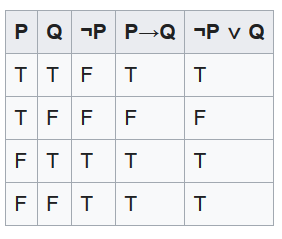
Implication Truth Table, notice how the only case where the implication is not true is if p is true and q false (HT Wiki)

Algebraically, p => q is analysed as ~[p AND ~q]. Interpreted, for whatever reason, p being so is sufficient for q to also be so. This compound proposition does NOT assert that p, only that p is sufficient for q. Similarly, q is NECESSARY for p, i.e. if q can be false and p true, q is not implied by p.

As a bare structure, this is termed material implication, fleshing out the why of the implication brings in issues of cause, logic of being, mathematical relations, semantics, imposed conditions in a process flow etc.

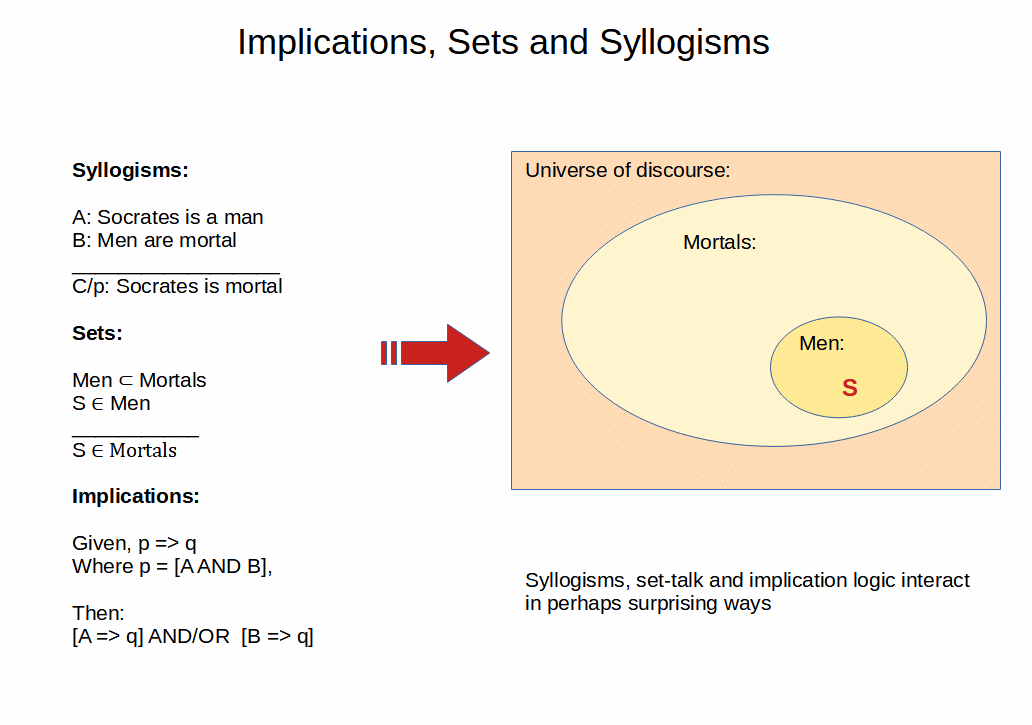
As a subtlety, if we apply this structure to the classic syllogism,

A: Socrates is a man
B: Men are mortal
_____________________
C: Socrates is mortal

. . . we will see that p = [A AND B] with p => q entails that

[A => q and/or B => q ]

It turns out, yes. The propositions in the syllogism overlap and interact, one draws out and applies a meaning implicit in the other. The set, men is a subset of the set, mortals. That Socrates is a man only stipulates that Socrates is a member of that subset of mortals. Socrates is a man is sufficient for his mortality, and Men are mortal is sufficient for any particular case of man to be mortal. Syllogisms and implications interact in unexpected ways, sometimes. But that is where insights surface.
Yes, too, a similar analysis can be done on the truth table equivalent form, ~p AND/OR q; as is shown. (I here emphasise the inclusive or rather than the exclusive one [XOR], vel not aut as Latin distinguishes.)

The second form surfaces a hidden property, the principle of explosion.

A false antecedent, p, can and does often entail a true consequent q; however it is also prone to imply false ones. A true antecedent will only imply true consequents. That is a key property, truth preservation. Also, this is where ex falso quodlibet comes from: when p is [x AND ~x], it materially entails anything, becoming an expression of meaninglessness. That said, in modelling we often pose a “simplified” antecedent to derive correct results in a tested zone of reliability.

That becomes important in science and engineering. In the latter as models are a major design technique. In science as we see that hypotheses and theories are not shown to be strictly true by predictive success, only to be empirically reliable in a given domain of successful testing. Our confidence in theories ought to be tempered by the concept that a scientific law, hypothesis or theory boils down to being at best an empirically reliable, possibly true model. Sometimes, not even that. (The pessimistic induction that across times many grand theories generally taken as true failed empirically, beckons.)

With that in mind, we now may clip our comment of interest, to see how implication works out on the ground so to speak. Here, I assert that “[t]he role of implication logic is central, both as proof structure and explanation structure.” Expanding:

[Law/Duty thread, 1184;] Where, p => q, we are often tempted to reason
p => q but I reject q, so I reject p,
however, when p is self-evident, that rejection clings to absurdity:
I reject p, but p is self evident means ~p is absurd [in various ways]

However, we can arbitrarily redefine terms, manipulate opinion, play lawfare, build up corrupted systems and the like to support ~p, especially when entrenched interests and ideological agendas are at stake. History since 1789 and especially from 1917 speaks on this in rivers of blood and tears.

Such leads to a breakdown of rationality, organisations, societies and more.

Likewise, where q is a composite of observations o1, o2 . . . on
We may ask, which p currently best explains such of p1, p2 . . . pm
At an earlier stage, we may examine the set of observations to sketch out possible explanations.

This is abductive reasoning, a key form of modern sense inductive logic.

We propose criteria of ranking, typically tied to factual adequacy, coherence and balanced explanatory power [ elegantly simple, not simplistic or ad hoc]

This introduces issues of discernment and judgement as is typical of inductive reasoning

In this process, self evident first principles and duties are involved but are not generally sufficient to determine the overall decision. Prudence becomes pivotal and so the habitual discipline to build it up is vital to intellectual thriving.

Factual adequacy is an appeal to truth [and, when is a claimed fact so is material].

Coherence is an appeal to right reason and principles of logic including distinct identity and close corollaries non contradiction and excluded middle.

Explanatory balance involves discernment and the whole involves prudence including the judgement when a conclusion is well warranted.

So, when such are systematically undermined in a culture, the ability to think reliably and soundly is undermined.

For practical import, look all around.

We now see how first duties of reason pervade real world rational inference. First, in logic of implication, with p as a self-evident truth as a key special case. If you doubt the reality of self-evidence, let me add a further clip to show by example that self-evident truths do exist:
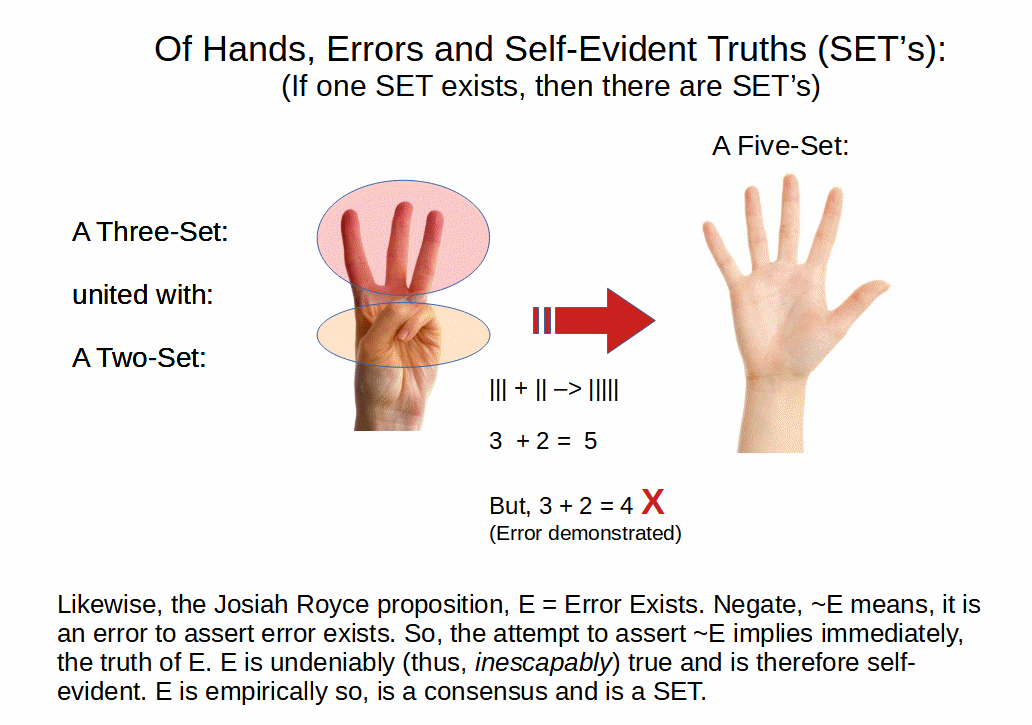
[Laws/duties, 1172:] 1] || + ||| –> |||||, symbolically, 2 + 3 = 5; undeniable on pain of absurdity and demonstrating that the class is non-empty. Split your fingers into a two set and a three set, join them as a five set.

2] The Josiah Royce proposition: E – error exists. This is manifestly familiar from sums exercises with red X’s. But it is not just a massively empirically supported truth and one that is a general consensus. It is undeniable. Let the denial be ~E. Already to assert ~E entails, it would be an error to assert E. So, undeniably, E. E is true, undeniably, necessarily, self evidently true. It is also warranted to incorrigible certainty. It is empirically discoverable and a widespread consensus. It is known truth. Accordingly, general skepticism denying possibility of knowledge, fails. So do radical relativism and subjectivism, which deny the possibility of objectively warranted and undeniably demonstrated knowledge.

3] Moral case study and yardstick I: it is self evidently wrong, willfully wicked, inherently criminal and evil to kidnap, bind, sexually torture and murder a young child for one’s pleasure. Those who deny or dismiss or evade this do not overthrow the truth, they simply reveal their absurdities or worse. This also shows that the weak and inarticulate have rights and are owed justice. Might does not make right, manipulation does not make rights out of thin air.

Next, in abductive form inductive reasoning. The evaluation of which candidate explanation best accounts for empirical observations draws on appeals to first duties of reason even more intensely than deductive forms that rely on our implicitly accepted duties to truth and rationality, prudence and so too warrant.

Yes, things are that dire. We need to go back to and start afresh from clarifying ABC first principles to sort out where we are; when as a civilisation we ought instead to have long since been a shining example and teacher to the world. END

PS: Just to make it crystal clear where this leads, first the plumb line test:

So, too, for example, we see the first truths of logic:
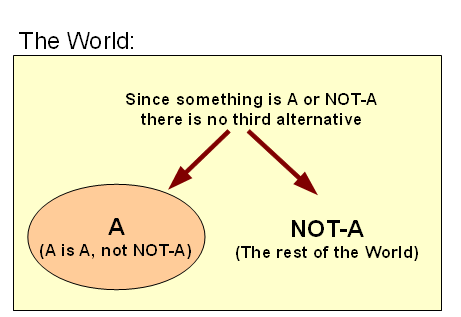
And, here are more, set in the context of first duties of reason . . . unlike a computer or a rock, we can choose to disregard logic, truth, prudence etc:
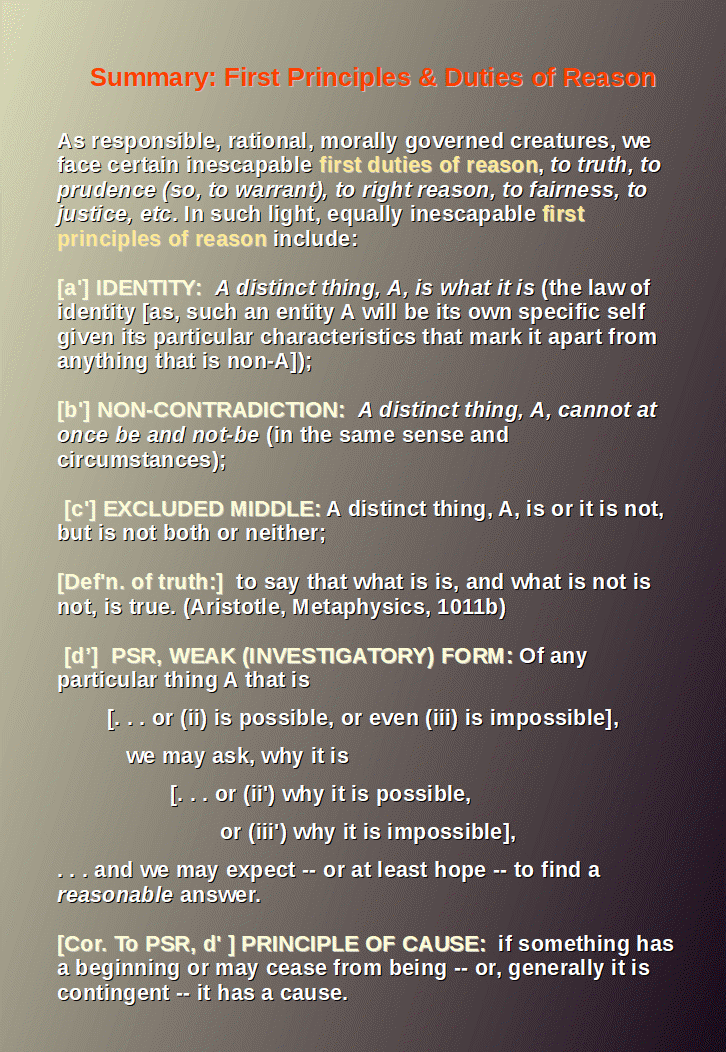
Inescapable? The objector, to gain rhetorical traction invariably appeals to our implicit recognition of the first duties, and the one who tries to prove them does so too. These are therefore first duties that pervade reasoning and by and large move us to acknowledge them (save when it is too inconvenient).

Comments
Kairosfocus, modern creationists believe that God created the universe, life and humans. Whether or not some don’t agree that you can infer design by simply examining the artifact/structure doesn’t mean that creationism itself does not fall within ID. An analogy would be Christianity as the big tent and all of the denominations under it. Within this tent there are denominations that will claim that one or more of the other denominations are not truly Christian because they have differing interpretations of the Bible. But the big tent fundamental idea is just that Jesus was the son of God, died on the cross and was resurrected (obviously there is a lot more). By that definition they are all Christian. The big tend ID concept is that many of the things we observe, including life, is best explained by the actions of an intelligent agent. Clearly, creationism falls within this tent even if there are some that have trouble with some of the approaches that are used. Science only progresses by questioning. Arguing that some ideas of creationism don’t fall under ID because they have disagreements about some of the details would be akin to admitting that ID is not science.Steve Alten2
March 20, 2021
March
03
Mar
20
20
2021
09:00 AM
9
09
00
AM
PDT
SA2, design by God is design, as are designs by people, beavers and possibly other intelligent races in the cosmos. The design inference on the empirical study that there are reliable signs of design is about an empirical view of aspects of the world. Namely, that simply by studying features of the objects we may validly infer on signs that design was a key causal factor. Some creationists seem to think that we cannot cogently or reliably infer reliably about the world in the past of origins and reject the design inference principle and empirical tests. At the same time, design thinkers from Plato to today can and do infer to design on features of the world and its contents, without being creationists much less Biblical creationists whether old or young cosmos. Thus, on duty to accuracy, we have to be cautious in asserting subset claims one way or the other. That is why I made a side note to MNY. KFkairosfocus
March 20, 2021
March
03
Mar
20
20
2021
08:39 AM
8
08
39
AM
PDT
Kairosfocus “ , I think there are creationists who violently dismiss the design inference approach. Hence, overlap.” Their may be creationists that don’t agree with the design inference approach, but I think that most IDists believe that creationism clearly falls within the ID concept. Maybe it would be clearer if you could mention a creationist idea that is incompatible with ID.Steve Alten2
March 20, 2021
March
03
Mar
20
20
2021
08:16 AM
8
08
16
AM
PDT
ET, I think there are creationists who violently dismiss the design inference approach. Hence, overlap. KFkairosfocus
March 20, 2021
March
03
Mar
20
20
2021
08:09 AM
8
08
09
AM
PDT
MNY, actually, there is overlap but not a subset status. KFkairosfocus
March 20, 2021
March
03
Mar
20
20
2021
07:40 AM
7
07
40
AM
PDT
No, Mo. Creation is a subset of ID.ET
March 20, 2021
March
03
Mar
20
20
2021
07:21 AM
7
07
21
AM
PDT
This is an intelligent design blog, and intelligent design is a subset of creationism. Intelligent design is the theory of how things are created, by intelligent design. So presenting a creationist argument, as I do, you should listen to it, because the blog is based on creationism. For non creationist arguments, you have other blogs. As I have been arguing many times, the concepts of subjectivity, personal opinion, emotions, are inherently creationist concepts. Science is not about subjectivity, science is about facts. So one might think, that it doesn't really matter to science to throw out subjectivity. But it does matter a lot. Because without understanding of subjectivity, then you can't know what your emotions are up to. Then your emotions take over behind the scenes of your argument, and you end up just asserting prejudices. Throwing out subjectivity, then you get the kind of people who are lawyers for a particular position, trying to argue a case for their client, their client being their intellectual position. They will just say anything to promote the interest of their client, the truth be damned. And because academic people are generally very smart, they think up brilliant arguments for their client. Arguments that are very persuasive, because the arguments are designed to be persuasive. In throwing out creationism, academic people have lost the ability to prime their emotions for honesty. That is a skill, where you really need understanding of subjectivity, to do it. The creationist conceptual scheme: 1. Creator / chooses / spiritual / opinion 2. Creation / chosen / material / fact The concept of opinion is validated in category 1. The concept of fact is validated in category 2. The two categories are connected by "choice". The first category contains all what is doing the choosing, the second category contains all what is chosen. Choice is the mechanism of creation, how a material thing originates. To choose means to make one of alternative futures the present. Simply put, there are the alternative futures A and B, alternative future A is made the present, meaning A is chosen. Choosing is anticipatory in regards to a future of possibilities. Choice does not operate based on cause and effect logic. Choices are not based on preference, as people incorrectly state. To argue that choice is based on preference, means to confuse the good advise to think about what is best before you make a choice, with the definition of making a choice. All choices without any exception, are essentially spontaneous. The spirit makes one of alternative futures the present, spontaneously. To think about what is the best option, that is done by a complicated way of choosing, involving several sub choices. Emotions, feelings, personal character, the soul, the God, these are all defined in terms of that they make choices. Therefore they belong in category number 1. Therefore they can only be identified with a chosen opinion. You feel what the personal character of someone is, and then you express those feelings, by spontaneous expression of emotion with free will. To science the decisionmaking is all just randomness. In the moment the decision can turn out either A or B. But subjectively we can feel that it was courage that made the decision turn out A instead of B. So really, much of the dysfunction in science and society that we now see, is caused by undermining of understanding of subjectivity.mohammadnursyamsu
March 20, 2021
March
03
Mar
20
20
2021
07:20 AM
7
07
20
AM
PDT
WJM, oftentimes, one is most disinclined to do the duty but chooses because it is right. That is part of why I think preference language is not helpful. KFkairosfocus
March 20, 2021
March
03
Mar
20
20
2021
07:10 AM
7
07
10
AM
PDT
WJM, that is what has been promoted and used to create plausibility for hyperskepticism. In reality, our experience of the macro, slow-moving scale is the bulk of our experience and is reliable and real. That there is a micro scale that contributes to that macro reality is an onward analysis that is required, through the correspondence principle, to conform to it. That is far from reducing it to delusion. Beyond that, the defeatable defaults are not given as absolutes, overthrown by any exception, but as a pattern of the typical that may err in particular cases but on the whole tends to be so. Our sight, hearing, touch can err but are generally credible. The benefit of the doubt and burden to show otherwise [with caveat on grand delusion] rightly rest there. I remember breakfast, that I could err does not discredit memory on the whole; that would take down knowledge and rationality with it. likewise, sound conscience, which is where this exchange began. Our senses and judgement need not be infallible to have earned a right to be taken as generally credible. The alternative being absurd. Which does not reduce to logical incoherence. KFkairosfocus
March 20, 2021
March
03
Mar
20
20
2021
07:07 AM
7
07
07
AM
PDT
KF @11, Then one is more inclined (prefer) to do the duty, as I explained.William J Murray
March 20, 2021
March
03
Mar
20
20
2021
06:50 AM
6
06
50
AM
PDT
KF @8 quoted:
For example, suppose someone proposes that things-as-they-appear-to-be are not things-as-they-really-are. I do not think I would buy a used car from this man.
Then said:
That seems a fair enough test of habitual adherence to first duties of reason — or otherwise.
And yet, this is exactly what both self-evident truth (all experiences occur in mind) and quantum physics experimentation have clearly demonstrated; that things are not as they appear to us to be. Entirely mental experiences appear to us to be external of mind when they cannot be; what appears to us to be a material world governed by linear cause-and-effect relationships between real entities with intrinsic, identifiable characteristics is in fact not the case. Best come up with a different set of "default rules," KF. The ones you quote from Davidson have been shown to be both factually and logically in error. Your logic above stems from a scientifically disproved and logically untenable premise, which also indicts your expositions of "common sense." Valid "common sense" requires grounding in a sound context of premises. Lacking that, all "common sense" boils down to is "what most people think." Also, if you go about conducting any business based on the assumption that things are what they appear to be, I have a bridge in New York I'd be happy to sell you real cheap.William J Murray
March 20, 2021
March
03
Mar
20
20
2021
06:48 AM
6
06
48
AM
PDT
WJM, preference is ambiguous, many free will decisions are by duty against inclination, sometimes strikingly so. KFkairosfocus
March 20, 2021
March
03
Mar
20
20
2021
06:16 AM
6
06
16
AM
PDT
So, let me make a counter-argument about what conscience is, with logic that flows from an actual self-evident truth. 1. All free will choices are about preference. 2. Preferences, and how choices are made, stem from how the individual organizes, interprets and processes the available (either physical or imagined) options. We'll call these choosing systems. 3. There are different kinds of choosing systems, ranging from the very basic, survival level (choosing to eat instead of going hungry, not walk off a cliff, hide when a predator is nearby, etc.) to the metaphysical level (choosing to not eat meat because of karma, or go to church to serve the Lord.) 4. Group (from the basic family to community and social) survival and success is one such choosing system. In such a system, there are direct personal preferences that are put on lower priority or abstained from to serve the greater preference of predicted better protection and survival that staying in the group affords us. 5. Thus, conscience is the naturally occurring tension which exists when a direct personal preference conflicts with more conceptual or abstract preferences, such as "success of the group" or metaphysical choosing systems, like avoiding bad karma or eternal damnation.William J Murray
March 20, 2021
March
03
Mar
20
20
2021
06:13 AM
6
06
13
AM
PDT
WJM, kindly see the above and rule 7 i/l/o context. KFkairosfocus
March 20, 2021
March
03
Mar
20
20
2021
05:51 AM
5
05
51
AM
PDT
F/N: Michael Davidson discusses what he terms Reid's Razor, in effect a manifesto of defeasible but heuristically generally effective common good sense reasoning:
[Reidian Common good sense as definition and razor, 1785:] “that degree of judgement which is common to men with whom we can converse and transact business”
Davidson shrewdly points out,
Take a philosophical or scientific principle that is being applied to a particular situation: ask yourself whether you would be able to converse rationally and transact business with that person assuming that principle governed the situation or persons involved. If not dismiss the principle as erroneous or at least deeply suspicious. For example, suppose someone proposes that things-as-they-appear-to-be are not things-as-they-really-are. I do not think I would buy a used car from this man.
That seems a fair enough test of habitual adherence to first duties of reason -- or otherwise. We then see a list of defeatable, default rules of thumb for credulity vs skepticism:
1) Everything of which I am conscious really exists [--> at minimum as an object of conscious awareness, and often as a particular or abstract entity, the presumption is, if I perceive a world with entities, it is by and large real] 2) The thoughts of which I am conscious are the thoughts of a being which I call myself, my mind, my person. 3) Events that I clearly remember really did happen. 4) Our personal identity and continued existence extends as far back in time as we remember anything clearly. 5) Those things that we clearly perceive by our senses really exist and really are what we perceive them to be. 6) We have some power over our actions and over the decisions of our will. 7) The natural faculties by which we distinguish truth from error are not deceptive. 8) There is life and thought in our fellow-men with whom we converse. 9) Certain features of the face, tones of voice, and physical gestures indicate certain thoughts and dispositions of mind. 10) A certain respect should be accorded to human testimony in matters of fact, and even to human authority in matters of opinion. 11) For many outcomes that will depend on the will of man, there is a self-evident probability, greater or less according to circumstances. 12) In the phenomena of Nature, what happens will probably be like what has happened in similar circumstances.
Davidson comments:
According to Reid, anyone who doubts these principles will be incapable of rational discourse and those philosophers who profess to doubt them cannot do so sincerely and consistently. Each of these principles, if denied, can be turned back on the denier. For example, although it is not possible to justify the validity of memory (3) without reference to premises that rest on memory, to dispense with memory as usually unreliable is just not philosophically possible. Reid qualifies some of these principles as not applying in all cases, or as the assumptions that we presume to hold when we converse, which may be contradicted by subsequent experience. For instance with regard to (10) Reid believes that most men are more apt to over-rate testimony and authority than to under-rate them; which suggests to Reid that this principle retains some force even when it could be replaced by reasoning. I endorse Reid’s principles as normally true and what we must assume to be true to engage in argument and discussion. But, as Reid acknowledges, not all may be true all the time. I thus see Reid’s principles as epistemological rather than metaphysical. Psychologists might point to such things as optical illusions, false memory, attentional blink, hallucinations and various other interesting phenomena which might throw some doubt over some of Reid’s assertions. But these are nonessential modifiers that if entertained as falsifications of these principles would lead to the collapse of all knowledge. Very few philosophers have not acknowledged that the senses can deceive us or that reason is fallible, but to say the senses consistently deceive or that reason is impotent is too big a sacrifice. That the senses can deceive and reason is fallible is good reason to be cautious in our conclusions but not a good reason to dispense with observation and reason all together.
That seems to me to be a useful backgrounder. KFkairosfocus
March 20, 2021
March
03
Mar
20
20
2021
05:48 AM
5
05
48
AM
PDT
KF, I didn't say you couldn't take them seriously. What I said is, you can't make the case that such things are self-evidently true. You can build a case for a model based on how you interpret and understand those things that you experience, but that is not what it means for a thing to be considered "self-evidently true." Your model of morality (and conscience) is based on interpreting experience through a particular worldview that is required for that model to be valid. All possible worldviews do not require your your statement in the OP to be true to even get off the ground. Therefore, you have not made the case that your statement in the OP is self-evidently true. I suspect you cannot.William J Murray
March 20, 2021
March
03
Mar
20
20
2021
05:25 AM
5
05
25
AM
PDT
WJM, no. We are perfectly entitled to take conscience, consciousness, our eyes and ears seriously. Those who try to reduce our conscious rationality to grand delusion are opening the door to absurdity. Reidian common sense makes excellent sense. KFkairosfocus
March 20, 2021
March
03
Mar
20
20
2021
05:12 AM
5
05
12
AM
PDT
KF, Your comment @ #4 doesn't advance your case; it just further undermines it. When you appeal to what other people say to make your case, or appeal to consequences, or make emotional appeals against those who might challenge your argument, it seems like you realize you cannot actually make your case. You can either make the case that the statement you offered is self-evidently true or not. To be self-evidently true means that it does not rely on any particular religious, spiritual or indeed any particular metaphysical context whatsoever; it would be unavoidably necessary in all such perspectives. Unfortunately for your argument, the idea of an objective morality entirely relies on a particular set of religious/spiritual/metaphysical ideas for contextual support. It is the conclusion of those particular systems of thought. That is backwards of a what it is for something to be called a self-evident truth.William J Murray
March 20, 2021
March
03
Mar
20
20
2021
04:55 AM
4
04
55
AM
PDT
WJM, moral SETs work differently from mathematical or logical ones. A moral absurdity is just as absurd and far more repulsive than the former two. As noted, one who objects to the manifest evil of a case as cited does not change us to believe, no, the case is not evil or is doubtful; conscience -- unless half-dead, does not permit that; and conscience is so big a part of our conscious mindedness that to hold it generally delusional is to discredit our minds as hopelessly prone to delusion. Such would undermine rationality, logic, math, knowledge and more. The voice of sound conscience, or else absurdity. Similar to, the message of our eyes or ears on the whole, or else absurdity; yes, there is room for illusions and occasional errors, but not for wholesale hyperskeptical dismissiveness, i.e. we are at Thomas Reid's common sense and the principle of credulity. Such an objector, therefore, simply shows that s/he is at best morally defective. This is a case where the word magic of skepticism to create a doubt fails. KF PS: Observe here, how the 56 US founders used this to frame sound government:
When . . . it becomes necessary for one people . . . to assume among the powers of the earth, the separate and equal station to which the Laws of Nature and of Nature's God [--> natural law context is explicit] entitle them, a decent respect to the opinions of mankind requires that they should declare the causes which impel them to the separation. We hold these truths to be self-evident, [cf Rom 1:18 - 21, 2:14 - 15; note, law as "the highest reason," per Cicero on received consensus], that all men are created equal [--> note, equality of humanity], that they are endowed by their Creator with certain unalienable Rights [--> thus there are correlative duties and freedoms framed by the balance], that among these are Life, Liberty and the pursuit of Happiness. --That to secure these rights, Governments are instituted among Men, deriving their just powers from the consent of the governed, --That whenever any Form of Government becomes destructive of these ends, it is the Right of the People to alter or to abolish it, and to institute new Government, laying its foundation on such principles and organizing its powers in such form, as to them shall seem most likely to effect their Safety and Happiness. Prudence, indeed, will dictate that Governments long established should not be changed for light and transient causes; and accordingly all experience hath shewn, that mankind are more disposed to suffer, while evils are sufferable, than to right themselves by abolishing the forms to which they are accustomed. But when a long train of abuses and usurpations, pursuing invariably the same Object evinces a design to reduce them under absolute Despotism, it is their right, it is their duty, to throw off such Government, and to provide new Guards for their future security . . . . We, therefore, the Representatives of the united States of America, in General Congress, Assembled, appealing to the Supreme Judge of the world for the rectitude of our intentions [Cf. Judges 11:27], do, in the Name, and by the Authority of the good People of these Colonies, solemnly publish and declare, That these United Colonies are, and of Right ought to be Free and Independent States; that they are Absolved from all Allegiance to the British Crown, and that all political connection between them and the State of Great Britain, is and ought to be totally dissolved; and that as Free and Independent States, they have full Power to levy War, conclude Peace, contract Alliances, establish Commerce, and to do all other Acts and Things which Independent States may of right do. And for the support of this Declaration, with a firm reliance on the protection of divine Providence, we mutually pledge to each other our Lives, our Fortunes and our sacred Honor.
To see, ponder the implications and revelations of the secrets of one's heart that come of denying the right to life, to liberty, to one's vision of one's purpose and its pursuit. The first already declares you a potential murderer or accessory, the second, similar for tyranny, the third, for crushing the human spirit. This is of course also a time bomb on the slavery system.kairosfocus
March 20, 2021
March
03
Mar
20
20
2021
04:28 AM
4
04
28
AM
PDT
Where KF's argument fails:
3] Moral case study and yardstick I: it is self evidently wrong, willfully wicked, inherently criminal and evil to kidnap, bind, sexually torture and murder a young child for one’s pleasure.
You have not established that statement as self-evidently true in the same manner that one can establish "A=A" or "2+2=4" as self-evidently true. Those things are self-evidently true because rational existence itself fundamentally relies on those truths. You can't make an argument against without using them. So far, you have not made the case that it is self-referentially absurd to not consider such an act immoral or evil; it appears you are relying on a (near) universal psychological reaction to the statement to make it appear as if it is "self-evidently true." I'm not saying you cannot make your case, but a (near) universal psychological reaction does not a self-evidently true statement make.William J Murray
March 20, 2021
March
03
Mar
20
20
2021
04:18 AM
4
04
18
AM
PDT
Also, if one self-evident truth exists, then self-evident truths exist. So, if p in p => q is a SET, then if one tries to object ~q so ~p, one resorts to absurdity. Not surprisingly, many ideologies do just that. KF PS: Obviously, SET's are plumb-line guaranteed upright and straight, testing our crooked yardsticks and crooked walls.kairosfocus
March 20, 2021
March
03
Mar
20
20
2021
04:11 AM
4
04
11
AM
PDT
Implication logic is pivotal to understanding how we think as duty-bound rational creatureskairosfocus
March 20, 2021
March
03
Mar
20
20
2021
01:46 AM
1
01
46
AM
PDT
1 6 7 8

Leave a Reply