Uncommon Descent Serving The Intelligent Design Community

Swallowing camels

Over at Why Evolution is True, in an article crassly titled, Why God hurt Japan, Professor Jerry Coyne takes pastor Adam Hamilton to task for his personal perspective on the recent magnitude 9.0 earthquake and tsunami that hit Japan on March 11.

Now, I’ve already argued here that suffering does not make it absurd to believe in an omnibenevolent, omniscient and omnipotent God, and I’ve attempted to address the problem of suffering here in an article I wrote in response to Professor Anthony Grayling on the recent disaster that affected Japan, so I shall say no more about the matter in this post. By the way, readers can donate to the Japanese Red Cross here and here, or donate to the American Red Cross earthquake relief response here and here.

The phrase “swallowing camels” is often used to refer to believing incredible things. Professor Coyne appears not to realize that he is a camel-swallower extraordinaire. For the difficulties in accepting the existence of an Intelligent Designer of Nature who is also (as many ID supporters like myself believe) omnibenevolent, omniscient and omnipotent, pale in comparison with the sheer impossibility of a world with no Designer at all. For that reason, I regard Professor Coyne as far more credulous than any of the religious fundamentalists whom he regularly lambastes in his posts. Today, I’d like to briefly explain why.

Near the end of his article, Professor Coyne asks:

What would our world be like if God had not created it, and it had arisen in a purely natural manner?

Talk about leading with your chin! This one’s easy. Read More ›

Darwin Step Aside–Survival of the “Quickest”

Here’s the latest from PhysOrg:

The process of “spatial sorting” relies on genes for speed accumulating at the increasingly fast-moving frontline. Unlike natural selection – a process first described by Charles Darwin, stating that traits which help an organism survive and reproduce will build up over time – spatial sorting does not require an animal’s survival or reproduction to be increased by it being quicker. The new process can only work within the limits set by natural selection, but may be an important cause of evolutionary change in species that are expanding their ranges into new territory.

There’s a name for this kind of process, isn’t there? I think you would term this a “sieve-like” process. But, IIRC, Richard Dawkins in the Blind Watchmaker says that a “sieve-like” can’t explain the complexity we see. So, here we have “changing gene frequencies” that have no connection to what NS is purported to be able to do. We simply have changing gene frequencies without any “increase in fitness”. It’s simply a matter of non-random mating patterns, patterns that are imposed simply by proximity of mates. I’m more than willing to concede that these kinds of “changing gene frequencies” happen all the time; but I’m not willing to say that this constitutes “evolution”. I think there is some “microevolution” that takes place, but that the most of what happens is right along this sieving process that is proposed by these experimenters. Share your thoughts. Read More ›

Secular humanist gives us the good word … about evil

A friend writes about this BoingBoing from a member of a four-generation family of secular humanists (originally, an address to the Harvard Humanist Society, April 2010), asking for comments. See what you think, but this jumps out at me:

There’s a quote I love: “Evil is a little man afraid for his job.” I always thought some famous author said it, but I asked my 200,000 followers on Twitter today, and it turns out that Roy Scheider said it in Blue Thunder.

That’s another classic in not-true catchy slogans. Idi Amin, Hitler, Pol Pot, Stalin … were hardly little men and were not afraid for their jobs.

That “little man” type, hardly an endangered species, is good at stamping in the mail and complaining about his co-workers and his bad back, but he only ever becomes a tool of evil when co-opted by genuinely evil – and not little – men. The worst he could do on his own is fail to call an ambulance when someone showed obvious signs of heart failure because he was busy hanging curtains or something.

Ordinary people can be evil. An older, somewhat flawed, but still useful book on what evil can look like in everyday life is People of the Lie by the late psychiatrist, Scott Peck. He recounts, for example, the case of a young man who had crashed up his car in an apparent suicide attempt. It turned out that his parents had given him the gun with which his elder brother had committed suicide as a Christmas gift. Then Peck interviewed the parents and … He became interested in studying how evil works in everyday life. But none of it was about littleness. Had they been more important people, the scope of their evil would have extended far beyond their own family.

Mostly, the rest of the published address is just more not-quite-truisms about growing up, but then there’s this: Read More ›

Coffee!! Genius is just a birth accident, prof reveals

“Will the real Baby Einstein please stand up?” is the hedder on a university media release aimed at pop science central:

When it comes to what causes genius, nature may be ready to pull a stunning upset over nurture. University of Alberta researcher Martin Mrazik has put forward the argument that an increased presence of a naturally-occuring hormone could mean that genius is determined before birth.In a recent article in Roeper Review, Mrazik and a colleague posit that genius may be caused by prenatal exposure to an excessive level of testosterone. Mrazik notes that there is evidence that this high exposure facilitates increased brain connection. This hormonal “glitch” in-utero, Mraizk notes, would explain why children are born with an affinity for certain areas such as math, science or arts.

I was invited to e-mail or call for details.

Now, the nice thing about Roeper’s thesis is that it is undemonstrable. Read More ›

If your connection fails …

At Wired Science’s Science News, Rachel Ehrenberg tells us, “Adult Brain Activity Stirs Before Birth” (February 16, 2011):

Nerve cells from developing brains as young as 20 weeks old fire in a pattern that persists into adulthood, researchers reported Tuesday in the Journal of Neuroscience. The research provides a glimpse into the behavior of extremely young brain cells and could help scientists understand what happens when brain development goes awry.Cells from the cerebral cortices of 20- to 21-week-old fetuses exhibit bursts of electrical activity interspersed with periods of quiet, researchers from the University of Connecticut Health Center in Farmington found. When the adult brain is sleeping, or under anesthesia, it also displays this busy-then-quiet firing pattern, suggesting it may be an intrinsic property of human brains.

As to why they do it, Read More ›

Soul Time: Well, it must be, because we are hearing from the New Humanists again

(Who were the old Humanists, by the way? Anyone know?)

In “Natural history of the soul”, Caspar Melville profiles “the man who thinks that spirituality is essential to consciousness, and science can tell us why.”

That would be Nicholas Humphrey, an evolutionary psychologist and author of Soul Dust: The Magic of Consciousness who

claims to have solved two fairly large intellectual conundrums. One is something of a technical matter, about which you may have thought little or not at all, unless you happen to be a philosopher. This is the so-called “hard problem” of consciousness. The problem is how an entity which is apparently immaterial like the human consciousness – it exists, but you can’t locate it, much less measure it – can have arisen from something purely physical, like the arrangement of cells that make up the human body. The second problem Humphrey claims he has solved is a rather more everyday one, about which you may well have puzzled yourself. This is the problem of the soul. Does it exist? What sort of a thing might it be? Does everyone have one, even atheists? (Volume 126 Issue 2 March/April 2011)

I’ve often wondered why just anyone who claims to have solved two hard problems in one book is accorded a lot of acceptance and respect. But credulity could have something to do with it.

Anyway, we buzzes of neurons learn, Read More ›

Science, religion, wise to talk … or not, maybe …

In “Science and religion are wise to talk”, a letter to Nature, UK Christian Darwinists Denis Alexander and Bob White explain,

As far as the mingling of scientific and religious language is concerned, we agree that this is a justifiable concern. In the United Kingdom, the Faraday Institute (our institution) is well known for its criticism of both creationism and intelligent design. Attempts to introduce theological language into the practice of science is as damaging for theology as it is for science. Each academic discipline has its own specialized language and its own criteria for justifying its claims; mixing them only creates confusion.However, we disagree with the scientists you cite who oppose any kind of interdisciplinary engagement between science and religion, or who maintain that they are in conflict. (Nature, 471, 166 (10 March 2011) | doi:10.1038/471166b)

Thought, on hearing the good word above:  A widely used phrase like “conflict (or no conflict) between science and religion” is meaningless absent details about what science and whose religion.

For example, if someone, using advanced neuroscience, can exquisitely target and destroy brain areas so that people cannot form concepts that might include dissent from the government – and the Catholic Church opposes it? Is that a “conflict between science and religion”?

What if representatives of another religion come along and say, “Yes, this is wonderful, now there will be no more infidels and no more disobedience to the great prophet. It fits our theology because we don’t believe in free will anyway.” So that is “no conflict between science and religion”?

Must be. That’s pretty much how the debate on using stem cells from abandoned embryos has been understood.

Anyway, physicist David Tyler offers an interesting comment here: Read More ›

File this under: “Science is open to new ideas”

David Tyler asks, Are evolutionary biologists really ready for the Extended Synthesis? Here, he discusses the sad story of efforts to reform the discipline three decades ago: The background to the 1982 paper was the burgeoning disquiet with Neo-Darwinism. Gould and Eldredge led the way with their assault on gradualism in the fossil record. Brooks recounts his own involvement with a small band of pioneering rebels: “By 1982, the centenary of Darwin’s death, Niles Eldredge and Steven J. Gould had catalyzed a loosely connected group of evolutionary biologists unhappy with the New Synthesis to unleash a cascade of criticisms and proposals. Emboldened by this display of the scientific community at its meritocratic best, Ed Wiley and I entered the fray. Read More ›

New Research: Retina Wiring Architecture Crucial in Image Processing

Our different senses rely on a complex process known as cellular signal transduction which converts an external stimulus, such as sound or light, to a nerve signal. But the nerve signal doesn’t go straight to the brain. In the case of mammalian vision the massive data stream emanating from the millions of photoreceptor cells undergoes substantial signal processing before the information is sent to the brain. New research is now providing more information about the cellular architecture involved in this intermediate processing stage.  Read more

Hello, World: Toronto’s evolution stalwart and textbook writer Larry Moran is NOT a Darwinist

Here, University of Toronto’s Larry Moran, blogger at Sandwalk (named after Darwin’s garden path) and famed (okay, okay, reputable) textbook author, commented at UncommonDescent on this story about Jonathan Wells’ new book on the junk DNA myth, complaining, Denyse, you’ve promised in the past to stop using the term “Darwinism” to refer to all of evolution. What happened to that promise?In evolutionary biology, “Darwinism” refers to those who focus on adaptation as the almost exclusive mechanism of change. They are also called adapationists. Moran calls himself a pluralist. For the record, he said, I’m a pluralist who promotes the importance of random genetic drift and accidental evolution. That’s perfectly consistent with junk DNA. I am not a Darwinist. Yes, as Read More ›

Of Pegasus and Pangloss: Two Recurring Fallacies of Skeptics

(This is a sequel to my previous post in response to Professor Anthony Grayling, entitled Is the notion of God logically contradictory?)

In a recent short essay, entitled God and Disaster, Professor Anthony Grayling, a leading atheist philosopher and Professor of Philosophy at Birkbeck College, University of London, lamented the loss of life from the recent earthquake in Japan and the tsunami that followed it. He then went on to voice his perplexity at television reports of people going to church after the massive earthquake which hit Christchurch, New Zealand, on February 22, killing over 200 people. Grayling concluded by wondering how such people could believe in such an “incoherent fiction” as the idea of a Deity. “This,” he wrote, “is a perennial puzzle.”

Before I address the substance of Professor Grayling’s essay, I’d like readers to keep one simple question uppermost in their minds: exactly what does Grayling want God to do, in order to prevent human suffering?

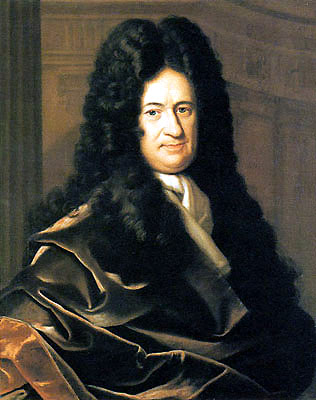
Let me begin with a short word about myself. Like Professor Grayling, I possess a Ph.D. in philosophy. Unlike him, I live and work in Japan, and I was working in Yokohama, Japan, when the earthquake struck on Friday, March 11th at 2:46 p.m. local time. After the quake hit, I spent the night with several hundred people in a shopping mall near Yokohama station, as the trains had stopped running. On the Sunday after the quake, I also attended my local church, where the congregation is almost entirely Japanese. Despite the tragic loss of life – the death toll is expected to exceed 20,000 – the earthquake did not weaken my belief in God. It did, however, reinforce my conviction that attempts to rationalize suffering – such as Leibniz’s optimistic assertion that we live in the best of all possible worlds, which Voltaire savagely satirized in his novel Candide – are fundamentally wrong-headed. Whole towns were swept away by the tsunami following the quake. The suffering that people experience in disasters is absurd and pointless; on this point, the atheists are surely right.

The views I present in this essay are mine, and I take sole responsibility for them. My aim is to show that two mistaken theological assumptions – the notion that God can do anything imaginable and the notion that God always does things for the best – lie at the heart of the contemporary “New Atheist” insistence that senseless suffering renders belief in God irrational. In passing, I also point out examples of invalid arguments for Darwinian evolution which rely on the assumption that that God can do anything imaginable. Read More ›

Craig Venter and the Tree of Life–Revisited

Recently Bill Dembski posted on the Origin of Life debate that took place at ASU not too long ago. At issue was the exchange that took place between Richard Dawkins and Craig Venter over the Tree of Life. Venter expressed a contrarian view, saying that he saw a “bush” instead of a “tree”. The article below from New Scientist I believe let’s us know just what Venter was thinking. So, for those involved in that original post here’s the article.

Professional skeptic Michael Shermer has bought Settled Science, Inc.; a now trademarked subsidiary of his own considered opinions

In The Believing Brain: From Ghosts and Gods to Politics and Conspiracies–How We Construct Beliefs and Reinforce Them as Truths, Michael Shermer explains it all for you. And Publishers Weekly’s reviewer offers As the founding publisher of Skeptic magazine, author of Why People Believe Weird Things, and a columnist for Scientific American, Shermer is perhaps the country’s best-known skeptic. His position is as clear as it is simple: “When I call myself a skeptic I simply mean that I take a scientific approach to the evaluation of claims.” But now Shermer is interested not only in why people have irrational beliefs, but “why people believe at all.” Our brains, he says, have evolved to find meaningful patterns around us. But Read More ›

Is nothing sacred? Fire unimportant to human evolution?

(Or, why human evolution should not be taught in school) Jessica Hamzelou tells us, “Fire did not spark human colonisation of cold Europe” (New Scientist, 14 March 2011): To try to pin down the earliest evidence of controlled fire use, Paola Villa at the University of Colorado in Boulder, and Wil Roebroeks at Leiden University in the Netherlands re-examined the data from over 100 European sites. They were looking for evidence of fires that were unlikely to have occurred naturally – those in caves, for example – and for clues that fire had been used in a controlled way. These include activities such as making pitch: some early hominins made this sticky substance by burning birch bark and using it Read More ›

Coffee!! One of the few who really care advances a possible law of nature to explain why it looks as though we are alone

In “All alone and no one knows why” former nanotechnology watchdog Mike Treder tells us (Ethical Technology, Mar. 2, 2010)

In 1950, the physicist Enrico Fermi famously wondered, “Where is everybody?” He was referring to the strange silence in the universe, the apparent lack of any advanced civilizations beyond Earth.

Fermi reasoned that the size and age of the universe would indicate that many technologically advanced extraterrestrial civilizations ought to exist. However, this hypothesis is inconsistent with the lack of observational evidence to support it.

He offers a solution he says his critics have been unable to refute.

First, he rejects the idea that humans may simply be the first intelligent beings to explore outer space, arguing that humans “along with every other form of life” evolved by natural selection and are not special”: “Why, then, would it even be conceivable that earthlings are destined to be the very first species to make a noticeable mark on the universe?”

(The logic here escapes me. Earthlings could just happen to be first to explore because 1 is the first natural number. Indeed, absent prejudice, his first option is far more reasonable than what follows.)

He then finds himself stuck between:

2. There have been others before us, but all of them, without exception, have chosen—or somehow been forced—to expand in such a way that they are presently undetectable by our most sophisticated instruments. ?

3. There have been others, but all of them, without exception, have run into a cosmic roadblock that either destroys them or prevents their expansion beyond a small radius.

Well, he rejects 2 because it is unreasonable to suppose that millions of advanced civilizations before us chose or were forced to avoid detection by ourselves.

Again, I don’t follow because we cannot establish the definite existence of even one of these millions of secretive civilizations, which makes it premature to dispute their motives. However, unless one is paranoid (“Secret groups are hiding critical information from me”), one must agree with him.

That leaves proposition 3: Read More ›