2011
Should you teach your children that they’re nothing but survival machines for their genes? Artist/biology fan wonders
How can students learn to think when suppression of dissent is the campus’duty?
Evolutionists Aren’t the Only Ones: More Climate Emails
Scientists, as Del Ratzsch has pointed out, are people. And qua people, they sometimes have non scientific biases. These biases and motivations are crucial for they guide and restrict the science. Some answers are acceptable and other answers are not acceptable. It is that simple. There are those who are blackballed, and there are those who do the blackballing. It all depends on whether one is interested in truth or in dogma. You know who you are. Read more
Materialist explains why you should doubt a typical lecture-room argument against free will
Planetary Habitability Index: Conjuring life on other planets
From “Planets’ life-hosting potential ranked” (CBC News, Nov 24, 2011), we learn, Plugging in parameters such as a planet’s mass, radius, and average temperature generates a series of measures in the Earth Similarity Index, which “provides a quick screening tool with which to detect exoplanets most similar to Earth,” said Dirk Schulze-Makuch, an astrobiologist at Washington State University in Pullman, Wash., in a statement. He added that scientists know empirically that Earth-like conditions can support life. Amazing! How did they figure that out?!! But the researchers noted that some conditions that aren’t Earth-like — such as those found in oily lakes on Titan, a moon of Saturn — could theoretically also be conducive to life — albeit not the kind Read More ›
Adam, Eve and the Concept of Humanity: A Response to Professor Kemp (Part 1)
I’d like to put three hypothetical questions to my readers. They might sound rather silly, but as we’ll see, they have profound implications for the very concept of what it means to be human. Let us assume that the very first creatures on Earth who possessed a natural capacity to reason – i.e. the first people – had primate parents who lacked this capacity. Let us also assume for argument’s sake that there were only two people in the beginning – Adam and Eve – who later went on to have several children. Adam and Eve’s parents were therefore non-rational animals. Here are my three questions: (1) Would it have been possible for Adam to have had an identical twin Read More ›
Here, alas, is a throng of women in science who will NOT be the next Lynn Margulis
Eric Alm: It’s A Plausible Idea
plau•si•ble /’plôzəbəl/ 1. (of an argument or statement) Seeming reasonable or probable. 2. (of a person) Skilled at producing persuasive arguments, esp. ones intended to deceive. When one thinks of MIT one thinks of engineering and hard sciences. No nonsense academia that doesn’t suffer fools gladly. But now MIT Professor Eric Alm tells us that the spontaneous generation of a super progenitor is “plausible.” That’s an interesting choice of words because, in fact, that is precisely what evolution is not and it is difficult to imagine how Alm could have arrived at such a strange conclusion. Read more
A scientist explains the problem with bias in science
Common ancestor was a mega-organism “like none seen since”?
Cambrian crustacean’s unusual vision system described
ID Foundations, 11: Borel’s Infinite Monkeys analysis and the significance of the log reduced Chi metric, Chi_500 = I*S – 500
(Series)
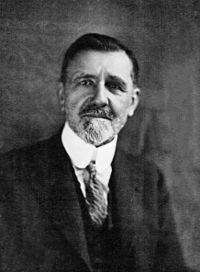
Emile Borel (1871 – 1956) was a distinguished French Mathematician who — a son of a Minister — came from France’s Protestant minority, and he was a founder of measure theory in mathematics. He was also a significant contributor to modern probability theory, and so Knobloch observed of his approach, that:
>>Borel published more than fifty papers between 1905 and 1950 on the calculus of probability. They were mainly motivated or influenced by Poincaré, Bertrand, Reichenbach, and Keynes. However, he took for the most part an opposed view because of his realistic attitude toward mathematics. He stressed the important and practical value of probability theory. He emphasized the applications to the different sociological, biological, physical, and mathematical sciences. He preferred to elucidate these applications instead of looking for an axiomatization of probability theory. Its essential peculiarities were for him unpredictability, indeterminism, and discontinuity. Nevertheless, he was interested in a clarification of the probability concept. [Emile Borel as a probabilist, in The probabilist revolution Vol 1 (Cambridge Mass., 1987), 215-233. Cited, Mac Tutor History of Mathematics Archive, Borel Biography.]>>
Among other things, he is credited as the worker who introduced a serious mathematical analysis of the so-called Infinite Monkeys theorem (just a moment).
So, it is unsurprising that Abel, in his recent universal plausibility metric paper, observed that:
Emile Borel’s limit of cosmic probabilistic resources [c. 1913?] was only 1050 [[23] (pg. 28-30)]. Borel based this probability bound in part on the product of the number of observable stars (109) times the number of possible human observations that could be made on those stars (1020).
This of course, is now a bit expanded, since the breakthroughs in astronomy occasioned by the Mt Wilson 100-inch telescope under Hubble in the 1920’s. However, it does underscore how centrally important the issue of available resources is, to render a given — logically and physically strictly possible but utterly improbable — potential chance- based event reasonably observable.
Read More ›