Uncommon Descent Serving The Intelligent Design Community
Author

Jonathan M

Margulis

Lynn Margulis Expresses Her Doubts About neo-Darwinism In Discover Magazine

A friend shared this recent piece from Discover Magazine, which features an interview with the renowned biologist Lynn Margulis. And I thought it was worth sharing with you lot on this blog. Some revealing highlights: All scientists agree that evolution has occurred… The question is, is natural selection enough to explain evolution? … This is the problem I have with neo-Darwinists: They teach that what is generating novelty is the accumulation of random mutations in DNA, in a direction set by natural selection… Natural selection eliminates and maybe maintains, but it doesn’t create. … I was taught over and over again that the accumulation of random mutations led to evolutionary change — led to new species. I believed it until Read More ›

Biogeography and Common Descent — And Why I Don’t Buy It

Recently on this blog, I have been exploring and examining some of the genomic arguments for common descent. As I have been documenting in recent weeks, while the case for common ancestry — on the face of it — looks mightily strong, closer inspection reveals that the arguments don’t, in fact, stand up under more rigorous scrutiny. In the vast majority of instances, the corroborative data is very carefully cherry picked from the pertinent data set, and the non-congruent evidence is discarded or ignored. In some cases, non-congruent data is rationalised — sometimes plausibly. But then one ought not to think that an ad hoc rationalisation constitutes  evidence for said position. As Casey Luskin notes,

…at the end of the day, we must call them what they are: ad hoc rationalizations designed to save a theory that has already been falsified. Because it is taken as an assumption, evolutionists effectively treat common ancestry in an unfalsifiable and unscientific fashion, where any data that contradicts the expectations of common descent is simply explained away via one of the above ad hoc rationalizations. But if we treat common descent as it ought to be treated — as a testable hypothesis — then it contradicts much data.

One popular argument for common descent is the case from the discipline of biogeography — that is, the study of the geographical and historical distribution of species in relation to one another. The argument is based largely around the observation that species are related in accordance with their geographical proximity with respect to one another. One well-known example of this is the concentration of marsupial mammals in Australia and South America. As the Internet encyclopedia, Wikipedia, explains,

The history of marsupials also provides an example of how the theories of evolution and continental drift can be combined to make predictions about what will be found in the fossil record. The earliest marsupial fossils are about 80 million years old and found in North America; by 40 million years ago fossils show that they could be found throughout South America, but there is no evidence of them in Australia, where they now predominate, until about 30 million years ago. The theory of evolution predicts that the Australian marsupials must be descended from the older ones found in the Americas. The theory of continental drift says that between 30 and 40 million years ago South America and Australia were still part of the Southern hemisphere super continent of Gondwana and that they were connected by land that is now part of Antarctica. Therefore combining the two theories scientists predicted that marsupials migrated from what is now South America across what is now Antarctica to what is now Australia between 40 and 30 million years ago. This hypothesis led paleontologists to Antarctica to look for marsupial fossils of the appropriate age. After years of searching they found, starting in 1982, fossils on Seymour Island off the coast of the Antarctic Peninsula of more than a dozen marsupial species that lived 35-40 million years ago.

I must confess that I have my doubts with regards the efficacy of this argument in establishing universal common descent, or even common descent of all marsupial mammals. After all, as noted in the textbook Explore Evolution, marsupials are not even restricted to the southern continents of Australia and South America. Some marsupials live in the northern hemisphere, and there is even some paleontological evidence for the oldest marsupials inhabiting China!

But be that as it may. As with the majority of arguments favouring common descent, the argument from biogeography is loaded with carefully cherry-picked data.

Read More ›

When Papers Shouldn’t Have Gotten Through Peer-Review

Over on his blog, Why Evolution is True, University of Chicago biologist Jerry Coyne writes critically of a Nature paper published in May of last year, which he describes as “a misguided attack on kin selection.” Coyne asks, If the Nowak et al. paper is so bad, why was it published? That’s obvious, and is an object lesson in the sociology of science.  If Joe Schmo et al. from Buggerall State University had submitted such a misguided paper to Nature, it would have been rejected within an hour (yes, Nature sometimes does that with online submissions!).  The only reason this paper was published is because it has two big-name authors, Nowak and Wilson, hailing from Mother Harvard.  That, and the Read More ›

Constantly Keeping In Mind…

At the risk of doing this subject to death (for those who haven’t noticed, I’m fairly set on bacterial regulation of gene expression and, in particular, flagellar assembly), I recently encountered a somewhat revealing quote from one of my favourite overviews of the flagellum — that is, Pili and Flagella: Current Research and Future Trends. In chapter 6 of that book (entitled, “What Is Essential For Flagellar Assembly?”), contributer Shin-Ichi Aizawa writes, Since the flagellum is so well designed and beautifully constructed by an ordered assembly pathway, even I, who am not a creationist, get an awe-inspiring feeling from its ‘divine’ beauty … However, if the flagellum evolved from a primitive form, where are the remnants of its ancestor? Why Read More ›

“Junk DNA” and the Molecular Basis of Cell Identity

An interesting research article was published in Nature this week [Wang, K. C., Y. W. Yang, et al. (2011). “A long noncoding RNA maintains active chromatin to coordinate homeotic gene expression.” Nature]. In the study, a fascinating new regulatory role is identified for long intergenic noncoding RNAs (lincRNAs). Read More>>>

A False Trichotomy

I recently promised that I would discuss the latter half of chapter 4 of Daniel Fairbanks’ 2010 book, Relics of Eden, in which Fairbanks attempts to demonstrate common ancestry based on considerations of maternally-inherited mitochondrial and paternally-inherited Y-chromosomal DNA sequences. Or, put more accurately, Fairbanks attempts to demonstrate that humans and chimpanzees are more closely related than either is to gorillas. Fairbanks’ methodology here, however, presupposes (and does not demonstrate) that indeed there is such a hereditary relationship linking humans, chimpanzees and gorillas. If one chooses to interpret mere genetic similarities as evidence for common descent then, indeed, within the framework of that paradigm, Fairbanks’ conclusions may be allowed to stand. But given that modern Darwinians are not even close to articulating a plausible — or even viable — naturalistic mechanism which can account for such evolution from a common ancestor, are we not justified in, at the very least, reserving our judgment until such a mechanistic basis is forthcoming?

The majority of Fairbanks’ arguments for common ancestry (such as shared mobile element or intron inserts, and shared “mistakes”) can be readily accounted for in terms of a common mechanism (i.e. constraints on integration, or similar genetic instabilities or mutation “hotspots”). And there is no decisive way to distinguish common ancestry from common design with regards to unqualified appeals to “similarity”. Does it not stand to reason that a designer might use similar genes and tools to perform similar functions in different organisms?

In fact, if we are going to let all the evidence speak, then why not take into account the evidence against common ancestry? Since we’re on the topic of the Y-chromosome, what about this study published in Nature just last year, which yielded evidence that the male-specific portions of the human and chimp Y chromosome “differ radically in sequence structure and gene content,” suggesting “wholesale renovation,”? The Nature News report noted that,

The common chimp (Pan troglodytes) and human Y chromosomes are “horrendously different from each other”, says David Page of the Whitehead Institute for Biomedical Research in Cambridge, Massachusetts, who led the work. “It looks like there’s been a dramatic renovation or reinvention of the Y chromosome in the chimpanzee and human lineages.”

Read More ›

Discovery Institute 2011 Summer Seminar on Intelligent Design

Last summer, I had the tremendous opportunity to travel to Seattle, Washington, and take part in Discovery Institute’s yearly summer seminar for undergraduate and graduate students. Truth be told, it was one of the most memorable experiences of my life. I had the chance to interact at a one-on-one level with key ID scholars including William Dembski, Jonathan Wells, Paul Nelson, Richard Sternberg, Stephen C. Meyer, Scott Minnich, Michael Behe, Douglas Axe, Ann Gauger, Jay Richards, and Bruce Gordon (and more!). I also made many good friends from all over the world, most of whom I have remained in contact with even until now. If you are a postgraduate or undergraduate student who is keen on ID and is swithering on whether or not this is for you, then I strongly encourage you to apply! Not only will you get connected with many phenomenal like-minded people, you will never think the same way about ID and evolution ever again! Best of all, if you are accepted for the program, you needn’t pay a cent! Travel expenses, lodging, meals, the lot, are fully funded.

Even if your academic discipline isn’t in the natural sciences, you needn’t worry — there is a program which is specifically geared towards those with a background in social sciences, humanities, law or theology!

Below are the details and information you need to APPLY.

Read More ›

bacterial-flagellum

The Sheer Genius And Brilliance Of Flagellar Assembly

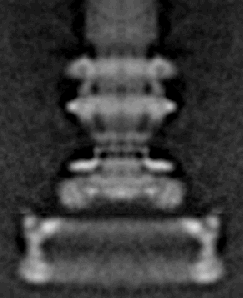
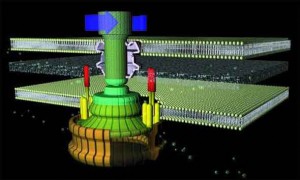
A few months ago, I posted a reasonably detailed introduction to the incredible molecular processes which undergird the activities of the bacterial flagellum — a remarkable high-tech rotory motor which confers motility to certain species of bacteria (the most studied being E. Coli and Salmonella). I posted this because the remarkable processes which I describe are not commonly discussed in these circles (which is somewhat ironic since we have made the flagellum our paradigm system). All-too-often those of a Darwinian persuasion are allowed to get away with the most outlandish of explanatory hypotheses in attempt to account for complex biochemical systems such as the flagellum. While these explanations may appear persuasive to the largely lay-audience, ill-aquainted with the sheer brilliance and design which undergirds these systems at the molecular level, closer inspection finds them wanting. Just as evolutionary “explanations” of the eye suddenly become inherently unpersuasive when one considers the remarkable biochemistry and molecular details of vision, so too do the purported “explanations” of the bacterial flagellum pale into triviality when one considers the biochemistry and molecular details undergirding its construction within the cell.

In this article, I want to take the opportunity to discuss in perhaps somewhat greater detail than I did previously, just how magnificent this system really is.

Read More ›

Mobile DNA: Finding Treasure In Junk

I wanted to flag up an interesting-looking forthcoming title which I recently happened across on Amazon. The book (by Haig Kazazian) is entitled “Mobile DNA: Finding Treasure In Junk”. The book’s back-cover synopsis reads as follows: Haig Kazazian reviews our current scientific understanding of mobile DNA and its role in the evolution and function of genomes and organisms, offering an in-depth portrait of the developing perspectives and research strategies pursued by the workers in his own laboratory. He presents an engaging history of the field, showing how advances have presented unexpected new questions, and how new tools and techniques have promoted further progress. Coverage includes: multiple types of mobile DNA; retrotransposition and other key concepts; important mobile DNA research advances Read More ›

On The Non-Evidence For The Endosymbiotic Origin Of The Mitochondria

Over the past several weeks, I have been reviewing the case presented by Daniel Fairbanks for common ancestry in his 2010 book, Relics of Eden. For my previous articles on this topic, see my discussion of the first three chapters here, here and here. Chapter 4 of Fairbanks’ book is entitled “Solving The Trichotomy”. In this chapter, Fairbanks addresses what he calls the “trichotomy problem”— that is, of humans, chimpanzees, and gorillas, which two of the three are most closely related to each other? In the latter half of his chapter, Fairbanks draws evidence from mitochondrial DNA and nuclear DNA studies in support of the traditional view that humans and chimpanzees are the closest genetically related. Before turning to this question, however, Fairbanks offers an array of evidence in view of confirming the standard evolutionary view that the mitochondrion is derivative of alpha-proteobacteria and became incorporated into the now-eukaryotic cell by virtue of an endosymbiotic event. I am going to divide my discussion of this chapter into two separate articles — in the first (this article), I am going to address the purported case for the endosymbiotic origin of mitochondria. In the second, I will discuss Fairbanks’ comments on the “trichotomy problem”.

When I held my former views on common ancestry, I was greatly compelled by the array of evidence often marshalled in support of the endosymbiotic origin of the eukaryotic mitochondrion. Indeed, if such a claim is true, then the proposition of the common ancestry of all eukaryotic life seems to be close at hand. This, I think, is an important area to discuss, for the argument — if sound — does not only establish the common ancestry of our order, primates. It also serves to support the somewhat grander claim that all extant eukaryotes are derivative of a common ancestral progenitor. But the important and fundamental question must be raised: Is this argument sound? Does the evidence support this claim? It is to this question that I now turn.

Read More ›

Axe (2004) And The Evolution Of Protein Folds

In my second response to Arthur Hunt on the origin of the T-urf13 gene (which specifies a mitochondrial ligand-gating pore-forming receptor for T-toxin in maise), I briefly mentioned towards the end of my post Arthur Hunt’s comments on the Panda’s Thumb blog regarding the Axe (2004) result concerned with the rarity of catalytic domains within sequence space.

As I noted in my previous post, Axe’s 2004 JMB paper is not an isolated result. I cited a number of papers which attained similar results with respect to the rarity of functional domains within sequence space. In one study, published in Naturein 2001 by Keefe & Szostak, it was documented that more than a million million random sequences were required in order to stumble upon a functioning ATP-binding protein, a protein substantially smaller than the transmembrane protein specified by the gene, T-urf13, discussed by Hunt. In addition, I noted, a similar result was obtained by Taylor et al. in their 2001 PNAS paper. This paper examined the AroQ-type chorismate mutase, and arrived at a similarly low prevalence (giving a value of 1 in 10^24 for the 93 amino acid enzyme, but, when adjusted to reflect a residue of the same length as the 150-amino-acid section analysed from Beta-lactamase, yields a result of 1 in 10^53). Yet another paper by Sauer and Reidhaar-Olson (1990) reported on “the high level of degeneracy in the information that specifies a particular protein fold,” which it gives as 1 in 10^63. In my previous post, I also strongly encouraged Arthur Hunt and others to read Douglas Axe’s excellent review article in Bio-complexity which covers this topic in more detail, as well as to read the recently-published The Nature of Nature — Examining The Role of Naturalism in Science, which is highly accessible for non-specialists.

Yesterday, I posted a short itallicised update to my previous article, having now looked somewhat closer at the article to which Hunt referred me. For those that missed it, allow me to highlight just a few of the points at which Hunt errs.

Read More ›

Daniel Fairbanks Cherry Picks Data On Pseudogenes To Prop Up Common Descent

In two previous posts (here and here), I raised some objections to the first couple of chapters of Daniel Fairbanks’ 2010 book, Relics of Eden — The Powerful Evidence of Evolution in Human DNA. I encouraged Fairbanks and others to review all the evidence pertinent to the matter at hand. As impressive the array of arguments for common descent may superficially appear at first glance, with only a cursory reading of the relevant literature, upon closer inspection they invariably fall apart.

Given the demonstrable causal impotence of neo-Darwinism to account for the evolution of novel genes and proteins, new body plans, and radical innovations in form, I have thus in recent months become inclined to be rather sceptical of the stupendous claim that all extant taxa are derivative of a single progenitor or common ancestor. If no one can tell us how such evolution from a common ancestor could possibly have occurred, then how can we be so sure that it did occur? In such a case, one would need to marshall some very spectacular evidence for common descent in order to present a persuasive argument. Unfortunately for Darwinists, however, the evidence for common ancestry is paper thin on the ground.

Chapter three of Fairbanks’ book is concerned with pseudogenes, allegedly once-functional relics of our evolutionary heritage. As with all his other “evidences” for common ancestry, Fairbanks — once again — cherry picks all the seemingly confirmatory evidence, while hand-wavingly ignoring all the obvious counter-examples in the scientific literature. Let’s turn our attention to what he has to say.

Read More ›

More On T-urf13 – A Response To Arthur Hunt And Others

A week ago I blogged about Arthur Hunt’s failure to refute Michael Behe on his concepts of irreducible complexity and the edge of evolution. My article quickly ignited into a heated debate which honed in on a host of different issues. Within just 48 hours of publishing the piece, more than 70 responses had ensued (as of now, there is more than 170!). Among those who commented was none other than Arthur Hunt himself, who raised a few criticisms of his own. This is my response to these criticisms.

Read More ›

Francis Collins Changes His Tune On “Junk DNA”

I’m currently reading Francis Collins’ latest book, The Language of Life — DNA And The Revolution In Personalised Medicine. I have to confess to a certain element of surprise when I read this statement in chapter 1 of his book: The discoveries of the past decade, little known to most of the public, have completely overturned much of what used to be taught in high school biology. If you thought the DNA molecule comprised thousands of of genes but far more “junk DNA”, think again. Is this really the same Francis Collins who wrote The Language of God, in which he tells us that it “strains credulity” to think that more than a few pieces of “junk DNA” could be functional Read More ›

Fairbanks Continues To Support Common Ancestry With Cherry Picked Data And Fails To Disclose All Relevant Facts

In a recent article, I criticised Daniel Fairbanks for his selective disclosure of relevant evidence with regards to the chromosomal fusion evidence for human/chimp shared ancestry. In this article, I want to consider Fairbanks’ central argument in chapter 2 of his book (Relics of Eden — The Powerful Evidence of Evolution in Human DNA), in which he covers jumping genes (transposable elements). In regard to this topic, as we shall learn in due course, Fairbanks not only applies his reasoning inconsistently, but conveniently omits to inform his readers of those papers which (a) serve to substantially undermine his core thesis, and (b) provide extremely potent counter-examples to much of the evidence which he marshalls in defense of it.

Read More ›