Uncommon Descent Serving The Intelligent Design Community
Author

kairosfocus

How to calculate Chi_500, a log-reduced, simplified form of the Dembski Chi-metric for CSI

In response to onward use of the talking points that CSI is not calculable etc., I have updated the CSI Newsflash post of April 14, 2011, to explicitly incorporate the dummy variable for specificity, and by adding a 1,000 coin demonstration calculation to go with the already existing use of the Durston et al calculation of FSC that was fed into three cases of a biologically relevant Chi_500 value.

I show the clip below: Read More ›

Going Nuclear: Cyberstalking design advocates and their families – re: “Say hi to XXXXXXXXXX and the kids for me, you demented child abuser”

This attempt as headlined to implicitly “out” and threaten my wife and our children – not to mention (per the outrageous rhetoric of Mr Dawkins and fellow New Atheists) to try to falsely smear me as a child abuser for trying to raise my children in a Christian home – moves matters at and around UD beyond the context of debate to something far more poisonously menacing and destructive.
So, let’s do a little equation:
Threatening, obsessive hostile anti-Christian commentary x repeated unhealthy references to sexual matters in same x Mafioso thug style “outing” attempt on wife and children = cyberstalking

Off-topic (somewhat): Bydand . . .

Sometimes, it is necessary to draw a line in the sand and stand, regardless of cost.

DM, in his haste to play at clever ad hominem circumstantial, and in his ill-instructed hatred of Christendom and its blessings in our civilisation, has tried to cross such a line. (CY, thank you.)

This is just to serve notice to all on the character of what we are facing, and what is liable to happen if we are silent or unwilling to stand, cost what it may, when such a line is crossed.

And, again, let us see just what he and ilk are ever so desperate to distract our attention from.

This:

Read More ›

Responding to Dr Liddle’s challenge as to whether science can study “the supernatural”

In Gil’s recent ANNOUNCEMENT thread, Dr Liddle has made a summary of her core challenge to design thinkers, at no 6:

Science necessarily involves an a priori commitment to the proposition that natural causes are the reason for everything.

It does not possess the methodology to discover any other kind of cause.

What methodology would you recommend for investigating an un-natural/supernatural cause?

I have thought this is sufficiently focussed to respond on points (currently awaiting moderation, on I think number of links . . . ). I augment that response here where I can use colours [Dr Liddle’s remarks are in bolded green], fill in diagrams and links:

Read More ›

He said it: PZM on the tolerance of evolutionary materialist atheists

Since it is liable otherwise to be lost in the flood of distractive tangential comments,  I here headline my markup of PZM’s recent remarks on Dr Jonathan Wells.

Pardon some fairly direct comments, but unless we specifically expose capital examples of what we are objecting to, the destructive misbehaviour will continue:

[“They said it: Judge Jones of Dover …” is here. – UD News]

Read More ›

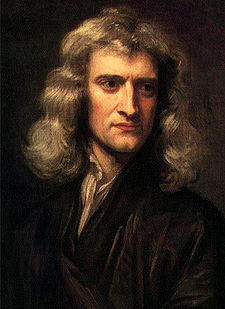
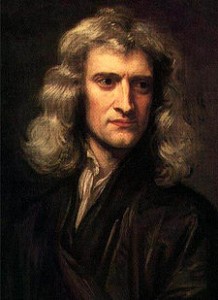
GodfreyKneller-IsaacNewton-1689
Sir Isaac Newton
Public domain

They said it: NCSE/Judge Jones of Dover and Wikipedia vs. Newton in Opticks, Query 31, on methodological naturalism and science

Public domain
Sir Isaac Newton

In further addressing the now commonly promoted idea that methodological naturalism is an innocent, “natural” part of the definition of science that properly keeps out those who wish to smuggle in “the supernatural” where it does not belong, I have had occasion to add an appendix to the recent June 17 post promoting Nancy Pearcey’s 2005 sleeper article on Christianity as a science starter, not a science stopper.

That appendix is worth a post in its own right, as — by utter contrast with Wikipedia’s enthusiastic citation of Judge Jones channelling the NCSE on how methodological naturalism has been the prevailing rule for doing science since the 1500’s & 1600’s — we can see how in his 1704  Opticks, Query 31 Newton blows apart the Wikipedian talking-point:

Read More ›

They said it: CNN’s loaded strawman “definition” of ID

According to a report by CNN political correspondent, Peter Hamby, US Presidential Candidate Michele Bachmann recently went on record as saying:

“I support intelligent design”  . . .  “What I support is putting all science on the table and then letting students decide. I don’t think it’s a good idea for government to come down on one side of scientific issue or another, when there is reasonable doubt on both sides” . . .  “I would prefer that students have the ability to learn all aspects of an issue”  . . . “And that’s why I believe the federal government should not be involved in local education to the most minimal possible process.”

This is in itself interesting, as it means that significant numbers of policy makers are increasingly aware of the problem of Lewontinian-Saganian, NAS, NSTA style a priori imposition of evolutionary materialism on science education.

But, this is not the main issue for this post.

That comes up when Mr Hamby provides a “definition” of ID:

Intelligent design suggests that the complexity of the universe cannot be explained by evolution alone, and must also be attributed to a creator or supernatural being.

By now, surely, CNN’s reporters and editors — never mind that artful wriggle-room word, “suggests” — know they could easily find a reasonable, non-loaded, accurate definition of ID, such as is provided by New World Encyclopedia:

Read More ›

She said it: Nancy Pearcey’s thoughtful article on how “Christianity is a Science-starter, not a Science-stopper”

One of the most common objections to design thought is the idea that it is about the improper injection of the alien  supernatural into the world of science. (That is itself based on a strawman misrepresentation of design thought, as was addressed here a few days ago.)

However, there is an underlying root, a common distortion of the origins of modern science, which Nancy Pearcey rebutted in a  2005 sleeper article as headlined, that deserves a UD post of its own.

Let’s clip the article:

Read More ›

He said it: Prof Lewontin’s strawman “justification” for imposing a priori materialist censorship on origins science

Yesterday, in the P Z Myers quote-mining and distortion thread, I happened to cite Lewontin’s infamous 1997 remark in his NYRB article, “Billions and Billions of Demons,” on a priori imposition of materialist censorship on origins science, which reads in the crucial part:

It is not that the methods and institutions of science somehow compel us to accept a material explanation of the phenomenal world, but, on the contrary, that we are forced by our a priori adherence to material causes to create an apparatus of investigation and a set of concepts that produce material explanations, no matter how counter-intuitive, no matter how mystifying to the uninitiated. Moreover, that materialism is absolute, for we cannot allow a Divine Foot in the door.

To my astonishment, I was promptly accused of quote-mining and even academic malpractice, because I omitted the following two sentences, which — strange as it may seem —  some evidently view as justifying the above censoring imposition:

The eminent Kant scholar Lewis Beck used to say that anyone who could believe in God could believe in anything. To appeal to an omnipotent deity is to allow that at any moment the regularities of nature may be ruptured, that miracles may happen.

To my mind, instead, these last two sentences are such a sad reflection of bias and ignorance, that their omission is an act of charity to a distinguished professor. Read More ›

Why is the debate over design theory so often so poisonous and polarised?

To answer this one, we need to go as far back as Aristotle’s The Rhetoric some 2300 years ago.

In this verbal self-defense classic — as in: “you gotta know what can be done, how, if you are to effectively defend yourself . . . ” —  on what has aptly been called the devilish art of persuasion by any means fair or foul, Aristotle (left, courtesy Wiki, public domain)  found this key answer to the question “How do arguments work to persuade us?” in Book I Ch 2:

“Of the modes of persuasion furnished by the spoken word there are three kinds. The first kind depends on the personal character of the speaker [ethos]; the second on putting the audience into a certain frame of mind [pathos]; the third on the proof, or apparent proof, provided by the words of the speech itself [logos]. Persuasion is achieved by the speaker’s personal character when the speech is so spoken as to make us think him credible . . . Secondly, persuasion may come through the hearers, when the speech stirs their emotions. Our judgements when we are pleased and friendly are not the same as when we are pained and hostile . . . Thirdly, persuasion is effected through the speech itself when we have proved a truth or an apparent truth by means of the persuasive arguments suitable to the case in question . . .”

Now, of course, as clever ad men and smart politicians have long since known, the most persuasive form of argument is the appeal to our emotions and underlying perceptions. Unfortunately, how we feel about something or someone is no more reasonable or accurate than the quality of the facts beneath our perceptions.

But, what does this dusty quip by a long since dead philosopher have to do with science and getting rid of creationists and their dishonest attempts to push in the supernatural into science by the back door?

A lot, and indeed that artfully cultivated and widely spread perception that we are dealing with “a war between religion and science” is at the heart of the problem.

Read More ›

But, what if the Cambrian robot is self-replicating?

Dr Liddle, commenting on the Cambrian Robot thread (itself a takeoff on the Pre- Cambrian Rabbit thread), observes at comment no 5:

the ribosome is part of a completely self-replicating entity.

The others aren’t.

The ribosome didn’t “make itself” alone but the organism that it is a component of was “made” by another almost identical organism, which copied itself in order to produce the one containing the ribosome in question.

It is probably true that the only non-self-replicating machines are those designed by the intelligent designers we call people.

But self-replication with modification, I would argue, is the alternate explanation for what would otherwise look like it was designed by an intelligent agent.

I don’t expect you to agree, but it seems to me it’s a point that at least needs to be considered . . .

The matter is important enough to be promoted to a full post — UD discussion threads can become very important. So, let us now proceed . . .

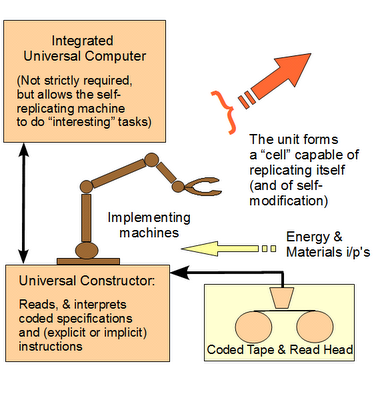
In fact, the living cell implements a kinematic von Neumann Self Replicator [vNSR], which is integrated into a metabolising automaton:

Fig. A: A kinematic vNSR, generally following Tempesti’s presentation (Source: KF/IOSE)

Why is that important?

Read More ›

Automation_of_foundry_with_robot

A robot in the Cambrian era?

Proverbially,  it is said that if paleontologists were to discover a rabbit in Cambrian era fossil strata, that would be an empirical refutation of macro-evolutionary theory.  UD contributor, News, has therefore raised a “but what about . . . ? “ in light of finding “complex non-marine multicellular eukaryotes in Precambrian strata . . .  ” and specifically:

large populations of diverse organic-walled microfossils extracted by acid maceration, complemented by studies using thin sections of phosphatic nodules that yield exceptionally detailed three-dimensional preservation. These assemblages contain multicellular structures, complex-walled cysts, asymmetric organic structures, and dorsiventral, compressed organic thalli, some approaching one millimetre in diameter. They offer direct evidence of eukaryotes living in freshwater aquatic and subaerially exposed habitats during the Proterozoic era.

As a further kicker, we must observe a date:”one billion years.”

The very first response, by Dr REC, was dismissive:

A longer, more gradual history of Eukaryotes and of colonization of land renders Darwinism more doubtful?

Where things get very intersting is with the onward suggestion of a gradual unfolding of life from simple to complex forms.

Therein lieth the rub: there ain’t no “simple” life forms.

Read More ›

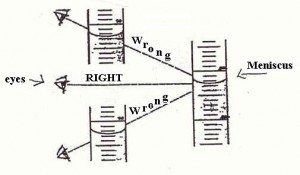
meniscus

FOOTNOTE: On Einstein, Dembski, the Chi Metric and observation by the judging semiotic agent

(Follows up from here.)

Over at MF’s blog, there has been a continued stream of  objections to the recent log reduction of the chi metric in the recent CSI Newsflash thread.

Here is commentator Toronto:

__________

>> ID is qualifying a part of the equation’s terms with subjective observation.

If I do the same to Einstein’s, I might say;

E = MC^2, IF M contains more than 500 electrons,

BUT

E **MIGHT NOT** be equal to MC^2 IF M contains less than 500 electrons

The equation is no longer purely mathematical but subject to other observations and qualifications that are not mathematical at all.

Dembski claims a mathematical evaluation of information is sufficient for his CSI, but in practice, every attempt at CSI I have seen, requires a unique subjective evaluation of the information in the artifact under study.

The determination of CSI becomes a very small amount of math, coupled with an exhausting study and knowledge of the object itself.>>

_____________

A few thoughts in response:

a –> First, let us remind ourselves of the log reduction itself, starting with Dembski’s 2005 chi expression:

χ = – log2[10^120 ·ϕS(T)·P(T|H)]  . . . eqn n1

How about this (we are now embarking on an exercise in “open notebook” science):

1 –> 10^120 ~ 2^398

2 –> Following Hartley, we can define Information on a probability metric:

I = – log(p) . . .  eqn n2

3 –> So, we can re-present the Chi-metric:

Chi = – log2(2^398 * D2 * p)  . . .  eqn n3

Chi = Ip – (398 + K2) . . .  eqn n4

4 –> That is, the Dembski CSI Chi-metric is a measure of Information for samples from a target zone T on the presumption of a chance-dominated process, beyond a threshold of at least 398 bits, covering 10^120 possibilities.

5 –> Where also, K2 is a further increment to the threshold that naturally peaks at about 100 further bits . . . . As in (using Chi_500 for VJT’s CSI_lite):

Chi_500 = Ip – 500,  bits beyond the [solar system resources] threshold  . . . eqn n5

Chi_1000 = Ip – 1000, bits beyond the observable cosmos, 125 byte/ 143 ASCII character threshold . . . eqn n6

Chi_1024 = Ip – 1024, bits beyond a 2^10, 128 byte/147 ASCII character version of the threshold in n6, with a config space of 1.80*10^308 possibilities, not 1.07*10^301 . . . eqn n6a . . . .

Using Durston’s Fits from his Table 1, in the Dembski style metric of bits beyond the threshold, and simply setting the threshold at 500 bits:

RecA: 242 AA, 832 fits, Chi: 332 bits beyond

SecY: 342 AA, 688 fits, Chi: 188 bits beyond

Corona S2: 445 AA, 1285 fits, Chi: 785 bits beyond  . . . results n7

The two metrics are clearly consistent . . . .one may use the Durston metric as a good measure of the target zone’s actual encoded information content, which Table 1 also conveniently reduces to bits per symbol so we can see how the redundancy affects the information used across the domains of life to achieve a given protein’s function; not just the raw capacity in storage unit bits [= no.  of  AA’s * 4.32 bits/AA on 20 possibilities, as the chain is not particularly constrained.]

Read More ›
NEWS FLASH: Dembski’s CSI caught in the act

Dembski’s CSI concept has come under serious question, dispute and suspicion in recent weeks here at UD.

After diligent patrolling the cops announce a bust: acting on some tips from un-named sources,  they have caught the miscreants in the act!

From a comment in the MG smart thread, courtesy Dembski’s  NFL (2007 edn):

___________________

>>NFL as just linked, pp. 144 & 148:

144: “. . . since a universal probability bound of 1 in 10^150 corresponds to a universal complexity bound of 500 bits of information, (T, E) constitutes CSI because T [i.e. “conceptual information,” effectively the target hot zone in the field of possibilities] subsumes E [i.e. “physical information,” effectively the observed event from that field], T is detachable from E, and and T measures at least 500 bits of information . . . ”

148: “The great myth of contemporary evolutionary biology is that the information needed to explain complex biological structures can be purchased without intelligence. My aim throughout this book is to dispel that myth . . . . Eigen and his colleagues must have something else in mind besides information simpliciter when they describe the origin of information as the central problem of biology.

I submit that what they have in mind is specified complexity, or what equivalently we have been calling in this Chapter Complex Specified information or CSI . . . .

Biological specification always refers to function . . . In virtue of their function [a living organism’s subsystems] embody patterns that are objectively given and can be identified independently of the systems that embody them. Hence these systems are specified in the sense required by the complexity-specificity criterion . . . the specification can be cashed out in any number of ways . . . “

Here we see all the suspects together caught in the very act.

Let us line up our suspects:

1: CSI,

2: events from target zones in wider config spaces,

3: joint complexity-specification criteria,

4: 500-bit thresholds of complexity,

5: functionality as a possible objective specification

6: biofunction as specification,

7: origin of CSI as the key problem of both origin of life [Eigen’s focus] and Evolution, origin of body plans and species etc.

8: equivalence of CSI and complex specification.

Rap, rap, rap!

“How do you all plead?”

“Guilty as charged, with explanation your honour. We were all busy trying to address the scientific origin of biological information, on the characteristic of complex functional specificity. We were not trying to impose a right wing theocratic tyranny nor to smuggle creationism in the back door of the schoolroom your honour.”

“Guilty!”

“Throw the book at them!”

CRASH! >>

___________________

So, now we have heard from the horse’s mouth.

What are we to make of it, in light of Orgel’s conceptual definition from 1973 and the recent challenges to CSI raised by MG and others.

Read More ›