Uncommon Descent Serving The Intelligent Design Community

At Evolution News: Mammoth Support for Devolution

Categories
Darwinism
Intelligent Design
Share
Facebook
Twitter/X
LinkedIn
Flipboard
Print
Email

Michael Behe writes:

The more science progresses, the more hapless Darwin seems.

In my 2019 book Darwin Devolves I showed that random mutation and natural selection are powerful de-volutionary forces. That is, they quickly lead to the loss of genetic information. The reason is that, in many environmental circumstances, a species’ lot can be improved most quickly by breaking or blunting pre-existing genes. To get the point across, I used an analogy to a quick way to improve a car’s gas mileage — remove the hood, throw out the doors, get rid of any excess weight. That will help the car go further, but it also reduces the number of features of the car. And it sure doesn’t explain how any of those now-jettisoned parts got there in the first place.
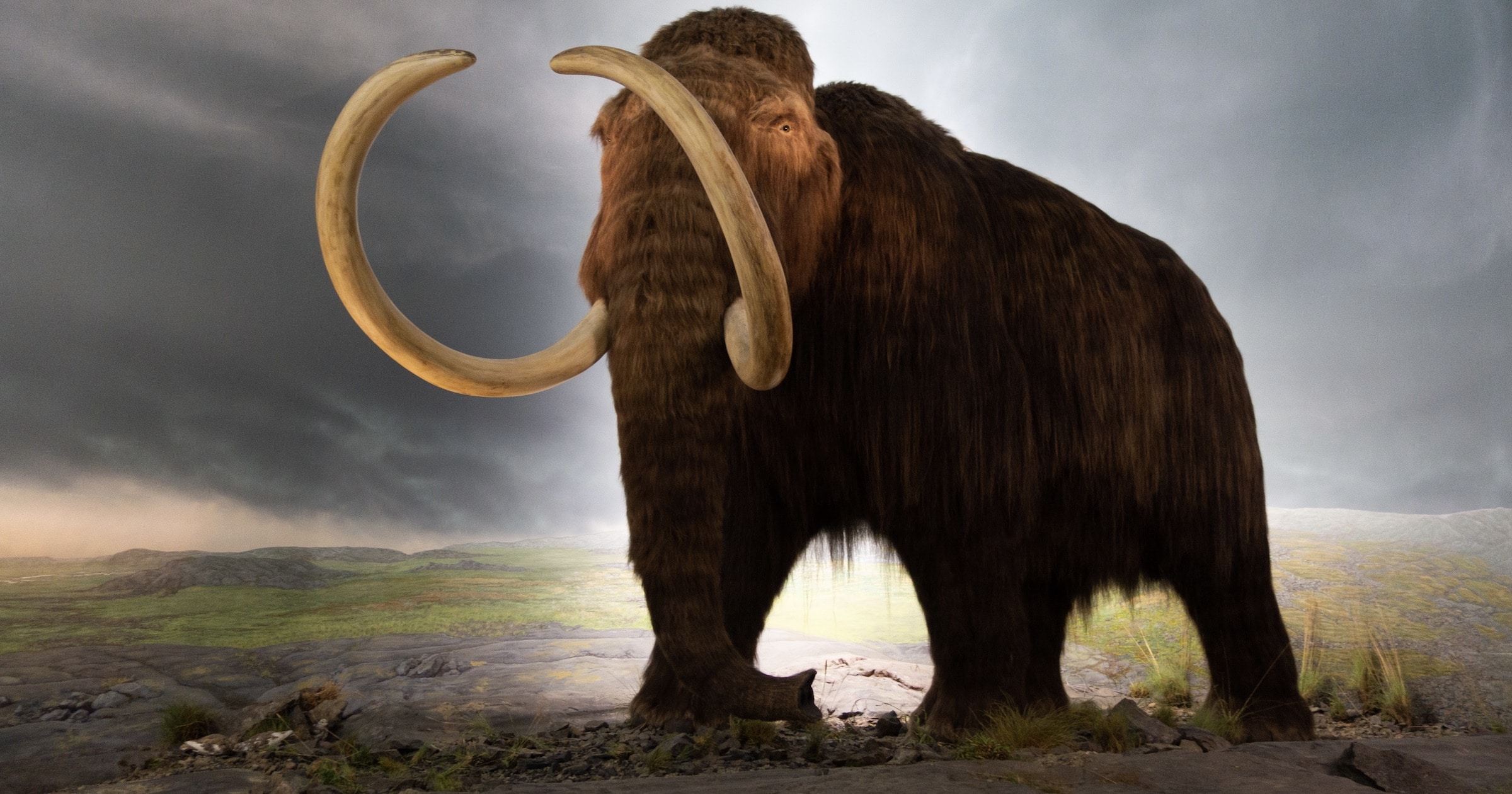
Image credit: Thomas Quine, CC BY 2.0 , via Wikimedia Commons.

The Bottom Line

The same goes for biology. Helpful mutations that arrive most quickly are very much more likely to degrade genetic features than to construct new ones. The featured illustration in Darwin Devolves was the polar bear, which has accumulated a number of beneficial mutations since it branched off from the brown bear a few hundred thousand years ago. Yet the large majority of those beneficial mutations were degradative — they broke or damaged pre-existing genes. For example, a gene involved in fur pigmentation was damaged, rendering the beast white — that helped; another gene involved in fat metabolism was degraded, allowing the animal to consume lots of seal blubber, its main food in the Arctic — that helped, too. Those mutations were good for the species in the moment — they did improve its chances of survival. But degradative mutations don’t explain how the functioning genes got there in the first place. Even worse, the relentless burning of genetic information to adapt to a changing environment will make a species evolutionarily brittle and more prone to extinction. The bottom line: Although random mutation and natural selection help a species adapt, Darwinian processes can’t account for the origins of sophisticated biological systems.

In Darwin Devolves, I also mentioned work on DNA extracted from frozen woolly mammoth carcasses that showcased devolution: “26 genes were shown to be seriously degraded, many of which (as with polar bear) were involved in fat metabolism, critical in the extremely cold environments that the mammoth roamed.” It turns out that was an underestimate. A new paper1 that has sequenced DNA from several more woolly mammoth remains says the true number is more than triple that — 87 genes broken compared to their elephant relatives. 

There’s Lots More

The point is that these gene losses aren’t side shows — they are the events that transformed an elephant into a mammoth, that adapted the animal to its changing environment. A job well done, yes, but now those genes are gone forever, unavailable to help with the next change of environment. Perhaps that contributed to eventual mammoth extinction.

As quoted above, the mammoth authors note that gene losses can be adaptive, and they cited a paper that I hadn’t seen before. I checked it out and it’s a wonderful laboratory evolution study of yeast.2 Helsen et al. (2020) used a collection of yeast strains in which one of each different gene in the genome had been knocked out. They grew the knockout yeast in a stressful environment and watched to see how the microbes evolved to handle it. Many of the yeast strains, with different genes initially knocked out, recovered, and some even surpassed the fitness of wild-type yeast under the circumstances. The authors emphasized the fact of the evolutionary recovery. However, they also clearly stated (but don’t seem to have noticed the importance of the fact) that all of the strains rebounded by breaking other genes, ones that had been intact at the beginning of the experiment. None built anything new, all of them devolved.

Well, Duh

That’s hardly a surprise. At least in retrospect, it’s easy to see that devolution must happen — for the simple reason that helpful degradative mutations are more plentiful than helpful constructive ones and thus arrive more quickly for natural selection to multiply. The more recent results recounted here just pile more evidence onto that gathered in Darwin Devolves showing Darwin’s mechanism is powerfully devolutionary. That simple realization neatly explains results ranging from the evolutionary behavior of yeast in a comfy modern laboratory, to the speciation of megafauna in raw nature millions of years ago, and almost certainly to everything in between.

References

  1. Van der Valk, Tom, et al. 2022. Evolutionary consequences of genomic deletions and insertions in the woolly mammoth genome. iScience 25, 104826.
  2. Helsen, J. et al. 2020. Gene loss predictably drives evolutionary adaptation. Molecular Biology and Evolution 37, 2989–3002.

Behe’s conclusions have significant implications: evolutionary adaptation seems to progress by breaking existing genes in such a way as to confer a survival advantage in a niche environment; the result is a more “brittle” species with fewer options for surviving further environmental stresses; the mystery of the origin of the original genes is in no way explained by natural means at any step in the process. Rather than Darwinian evolution providing a mechanism for the “origin of the species,” it more adequately explains the demise of species.

Comments
Why are we reading something from a discussion 6 1/2 years ago that goes no where and says nothing relevant? This is one of the more absurd discussions I have seen anywhere. But what else is new. Now, I only read Feselstein’s comments because I was told they were insightful but he said nothing of note. He’s just commenting on CSI. Did anyone else make any kind of case for anything? Again nothing presented as evidence for naturalized Evolution.jerry
August 21, 2022
August
08
Aug
21
21
2022
01:59 PM
1
01
59
PM
PDT
AF at 136, Beware. That sock will be incoming soon I suspect...relatd
August 21, 2022
August
08
Aug
21
21
2022
01:49 PM
1
01
49
PM
PDT
Here is an example of “evolution”:
No it isn't.Alan Fox
August 21, 2022
August
08
Aug
21
21
2022
01:44 PM
1
01
44
PM
PDT
http://theskepticalzone.com/wp/testing-intelligent-design/comment-page-6/#comment-103786 seems to be Professor Felsenstein's last comment in that thread.Alan Fox
August 21, 2022
August
08
Aug
21
21
2022
01:41 PM
1
01
41
PM
PDT
Pfft! Every word I write is specific, complex and in the right order to be understood. Below is the same sentence but compressed: EverywordIwriteisspecificcomplexandintherightordertobeunderstood Here is an example of "evolution": dtftyuop brrtfyiop dfghiop dfghiopikp blah blah dgfhjguhiojo gghjkpp dfgo Complex but not ordered or specific. In other words, useless.relatd
August 21, 2022
August
08
Aug
21
21
2022
01:36 PM
1
01
36
PM
PDT
http://theskepticalzone.com/wp/testing-intelligent-design/comment-page-4/#comment-103544
phoodoo: Joe Felsenstein: Keep in mind that fitness is not just number of offspring but also probability of survival. It is the expected number of offspring of a newborn Expected by who? Is fitness affected by the person doing the expectations?
No. We’re talking about simple models of population genetics here. There are genotypes and they have fitnesses. In a simple model with discrete generations and diploid organisms the fitnesses are half the expectations of the product of viability and fertility, so half the expected number of offspring. And yes, as various people saw, I am using “expectation” in the mathematical sense, of the expectation of a random variable. Not the hopes and dreams of the researcher. The whole issue of how you measure fitness in practice for real organisms is irrelevant here. It is just like a model in physics where each object has a mass, whether or not we can measure the mass in practice.Alan Fox
August 21, 2022
August
08
Aug
21
21
2022
01:33 PM
1
01
33
PM
PDT
http://theskepticalzone.com/wp/testing-intelligent-design/comment-page-4/#comment-103541 Mung:
Hi Joe, I guess I’m confused by the association of specificity [or specified] with fitness. I’ve never really thought of it in those terms and don’t know [yet] how to make the transition to that mode of thinking about it. I think more along the line of a sequence of bases specifying a polypeptide, or a sequence of amino acids specifying a protein.
Joe Felsenstein: That is using fitness as the scale. Keep in mind that fitness is not just number of offspring but also probability of survival. It is the expected number of offspring of a newborn. So in your example almost all the organisms whose genomes were typed by the monkey would be random piles of organic chemicals without even organized cells. Their fitness would be basically zero.
In your example of the monkeys, I would think of of everything they produce as close on a fitness scale because they all come from a typewriter, which is itself specified to produce output from a finite set. Not fit would be throwing the typewriter against the wall and having it shatter on the floor. Let’s say we have two different enzymes. I suppose we can both agree they are specified. How do we decide which once is more specified than the other or which one is more fit than the other? What do we do to get them on the same scale? If you don’t want to use enzymes, how about coins? ?
There are various scales you can use for specification. We’re talking about Dembski’s 2002 argument in No Free Lunch so let me go there for support (actually the copy I have is the 2007 First Paperback Edition, so the page numbers I give will be from there). In a crucial passage Dembski considers what to use for the specification. Here is the paragraph, quoted in full. In the edition I have this is in Chapter 3 (“Specified Complexity as Information”) in section 3.7 (“Biological Information”), on pages 148-149:
Biological specification always refers to function. An organism is a functional system comprising many functional subsystems. In virtue of their function, these systems embody patterns that are objectively given and can be identified independently of the systems that embody them. Hence those systems are specified in the sense required by the complexity-specification criterion (see sections 1.3 and 2.5). The specification of organisms can be cashed out in any number of ways. Arno Wouters cashes it out globally in terms of the viability of whole organisms. Michael Behe cashes it out in terms of the minimal function of biochemical systems. Darwinist Richard Dawkins cashes out biological specification in terms of the reproduction of genes. Thus, in The Blind Watchmaker Dawkins writes, “Complicated things have some quality, specifiable in advance, that is highly unlikely to have been acquired by random chance alone. In the case of living things, the quality that is specified in advance is … the ability to propagate genes in reproduction.”
(There are footnotes 29, 30, and 31 also given in the sentences on Wouters. Behe, and at the end of the passage from Dawkins, giving citations which are at the end of the chapter, on pages 174-175 in my copy.) So my use of fitness as the scale is in line with these folks, who Dembski cites approvingly as giving examples of what he is talking about. Note that Dembski is talking about scales like viability (itself a component of fitness — in simple discrete-generations diploid models fitness is 1/2 the product of viability and fertility). However one can also talk about a single gene producing a single enzyme, and discuss a scale such as reaction speed. This is what is done by Hazen, Griffin, Carothers, and Szostak in their 2007 paper on “Functional Information” in Proceedings of the National Academy of Sciences which has often been cited by Dembski as defining a concept equivalent to Orgel’s Specified Information.
Alan Fox
August 21, 2022
August
08
Aug
21
21
2022
01:30 PM
1
01
30
PM
PDT
http://theskepticalzone.com/wp/testing-intelligent-design/comment-page-3/#comment-103412
mung:
Joe Felsenstein: Thus you do not argue that there is some barrier to natural selection (differences of viability and fertility among genotypes) bringing about highly-fit, well-adapted organisms that are Specified by being far out on the scale of fitnesses.
I wanted to see Frankie’s reply before I stepped in, and now I’ve seen it. Can you explain a little more about what you mean when you say “organisms that are Specified by being far out on the scale of fitnesses,” in particular, how you are using the term fitness. Are you using it in some way that isn’t related to comparative numbers of offspring? 100 offspring would suggest greater fitness than 99 offspring, but hardly suggests that 100 offspring is “way out on the scale of fitnesses.”
Implicit in the notion of Specified Information (as used by Orgel and by Dembski) is that there is some sort of scale. Explicit in Dembski’s Complex Specified Information, as he used it in 2002 in No Free Lunch, is that one has CSI if the organism is far out enough on that scale that an organism that extreme or more extreme would have a probability less than 10^{-150} under an hypothesis of “chance”. You can imagine a monkey with a 4-letter typewriter typing strings of A, C, G or T (or a mutational process doing the same, in the absence of natural selection). If we have a moderately well-adapted species such a fish that can swim, what is the probability of getting an organism that does that well if its genome is typed by the monkey? Surely far less than 10^{-150}, so I agree with Dembski, and disagree with many of his opponents here, that the organism has CSI. That is using fitness as the scale. Keep in mind that fitness is not just number of offspring but also probability of survival. It is the expected number of offspring of a newborn. So in your example almost all the organisms whose genomes were typed by the monkey would be random piles of organic chemicals without even organized cells. Their fitness would be basically zero. (I have used only processes like mutation for “chance”, because I think that this is what Dembski meant in 2002 — he wanted his Law of Conservation of Complex Specified Information to be a guarantee that natural selection could not cause an organism to have CSI if it didn’t have it originally. Later, in 2005, he defined Specified Complexity so as to include natural selection as one of the “chance” mechanisms, and later claimed that this is what he meant all along. That later definition has its own problems, mostly by being useless and forcing the reader to do all the important work.)Alan Fox
August 21, 2022
August
08
Aug
21
21
2022
01:25 PM
1
01
25
PM
PDT
http://theskepticalzone.com/wp/testing-intelligent-design/comment-page-3/#comment-103341 Extreme front-loading again. How about it, Mung? Salvador? Fifthmonarchyman? Do you agree with Frankie’s position that Dembski’s argument is about the Origin of Life, and not evolution after that?Alan Fox
August 21, 2022
August
08
Aug
21
21
2022
01:22 PM
1
01
22
PM
PDT
http://theskepticalzone.com/wp/testing-intelligent-design/comment-page-3/#comment-103336 Frankie,</strong http://theskepticalzone.com/wp/testing-intelligent-design/comment-page-3/#comment-103332 My argument is about Specified Complexity and CSI. You seem to have them conflated with Irreducible Complexity. My whole effort has been to work out whether Dembski’s Specified Complexity) and CSI arguments work. They don’t. The arguments I presented in the NCSE paper are correct — I am sorry to hear that you did not understand them.Alan Fox
August 21, 2022
August
08
Aug
21
21
2022
01:19 PM
1
01
19
PM
PDT
http://theskepticalzone.com/wp/testing-intelligent-design/comment-page-3/#comment-103329 Frankie:
Joe Felsenstein: You make it clear that any argument I make about what happens after the first genome arises will be waved aside, saying that I am “starting with the very thing that needs to be explained”. So yours is a front-loading argument.In arguing from Specified Complexity, you argue that all of it was present right at the beginning. Thus you do not argue that there is some barrier to natural selection (differences of viability and fertility among genotypes) bringing about highly-fit, well-adapted organisms that are Specified by being far out on the scale of fitnesses.
Whatever, Joe. You don’t have anything anyway. If you did it would be in peer-review
My argument was published in the Reports of the National Center for Science Education in 2007. And your argument was published … where? Anyway, you have confirmed that, when you say that when you say that starting with a genome is “starting with the very thing that needs to be explained”, that your argument is that all the Specified Complexity is present from the beginning in the first genome. An extreme front-loading argument. And that means that you have no argument that later natural selection is somehow unable to put information that codes for adaptations into the genome.
Alan Fox
August 21, 2022
August
08
Aug
21
21
2022
01:15 PM
1
01
15
PM
PDT
http://theskepticalzone.com/wp/testing-intelligent-design/comment-page-2/#comment-103165
Frankie: By starting with a genome you are starting with the very thing that needs to be explained. But I digress, present the evidence that you think shows natural selection producing specified complexity and we can have a look
Joe Felsenstein You make it clear that any argument I make about what happens after the first genome arises will be waved aside, saying that I am “starting with the very thing that needs to be explained”. So yours is a front-loading argument. In arguing from Specified Complexity, you argue that all of it was present right at the beginning. Thus you do not argue that there is some barrier to natural selection (differences of viability and fertility among genotypes) bringing about highly-fit, well-adapted organisms that are Specified by being far out on the scale of fitnesses.Alan Fox
August 21, 2022
August
08
Aug
21
21
2022
01:11 PM
1
01
11
PM
PDT
http://theskepticalzone.com/wp/testing-intelligent-design/comment-page-1/#comment-103036 Joe Felsenstein: For Specified Complexity, when you say that
3) Naturalistic mechanisms or undirected causes do not suffice to explain the origin of information (specified complexity) or irreducible complexity.
is your argument that natural processes cannot put Specified Complexity into the genome? Or is the “origin” considered to be earlier than the time at which natural selection acts (the time at which there are differences between genotypes in viability or fertility)?
Alan Fox
August 21, 2022
August
08
Aug
21
21
2022
01:09 PM
1
01
09
PM
PDT
ET: Non-sequitur. With an unknown signal from space the best we could hope for is to determine if nature did it or is it artificial. Unless, of course, we observed that signal starting some unknown technology we had captured. Could it be artificial without any function? Observation. What do you 'observe' when you observe specified complexity? Let's say we're trying to determine if part of a particular human genome has functionality or specified complexity. How do you proceed?JVL
August 21, 2022
August
08
Aug
21
21
2022
12:20 PM
12
12
20
PM
PDT
JVL:
So, if you get a signal from outer space you cannot determine if it has functional information?
Non-sequitur. With an unknown signal from space the best we could hope for is to determine if nature did it or is it artificial. Unless, of course, we observed that signal starting some unknown technology we had captured.
How do you know it’s present?
Observation.ET
August 21, 2022
August
08
Aug
21
21
2022
12:14 PM
12
12
14
PM
PDT
AF at 85, You have just won the Beyond Troll Award, given for examples of exceptional trolling. You can claim you don't understand English but you are able to insult people in French? "Dogs bark. The caravan passes." Alan, Put a sock in it. Get a real job. I think you're getting tired of your current assignment.relatd
August 21, 2022
August
08
Aug
21
21
2022
12:11 PM
12
12
11
PM
PDT
ET: You determine functional information is present via observation. So, if you get a signal from outer space you cannot determine if it has functional information? And you don’t need to know “how much” there is with respect to specified complexity. You just need to know that it is present. How do you know it's present?JVL
August 21, 2022
August
08
Aug
21
21
2022
12:03 PM
12
12
03
PM
PDT
Joe Felsenstein talks about an article he wrote that is published on the NCSE website. Yet that article proves that he doesn't understand CSI. He is OK with question begging and thinking it's an argument.ET
August 21, 2022
August
08
Aug
21
21
2022
11:59 AM
11
11
59
AM
PDT
Alan Fox@70 The usual contentless rhetoric, no reasoned argument, no data. AF@75
...changes of DNA sequence by mutation and by changes of gene frequency of the resulting DNA sequences increase the functional information in the DNA.
The usual mindless repetition of Darwinist dogma. Accompanied by continued studied ignoring of the challenges to cite some real data. For instance mine in #11: Can you cite
cases of experimentally induced Darwinistic evolution of truly novel adaptive complex genetic structures, and/or incontrovertible fossil evidence of the long Darwinistic succession of minute incremental changes leading to complex novel new adaptive genetic changes (rather than the actual fossil record of abrupt transitions of species with no gradual transformations)?
It's been quite a while and it has become obvious that as in other cases there will never be a substantive response other than more argument by assertion.doubter
August 21, 2022
August
08
Aug
21
21
2022
11:59 AM
11
11
59
AM
PDT
Try this, Jerry- page 1 comments. Joe Felsenstein is on page one and a few of the next pages.ET
August 21, 2022
August
08
Aug
21
21
2022
11:40 AM
11
11
40
AM
PDT
You determine functional information is present via observation. And you don't need to know "how much" there is with respect to specified complexity. You just need to know that it is present.ET
August 21, 2022
August
08
Aug
21
21
2022
11:38 AM
11
11
38
AM
PDT
ET: Functional information is a real thing. How do you determine it is present and how much there is? Biological systems have a high information content (or specified complexity) How do you determine that specified complexity is present and how much there is?JVL
August 21, 2022
August
08
Aug
21
21
2022
11:23 AM
11
11
23
AM
PDT
I tried to go to the link and apparently the comments shown on a page are limited so that one has to constantly open additional pages. I couldn’t search for Felsenstein. So I stopped.jerry
August 21, 2022
August
08
Aug
21
21
2022
11:07 AM
11
11
07
AM
PDT
Yes, Alan. The first page of responses doesn't offer any valid objection to my post. And it doesn't get any better. Joe Felsenstein thinks it's OK to start with the very CSI that he cannot account for to explain CSI in genomes. All the while ignoring the fact that he is engaging in question-begging. And what I posted in 88 & 89 weren't a challenge as much as they refuted what Alan had posted. What is observed on TSZ is their ignorance of science. They don't understand Newton's 4 rules. They don't understand parsimony. And they don't understand Occam's razor. The fact is if evolution by means of blind and mindless processes, including the alleged chemical evolution for the OoL, something like it would have to be invented as science mandates that all design inferences first eliminate necessity and chance explanations. For example, if nature can account for something, then archaeologists cannot claim it is an artifact. This stupidity of "ID must stand on its own" demonstrates ignorance as to what science entails.ET
August 21, 2022
August
08
Aug
21
21
2022
10:58 AM
10
10
58
AM
PDT
Well, the opening post was written by ET (under the pseudonym Frankie) and ET reposted the text here, comments 88 & 89, as a challenge. Many commenters responded to Frankie's challenge in comments under the OP so I thought it worth looking through to save the wheel being reinvented. I already said I'd quote Joe Felsenstein as he has been in the past less dismissive of Dembski's CSI than other academics. Not going to do that using my phone so it will have to wait a whileAlan Fox
August 21, 2022
August
08
Aug
21
21
2022
10:40 AM
10
10
40
AM
PDT
Alan, I had some free time so I took a look through the thread you have been referring people too. In my opinion it offers nothing of worth as too your current debate with with participants here at UD. Is they’re any particular comment/comments you’d like to direct my attention too? Is it a discussion of ID you’d like to have again?(I noticed you were a participant in the thread six years ago) Do you require intimate knowledge of how a designer accomplished it’s work?, be it Alien or God if you prefer. Do you want a discussion of irreducible complexity? (that also came up on your thread.) or about fitness?. Which part of the thread am I to be referred too?. BobBobSinclair
August 21, 2022
August
08
Aug
21
21
2022
10:03 AM
10
10
03
AM
PDT
Alan Fox:
Well, anyone can read your piece and the comments and form their own opinion.
Yes, they can. And we know what the majority of people here will say about it. What people can't do is refute what I posted. What they cannot do is demonstrate that evolution by means of blind and mindless processes is in an y way a scientific explanation for our existence.ET
August 21, 2022
August
08
Aug
21
21
2022
09:31 AM
9
09
31
AM
PDT
Design and intelligent agency volition. Alan Fox:
What? Do you mean that the designer wishes something which then happens?
No. It means the designers implement the plans as best they see fit.ET
August 21, 2022
August
08
Aug
21
21
2022
09:29 AM
9
09
29
AM
PDT
Alan Fox:
Real science is evidence-led.
And there isn't any evidence that blind and mindless processes produced life and its diversity. There isn't any evidence that blind and mindless processes, such as natural selection and drift, are capable of producing any bacterial flagellum. The ONLY evidence for evolution by means of blind and mindless processes is genetic diseases and deformities.ET
August 21, 2022
August
08
Aug
21
21
2022
09:27 AM
9
09
27
AM
PDT
Alan Fox:
That’s true for the overwhelming majority of scientists these days.
Perhaps. But that alleged overwhelming majority doesn't have a scientific explanation for our existence. So, who cares what they say about it?ET
August 21, 2022
August
08
Aug
21
21
2022
09:25 AM
9
09
25
AM
PDT
1 … 12 13 14 15 16 … 18