Uncommon Descent Serving The Intelligent Design Community

Should we recognise that “laws of nature” extend to laws of our human nature? (Which, would then frame civil law.)

Categories
Academic Freedom
Control vs Anarchy
Defending our Civilization
Laws
Lessons of History
Logic and Reason
Share
Facebook
Twitter/X
LinkedIn
Flipboard
Print
Email

Laws of Nature are a key part of the foundation of modern science. This reflects not only natural, law-like regularities such as the Law of Gravitation that promotes the Earth to the heavens (from being the sump of the cosmos) but also the perspective of many founders that they were thinking God’s creative, ordering providential and world-sustaining thoughts after him. The focal topic asks us whether our civil law is effectively an accident of power balances, or else, could it be accountable to a built in law that pivots on first duties coeval with our humanity.

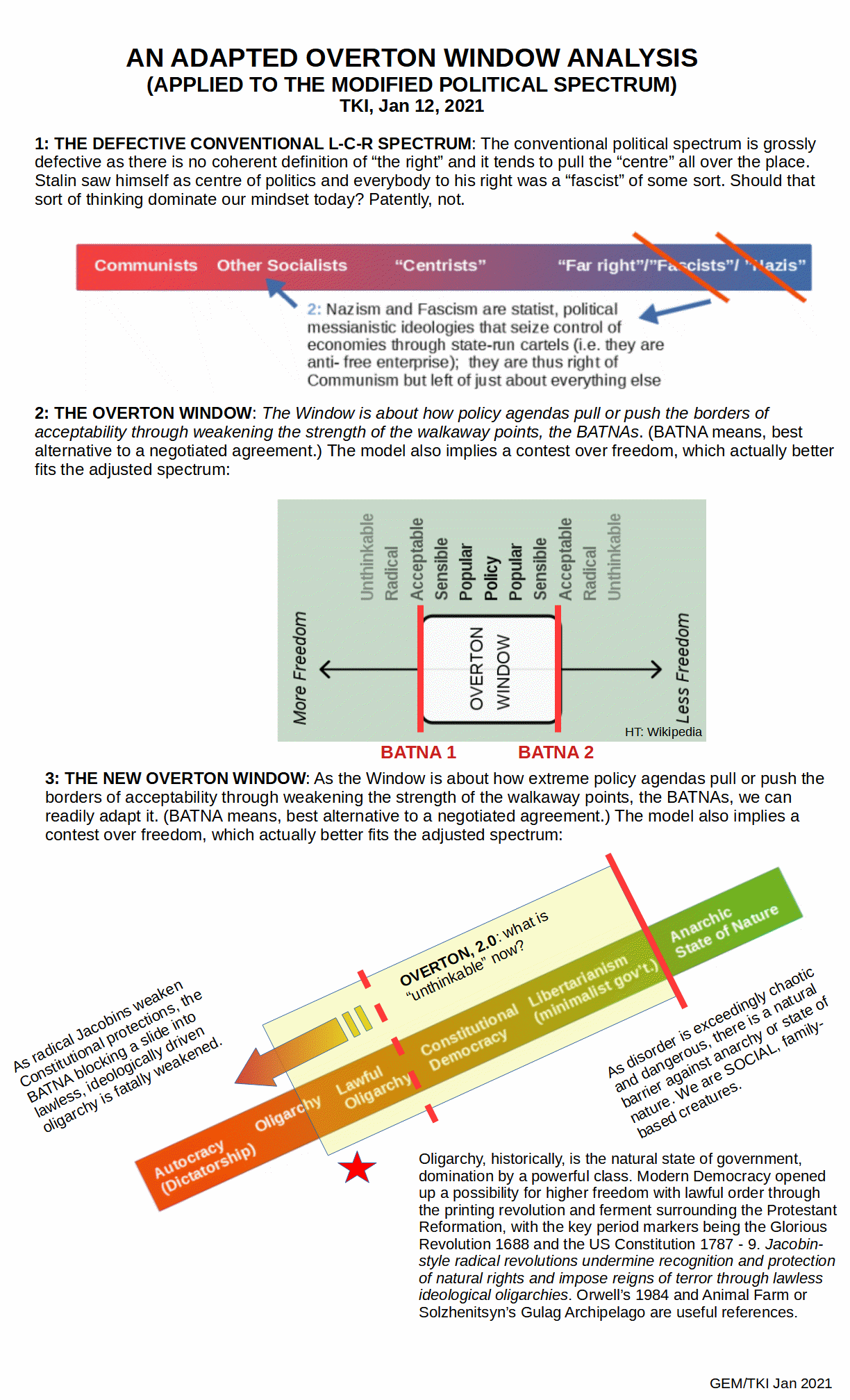
The issue becomes pivotal, once we ponder the premise that the typical, “natural” tendency of government is to open or veiled lawless oligarchy:
So, let us hear Cicero in his On The Republic, Bk 3 [c. 55 – 54 BC]:

{22.} [33] L . . . True law is right reason in agreement with nature , it is of universal application, unchanging and everlasting; it summons to duty by its commands, and averts from wrongdoing by its prohibitions. And it does not lay its commands or prohibitions upon good men in vain, though neither have any effect on the wicked. It is a sin to try to alter this law, nor is it allowable to attempt to repeal any part of it, and it is impossible to abolish it entirely. We cannot be freed from its obligations by senate or people, and we need not look outside ourselves for an expounder or interpreter of it. And there will not be different laws at Rome and at Athens, or different laws now and in the future, but one eternal and unchangeable law will be valid for all nations and all times, and there will be one master and ruler, that is, God, over us all, for he is the author of this law, its promulgator, and its enforcing judge. Whoever is disobedient is fleeing from himself and denying his human nature, and by reason of this very fact he will suffer the worst penalties, even if he escapes what is commonly considered punishment. . . . – Marcus Tullius Cicero, On the Republic, Bk 3

This, of course, is further reflected in his De Legibus, which lays out a framework:

With respect to the true principle of justice, many learned men have maintained that it springs from Law. I hardly know if their opinion be not correct, at least, according to their own definition; for “Law (say they) is the highest reason, implanted in nature, which prescribes those things which ought to be done, and forbids the contrary.” This, they think, is apparent from the converse of the proposition; because this same reason, when it [37]is confirmed and established in men’s minds, is the law of all their actions.

They therefore conceive that the voice of conscience is a law, that moral prudence is a law, whose operation is to urge us to good actions, and restrain us from evil ones.

We see in the Angelic Doctor, a broadening of the framework, elaborating four domains of law:

Thus, following Aquinas, we can see that arguably there is an intelligible core of law coeval with our responsible, rational, significantly free nature. This built-in law turns on inescapable, thus self-evident truths of justice and moral government, which rightly govern what courts may rule or parliaments legislate, per the premise of justice moderated by requisites of feasible order in a world that must reckon with the hardness of men’s hearts. Where, we are thus duty bound, morally governed creatures.

Hence, we come to the sense of duty attested to by sound conscience [“conscience is a law”], that breathes fire into what would otherwise be inert statements in dusty tomes. We may term these, by extension, the Ciceronian First Duties of Reason:

FIRST DUTIES OF RESPONSIBLE REASON

We can readily identify at least seven inescapable first duties of reason. “Inescapable,” as they are so antecedent to reasoning that even the objector implicitly appeals to them; i.e. they are self-evident. Namely, duties,

1 – to truth, 

2 – to right reason

3 – to prudence, 

4 – to sound conscience, 

5 – to neighbour; so also, 

6 – to fairness and

7 – justice 

x – etc.

[I add, Mar 12, for clarity:] {Of course, there is a linked but not equivalent pattern: bounded, error-prone rationality often tied to ill will and stubbornness or even closed mindedness; that’s why the study of right reason has a sub-study on fallacies and errors. That we seek to evade duties or may make errors does not overthrow the first duties of reason, which instead help us to detect and correct errors, as well as to expose our follies.}

Such built-in . . . thus, universal . . . law is not invented by parliaments, kings or courts, nor can these principles and duties be abolished by such; they are recognised, often implicitly as an indelible part of our evident nature. Hence, natural law,” coeval with our humanity, famously phrased in terms of “self-evident . . . rights . . . endowed by our Creator” in the US Declaration of Independence, 1776. (Cf. Cicero in De Legibus, c. 50 BC.) Indeed, it is on this framework that we can set out to soundly understand and duly balance rights, freedoms and duties; which is justice, the pivot of law.

The legitimate main task of government, then, is to uphold and defend the civil peace of justice through sound community order reflecting the built in, intelligible law of our nature. Where, as my right implies your duty a true right is a binding moral claim to be respected in life, liberty, honestly acquired property, innocent reputation etc. To so justly claim a right, one must therefore demonstrably be in the right.

Where, prudence can also be seen via Aristotle’s summary:  “. . . [who aptly] defined prudence as recta ratio agibilium, ‘right reason applied to practice.’ The emphasis on ‘right’ is important . . .  Prudence requires us to distinguish between what is right and what is wrong . . . If we mistake the evil for the good, we are not exercising prudence—in fact, we are showing our lack of it.”

Of course, we just saw a 400+ comment thread that saw objectors insistently, studiously evading the force of inescapability, where their objections consistently show that they cannot evade appealing to the same first duties that they would dismiss or suggest were so obscure and abstract that they cannot serve as a practical guide. The history of the modern civil rights movement once the print revolution, the civilisational ferment surrounding the reformation and the rise of newspapers, bills, coffee houses etc had unleashed democratising forces speaks to the contrary. The absurdity of appealing to what one seeks to overthrow simply underscores its self evidence. But free, morally governed creatures are just that, free. Even, free to cling to manifest absurdities.

This approach, of course, sharply contrasts with the idea that law is in effect whatever those who control the legal presses issue under that heading; based on power balances and so in effect might and/or manipulation. Aquinas’ corrective should suffice to show that not all that is issued under colour of law is lawful, or even simply prudent towards preserving order in a world of the hardness of men’s hearts.

Yes, obviously, if we are governed by built-in law, that raises the question that there is a cosmic law-giver, qualified to do so not by mere sheer power but also by being inherently good and utterly wise. Such a root of reality also answers the Hume Guillotine and the Euthyphro dilemma: an inherently good and utterly wise, necessary and maximally great being root of reality would bridge IS and OUGHT in the source of all reality and would issue good and wise, intelligible built-in law.

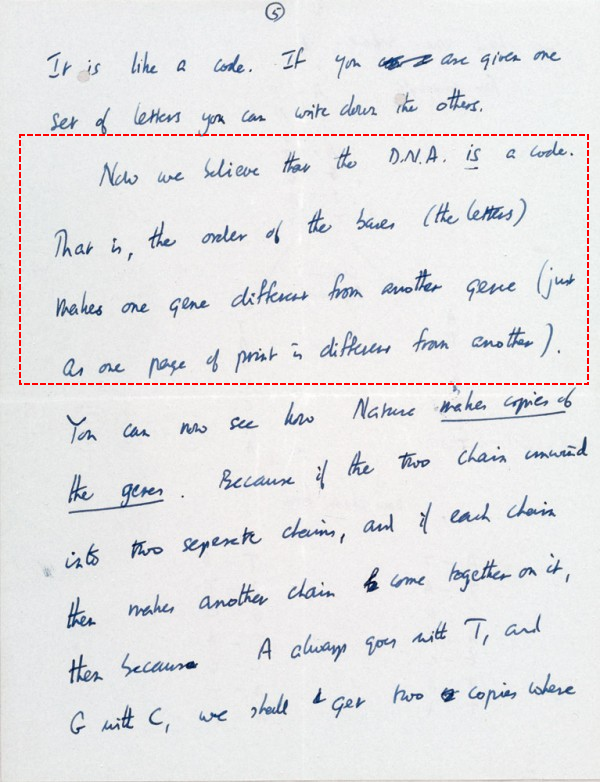
What of Mathematics? The answer is, of course, that a core of Math is inherent in the framework of any possible world. So, this would extend that core of Math tied to sets, structures and quantities expressed in N,Z,Q,R,C,R* etc to any actual world. That answers Wigner’s puzzlement on the universal power of Math and it points to, who has power to create an actual world in which we have fine tuning towards C-Chemistry, aqueous medium, cell based life? Likewise, it is suggestive on the source of the language and algorithms found in D/RNA etc.

Lest we forget, here is Crick, to his son, March 19, 1953:
So, we have come full circle, to law as expressing ordering principles of the dynamic-stochastic physical world and those of the world of intelligent, rational, morally governed creatures. Surprise — NOT — the design thesis is central to both. END

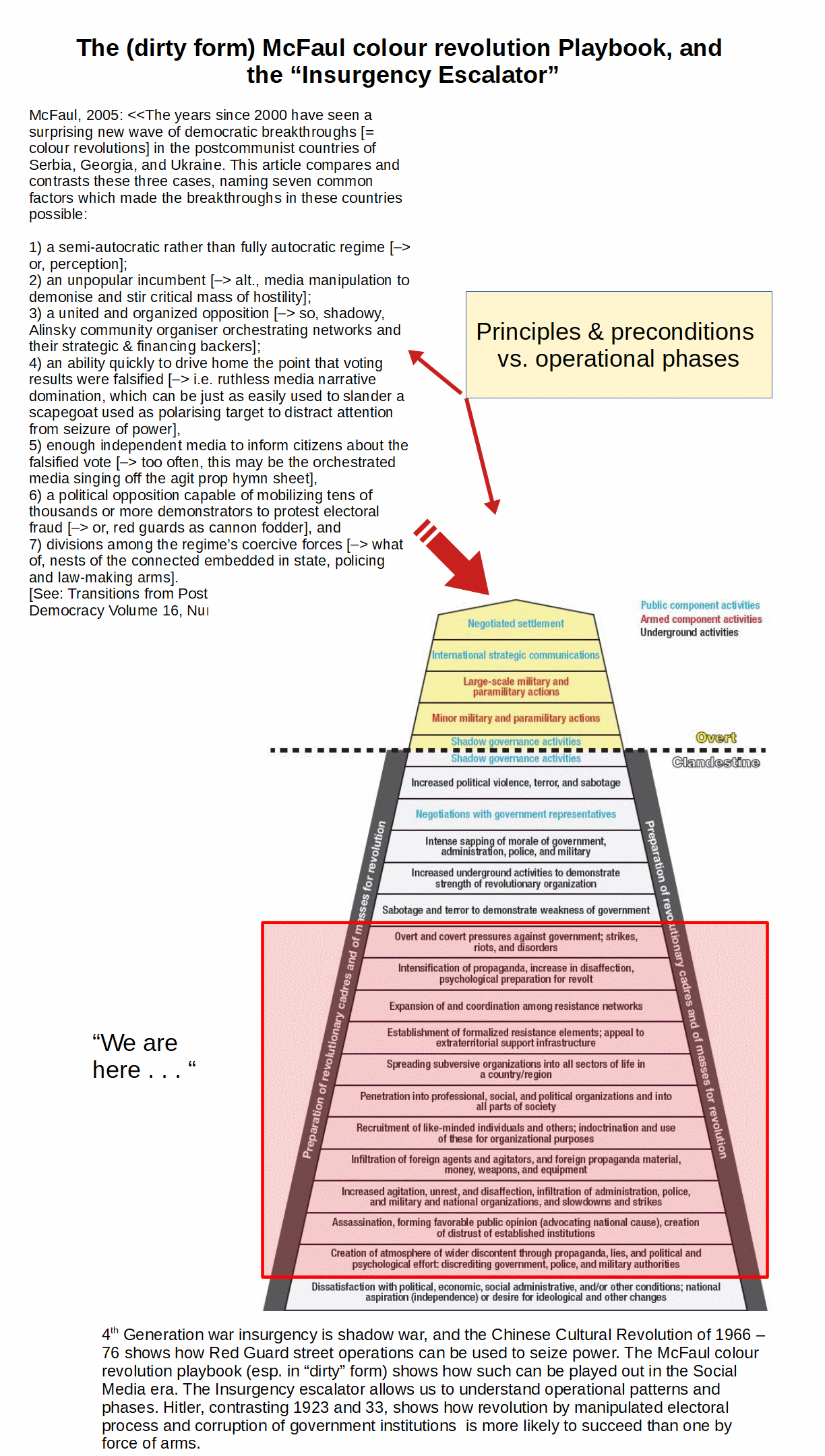
PS: As a reminder, the McFaul dirty form colour revolution framework and SOCOM insurgency escalator
U/D Feb 14: Outlines on first principles of right reason:
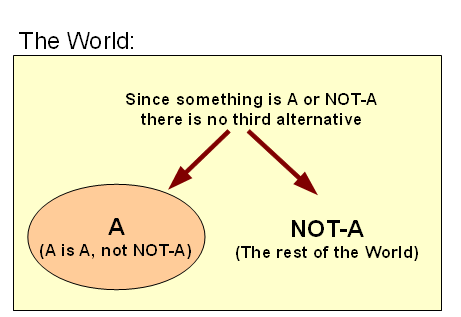
Here, we see that a distinct A — I usually use a bright red ball on a table:

and contrast a red near-ball in the sky, Betelgeuse as it went through a surprise darkening (something we observed separately and independently, it was not a figment of imagination):
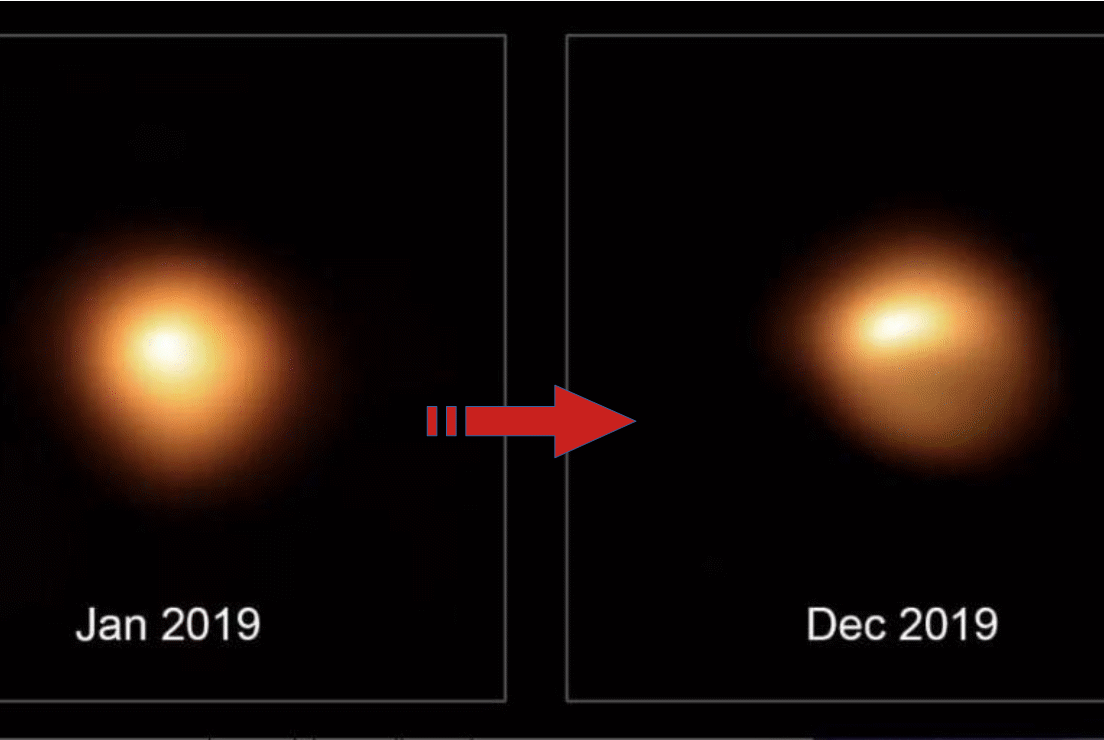
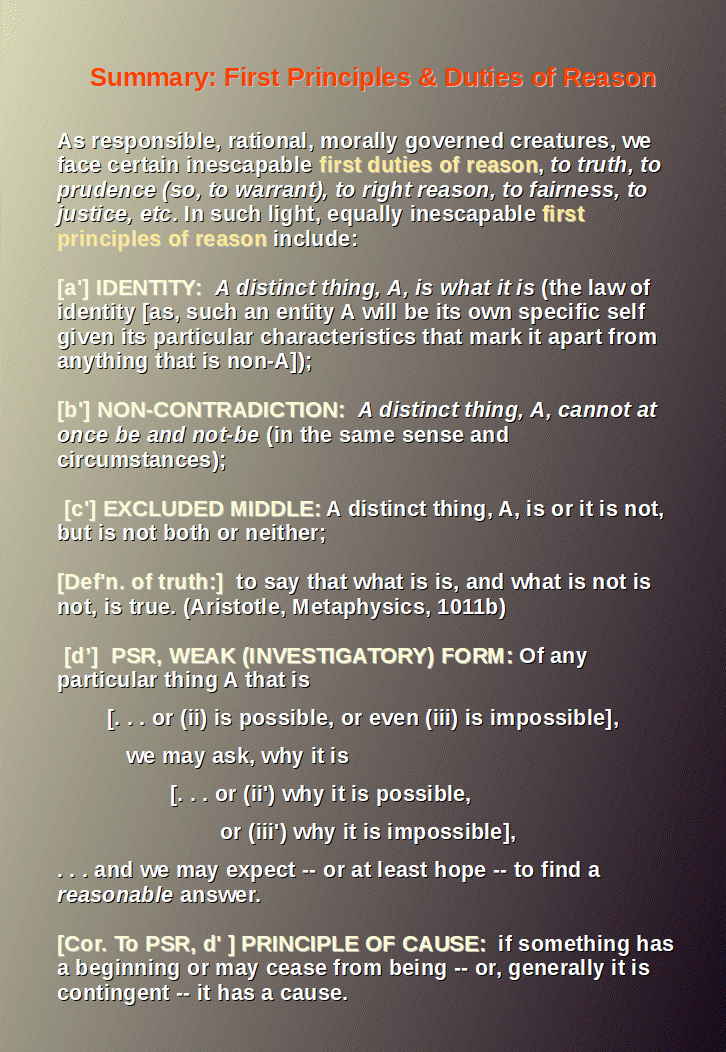
. . . is distinct from the rest of the world. A is itself i/l/o its characteristics of being, and it is distinct from whatever else is not A, hence we see that in w there is no x that is A and ~A and any y that is in W will either be A or not A but not both or neither. These three are core to logic: P/LOI, LNC, LEM.

We may extend to governing principles that we have duties toward — never mind whoever may disregard such (and thereby cause chaos):
U/D March 13: The challenge of building a worldview i/l/o the infinite regress issue:
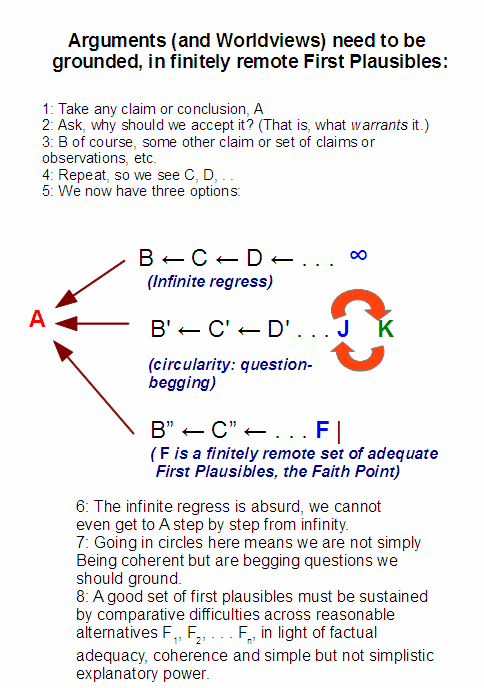
A summary of why we end up with foundations for our worldviews, whether or not we would phrase the matter that way}

Framing a ship:

. . . compare a wooden model aircraft:

. . . or a full scale, metal framework jet:
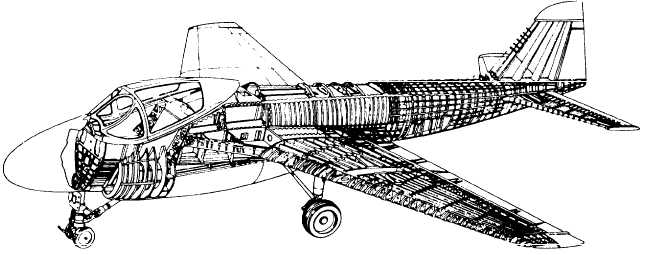
In short, there is always a foundational framework for any serious structure.

Comments
VL, that allows me to easily use clips that already have the usual two levels of quote marks in them, and reserves block quoting while also steering away from bold etc. Of course, stand-in for the French style quote marks . . . which, I once had an Editor remove when I wanted that in place of indent for clips. KFkairosfocus
February 23, 2021
February
02
Feb
23
23
2021
11:08 PM
11
11
08
PM
PDT
Dats wot i toughtes58
February 23, 2021
February
02
Feb
23
23
2021
09:31 PM
9
09
31
PM
PDT
Viola Lee I have overwhelming evidence that it’s “taught”, not “tought”.
The evolutionists are so sharp when it's about grammar. :)))Sandy
February 23, 2021
February
02
Feb
23
23
2021
09:05 PM
9
09
05
PM
PDT
I have overwhelming evidence that it's "taught", not "tought".Viola Lee
February 23, 2021
February
02
Feb
23
23
2021
07:38 PM
7
07
38
PM
PDT
Doubter There is overwhelming evidence...
Nope, you were tought that .Sandy
February 23, 2021
February
02
Feb
23
23
2021
07:28 PM
7
07
28
PM
PDT
Jerry@580 "Humans were created. I find no reasonable way that they could appear on this planet without some exterior guidance. " I don't think by a single creative act. There is overwhelming evidence that man very slowly evolved into his present physical and intellectual/moral/artistic/spiritual form. Especially, we have come to know with a high degree of certainty that man is also a spiritual being relating deeply to a spiritual realm of existence that exists along with the physical. It is a big problem to find some way to reconcile two seemingly incompatible bodies of evidence and experience. A new and excellent article in the Smithsonian (https://www.smithsonianmag.com/science-nature/essential-timeline-understanding-evolution-homo-sapiens-180976807/) details many of the fossil bone and tool finds over many years that have established beyond the shadow of a doubt that Homo Sapiens did slowly evolve both physically and culturally over the last 750,000 years or so from semihuman relatively primitive forms into modern man with great scientific, technological, artistic cultural, and spiritual capabilities and achievements.
"The long evolutionary journey that created modern humans began with a single step—or more accurately—with the ability to walk on two legs. One of our earliest-known ancestors, Sahelanthropus, began the slow transition from ape-like movement some six million years ago, but Homo sapiens wouldn’t show up for more than five million years. During that long interim, a menagerie of different human species lived, evolved and died out, intermingling and sometimes interbreeding along the way. As time went on, their bodies changed, as did their brains and their ability to think, as seen in their tools and technologies. To understand how Homo sapiens eventually evolved from these older lineages of hominins, the group including modern humans and our closest extinct relatives and ancestors, scientists are unearthing ancient bones and stone tools, digging into our genes and recreating the changing environments that helped shape our ancestors’ world and guide their evolution."
Of course materialist anthropologists assume "spiritual evolution" is just another relatively late cultural anomaly with no existential implications (there is no such thing as a spiritual realm), but as discussed at length in this forum, the very large body of paranormal empirical evidence that has accumulated points conclusively toward the existence of a spiritual realm that man is very much a part of. The mystery is how to reconcile the undeniable anthropological fossil evidence of a very gradual transformation of man from a brute to the modern version, with the spiritual view of modern man with a soul and an afterlife. Obviously evolution is a fact even though for many strong reasons the Darwinistic undirected by intelligence semi-random walk mechanism assumed to be how it happened is totally untenable. So there appears on the surface to be a cognitive dissonance between two large bodies of evidence, unless there can be some sort of understanding of how the spiritual component of modern man's persona came to be especially in the developmental primitive stages of this very slow (in terms of hundreds of thousands of years) process. At what point did the souls decide that the "physical vehicle" had finally evolved to an appropriate form and therefore decide to inhabit the physical? Or did the soul itself evolve along with the physical body and culture? If the latter, what sort of consciousness did the early primitive forms of soul have, and what sort of early primitive afterlife? What sort of higher spiritual plan could this be the result of, and what sort of spiritual beings could be behind it? We have no idea. On the surface it looks like just a fruitless attempt to merge two completely incompatible bodies of evidence.doubter
February 23, 2021
February
02
Feb
23
23
2021
06:11 PM
6
06
11
PM
PDT
Here is what I believe and for which I believe there is obvious support. Humans were created. I find no reasonable way that they could appear on this planet without some exterior guidance. Who did this guidance? Not known for sure but reasonable people believe it was the creator of the universe. However, for natural law purposes it is not necessary to know who provided the guidance that led to the existence of humanity. So the identity is not an issue for natural law only that it happened. Given that there was guidance, then whoever did the guiding was very intelligent and must have built into humans some survival characteristics. These are at a minimum, natural laws. They probably built into humans other characteristics leading to some objectives they had for this species since this species is so unlike any other in existence. These objectives could likely be deduced from how humans tend to act under a variety of situations and how they are different from other species. Lots of smart people have observed these tendencies and also have then deduced/observed the objectives they lead to. They then codified these tendencies/characteristics into something called human nature and what we are calling natural law. Some of these objectives that human nature leads to are not constructive to both themselves and to others. For example, too much freedom could get a toddler killed and many adults pursue self-destructive behavior that affects not just themselves but others. These self destructive objectives and tendencies then become proscribed. Objectives that are constructive for themselves and others are then prescribed. And the actions or should I dare say duties of individuals are such as to promote constructive objectives. (freedom is something that nearly all the natural law proponents missed as an essential characteristic of humans. This led to some horrible laws over the ages that oppressed most humans.) These are then put into laws to govern human actions toward these constructive ends for individuals as well as others. The codifying of laws was not necessary in small groups as the adults/leaders of the groups enforced what was obviously constructive. But as city states evolved, a more formal codifying was necessary. Hammurabi is one of the first persons to codify laws around 1800 BC but there were others before him. We then call these constructive objectives, moral objectives and actions that lead to them, moral. And the studies of the topic something called morality. I'd be interested if anything that Kf has said is in conflict with this. He will be the judge not others. If he does disagree then maybe we can have a conversation as to why and maybe some of the things I just wrote could be defended or modified.jerry
February 23, 2021
February
02
Feb
23
23
2021
02:30 PM
2
02
30
PM
PDT
And Jerry, I actually think you are talking about something different than KF is, and that I agree more with you than him. For instance, you write ,"Try refuting the law of supply and demand which is the basis for economics and based on natural tendencies of humans." Also, back at #4 you wrote, "Is human nature the result of something similar and rooted in the physical force that produces dopamine, oxytocin, serotonin, endorphins and cortisol?" I believe that human beings have a common core of characteristics, including rationality, compassion, and the innate urge to use those to make judgments, including moral ones. I also believe that those are associated with the laws of nature in the way you are using that term as you did in #4, including underlying biological components such as "dopamine, oxytocin, serotonin, endorphins and cortisol." I accept all that, and I accept, for instance, that the law of supply and demand is "based on natural tendencies in humans." So I agree with you on some of this. I don't think this is what KF and the natural law philosophers are talking about. They are talking about transcendent qualities to which we have access, and that is what I don't believe in, but that is different than what you are referring to, I think. Anyway, that't the way it looks to me.Viola Lee
February 23, 2021
February
02
Feb
23
23
2021
02:01 PM
2
02
01
PM
PDT
Jerry, first of all, I'm reasonable well-educated on the topic: taught some History of Western Civ many years ago and have read fairly widely on religion, philosophy, and the history of ideas since then. Natural law is a core idea in western and Christian philosophy. That doesn't automatically make it right. There are other perspectives, both from other religious traditions and from some branches of western philosophy. We are discussing the ideas, so just finding references from people, no matter how famous, that support an idea is not itself evidence that the idea is right.Viola Lee
February 23, 2021
February
02
Feb
23
23
2021
01:47 PM
1
01
47
PM
PDT
Not to anyone who hasn’t already accepted that premise.
Maybe you should study the history of ideas, specifically the history of natural law. Why don't you argue with those who wrote it. Try refuting Aristotle, Cicero, Socrates, Plato, Kant, Aquinas, Hobbes, Locke, Rousseau, Adam Smith, Mill, Newman, Robert George and a zillion others. Try refuting the law of supply and demand which is the basis for economics and based on natural tendencies of humans. Try refuting the behavior of a 12 month old as it learns to walk and seeks its freedom.jerry
February 23, 2021
February
02
Feb
23
23
2021
01:29 PM
1
01
29
PM
PDT
575 WJM writes, "4. We always utilize our free will to seek out and instantiate, if possible, that which we prefer." This doesn't seem meaningful. How do we know what we prefer? By looking at what we will. This seems circular. And I agree with your answer to Jerry. KF started the OP with "Laws of Nature are a key part of the foundation of modern science. This reflects not only natural, law-like regularities ...but also the perspective of many founders that they were thinking God’s creative, ordering providential and world-sustaining thoughts after him. The focal topic asks us whether our civil law is effectively an accident of power balances, or else, could it be accountable to a built in law that pivots on first duties coeval with our humanity." I do not find that obvious at all. As you, me, and others have said, that is a conclusion built into the premises of a particular world view, but there are other perspectives that seem much more reasonable to many people. So I also don't agree with Jerry's statement that the answer to the title question of the OP is "obviously yes" if we take the question as KF meant it.Viola Lee
February 23, 2021
February
02
Feb
23
23
2021
01:14 PM
1
01
14
PM
PDT
Seversky @ 574:
Yes, I can agree with that but I will put this question to you. I am heterosexual, have no problem with homosexuality but I simply cannot imagine how it would feel to find men attractive in the way that women are or to love a man as I might love a woman. Would you regard that as a restraint on free will?
Not any more than I would consider the physical inability to flap our arms and fly a constraint on free will. So, we are agreed on the following aspects of human nature: 1. Our existence is necessarily orderly. 2. we have free will (not free action). 3. all experience occurs in mind. I'm not sure if you saw it, but I later offered this as another aspect of human nature. 4. We always utilize our free will to seek out and instantiate, if possible, that which we prefer. Do you agree? Personally, I don't see how free will exists other than with #4 as one of its intrinsic qualities, but I think it's important to note. I think this quality of free will is at the root of most of our issues about morality. Jerry said:
The answer is so obviously yes.
Not to anyone who hasn't already accepted that premise.William J Murray
February 23, 2021
February
02
Feb
23
23
2021
12:48 PM
12
12
48
PM
PDT
William J Murray/527
I understand free will as the capacity to will, or intend, anything you want. “Will” is a mental capacity, not a physical one. It is not “free physical action” because our capacity to act physically is not anywhere near free. Mentally, however, we can desire anything, intend anything, send our mind off anywhere we desire, imagine anything. For example, I can freely intend or imagine or will myself to be able to walk through a brick wall, but it’s not going to physically happen. Can we agree that, under the above clarification, free will is part of our existential nature?
Yes, I can agree with that but I will put this question to you. I am heterosexual, have no problem with homosexuality but I simply cannot imagine how it would feel to find men attractive in the way that women are or to love a man as I might love a woman. Would you regard that as a restraint on free will?
Can we agree that while the theory that a world external of mind is common, that theory does not rise to the same level of certainty as the other three statements?
Yes, we can.Seversky
February 23, 2021
February
02
Feb
23
23
2021
12:08 PM
12
12
08
PM
PDT
Yes, single angle arrows wouldn't work. but why not just the standard punctuation of quotation marks? This is obviously not a big issue at all, though.Viola Lee
February 23, 2021
February
02
Feb
23
23
2021
10:49 AM
10
10
49
AM
PDT
VL, to highlight a certain level of quote. I would use the LH angle arrows but they trigger html and cause a problem. KFkairosfocus
February 23, 2021
February
02
Feb
23
23
2021
09:26 AM
9
09
26
AM
PDT
Back at #4 I asked
The primary physical force operating in human nature is the electromagnetic force. Amazing fine tuning. Does our conscious/will have the ability to counteract these physical force fields? Form new force fields? Apparently so. Is law based in maximizing dopamine, oxytocin, serotonin and endorphins and limiting cortisol in society?
No one has addressed this. I believe this should be the essence of the discussion. In other words, we are born with certain force fields operating (synapses established) but have the ability to establish new synapses. Some of these new synapses will lead to positive development and others will lead to long term harm. A lot of the discussion has focused on the harmful development of some people as opposed to what is beneficial for all. But humans are constantly building new synapses as are probably most life forms. This is a fundamental characteristic of human nature. There is the very appropriate expression “teaching an old dog new tricks.” Part of this is definitely not neurological but gene expression. In other words human nature is a function of gene expression and neurological connections (maybe other things.). Our conscious enables us to overcome both of these but not obviously not all instances. In the case of neurological synapses we can build new ones and weaken others but I doubt we can overcome gene expression. Maybe medical procedures or how we eat and what we ingest.jerry
February 23, 2021
February
02
Feb
23
23
2021
08:30 AM
8
08
30
AM
PDT
If it was truly objective, there would be no need to have it “beaten” into us.
That doesn't follow. And just because you can say it doesn't make it so. I would love to see you make you case, though.ET
February 23, 2021
February
02
Feb
23
23
2021
08:30 AM
8
08
30
AM
PDT
ps/ Yes, when we are debating someone we are appealing to the other person's morality. But we are doing so in the hopes that their morality with respect to interactions with others is similar to our own. If the other person's morality with respect to interactions is similar to ours, we can have a fruitful discussion; when our morality differs, any discussion is pointless. It is irrelevant whether these moral values are objective or subjective. This is no different than my desire to be treated with respect and in a civil manner when I am having a discussion on any thread. I am hoping that the person I am communicating with has the same desire. Although some of the interactions I have had here have been heated, there is usually a level of respect and civility, with one noted exception who I won't name. But with this person, there is no point in attempting to have a respectful discussion. That person's moral values simply differ too much from mine.Steve Alten2
February 23, 2021
February
02
Feb
23
23
2021
08:03 AM
8
08
03
AM
PDT
The title of this thread is
Should We Recognise That “Laws Of Nature” Extend To Laws Of Our Human Nature? (Which, Would Then Frame Civil Law.)
The answer is so obviously yes. Some very extremely smart people throughout history have debated and answered this. They have missed somethings, some very important, and have gotten some important things wrong but essentially they answered the question in general. The answer is yes. So it may be interesting to debate some of the details but the basic question has been answered and is not in doubt. For example, there is a double implication in the title. First, how do the laws of nature affect human nature. This has hardly been addressed. Second, does human nature have implications for civil laws? Just what are the characteristics of human nature that affect civil law? Which? How? Not really answered. Also are there some characteristics of human nature that are contradictory and actually self destructive? In other words are there some characteristics that have to be subdued or unlearned in order to flourish? Children must be taught not to walk in the street. In other words where does learning become part of human nature. There are books and theories on learning positive things about life so part of human nature is this ability to learn new ways to flourish. Much of what has been discussed has ignored that learning is part of our nature as well as basic instincts that must be suppressed. Does anyone believe a child left completely on its own will survive in a positive way? Aside: religious beliefs should not enter into it much except to recognize that some of the very smart people responsible for examining natural law had a religious background and were affected by that background. Obviously what they saw as divine law would also affect human civil law. This thread represents a reaction to some extremely negative trends going on in the world today. Namely, modern technology has created some amazing breakthroughs to enable human flourishing but at the same time created enormous concentrations of wealth that seek to limit human freedom. With a means of control never before seen in human history.jerry
February 23, 2021
February
02
Feb
23
23
2021
07:55 AM
7
07
55
AM
PDT
I have been trying to follow along with this discussion. Not an easy task given the writing style of one of the contributors. What this all boils down to is that Kairosfocus' first duties are better defined as desires/wishes/hopes/expectations, not objective duties or obligations. When I am making an argument I am doing so with the hope that others respond with honesty and. to the best of their knowledge, truth. There is no "objective" duty for the responder to do so. When I conclude that someone is not responding honestly or in good faith, something that we all run into, I simply stop responding to their comments. Kairosfocus falsely claims that whenever we make an argument that we are appealing to one of his first duties. We are not appealing to any objective duty, we are appealing to his desire to be honest. A desire that was instilled in him by his parents, and reinforced through societal interactions throughout the years. The fact that honesty was "beaten" into us from an early age is not evidence of it being objective, it is the exact opposite. If it was truly objective, there would be no need to have it "beaten" into us.Steve Alten2
February 23, 2021
February
02
Feb
23
23
2021
07:50 AM
7
07
50
AM
PDT
WJM First, God cannot have “created” either me or any particular “system” I must exist in; this would be an original violation of both free will and consent.
Hahaha, it's true you are Napoleon and you are not crazy.Sandy
February 23, 2021
February
02
Feb
23
23
2021
07:50 AM
7
07
50
AM
PDT
However, upon looking up some definitions of "duty," what I said earlier is mistaken. I don't think it's KF's definition of "duty" that is outside of the norm, it is mine. My apologies for that. It's my worldview that is (obviously) so outside of the norm, and I've become so accustomed to thinking this way, that my concept of "duty" seems "normal" to me. The normal definition of a "duty" is actually now almost incomprehensible to me. Like the theory of an external, physical, objective "reality," it doesn't really make any sense to me anymore. Again, my apologies, KF.William J Murray
February 23, 2021
February
02
Feb
23
23
2021
06:07 AM
6
06
07
AM
PDT
I do not have any "duty" in the sense of a "moral ought" to not engage in criminal behavior or otherwise be a "good citizen." You cannot coerce a "moral duty" onto a person. In terms of "legal obligation".. what does that even mean? Someone saying "If you don't do X, you will be taken to prison" does not represent my internal duty or olbigation. An imposed, coerced duty does not represent a necessary internal duty or obligation. There is no such thing as an internal duty - MY DUTY or MY OBLIGATION - that can be imposed on me without my consent.William J Murray
February 23, 2021
February
02
Feb
23
23
2021
05:55 AM
5
05
55
AM
PDT
Sandy said:
Christianity flourished under pagan Roman Empire and throughout history no matter what temporary “mighty” was reigned.
They only flourished inasmuch as that with the might allowed or protected, be that might their own, the pagans or the Christian God. It all boils down to distribution of might.William J Murray
February 23, 2021
February
02
Feb
23
23
2021
05:24 AM
5
05
24
AM
PDT
KF @559, All of that is derived under your worldview assumptions, which as you should be aware by now, I do not share.William J Murray
February 23, 2021
February
02
Feb
23
23
2021
05:21 AM
5
05
21
AM
PDT
So, I will go one step further and present the only rational existential situation that includes (1) the necessary ground of being "God" concept; (2) provides any meaningful free will, and (3) allows for any meaningful "consent." First, God cannot have "created" either me or any particular "system" I must exist in; this would be an original violation of both free will and consent. If that situation occurs, I then exist in a coerced state. My free will is, essentially, functionally useless, because it ultimately does not matter what I think, intend, desire or will, all realized possibilities are coercively arranged and imposed on me regardless of my will. I would be a victim of circumstance in every conceivable way. There is only one solution to the above dilemma, and it's been a part of many spiritual traditions for ages: I am God. That is the only way functional, meaningful free will exists. That is the only way I am not ultimately in a coerced system as a coerced "created" being living under coerced rules. It is only if I deliberately chose to exist as this kind of being, in this kind of situation, that it can be said that I have any meaningful "consent" available to me. It also means that I must, even now, have the capacity to change **everything** I experience as I desire and wish.William J Murray
February 23, 2021
February
02
Feb
23
23
2021
05:19 AM
5
05
19
AM
PDT
Just curious, KF. Is there a reason you use brackets >> instead of quotation marks " to indicate a quote by someone else? Why >>So, let me ask some questions.>> and not "So, let me ask some questions."Viola Lee
February 23, 2021
February
02
Feb
23
23
2021
05:18 AM
5
05
18
AM
PDT
WJM, if you are born an American you have a huge range of duties without your particular much less explicit consent, under law. In addition, simply by enjoying benefits you consent by participation, something that should be familiar from all those web site, social media and app licence agreements. Betray such and you are liable up to execution in some cases, e.g. treason, murder. It is you who have injected a tendentious redefinition. That's just for starters, I think the rest of your arguments will unravel from there on. . KFkairosfocus
February 23, 2021
February
02
Feb
23
23
2021
05:13 AM
5
05
13
AM
PDT
William J Murray It is folly to try and create any society that is not ultimately based on “might makes right.”
Haha, trying to shift the discussion is burying you deeper. Christianity flourished under pagan Roman Empire and throughout history no matter what temporary "mighty" was reigned. So, no , the mighy of the day doesn't have influence over real christians( that are willing even to die if is necessary ) .Sandy
February 23, 2021
February
02
Feb
23
23
2021
04:54 AM
4
04
54
AM
PDT
KF, You did exactly what I told you would not work in persuading me. However, by saying that I can have a "duty" without my free will consent ("Yes, built in by nature ...), you have provided me the answer I was seeking. Namely, that what you are talking about is not a "duty" in any normal sense of that word. You are referring to a very distinct ideological definition of "duty" that actually contradicts any normal understanding of the word. As you said above, and actually as I have said many times, this is a worldview gap. I've said that all of your arguments extend not from the fundamentals of logic itself, or even the basic agreed-upon evidence, or even from existential facts, but from specific premises in your particular worldview. Yet, you argue as if these extrapolations should be apparent to everyone who doesn't share your worldview because you simply make assertions about duty and oughts without even bothering to explain what a "duty" is. Do you think we were just supposed to understand that highly esoteric and religious use of the word "duty" and how you were using it? Here is a highly accurate analogy for what you're telling us. As soon as I'm born, one of the inherent necessities for living is breathing (use of basic logic, which includes truthful statements.) As soon as I draw my first breath (make necessary appeals to truth and use of basic logic,) even though I'm consciously unware of it, I am making a choice to consent to not only breathe for the rest of my life (the necessity), but to do so in a very particular way in all situations that follow ("right reason.") Perhaps you also have a very specialized, ideological definition of "consent?" In your worldview, "existential necessity" = "duty," and "doing what is existentially necessary, even if one doesn't realize or understand they are doing so" = "consent" not only to do what is necessary, but to do it in a very particular way. This is what it looks like to me. You appear to be so thoroughly programmed into your worldview that you can't even see the self-contradictory nature of it. You have to contort the meaning of words into meaning, essentially, the exact opposite of what they normally mean to maintain it. You keep repeating entire blocks of exposition that assume the very principles in question as if they make the case for the principles they assume, as if repeating the often enough will make it clear to others how the principles they assume are valid. This is the basic, fundamental problem with Christianity; our supposed moral obligations are forced upon us without our conscious understanding or consent. The Christian God is the ultimate "might makes right" concept. However, I don't think anyone here would consider "might makes right" a "good" in terms of morality; they would consider it an evil. What you call "moral obligations we have consented to," in any normal reformulation of what you've expressed above, is actually a coercive threat made by a supreme power that forced me into its system without my consent. IMO, your worldview is not sane or even remotely rational, even internally. But, I do appreciate you taking the time to clear that up for me.William J Murray
February 23, 2021
February
02
Feb
23
23
2021
04:42 AM
4
04
42
AM
PDT
1 20 21 22 23 24 41

Leave a Reply