In a recent UD thread on evidence vs selectively hyperskeptical dismissal, AS has been challenging that “religious” belief [= theism as worldview, worked into way of life] is ill founded, lacks evidence beyond testimonials, and the like. (Such is not new, already at UD I have had occasion to rebut his blanket dismissals of religious “dogma.”)
At 64, he sums up his perspective particularly succinctly:
AS, 64: I think religions have an emotional appeal that some people are more susceptible to than others. For those that succumb to that emotional need, evidence is superfluous. Those that lack that need aren’t swayed by testimony. Whether they might be impressed by evidence other than testimony is yet to be tested.
This is the old religion as a crutch fallacy.
(BTW, when I all but broke my ankle one Christmas morning as a student and had a doctor tell me I was very lucky once the X-Rays came out, I learned a lesson about crutches: when you need one, you need one real bad. Just ask the lovely and ever-cheerful Sis N, a lifelong Polio victim who walks with the aid of a pair of crutches and the most impressively muscled arms I have ever seen on a woman.)
Now, while debating theism is not the main purpose of UD, there is a matter of intellectual justice vs secularist prejudice — and even in some cases bigotry — here; the tendency to scorn theists as intellectually inferior emotional wrecks depending on unwarranted blind “faith” must be set straight.
Nor should the parting words of testimony as an eyewitness and chief spokesman of the 500+ witnesses at the core of the Christian contention, the Apostle Peter, about to be judicially murdered by Nero on a false charge of arson at Rome in AD 64, be ignored:
2 Peter 1:13 I think it right, as long as I am in this body, to stir you up by way of reminder, 14 since I know that the putting off of my body will be soon, as our Lord Jesus Christ made clear to me. 15 And I will make every effort so that after my departure you may be able at any time to recall these things.
16 For we did not follow cleverly devised myths when we made known to you the power and coming of our Lord Jesus Christ, but we were eyewitnesses of his majesty . . . .
19 And we have the prophetic word [E.g. Isa 53, c 700 BC] more fully confirmed, to which you will do well to pay attention as to a lamp shining in a dark place, until the day dawns and the morning star rises in your hearts, 20 knowing this first of all, that no prophecy of Scripture comes from someone’s own interpretation. 21 For no prophecy was ever produced by the will of man, but men spoke from God as they were carried along by the Holy Spirit. [ESV]
Where (given the Christian Faith is a primary target) I note, this is what Peter was talking about, vid:
[vimeo 17960119]
Or, as Barrister Frank Morison so aptly put the matter eighty plus years past now:
[N]ow the peculiar thing . . . is that not only did [belief in Jesus’ resurrection as in part testified to by the empty tomb] spread to every member of the Party of Jesus of whom we have any trace, but they brought it to Jerusalem and carried it with inconceivable audacity into the most keenly intellectual centre of Judaea . . . and in the face of every impediment which a brilliant and highly organised camarilla could devise. And they won. Within twenty years the claim of these Galilean peasants had disrupted the Jewish Church and impressed itself upon every town on the Eastern littoral of the Mediterranean from Caesarea to Troas. In less than fifty years it had began to threaten the peace of the Roman Empire . . . .
Why did it win? . . . .
We have to account not only for the enthusiasm of its friends, but for the paralysis of its enemies and for the ever growing stream of new converts . . . When we remember what certain highly placed personages would almost certainly have given to have strangled this movement at its birth but could not – how one desperate expedient after another was adopted to silence the apostles, until that veritable bow of Ulysses, the Great Persecution, was tried and broke in pieces in their hands [the chief persecutor became the leading C1 Missionary/Apostle!] – we begin to realise that behind all these subterfuges and makeshifts there must have been a silent, unanswerable fact. [Who Moved the Stone, (Faber, 1971; nb. orig. pub. 1930), pp. 114 – 115.]
Where also, we would do well to bear in mind the remarks of famed jurist (and former skeptic) Simon Greenleaf, in the opening chapter of his treatise on evidence (where, such of course includes eyewitness testimony and record of same):
Evidence, in legal acceptation, includes all the means by which any alleged matter of fact, the truth of which is submitted to investigation, is established or disproved . . . None but mathematical truth is susceptible of that high degree of evidence, called demonstration, which excludes all possibility of error [–> Greenleaf wrote almost 100 years before Godel], and which, therefore, may reasonably be required in support of every mathematical deduction.
Matters of fact are proved by moral evidence alone; by which is meant, not only that kind of evidence which is employed on subjects connected with moral conduct, but all the evidence which is not obtained either from intuition, or from demonstration. In the ordinary affairs of life, we do not require demonstrative evidence, because it is not consistent with the nature of the subject, and to insist upon it would be unreasonable and absurd.
The most that can be affirmed of such things, is, that there is no reasonable doubt concerning them.
The true question, therefore, in trials of fact, is not whether it is possible that the testimony may be false, but, whether there is sufficient probability of its truth; that is, whether the facts are shown by competent and satisfactory evidence. Things established by competent and satisfactory evidence are said to be proved.
By competent evidence, is meant that which the very-nature of the thing to be proved requires, as the fit and appropriate proof in the particular case, such as the production of a writing, where its contents are the subject of inquiry. By satisfactory evidence, which is sometimes called sufficient evidence, is intended that amount of proof, which ordinarily satisfies an unprejudiced mind, beyond reasonable doubt.
The circumstances which will amount to this degree of proof can never be previously defined; the only legal test of which they are susceptible, is their sufficiency to satisfy the mind and conscience of a common man; and so to convince him, that he would venture to act upon that conviction, in matters of the highest concern and importance to his own interest. [A Treatise on Evidence, Vol I, 11th edn. (Boston: Little, Brown, 1888) ch 1., sections 1 and 2. Shorter paragraphs added. (NB: Greenleaf was a founder of the modern Harvard Law School and is regarded as a founding father of the modern Anglophone school of thought on evidence, in large part on the strength of this classic work.)]
So, trying to sweep the report of millions of people whose lives have been transformed by meeting God off the table is patently ill-advised.
Now, too, I replied to AS initially at 165, pointing to the significance of worldview foundations:
A summary of why we end up with foundations for our worldviews, whether or not we would phrase the matter that way}
In that context, to blanket-dismiss the experience of millions across the world and across the ages of life-transforming encounter with the living God, is tantamount to implying general delusion of the human mind. This leads straight to self-referential incoherence. I suggest, you may find it relevant to contrast the chain and the rope. KF
Of chains, ropes and cumulative cases
PS: I point out that evolutionary materialism credibly does entail general delusion by way of self-referential incoherence, e.g. as the well known evolutionary theorist Haldane noted:
“It seems to me immensely unlikely that mind is a mere by-product of matter. For if my mental processes are determined wholly by the motions of atoms in my brain I have no reason to suppose that my beliefs are true. They may be sound chemically, but that does not make them sound logically. And hence I have no reason for supposing my brain to be composed of atoms. In order to escape from this necessity of sawing away the branch on which I am sitting, so to speak, I am compelled to believe that mind is not wholly conditioned by matter.” [“When I am dead,” in Possible Worlds: And Other Essays [1927], Chatto and Windus: London, 1932, reprint, p.209. [–> and in response to a silly distractor, what Haldane says here is pivotal and needs to be seriously attended to and addressed on its merits.]]
In reply to this, AS went off on a tangent as to why denominations and variants of theism exist and why their adherents quarrel or even fight. To which the basic answer is obvious, we humans are factious. Then, at 176, AS repeated his challenge and dismissal of testimony, in reply to a question on what research he has recently done on religious evidence:
AS: None, recently. Where do you suggest I start, bearing in mind that testimony isn’t going to cut it for me?
c: But human thought, clearly a phenomenon in the universe, must now fit into this [a priori evolutionary materialistic] meat-machine picture. So, we rapidly arrive at Crick’s claim in his The Astonishing Hypothesis (1994): what we subjectively experience as “thoughts,” “reasoning” and “conclusions” can only be understood materialistically as the unintended by-products of the blind natural forces which cause and control the electro-chemical events going on in neural networks in our brains that (asthe Smith Modelillustrates) serve as cybernetic controllers for our bodies.
The Derek Smith two-tier controller cybernetic model
d: These underlying driving forces are viewed as being ultimately physical, but are taken to be partly mediated through a complex pattern of genetic inheritance shaped by forces of selection [[“nature”] and psycho-social conditioning [[“nurture”], within the framework of human culture [[i.e. socio-cultural conditioning and resulting/associated relativism]. And, remember, the focal issue to such minds — notice, this is a conceptual analysis made and believed by the materialists! — is the physical causal chains in a control loop, not the internalised “mouth-noises” that may somehow sit on them and come along for the ride.
A neural network is essentially a weighted sum interconnected gate array, it is not an exception to the GIGO principle
(Save, insofar as such “mouth noises” somehow associate with or become embedded as physically instantiated signals or maybe codes in such a loop. [[How signals, languages and codes originate and function in systems in our observation of such origin — i.e by design — tends to be pushed to the back-burner and conveniently forgotten. So does the point that a signal or code takes its significance precisely from being an intelligently focused on, observed or chosen and significant alternative from a range of possibilities that then can guide decisive action.])
e: For instance, Marxists commonly derided opponents for their “bourgeois class conditioning” — but what of the effect of their own class origins? Freudians frequently dismissed qualms about their loosening of moral restraints by alluding to the impact of strict potty training on their “up-tight” critics — but doesn’t this cut both ways? Should we not ask a Behaviourist whether s/he is little more than yet another operantly conditioned rat trapped in the cosmic maze? And — as we saw above — would the writings of a Crick be any more than the firing of neurons in networks in his own brain?
f: For further instance, we may take the favourite whipping-boy of materialists: religion. Notoriously, they often hold that belief in God is not merely cognitive, conceptual error, but delusion. Borderline lunacy, in short. But, if such a patent “delusion” is so utterly widespread, even among the highly educated, then it “must” — by the principles of evolution — somehow be adaptive to survival, whether in nature or in society. And so, this would be a major illustration of the unreliability of our conceptual reasoning ability, on the assumption of evolutionary materialism.
g: Turning the materialist dismissal of theism around, evolutionary materialism itself would be in the same leaky boat. For, the sauce for the goose is notoriously just as good a sauce for the gander, too.
h: That is, on its own premises [and following Dawkins in A Devil’s Chaplain, 2004, p. 46], the cause of the belief system of evolutionary materialism, “must” also be reducible to forces of blind chance and mechanical necessity that are sufficiently adaptive to spread this “meme” in populations of jumped- up apes from the savannahs of East Africa scrambling for survival in a Malthusian world of struggle for existence. Reppert brings the underlying point sharply home, in commenting on the “internalised mouth-noise signalsriding on the physical cause-effect chain in a cybernetic loop” view:
. . . let us suppose that brain state A, which is token identical to the thought that all men are mortal, and brain state B, which is token identical to the thought that Socrates is a man, together cause the belief that Socrates is mortal. It isn’t enough for rational inference that these events be those beliefs, it is also necessary that the causal transaction be in virtue of the content of those thoughts . . . [[But] if naturalism is true, then the propositional content is irrelevant to the causal transaction that produces the conclusion, and [[so] we do not have a case of rational inference. In rational inference, as Lewis puts it, one thought causes another thought not by being, but by being seen to be, the ground for it. But causal transactions in the brain occur in virtue of the brain’s being in a particular type of state that is relevant to physical causal transactions. [[Emphases added. Also cf. Reppert’s summary of Barefoot’s argument here.]
AS comments:
AS, 189: KF writes:
…to blanket-dismiss the experience of millions across the world and across the ages of life-transforming encounter with the living God, is tantamount to implying general delusion of the human mind.
Well, “delusion” is a bit strong, but, yes, I do think people who believe that the various gods exist are mistaken. But I don’t think belief in something that is not true is per se a terrible thing. It is only when religion is used as an excuse to attack the out-group, be they infidels, women, gays and so on, that it becomes something that must be opposed.
Of course, we have just come off a century where ideologies of irreligion, atheism, materialism, scientific racism or class-ism, amorality disguising itself under the label of advancing novel rights and rescue for favoured groups [= the essence of fascism] and the like, secularism and evolutionism were used as a key part of agendas that murdered well over 100 millions, just inside states. Names such as Stalin, Pol Pot, Mao, or even Hitler (who definitively was NOT a Christian, pace too many atheistical online rants), are not to be found in the generally acknowledged lists of religious leaders. Nor is such exactly news, Plato long since warned 2350 years ago, speaking in the voice of the Athenian Stranger in The Laws bk X:
Ath. . . .[The avant garde philosophers and poets, c. 360 BC] say that fire and water, and earth and air [i.e the classical “material” elements of the cosmos], all exist by nature and chance, and none of them by art . . . [such that] all that is in the heaven, as well as animals and all plants, and all the seasons come from these elements, not by the action of mind, as they say, or of any God, or from art, but as I was saying, by nature and chance only [ –> that is, evolutionary materialism is ancient and would trace all things to blind chance and mechanical necessity] . . . . [Thus, they hold] that the principles of justice have no existence at all in nature, but that mankind are always disputing about them and altering them; and that the alterations which are made by art and by law have no basis in nature, but are of authority for the moment and at the time at which they are made.- [ –> Relativism, too, is not new; complete with its radical amorality rooted in a worldview that has no foundational IS that can ground OUGHT.] These, my friends, are the sayings of wise men, poets and prose writers, which find a way into the minds of youth. They are told by them that the highest right is might [ –> Evolutionary materialism — having no IS that can properly ground OUGHT — leads to the promotion of amorality on which the only basis for “OUGHT” is seen to be might (and manipulation: might in “spin”)], and in this way the young fall into impieties, under the idea that the Gods are not such as the law bids them imagine; and hence arise factions [ –> Evolutionary materialism-motivated amorality “naturally” leads to continual contentions and power struggles influenced by that amorality], these philosophers inviting them to lead a true life according to nature, that is, to live in real dominion over others [ –> such amoral factions, if they gain power, “naturally” tend towards ruthless abuse], and not in legal subjection to them.
But, the core issue needed some elaboration. So, at 207, I pointed to ontological and linked issues. This, I believe, should be headlined for record:
I have long since suggested that we start with the foundations of worldviews and then overnight, that we focus on a pivotal issue, root of being in a necessary being and of what character. Cf here for an outline i/l/o modes of being and ontology:
https://uncommondescent.com…..eat-being
I must assume that you have not simply ignored a linked discussion, in haste to drum out talking points in disregard of there being another side to the story.
If you all are unable to recognise this as addressing a body of evidence on the general approaches of inference to best explanation, comparative difficulties and particularly grand sense-making, in light of evidence accessible to all who would inquire, then it shows logical, epistemological and broader philosophical impoverishment.
Which, is unsurprising.
Let me do a basic outline of key points:
1: A world, patently exists.
2: Nothing, denotes just that, non-being.
3: A genuine nothing, can have no causal capacity.
4: If ever there were an utter nothing, that is exactly what would forever obtain.
5: But, per 1, we and a world exist, so there was always something.
6: This raises the issue of modes of being, first possible vs impossible.
7: A possible being would exist if a relevant state of affairs were realised, e.g. heat + fuel + oxidiser + chain rxn –> fire (a causal process, showing fire to depend on external enabling factors)
8: An impossible being such as a square circle has contradictory core characteristics and cannot be in any possible world. (Worlds being patently possible as one is actual.)
9: Of possible beings, we see contingent ones, e.g. fires. This also highlights that if something begins, there are circumstances under which it may not be, and so, it is contingent and is caused as the fire illustrates.
10: Our observed cosmos had a beginning and is caused. This implies a deeper root of being, as necessarily, something always was.
11: Another possible mode of being is a necessary being. To see such, consider a candidate being that has no dependence on external, on/off enabling factors.
12: Such (if actual) has no beginning and cannot end, it is either impossible or actual and would exist in any possible world. For instance, a square circle is impossible,
One and the same object cannot be circular and square in the same sense and place at the same time
. . . but there is no possible world in which twoness does not exist.
13: To see such, begin with the set that collects nothing and proceed:
{ } –> 0
{0} –> 1
{0, 1} –> 2
Etc.
14: We thus see on analysis of being, that we have possible vs impossible and of possible beings, contingent vs necessary.
15: Also, that of serious candidate necessary beings, they will either be impossible or actual in any possible world. That’s the only way they can be, they have to be in the [world-]substructure in some way so that once a world can exist they are there necessarily.
16: Something like a flying spaghetti monster or the like, is contingent [here, not least as composed of parts and materials], and is not a serious candidate. (Cf also the discussions in the linked thread for other parodies and why they fail.)
Public domainFlying Spaghetti Monster Creation of Adam
17: By contrast, God is a serious candidate necessary being, The Eternal Root of being. Where, a necessary being root of reality is the best class of candidates to always have been.
18: The choice, as discussed in the already linked, is between God as impossible or as actual. Where, there is no good reason to see God as impossible, or not a serious candidate to be a necessary being, or to be contingent, etc.
19: So, to deny God is to imply and to need to shoulder the burden of showing God impossible. [U/D April 4, 2015: We can for illustrative instance cf. a form of Godel’s argument, demonstrated to be valid:]
20: Moreover, we find ourselves under moral government, to be under OUGHT.
21: This, post the valid part of Hume’s guillotine argument (on pain of the absurdity of ultimate amorality and might/manipulation makes ‘right’) implies that there is a world foundational IS that properly bears the weight of OUGHT.
22: Across many centuries of debates, there is only one serious candidate: the inherently good, eternal creator God, a necessary and maximally great being worthy of loyalty, respect, service through doing the good and even worship.
23: Where in this course of argument, no recourse has been had to specifically religious experiences or testimony of same, or to religious traditions; we here have what has been called the God of the philosophers, with more than adequate reason to accept his reality such that it is not delusional or immature to be a theist or to adhere to ethical theism.
24: Where, ironically, we here see exposed, precisely the emotional appeal and hostility of too many who reject and dismiss the reality of God (and of our being under moral government) without adequate reason.
So, it would seem the shoe is rather on the other foot.
In the day since, there has been a tip-toe around. But, given that there has been a global challenge to the basic rationality of theists, rooted in a priori evolutionary materialist scientism, it is appropriate to headline this matter as a question on science, scientism, worldviews, cultural agendas and society. END
PS: Trollish conduct will not be tolerated. Comment at UD is a privilege on good behaviour — basic civility and what in my neck of the woods is termed broughtupcy; especially in a world where there are any number of soap boxes out there and a blog can be set up in fifteen minutes at no cost. Abuse of privilege will lead to forfeit.
PPS: It seems some notes on first rules of right reason are required:
Here we see a bright red ball on a table, marking a world partition {A | NOT_A }.
From this we can generalise to see the force of first principles of right reason:
That is, the world partition pivoting on our ball or any entity having a distinct identity immediately imposes that A is A, A is not also at the same time and in the same sense NOT_A, and that anything will either be A or not A but not both or neither. This directly applies to for instance what happens when we try to communicate. As noted in comment 98 below to P:
. . . you object using a definite, structured language based on distinct sounds and using text that is based on distinct symbols. That is already pregnant with implications that decisively undermine your argument (i.e. WJM is right). Let me go to an often neglected classical source, Paul of Tarsus, speaking to requisites of articulate, intelligible language and implications thereof:
1 Cor 14:7 If even inanimate musical instruments, such as the flute or the harp, do not give distinct notes, how will anyone [listening] know or understand what is played? 8 And if the war bugle gives an uncertain (indistinct) call, who will prepare for battle?
9 Just so it is with you; if you in the [unknown] tongue speak words that are not intelligible, how will anyone understand what you are saying? For you will be talking into empty space!
10 There are, I suppose, all these many [to us unknown] tongues in the world [somewhere], and none is destitute of [its own power of] expression and meaning. 11 But if I do not know the force and significance of the speech (language), I shall seem to be a foreigner to the one who speaks [to me], and the speaker who addresses [me] will seem a foreigner to me. [AMP]
In short, the very project of communication in symbolic language or music depends on and manifests the self evident nature of distinct identity, linked contrast and associated dichotomy. A is A (let’s use the bright red ball sitting on a table case in point I have used here at UD for years . . . I will append to OP for reference) directly distinguishes itself via a dichotomising world partition:
{ A | ~ A }
As immediately present corollaries of distinct identity (LOI), we have LNC, that A AND ~A cannot hold of the same thing and sense, and also excluded middle (LEM) by virtue of partition: A X-OR ~ A.
These are first, self evident truths that we must imply or acknowledge just in order to communicate.
So, my first, foremost point, is that it is thereafter useless to seek to dismiss the reality and presence of foundational, self evident truths.
To try to protest such is to hopelessly depend on them, it is absurd. Manifestly absurd.
The case you attempt to make collapses with literally the first word of your own, in comment no 83:
{Y | ~Y} + {o | ~o} + {u | ~u}
Comments
Why does it seem that an agnostic standpoint appears so frowned upon during discussions on this topic? It has always, and still does seem the most intellectually honest position for me. In my experience, no amount of perceived evidence ever satisfies anyone who has already decided what they are certain of.JD Welbel
March 31, 2015
March
03
Mar
31
31
2015
10:39 AM
10
10
39
AM
PST
A problem with intelligent design theory is that it doesn’t actually solve the problem at hand.
That depends on what you think the "problem at hand" is.William J Murray
March 31, 2015
March
03
Mar
31
31
2015
07:19 AM
7
07
19
AM
PST
Popperian argues as if logic was a valid foundational method by which an anti-foundationalist can build and arbit statements as either true or false:
I’m suggesting there are no self-evident, foundational truths. For if they were self-evident, they would be immune from criticism, which is how knowledge grows.
Yet, how would one examine the logical necessity of the conclusion from the premise if not by some of the very "self-evident, foundational" truths he argues against? Does it actually, logically follow that just because a truth is self-evident, one cannot criticise it?
Of course not; anyone can criticize any statement - even, "I exist", or "I experience", or "there are no 4-sided triangles". If one means "criticize" in terms of a valid logical criticism, then one is again employing foundational tools and methodology.
Anyone can deny any statement no matter how necessarily or self-evidently true, even "error exists", even though it means certain self-refutation and absurdity.
Popperian makes his case against foundationalism using foundationalist tools and practices and necessarily assuming their validity while expecting others to submit to that very validity. Otherwise, if we are free (as anti-foundationalism indicates) to continue believing that which we prefer, why make the case at all? Why bring what is nothing more than rhetoric to a debate where no one is bound by fondationalist principles and expectations to bend their beliefs to that which is proven valid and true?
Any rational case against foundationalism requires the use tools and tactics that require foundationalism for them to have any merit.
If A=A is not held to be a self-evident, fundamental truth, nobody here has any arguments worth considering.William J Murray
March 31, 2015
March
03
Mar
31
31
2015
07:18 AM
7
07
18
AM
PST
Cross:
It wasn’t me so I don’t know, I could just as easily ask you how dead chemicals became reproducing life?
You could but I wasn't referring to the origin of life, unless every design we see was created from non life by divine fiat.
I could answer you from my own personal faith as a Christian but the purpose of my post was that for ID theory it is not required. Some ID’ers believe the designer is the Christian God, others don’t, it’s not relevant to the detection of design.
It could be, an omnipotent designer has a wider option of choices and goals than an finite being.
That is why I said it was a spiritual/philosophical problem, not everyone thinks it is a spiritual question or anything to do with God.
It just doesn't seem like a philosophical issue in determining how my computer was designed. "Why"perhaps might be.velikovskys
March 31, 2015
March
03
Mar
31
31
2015
06:48 AM
6
06
48
AM
PST
Folks, while a design discussion is generally relevant at UD, this thread is about a deeper concern. Serious contempt and dismissiveness has been consistently directed to those who hold to theism, including accusations of in effect stubborn irrationality, i.e. potentially dangerous delusion. In answer, ontological-moral frames of thought at worldview foundation level have been put on the table in a context of also clarifying what evidence is. I would appreciate it if discussion were to orbit around those themes consistently rather than run off on successive tangents. KF
PS: A major comeback to loaded accusations in parliament y/day (with I think the 6th day's sitting this month coming up today), but that means my focus is still elsewhere. Archimedean points, kairos, pistis and shoestring into snowball strategic moments. All in a context of three moves ahead multi-level, multi-direction strategic chess boards.
PPS: Popperian, when I can, I will come back to you on points, but the "error exists" [= the set that collects errors is necessarily non empty] case of self-evident truth with worldview foundational implications is still on the table. Is it undeniably true, on pain of instantiation of its truth through the attempted denial? I hold yes and we can see why readily. Thus, the set of self evident truths is non empty. Where, this is a case of knowledge that is foundational and self-evidently undeniably certain, a plumbline truth. On it, any scheme that implies utter relativisation of truth and/or knowledge is fatally flawed. And, it shows part of how one may have a framework of finitely remote first plausibles that are a basis for confident, reliable knowledge and action. And alleged immunity from criticism is fatally ambiguous. Any claim can be denied or critiqued, ridiculed and made to look or sound foolish. But that has nothing to do with its soundness. In this case, error exists is immediately seen to be fully justified, true and credible just from the direct consequence of immediate denial. That is, once understood, it is self-supporting to the point that its rejection lands in patent absurdity. But, one lesson of the ID debates, is that ever so many devotees of selective hyperskepticism and zero concessions rhetoric will willingly cling to the absurd.
PPPS: Knowledge grows by good warrant and humble docility before evident truth and cogent reason, not by surrender to the hyperskeptical.kairosfocus
March 31, 2015
March
03
Mar
31
31
2015
03:10 AM
3
03
10
AM
PST
velikovskys @ 86
I wrote" ID theory’s purpose is to show life is designed rather than just appearing designed. Knowledge of the designer is not required for ID."
Knowledge of the designer is not required for ID theory in the same way as lack of knowledge of the origin of life does not stop the proponents of the materialist/evolution theory.
"Then how did the design come to be material?"
It wasn't me so I don't know, I could just as easily ask you how dead chemicals became reproducing life?
"To know that is a spiritual problem is to know who the designer is. So the problem is easier,how did the divine do it? What is the first step?"
I could answer you from my own personal faith as a Christian but the purpose of my post was that for ID theory it is not required. Some ID'ers believe the designer is the Christian God, others don't, it's not relevant to the detection of design. That is why I said it was a spiritual/philosophical problem, not everyone thinks it is a spiritual question or anything to do with God.
CheersCross
March 30, 2015
March
03
Mar
30
30
2015
07:57 PM
7
07
57
PM
PST
Cross:
The “problem” is not knowledge of the designer but the design
Then how did the design come to be material?
Knowledge of the designer is a spiritual/philosophical problem.
To know that is a spiritual problem is to know who the designer is. So the problem is easier,how did the divine do it? What is the first step?velikovskys
March 30, 2015
March
03
Mar
30
30
2015
06:51 PM
6
06
51
PM
PST
Popperian @ 83
"A problem with intelligent design theory is that it doesn’t actually solve the problem at hand. A designer that “just was”, complete with the knowledge of how to build biological organism, serves no explanatory purpose."
ID theory's purpose is to show life is designed rather than just appearing designed. Knowledge of the designer is not required for ID.
Many of the evo/materialist posters on this site have no problem espousing "dirt to man" evolution without any idea how life began ie OOL. In the same way, knowledge of the designer is not required to show that life is designed.
The "problem" is not knowledge of the designer but the design. Knowledge of the designer is a spiritual/philosophical problem.
CheersCross
March 30, 2015
March
03
Mar
30
30
2015
03:46 PM
3
03
46
PM
PST
P: busy just now, will come back. But for now, explain to us how error exists -- the set that collects errors is non-empty -- is not undeniably so. KFkairosfocus
March 30, 2015
March
03
Mar
30
30
2015
07:04 AM
7
07
04
AM
PST
KF: I draw your attention to the OP,and its first infographic, on worldview roots.
You mean the infographic that starts with Arguments (and Worldviews) need to be grounded, in finitely remote First Plausables and ends with A summary of why we end up with foundations for our worldviews, whether or no we would phrase the matter that way? If so, that's precisely what part of the OP that caught my attention and presents the false dilemma that Bartley criticizes.
One could say that Arguments (and Worldviews) need to be grounded, in finitely remote First Plausables is itself a world view because it's an idea about how the world works. IOW, all of your arguments that suggest a belief in God is warranted fall under the same criticism of the epistemological idea that any knowledge is somehow warranted. So would any argument that moral knowledge is objectively founded on God.
Note: this is not to say that I think knowledge doesn't exist or that Evolution isn't the best explanation for the concrete features of organisms in our biosphere. I can agree with someone's conclusion without agreeing with how they reached it. So, I would say that, "yes.", evolutionary theory isn't warranted. But that's a red herring, as nothing is warranted.
Since you seem to think the criticism does not apply to you, let me illustrate that it does.
First, you wrote:
KF: There is no need to abandon knowledge, or to despair of being able in many cases to say of what is that it is or of what is not that it is not . . . truth.
However, this paints me as holding the first attitude: a disappointed justificationst. Yet, I've clearly indicated I'm in the third attitude: critical preference. If the criticism presented doesn't apply to you, by what other means did you get to the same place? And despair? What I want from ideas are their contents (their ability to solve problems), not their providence. As a foundationailst, the absence of the latter might cause you despair, but that's your problem, not mine.
Second, you wrote:
KF: You will observe that per the principle of comparative difficulties across worldview alternatives, the issues of potential infinite regress and of circularity are addressed.
Yet, you speak of first plausibles, which is foundationalism. So you haven't addressed the criticism. What you've presented is what Bartley calls "conscientious objections" to open mindedness about how the world works. Namely, open mindedness about knowledge itself, how it grows, etc. That's what the entire field of epistemology is about.
Bartley: This dilemma creates ‘conscientious objections’ to open-mindedness because a logical chain of argument apparently justifies resistance to counter arguments by suggesting that the only way out of the infinite regress is to place an arbitrary limit on criticism at some point: ‘Here I stand’. To the despair of people who believe in reason, their opponents can defeat the principle of open-ended criticism and debate on impeccably logical grounds, simply by pointing to the problem of the infinite regress.
This is the false dilemma which is implied when you wrote:
KF: There is no need to abandon knowledge, or to despair of being able in many cases to say of what is that it is or of what is not that it is not . . . truth.
But I'm not suggesting that we abandon knowledge. Again, that suggests I'm a disappointed justificationist.
Next you quoted..
John Lock: Men have reason to be well satisfied with what God hath thought fit for them...
The things Lock describes as "fit" for us would represent knowledge about how the world works, which Lock ascribes it to God. And the idea that we must disbelieve everything without certainty is the same false dilemma.
From this article on uncertainty.
The theory of knowledge is a tightrope that is the only path from A to B, with a long, hard drop for anyone who steps off on one side into “knowledge is impossible, progress is an illusion” or on the other side into “I must be right, or at least probably right.” Indeed, infallibilism and nihilism are twins. Both fail to understand that mistakes are not only inevitable, they are correctable (fallibly). Which is why they both abhor institutions of substantive criticism and error correction, and denigrate rational thought as useless or fraudulent. They both justify the same tyrannies. They both justify each other.
KF: Of course, on the other hand, there is something profound that is too often scanted. Self-evident, foundational truth.
Such as, per Josiah Royce, error exists. If you want, the set that collects errors is non-empty.
To see how this is undeniably true, try to deny it. Immediately, this instantiates an error, showing the matter to be undeniably so on pain of absurdity.
I'm suggesting there are no self-evident, foundational truths. For if they were self-evident, they would be immune from criticism, which is how knowledge grows. This includes the idea that "set that collects errors is non-empty." We've reached the same conclusion by different means. Nor do I see it as foundational. the From the same article....
Paradoxes seem to appear when one considers the implications of one’s own fallibility: A fallibilist cannot claim to be infallible even about fallibilism itself. And so, one is forced to doubt that fallibilism is universally true. Which is the same as wondering whether one might be somehow infallible—at least about some things. For instance, can it be true that absolutely anything that you think is true, no matter how certain you are, might be false?
I'm suggesting that, what we really do, we adopt ideas that have best withstood criticism. Including the idea that there are no infallible sources. An explanation that plays a significant part in a number of other explanations can be "foundational" without being immune from criticism.
A problem with intelligent design theory is that it doesn't actually solve the problem at hand. A designer that "just was", complete with the knowledge of how to build biological organism, serves no explanatory purpose. This is because one could more efficiently state that organisms "just appeared" complete with the knowledge of how to build those same concrete biological adaptations, already present. Neither actually explain the origin of that knowledge. It's just moved from one place (in the designer) to another (the genome of the organism.)
Bartley's criticism applies because the designer is an authoritative source of knowledge, which is a foundational, and for which you think the above criticism does not apply.Popperian
March 30, 2015
March
03
Mar
30
30
2015
06:39 AM
6
06
39
AM
PST
AS:
I can’t decide between stories as there is never any supporting evidence and conflicting stories can’t all be true. I think it is a fairly common trait among people to invent stories to fill gaps in knowledge.
False, and the OP lays out just why.
I suggest you read here on in context, or you can start by actually really watching the embedded vids in the OP with an open mind.
You are dismissing evidence that is in reasonable reach, and are revealing much about underlying mindset and attitude to epistemic duties of care.
The Morison challenge, you need to face:
[N]ow the peculiar thing . . . is that not only did [belief in Jesus' resurrection as in part testified to by the empty tomb] spread to every member of the Party of Jesus of whom we have any trace, but they brought it to Jerusalem and carried it with inconceivable audacity into the most keenly intellectual centre of Judaea . . . and in the face of every impediment which a brilliant and highly organised camarilla could devise. And they won. Within twenty years the claim of these Galilean peasants had disrupted the Jewish Church and impressed itself upon every town on the Eastern littoral of the Mediterranean from Caesarea to Troas. In less than fifty years it had began to threaten the peace of the Roman Empire . . . .
Why did it win? . . . .
We have to account not only for the enthusiasm of its friends, but for the paralysis of its enemies and for the ever growing stream of new converts . . . When we remember what certain highly placed personages would almost certainly have given to have strangled this movement at its birth but could not – how one desperate expedient after another was adopted to silence the apostles, until that veritable bow of Ulysses, the Great Persecution, was tried and broke in pieces in their hands [the chief persecutor became the leading C1 Missionary/Apostle!] – we begin to realise that behind all these subterfuges and makeshifts there must have been a silent, unanswerable fact. [Who Moved the Stone, (Faber, 1971; nb. orig. pub. 1930), pp. 114 - 115.]
KFkairosfocus
March 29, 2015
March
03
Mar
29
29
2015
04:35 PM
4
04
35
PM
PST
WJM:
If you do not assume the law of non-contradiction, you have nothing to argue about. If you do not assume the principles of sound reason, you have nothing to argue with. If you do not assume libertarian free will, you have no one to argue against. If you do not assume morality to be an objective commodity, you have no reason to argue in the first place.
I’ll add to this list: If you do not assume mind is primary, there is no “you” to make any argument at all.
And yes these all cry out for adequate cause.
KF
I see you have extended this gem.kairosfocus
March 29, 2015
March
03
Mar
29
29
2015
03:24 PM
3
03
24
PM
PST
Onlookers,
notice who is actually presenting a serious case and who is evasive, playing redefinition and dismissal games, etc. The one that arguments are not evidence when such normally are used to present evidence and discuss its import, drawing conclusions hints at an underlying want of rationality in the objector position.
And, the astute onlooker would be well advised to note that the force of the modal ontological-moral cluster of arguments is cumulative. (Which BTW is where the ropes vs chains comparison is conceptually helpful; there was an attempt above to brush this aside as though it were irrelevant.)
And, as MO is valid, with just one key proposition that is open to debate, the force of the issue is not so much, see, we "prove" God to the unwilling, but that -- first -- you face issues of grounding and/or acknowledging morality other than on the inherently good Creator-God, a necessary and maximally great being.
Linked to that, there is the issue that God is a serious candidate necessary being -- start with, eternality. On the logic involved, such will be either impossible or actual.
So, to reject or dismiss God is to imply that God is either impossible or contingent. The latter is not a serious view.
So, atheism, in whatever form, carries a burden of proof to back its implication that God is impossible. And remember, here, we are not dealing with religious traditions -- the obsession with trying to debate such is simply barking up the wrong tree -- but with philosophy of being and linked logic. Where we need a causally adequate root of a world in which we have morally governed creatures, us. An infinite regress of matter-energy entities and/or quasi-infinite array of such in a grand material multiverse just does not make that grade. (And that's before we get to responsible freedom sufficient to ground a genuinely reasoning and knowing mind. Which even objectors imply having by coming here to argue.)
The above thread and previous discussions, per fair comment, show a disturbing lack of seriousness regarding such.
When that is then joined to sneering dismissiveness of ethical theism as a worldview, the overall effect is snobbish and sophomorically bombastic.
Not good.
But, going back, it is eminently reasonable for people to take voice of conscience seriously as showing we are under moral government, pointing to a world foundational IS capable of grounding OUGHT. For which, there is one serious candidate.
Then, on exploring being -- on literally a world of evidence -- one sees that a serious candidate necessary being will be either impossible or actual. There being no serious reason to think God impossible, there is good reason to hold him to be actual.
And, such thinking on inherently good creator, a necessary and maximally great being, the IS who grounds OUGHT then allows us to responsibly assess religious claims as well as other worldviews.
And, ethical theism in the Judaeo-Christian tradition is plainly responsible.
So much for brand A vs brand B talking points, they are sophomoric.
Where also, obviously if a world full of evidence and linked reasonable reflection are being used, it is irresponsible to toss off no evidence talking points or pretend that no evidence has been adduced.
KFkairosfocus
March 29, 2015
March
03
Mar
29
29
2015
02:28 PM
2
02
28
PM
PST
Wjm:
Which is why comparing ones consideration of the evidence to how one considers other, similar kinds (and amounts) of evidence is a good idea to see if there lies a great disparity between how one arrives at and justifies their position.
Is that what you did here?
“For an intelligent, honest, informed person, agnosticism can only be a form of self-deception.”
You are asserting that whether there is a disparity or not, agnosticism can only be form of self deception
IOW, do they discount similar kinds of evidence in other matter? Do they reach similar conclusions about the evidence in other matters? Is their agnosticism similar in other matters?
Go ahead if you feel it is necessary as long as you subject those who believe that the evidence is compelling to the same scrutiny Are they as accepting of other evidence as they demand of others? Was the source of the belief the evidence or some other factors? Are those factors of more importance to maintaining the belief than evidence?velikovskys
March 29, 2015
March
03
Mar
29
29
2015
11:30 AM
11
11
30
AM
PST
In 75 I said: "Would there be self-evidently true moral statements derivable by any sane, reasonably sentient/intelligent human regardless of their culture or upbringing?"
What I should have said is: "Would there be self-evidently true moral statements apprehended as such by any sane, reasonably sentient/intelligent human regardless of their culture or upbringing?"William J Murray
March 29, 2015
March
03
Mar
29
29
2015
10:25 AM
10
10
25
AM
PST
AS askes:
There you go again with the “large volume of evidence”. Could we try and focus one one actual genuine piece of evidence that you found convincing?
No single bit of evidence moved me from atheism to theism. It was a process that began with the decision to honestly try to figure out a way to see theists as my equals instead of feeling a deep, ridiculing condescension towards them. Over a long period of time, lots of new information and many realizations later, I'm as convinced as I can be that there is a god at least in terms of a classical theism as well as in terms of some modern, non-religious spiritual thought (the latter primarily driven by personal experience).William J Murray
March 29, 2015
March
03
Mar
29
29
2015
10:10 AM
10
10
10
AM
PST
AS said:
And how am I to decide that? How am I to decide between what someone has imagined or made up and, well, what someone else has imagined or made up?
I thought you didn't judge people? Aren't you now judging that people have "made up" or "imagined" their concept of god?
How can I test the claim against reality when everone seems so keen to avoid entailments that can be tested?
Why would you assume that you are capable of such a test in the first place if non-theism is true? Do you imagine that happenstance collisions of matter have somehow imbued in you the capacity to comprehend "reality" and further, be capable of adequately testing claims against it? And further that such collisions have imbued in almost everyone else throughout history the mistaken notion that a god or gods of any sort exist? How fortunate you are!
What would the entailments be of a god that created this universe specifically so that sentient, intelligent life could exist with the capacity for free will moral choice? Would the universe show signs of fine-tuning? Would the universe necessarily be fundamentally adherent to the basic characteristics of god, including the purpose for which it was created? Would humans be able to perceive via some perceptive capacity, such as conscience, an objectively existent moral landscape that reflected that purpose? Would there be self-evidently true moral statements derivable by any sane, reasonably sentient/intelligent human regardless of their culture or upbringing? Would any sane human feel a moral obligation to intervene in such moral matters, like gratuitous child torture, even at the risk of their own personal safety?
To facilitate their free will capacity, would not humans be capable of denying **anything**, including self-evidently true moral statements, the principles of logic, and statements that would be true in any possible universe (error exists, 1+1=2, A=A). In such a universe created by such a god, would it be impossible to tender arguments as if such god-specific premises are not true (because the fabric and structure of reality would demand it), even though one could personally deny it?
If you do not assume the law of non-contradiction, you have nothing to argue about. If you do not assume the principles of sound reason, you have nothing to argue with. If you do not assume libertarian free will, you have no one to argue against. If you do not assume morality to be an objective commodity, you have no reason to argue in the first place.
I'll add to this list: If you do not assume mind is primary, there is no "you" to make any argument at all.
All of these necessary assumptions inexorably lead back to a source/explanation/grounding that can reasonably be referred to as "god".William J Murray
March 29, 2015
March
03
Mar
29
29
2015
09:31 AM
9
09
31
AM
PST
velikovskys said:
Or likewise the evidence is compelling for something they wish to believe.
Which is why comparing ones consideration of the evidence to how one considers other, similar kinds (and amounts) of evidence is a good idea to see if there lies a great disparity between how one arrives at and justifies their position. IOW, do they discount similar kinds of evidence in other matter? Do they reach similar conclusions about the evidence in other matters? Is their agnosticism similar in other matters?
AS said:
Just give me one bit of evidence for any god; evidence that is not personal or related testimony.
Already have; that you redefine scientific (fine-tuning) and logical argument evidence as non-evidence is not my problem.
I can’t accept this. How can a claim for the existence of god*(version A) be support for a claim for the existence of a god* (version B).
This is a misrepresentation; I have argued that testimonial evidence for god (version A) and testimonial evidence for god (version B) are both evidence for god, just not for the conflicting version. In the same manner, testimonial evidence for perpetrator (version A, say a male) and perpetrator (version B, ay female) is not evidence that there was no perpetrator at all, but rather that one of the witnesses is mistaken or perhaps the actual perpetrator has a quality that explains the apparent contradiction (is androgynous).
But this gives us nothing other than the word “god”. From there it is just an unconnected leap to YHWH, Allah, Krishna or whichever sectarian god one has been brought up to believe culturally.
It gives you much more than the "word" god; it gives you a characteristic (source of objective morality, as in providing an existential purpose "is" that can adequately ground self-evidently true "oughts") that can be reasonably considered the province of an entity we would refer to as "god".
This is why the admission of logical arguments is so important; if you deny what is logically necessary to explain a thing as evidence that the explanation is likely true, then you are agreeing that your position has no rational basis. You cannot claim your position is rational if you agree to X and then deny what is logically necessary for X, and if by denying X your position devolves into self-referential absurdity.William J Murray
March 29, 2015
March
03
Mar
29
29
2015
09:09 AM
9
09
09
AM
PST
AS asks:
Ah, but which one should we pick?
Which (if any) particular, detailed conceptualization of god is most likely true, or which characteristics are justifiably attributed to god, would be an investigation one could carry out after one has concluded that theism is likely true in the first place.
However, dismissing theism categorically because one finds certain particular characterizations of god one is familiar with unappealing or unsound is a logical error, especially when theism itself, in general, is supported by a large volume of various kinds of evidence.William J Murray
March 29, 2015
March
03
Mar
29
29
2015
08:42 AM
8
08
42
AM
PST
Wjm:
Surely you realize the vagueness of this defense of agnosticism. Who decides if the evidence is “compelling” or not?
It seems you do if we take your statement as evidence
"For an intelligent, honest, informed person, agnosticism can only be a form of self-deception."
That term offers you no rational justification for agnosticism; anyone can say that the evidence is not compelling for anything they don’t wish to believe.
Or likewise the evidence is compelling for something they wish to believe.velikovskys
March 29, 2015
March
03
Mar
29
29
2015
08:33 AM
8
08
33
AM
PST
AS said:
The justification is the absence of evidence. Why do you asume that we have to start with denying gods. You are welcome to believe in your version of god. It has no evidential support so I don’t need to challenge it.
There is no absence of evidence. There is a mountain of evidence that a god of some sort exists even if large swathes of the testimonial evidence is in many respects conflicting. There is considerable evidence that a god with at least certain logically necessary and well-evidenced attributes exists.
If you do not wish to accept the challenge of defending non-theism, why are you attempting to do so?William J Murray
March 29, 2015
March
03
Mar
29
29
2015
08:12 AM
8
08
12
AM
PST
AS said:
But an argument is not evidence of anything.
Wikipedia says:
Evidence, broadly construed, is anything presented in support of an assertion.
The Free Dictionary says:
A thing or set of things helpful in forming a conclusion or judgment
Arguments are definitely presented in support of the assertion and helpful in forming a conclusion. Perhaps you have simply personally decided to define logical arguments as "not evidence"?
And where I have seen such alleged arguments, such as the”Ontological” arguments always appear to miss out the bit that goes from Et voilà, Dieu to mon Dieu. Why these logical gods fit the premise of whatever god is being “proved”.
My point isn't about supporting the belief in any particular god, but rather in supporting theism over non-theism. Those arguments support my case in theism vs non-theism.
“Fine-tuning” is an interpretation of facts we observe about the universe that is visible to us. It is an argument and not a convincing one.
All evidence is an interpretation of facts in light of a theory or proposition. So? The fine-tuning facts can be reasonably interpreted in light of a theistic proposition. And all evidence is argued to support one theory, proposition or another.
It’s circular.
The question is whether or not it is testimonial. It is not.
I keep suggesting that, so far, no evidence other than testimony, has been presented for the existence of a particular god, or gods in general.
Of course it has; logical arguments, which are certainly a form of evidence, have been tendered. The fine-tuning evidence, which is certainly not testimonial in nature, has been offered. All you are doing is simply redefining all non-testimonial evidence provided here as "non-evidence" and then reiterating that no non-testimonial evidence has breen provided.William J Murray
March 29, 2015
March
03
Mar
29
29
2015
08:03 AM
8
08
03
AM
PST
seversky said:
The agnostic position on the existence of a god or gods is that the question is undecided, which, in the absence of compelling evidence one way or the other, is the is the only correct and proper response.
Surely you realize the vagueness of this defense of agnosticism. Who decides if the evidence is "compelling" or not? That term offers you no rational justification for agnosticism; anyone can say that the evidence is not compelling for anything they don't wish to believe.
The wide variety of faiths followed by people over the millenia is a good reason to doubt whether any of them are true.
A variety of perspectives about god is not evidence that god doesn't exist any more than conflicting descriptions of a perpetrator in a crime indicates that no perpetrator exists. While one may doubt that any of the particular descriptions are true, there are still no grounds to dismiss the idea that a perpetrator exists at all.
Your conclusion that it is wise to be skeptical of the existence of a perpetrator at all simply because descriptions of the perpetrator conflict is not sound.
As I argued before, if we assume, for the sake of argument, that there is only one true faith then the overwhelming majority of those personal testimonials are simply wrong.
You are beginning with an assumption that is predisposed to reach your desired conclusion of agnosticism. Why should we assume there is "one true faith"? That is not the question at hand at all. The question is whether or not theism of some sort is indicated by the evidence, and if the evidence can lead us to rational conclusions about god.
That a god (perpetrator) of some sort exists is a proposition made more likely by the accumulated testimony of claimed experiencers (witnesses) even if their descriptions vary and even if they conflict.
Additionally, if a god of some sort (an entity that could be reasonably described by the term "god") is indicated by additional evidence and through a logical examination of our circumstances (in relation to reasonably proposed god-like qualities of that entity), then the viability of agnosticism lies in whether or not skepticism of that evidence and logic examination is rationally justifiable.
I don’t see any reason why we should not be able to act as if there is no god.
I gave you the reasons; did you not see them or are you not willing to make a case that those reasons are (1)not valid assessments of our behavior or (2) not logically tied to a source reasonable characterized as "god"?
It may be far from perfect but we do have the intelligence to work things out for ourselves. That should not be underestimated.
Without god as an assumed source of what "perfect" means, what does "perfect" mean when you say it here?
And we may have no alternative.
Of course there is an alternative; belief in god.
They attest to something that isn’t true. You can certainly counter with something along the lines that they are all different perspectives on the same phenomenon but, on its own, it isn’t persuasive, not for me, anyway.
Anyone can simply claim the evidence and argument isn't persuasive for them. The question is if they are applying a degree of skepticism (along with a breathtaking refusal to pursue a charitable, "best light" interpretation of testimony) with regard to theism that they do not apply to anything else.
Would you say that no perpetrator is likely to exist if literally billions of people all agreed that there is a perpetrator (or perpetrators), even if there were conflicting disagreements in the descriptions given?
Now, what if some of those witnesses were some of the finest minds to ever exist? What if the vast majority of believers agreed on some fundamental aspects of their description? What if other evidence and a logical examination of the testimonial accounts, the evidence at hand and logic applied to the circumstances indicated a vector of certain necessary and likely characteristics of the alleged perpetator?
The alleged need for God to ground morality sounds too much like trying to annexe that moral high ground for your own particular faith. Since, according to the Bible, your God seems reluctant to reveal the detailed reasoning behind His moral injunctions, we are left with an unasnwered question as to whether they are, indeed, the product of a rational process or were they decided on a whim?
First, I'm not a Christian nor am I affiliated with any particular religion. Second, I'm not making a case that non-Christianity is an insupportable position.
Third, the moral argument has nothing to do with any particular religion's view of what is and is not "moral". The moral argument is that no version of morality is rationally sustainable unless there is an assumption that morality refers to an objectively existent commodity - an "is" (an objective purpose or goal) which can account for the existence of self-evidently true "oughts" (such as the wrongness of gratuitous child torture) which compel sane humans to act and intervene even if their own lives are at risk.
No version of morality is meaningful of gratuitous child torture can be moral; therefore morality is not subjective in nature. We cannot behave as if morality is subjective or preferential; we behave as if we have both the right and the obligation, in certain instances, to intervene in the behaviors of others on account of the moral right.
Objective morality can only exist if there is an objective purpose to our existence, which can only be attributed to a being reasonably referred to as "god".
Besides, my counter to the accusation that atheists have no grounds for moral claims is to ask the accusers if they are seriously admitting that they would have no idea that, for example, murder or torture or rape are wrong unless God had told them?
The pity is that you don't recognize the damning nature of what you just wrote; without assuming an objective source of morality, how can you say that murder and torture and rape "are wrong" in any sense other than"for me, personally" or "in my particular culture"?
Atheists have no logically justifiable grounds for calling what anyone else does "wrong" in any meaningful sense, much less intervening in the affairs of others on moral grounds. However, this is not to say that atheists are more immoral than theists; the point is they have no rationally coherent means of justifying their moral behavior. They behave like moral objectivists.
If, on the other hand, they are the product of reason, what is to prevent us as – occasionally – reasonable beings from working these things out for ourselves?
Morality (what one ought and ought not do) cannot be the product of reason because it requires something reason cannot provide; a goal or purpose, or self-evidently and necessarily true moral statements.
On the subjective side, one can reason from a goal or purpose to evaluate what they ought or ought not do, but the goal or purpose cannot be provided by reason without question begging. If morality refers to subjective goals and purposes, then anytyhing can be moral and our interventions in the affairs of others take the form of might/manipulation makes right, which is self-evidently immoral.
I would argue that believers cannot review all the evidence objectively and without prejudice because they are unable to see it except through the filter of their own personal faith.
Bias is a problem for everyone, including agnostics. So? That doesn't give the agnostic any greater footing in the debate about evidence and argument.
On its face, this vast body of testimonial evidence shows that people have followed a variety of faiths and worshiped a variety of gods. There is no reason to think that they were all, in fact, worshiping the same underlying god which just happens to be your god.
The question at hand has nothing to do with worshipping any particular conceptualization of god, what any particular faith says, nor whether or not the god I conceptualize is "the" god that everyone else was/is referring to.
The question is if the weight of evidence at hand/to date indicates an entity more likely than not exists that can reasonably be characterized as "god". By "reasonably characterized", I mean (1) Necessary ground of being as first cause/unmoved mover, (2) Necessary ground for a rational morality as having imbued existence with necessary (not arbitrary or whimsical) purpose from which objective morality can be logically derived, explaining how/why humans must act as if morality is objective; (3) source of conscious intent/libertarian free will which is necessarily detached from material cause-and-effect; (4) source of immaterial, abstract absolutes such as the principles of logic and fundamental mathematics as characteristics of its being.
Like I said, it shows that a lot of people have a strong need for a god not that there is a god.
Can you not see that this interpretation of the testimonial evidence is simply loaded with bias.
What is this assessment based on other than the contradictory nature of their testimony? Is everyone who provides contradictory testimony guilty of interpreting their experience according to what they "need to believe"? Is it your "need to believe" that drives your perspective that the divergent testimony of billions is driven by psychological need and not more simply the error of subjective perception/interpretation which is common for testimonial accounts given by observers/experiencers?
Strictly speaking, no, there is no reason for agnostics to support their position because they are not asserting a positive claim.
They do if they are asserting that agnosticism is a reasonable position given the evidence at hand. That is a positive claim.
They are simply saying that they find the arguments and evidence offered by various believers in support of their own specific beliefs as somewhat less than compelling.
I don't doubt that you find the evidence less than compelling; the problem you face is rationally justifying why you find the evidence less than compelling without resorting to selective hyperskepticism.William J Murray
March 29, 2015
March
03
Mar
29
29
2015
07:30 AM
7
07
30
AM
PST
Antony Flew said DNA was evidence for God.
Just sayin'Joe
March 29, 2015
March
03
Mar
29
29
2015
07:27 AM
7
07
27
AM
PST
Wjm:
Nobody said anything about knowing or not knowing, but rather reasonable belief based on weight of evidence. The weight of evidence is clearly in favor of, at minimum, a classical theistic god.
A classical theistic God is hardly the minimum belief. It requires claims of knowledge that is not based on the evidence you presented , fine tuning , moral argument.
One doesn’t have to know something to have a justifiable, provisional belief.
In many things true, but can belief in God be provisional? Perhaps agnostics have a higher standard ,one either believes or not. But of course lack of belief in God is not saying He does not exist.
I hardly call holding a provisional belief based on weight of the evidence a “selfish” motivation.
How one judges the weight of the evidence based on risk and reward is.velikovskys
March 29, 2015
March
03
Mar
29
29
2015
07:05 AM
7
07
05
AM
PST
AS, when you can find it in you to address what is actually on the table instead of srawman caricatures and selective hyperskepticism, there will be something that rises above inadvertently exposing the bankruptcy, incoherence, intellectual failure and worse that have been on display as representing evolutionary materialism to date. KFkairosfocus
March 29, 2015
March
03
Mar
29
29
2015
06:09 AM
6
06
09
AM
PST
William J Murray @ 44
Whether or not people have disagreed about how to interpret their experience of god over the duration of history is a hyperskeptical argument – people have disagreed over the course of history about everything they experience. It’s certainly not proper to accept such historical variations and conflicting descriptions of phenomena on the one hand as local and cultural variances when perceiving all sorts of actual commodities, while on the other using it to shore up an agnostic position about the very existence of a “god” commodity.
The agnostic position on the existence of a god or gods is that the question is undecided, which, in the absence of compelling evidence one way or the other, is the is the only correct and proper response.
The wide variety of faiths followed by people over the millenia is a good reason to doubt whether any of them are true. As I argued before, if we assume, for the sake of argument, that there is only one true faith then the overwhelming majority of those personal testimonials are simply wrong. They attest to something that isn't true. You can certainly counter with something along the lines that they are all different perspectives on the same phenomenon but, on its own, it isn't persuasive, not for me, anyway.
Also, no sane person can act as if there is no god. We all must act as if morality is an objective commodity, as if mind is primary and as if we have free will. Those things cannot be supported without reference to god. We all must act as if there is sufficient and necessary cause, which requires an uncaused cause or unmoved mover.
I don't see any reason why we should not be able to act as if there is no god. It may be far from perfect but we do have the intelligence to work things out for ourselves. That should not be underestimated. And we may have no alternative.
The alleged need for God to ground morality sounds too much like trying to annexe that moral high ground for your own particular faith. Since, according to the Bible, your God seems reluctant to reveal the detailed reasoning behind His moral injunctions, we are left with an unasnwered question as to whether they are, indeed, the product of a rational process or were they decided on a whim? If they are whimsical, which I have to say I don't think anyone believes, then they would seem to be groundless. If, on the other hand, they are the product of reason, what is to prevent us as - occasionally - reasonable beings from working these things out for ourselves? Besides, my counter to the accusation that atheists have no grounds for moral claims is to ask the accusers if they are seriously admitting that they would have no idea that, for example, murder or torture or rape are wrong unless God had told them?
For an intelligent, honest, informed person, agnosticism can only be a form of self-deception. There is no place to hide from the evidence in favor of god except behind one’s own willful ignorance and denialism.
I would argue that believers cannot review all the evidence objectively and without prejudice because they are unable to see it except through the filter of their own personal faith. On its face, this vast body of testimonial evidence shows that people have followed a variety of faiths and worshiped a variety of gods. There is no reason to think that they were all, in fact, worshiping the same underlying god which just happens to be your god.
When one is reduced to fronting up the fact that the billions and billions of people throughout history (that have at least agreed that a god of some sort exists) have disagreed about how they describe that god as a sound reason to dismiss the idea altogether, then one is obviously being selectively hyperskeptical.
Like I said, it shows that a lot of people have a strong need for a god not that there is a god.
If, in a debate about god, one takes the position of agnosticism, when challenged should they not have reasons and reasoning to support their agnosticism? Is “people have historically disagreed in their descriptions of god” really the best you have to offer in terms of supporting a position of agnosticism? In light of all the argument, logic and evidence supporting at least a classical theism god, that is the case you’re making for maintaining a position of agnosticism?
Strictly speaking, no, there is no reason for agnostics to support their position because they are not asserting a positive claim. They are simply saying that they find the arguments and evidence offered by various believers in support of their own specific beliefs as somewhat less than compelling. In practice, of course, it is intellectually stimulating to examine the evidence and review the arguments and show where, in the agnostics view, they fall short of compulsion.Seversky
March 29, 2015
March
03
Mar
29
29
2015
05:33 AM
5
05
33
AM
PST
One wonders, without the foundational principles of logic (taken on faith against descent into absurdity), how are arguments against foundationalism tendered?
The solution is to abandon the quest for positive justification and instead to settle for a critical preference for one option rather than others, in the light of critical arguments and evidence offered to that point.
How are critical arguments and evidence sorted and vetted as such under non-foundationalist epistemology? Perhaps more germane, why should a non-foundationalist care about criticism and epistemology if:
A preference may (or may not) be revised in the light of new evidence and arguments.
So, I may or may not revise my preferences in light of arguments and criticisms? If all we are talking about are preferences, why are you here arguing? Do you also wish to argue us out of what kind of ice cream we prefer?
This appears to be a simple, commonsense position but it defies the dominant traditions of Western thought which have almost all taught that some authority provides (or ought to provide) grounds for positively justified beliefs.
All this seems to me to be is anti-authoritarianism using a foundationalist premise (logic) to attempt to undermine foundationalism and the necessary faith in certain self-evidently true statements (such as, error exists and A=A and 1+1=2) as premised foundation for any coherent thought whatsoever to follow.
I'd like to see Popperian's alternative epistemological perspectives (that do not assume any foundationalist underpinnings themselves) to make criticisms or provide evidence in order to make the case that atheism is justifiable in any way other than as a simple "I stand here!" assertion of preference in defiance of argument and evidence otherwise.
Murray's Maxim: If you do not assume the law of non-contradiction, you have nothing to argue about. If you do not assume the principles of sound reason, you have nothing to argue with. If you do not assume libertarian free will, you have no one to argue against. If you do not assume morality to be an objective commodity, you have no reason to argue in the first place.
Popperian asks:
How does this not represent an example of ignoring criticism?
What criticism have you offered under any epistemological system concerning theism? Your point seems to be that the epistemological system that results in theism being the rational conclusion is suspect, but you've provided nothing to make the case for atheism or agnosticism as being viable under some other epistemology.William J Murray
March 29, 2015
March
03
Mar
29
29
2015
05:31 AM
5
05
31
AM
PST
Popperian:
The true belief framework is fundamentally flawed due to the perennial problem of validation and the dilemma of the infinite regress versus dogmatism. Sextus Empiricus was one of the first people to draw attention to this (circa 200 AD) and more recently David Hume made it topical with his devastating critique of induction.
I draw your attention to the OP,and its first infographic, on worldview roots.
This may also be helpful:
http://nicenesystheol.blogspot.com/2010/11/unit-2-gospel-on-mars-hill-foundations.html#u2theism
You will observe that per the principle of comparative difficulties across worldview alternatives, the issues of potential infinite regress and of circularity are addressed. Likewise, this approach means that as worldviews may be and are critically compared on difficulties, there is no automatic locking in of closed minded indoctrination here. Where, as we are finite, fallible, struggle to acknowledge unwelcome truth and are too often unwilling, we do all have to address finitely remote first plausibles framing diverse worldviews.
Worldiviewish, comparative difficulties thinking allows a much more balanced approach than many realise.
By examining relevant alternatives on factual adequacy, coherence and balanced explanatory power, we are enabled to hold to reasonable faith.
Yes, most of our knowledge is best termed reasonably warranted, credible belief that should be open to development and correction of gaps or errors. That has been on the table since practically forever and is explicit in the OP. On induction, Newton in Opticks, Query 31 addressed limitations in 1704 or so. Empirically reliable, provisionally warranted scientific conclusions are useful and even necessary in a world of 7 bn in a high tech age.
I think you and many others need to hear John Locke in Sect 5 of the intro to his essay on human understanding, c 1690:
Men have reason to be well satisfied with what God hath thought fit for them, since he hath given them (as St. Peter says [NB: i.e. 2 Pet 1:2 - 4]) pana pros zoen kaieusebeian, whatsoever is necessary for the conveniences of life and information of virtue; and has put within the reach of their discovery, the comfortable provision for this life, and the way that leads to a better. How short soever their knowledge may come of an universal or perfect comprehension of whatsoever is, it yet secures their great concernments [Prov 1: 1 - 7], that they have light enough to lead them to the knowledge of their Maker, and the sight of their own duties [cf Rom 1 - 2 & 13, Ac 17, Jn 3:19 - 21, Eph 4:17 - 24, Isaiah 5:18 & 20 - 21, Jer. 2:13, Titus 2:11 - 14 etc, etc]. Men may find matter sufficient to busy their heads, and employ their hands with variety, delight, and satisfaction, if they will not boldly quarrel with their own constitution, and throw away the blessings their hands are filled with, because they are not big enough to grasp everything . . . It will be no excuse to an idle and untoward servant [Matt 24:42 - 51], who would not attend his business by candle light, to plead that he had not broad sunshine. The Candle that is set up in us [Prov 20:27] shines bright enough for all our purposes . . . If we will disbelieve everything, because we cannot certainly know all things, we shall do muchwhat as wisely as he who would not use his legs, but sit still and perish, because he had no wings to fly. [Text references added to document the sources of Locke's allusions and citations.]
Of course, on the other hand, there is something profound that is too often scanted. Self-evident, foundational truth.
Such as, per Josiah Royce, error exists. If you want, the set that collects errors is non-empty.
To see how this is undeniably true, try to deny it. Immediately, this instantiates an error, showing the matter to be undeniably so on pain of absurdity.
But this is a day in which ever so many will cling to agenda-serving absurdities such as a priori evolutionary materialism . . . cf the OP.
Notwithstanding, that error exists is certainly knowable and true, instantly shatters the foundations of many systems of thought that suggest truth beyond true to me or you does not have substance, or that we may not know truths to the point of fully warranted, justified, certainly true belief.
There is no need to abandon knowledge, or to despair of being able in many cases to say of what is that it is or of what is not that it is not . . . truth.
KFkairosfocus
March 29, 2015
March
03
Mar
29
29
2015
12:42 AM
12
12
42
AM
PST
F/N: As a simple further correction, the documentary video by Lee Stroebel is also not merely a personal testimony. We are seeing a strawman tactic to push all evidence into the category "personal testimony" targetted for selectively hyperskeptical dismissal, or where the evidence is really hard to so relabel, it is pretended away. Where also, eyewitness testimony and records of same are foundational not only to history but to almost any serious praxis, including science and science education. KFkairosfocus
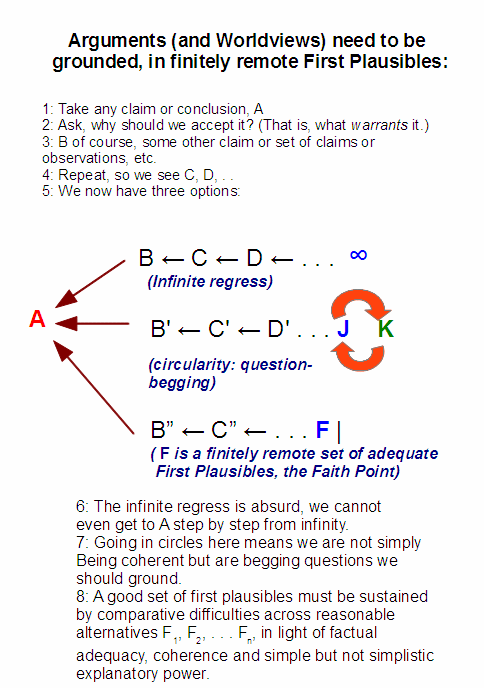
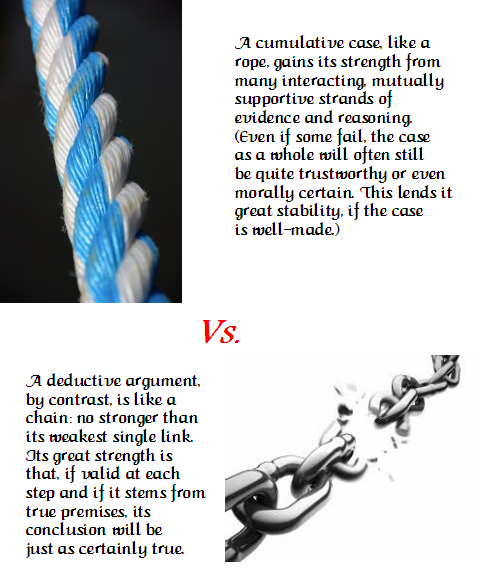
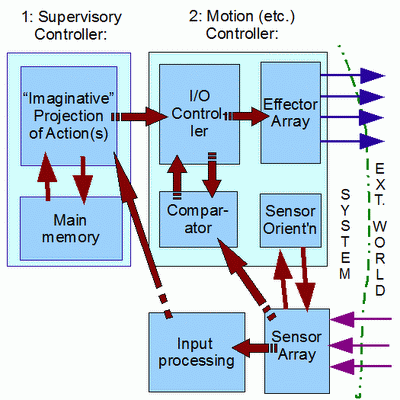
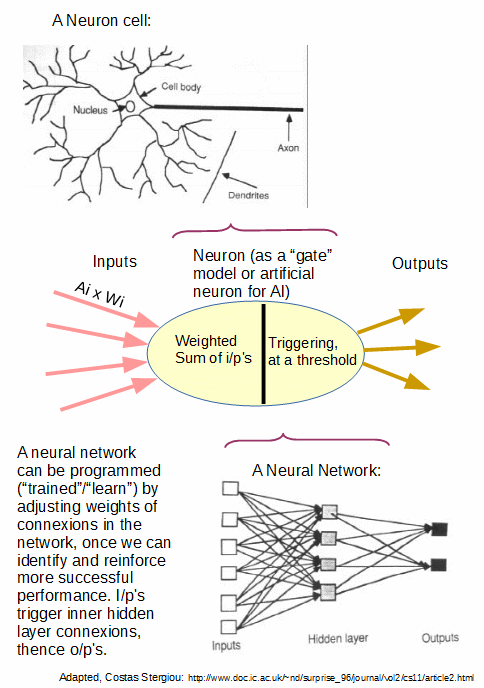
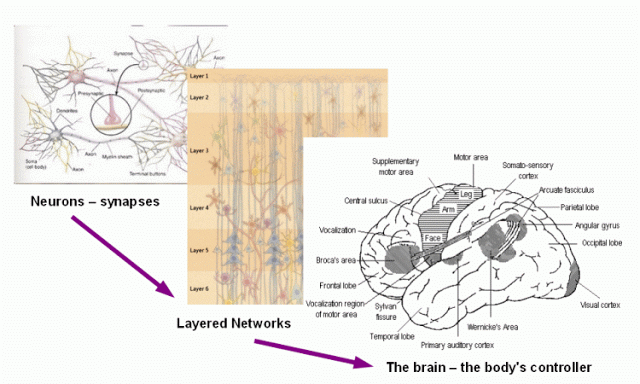
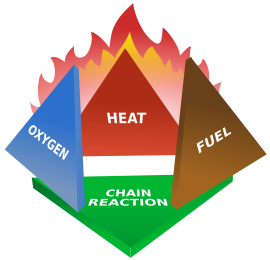

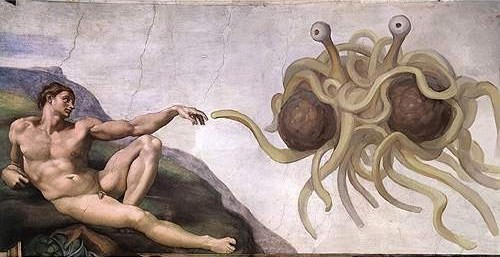 Public domain
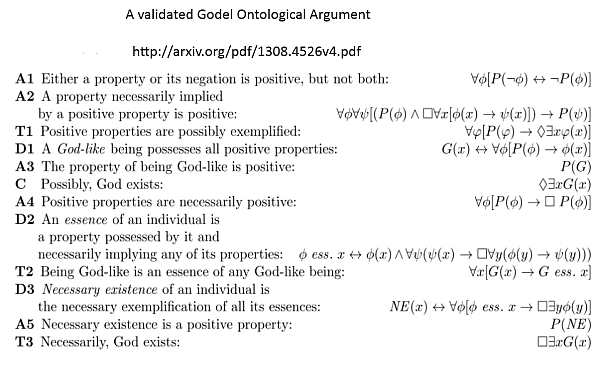

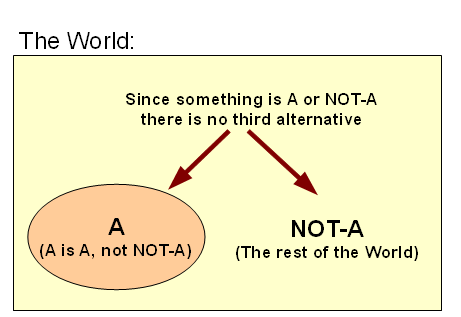
AS, 189: KF writes:
Well, “delusion” is a bit strong, but, yes, I do think people who believe that the various gods exist are mistaken. But I don’t think belief in something that is not true is per se a terrible thing. It is only when religion is used as an excuse to attack the out-group, be they infidels, women, gays and so on, that it becomes something that must be opposed.