Uncommon Descent Serving The Intelligent Design Community
Author

Denyse O'Leary

Mathgirrl returns? An entire blog is now devoted to complaining about Uncommon Descent …

Yes. About Uncommon Descent’s moderation policies in detail, and it is hosted by markf, who comments here.

So, if he comments here … does that … ? No, wait, this is the confused, illusory world of the Darwinist. It doesn’t have to make sense.

Hat tip: Our Cannuckian Yankee drew our attention to the continuation of the “overlong” MathGrrl’s thread over there,  here, by citing this comment.

Now, are we such hot stuff? Come to think of it, Satan doesn’t like us either, for some reason. And the ID guys are, in the view of a Christian Darwinist, an evil and adulterous generation.

Cannuckian notes,  Read More ›
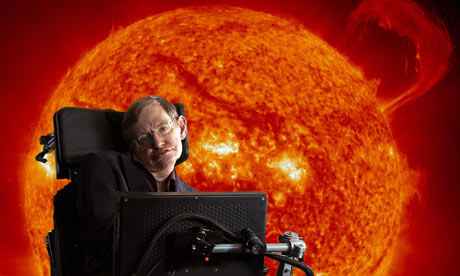
Why lots of smart people don’t agree with Stephen Hawking that

… death ends all – my current MercatorNet article (26 May 2011):

… most people have not assumed that we survive death because they are “afraid of the dark,” as Hawking supposes. On the contrary, the oldest beliefs usually include ancestor worship, which includes propitiating the continuing spirits of unpleasant ancestors for fear they will otherwise harm us. Or, as Beauregard and I put it [in The The Spiritual Brain] , in such a society the problem isn’t that everyone dies, but that no one does. (p. 48)  Read More ›

Eugenics and the Firewall: An interview with Jane Harris Zsovan, Part III

Denyse: First, step with us a moment into Scientific American’s past (a past it repudiates) where, in 1911, it enthusiastically editorialized about “The Science of Breeding Better Men.” How about this for an opening line: “ADA JUKE is known to anthropologists as the ‘mother of criminals.'” Well, how’s that for coming straight to the point? The solution?

The proper attitude to be taken toward the perpetuation of poor types is that which has been attributed to [Thomas] Huxley. “We are sorry for you,” he is reported to have said; “we will do our best for you (and in so doing we elevate ourselves, since mercy blesses him that gives and him that takes), but we deny you the right to parentage. You may live, but you must not propagate.”

Actually, her real name was “Margaret,” and the history was rather more complex than eugenics hysteria allowed for. In Canada, the worry surfaced as a fear that “the British race was ‘becoming small, dark, and emotional'” (p. 26). Maybe that’s code for “like the separatist-minded French-speaking Catholics of Quebec” …
(This is the third and final part of Uncommon Descent’s interview with Jane Harris Zsovan, author of Eugenics and the Firewall about her book on the controversial topic of social Darwinist eugenics in Western Canada in the mid-twentieth century. Here’s Part I and here’s Part II.) Read More ›

Numbers don’t lie but people do

Or anyway, they babble political correctness and call it accuracy. We looked at the “Goldilocks number” used to manipulate public opinion. In “The Marginalization of Christians continues in Canada” (May 21, 2011), journalist and author Michael Coren talks about politically correct manipulation of crowd numbers. For example, the government broadcaster, tax-funded Canadian Broadcasting Corporation underestimates the crowd for pro-life rallies by multiples; in the case Coren mentions, CBC underestimated by 200%. But it overestimated the Gay Pride parade in Toronto by five times the police figure:

We can only thank our publicly funded stars that the same network — joined by most others in the mainstream media — tells us every year that more than a million people attend the gay pride parade in Toronto, when the police privately inform journalists that 200,000 is closer to the mark. For a million people to be present, the crowd would have to stretch from the southern tip of Toronto to Barrie, Ont., more than 100 km north.

(See especially, Coren’s Why Catholics Are Right (McClelland & Stewart), on the bestseller list for five weeks.) Read More ›

All junk, no junk, who’ll give a buck for junk – thoughts on junk DNA

It looks like Francis Collins’ famed “junk DNA” – that proves Darwinism – is not junk after all. And that an ID theorist predicted we would find that. Of course, because Darwinism must be correct, a fact can only confirm it, never disconfirm it.  So it makes no difference that the Darwinists were wrong and an ID guy was right. Watch the spin, but not so close you get dizzy. Meanwhile, a question arises: If design is real, must all DNA be functional? I don’t see why that should necessarily be so. A designed system may accumulate junk. A well-designed system accumulates much less junk. So if design is real, we should see a system with only a small amount Read More ›

Contest: Impress your friends with a piece of Mars

(This contest was judged here.) … tell New Scientist, … what the first person to set foot on Mars should say. If you win, and it doesn’t impress them, you have the wrong friends. Mars rocks. So, come to think of it, we will offer a free copy of The Nature of Nature (which offers Guillermo Gonzalez’s work on the true status of habitability of exoplanets) to the best entry placed here at Uncommon Descent, in the comments box. Gonzalez’s 2001 prediction has held up so far. Contest will be closed for judging May 28, 2011.

What will implosion of traditional media mean for the ID community?

Maybe good, maybe bad, depending.

The decline is really happening. This source, Tom Price for “A Primer on Media in the 21st Century”, Miller-McCune (July 9, 2009) reports the fact with no satisfaction:

Beyond cost-cutting measures like reducing staff, pulling back coverage and shrinking the size of their printed products, news organizations are sharing work with longtime rivals, using amateurs as volunteer reporters and moving heavily or totally online. They’re also turning to new and untested methods for raising income.

Amateur reporters: You do the work, then buy the paper. It doesn’t work, editors say – but why should it? Read More ›

Nature: Reduced to telling the truth about Christianity and science. But why … ?

The folk at Nature’s blog appear so anxious to get people to believe Darwinism dunit that some have resorted to making statements about the history of Christianity and science that are actually true. Get a load of this, from James Hannam, “Science owes much to both Christianity and the Middle Ages” (May 18, 2011): Read More ›

Recent Uncommon Descent posts reveal starkly different standards of evidence out there …

They reveal the difference between “science” and science.

As a report on “science”, we offer “How many fields other than human evolution can cheerfully tolerate the following level of vagueness?”: Genetics researchers have discovered a shadowy, possible connection between certain genes and risk-taking tens of thousands of years ago.

From science by contrast, one expects rigor, not speculation based on a few possible pieces of evidence. Here’s why: Any reasonable person, with no knowledge of genetics and no specialized research, could replicate the findings reported in the linked story as follows: “Some people can accept more risk than others, and that sometimes seems to run in families. But you can’t rely on it.” And said reasonable person would be just as rigorous and accurate as the reported study.

That’s because “science,” at its best, doesn’t tell us more than common sense observation can. Linking its pretended discoveries to serious genetics is a frill.

And that’s at “science’s” best, mind! At its worst, “science” is the Bedrock of evolutionary psychology.

Science, by contrast, is about rigor and accuracy that potentially adds to our knowledge. For example, consider the recent post Read More ›

Secular humanism is inevitably the enemy of freedom

Here vjtorley cites the unspeakable Johansson case (Sweden), asking “Are secular humanism and freedom of thought ultimately incompatible?” The short answer is: Of course.

Secular humanism, as normally argued, denies the reality of the mind. On that, note this item at New Scientist on illusions, real and imagined*, which dramatically dismisses free will and just about everything else,

This might come as a shock, but everything you think is wrong. Much of what you take for granted about day-to-day existence is largely a figment of your imagination. From your senses to your memory, your opinions and beliefs, how you see yourself and others and even your sense of free will, things are not as they seem. The power these delusions hold over you is staggering, yet, as Graham Lawton discovers, they are vital to help you function in the world.

– Graham Lawton, “The grand delusion: Why nothing is as it seems” (16 May 2011)

The only freedom possible, if this folly were true – and the secular humanist believes it is – Read More ›

Evolutionary psychologists take dead aim at mathematician who says they don’t add up

Recently, as some may recall, the pastor wrote to E. O.Wilson:

Gr8 you got it str8 about humans vs. ants. Keep on keeping on. – Yr Pastor

Seems the pastor didn’t believe in Wilson’s sociobiology theories and lots of other tenets of materialist faith. Now Wilson doesn’t either.

Skinny:

Earlier this year, sociobiologist E. O. “Dear Pastor” Wilson disowned his “inclusive fitness” (kin selection) theory, developed from his study of ants and bees. According to his theory, among life forms that live in groups, many members may give up the chance of reproducing their selfish genes so that the group as a whole is more fit. The problem is that it’s not clear how this situation could arise.

What’s very clear is that hundreds of cast members of the long-running Evolutionary Psychology Show ( everyone from the evolutionary agony aunt to the big bazooms boys) sense their jobs at risk. Hence viper mode!

In “Biologists Team Up to Quash New View of Cooperation”, Thomas Bartlett profiles Wilson’s co-author Martin Nowak, a Harvard math and biology prof for Chronicle of Higher Education, outlining that Nowak may have “an enviable resume, with tens of millions in grants and hundreds of publications,” but he also has a red bulls-eye on his back.

Read More ›

How many fields other than human evolution can cheerfully tolerate the following level of vagueness?

In “Out-of-Africa migration selected novelty-seeking genes” (New Scientist, 06 May 2011), Aria Pearson tells us, “AS HUMANS migrated out of Africa around 50,000 years ago and moved across the planet, evolution may have latched onto a gene linked to risk-taking and adventurousness.” Once treated skeptically, the idea “stands up to rigorous analysis,” due to minor differences in gene frequencies:

The study suggests that some small portion of the behaviours that characterise populations may be down to genetics, and that cultural actions like mass migration can modify our genes, says Matthews.

Marcus Munafò, a biological psychologist at the University of Bristol, UK, cautions that variations in the DRD4 gene are numerous and complex, making its exact behavioural effects hard to pin down. But he agrees that it is likely that some differences in behaviour have been generated by genetic selection.

If a characteristic is usefully identified as genetic, shouldn’t it offer a stronger signal than this? And shouldn’t analysis be more rigorous than this? Read More ›

Retractions file: California Academy of Science Journal published Darwin lobbyist Eugenie Scott’s retraction of false claim (2005)

While writing “New York Times reports on Darwinist’s article disowned by philosophy journal,” I got the sense there was a similar case way back when that went unheralded.

(Note: Times writer Mark Oppenheimer linked to this blog from his blog, for clarification on the fact that the ID community was not conspiring against Forrest to vindicate Beckwith. He deserves much credit for wanting to know what is going on rather than punching out the usual snooze nooz.)

Suddenly, I remembered. In 2005 California lawyer named Larry Caldwell was active in education issues around teaching Darwinism in publicly funded schools. For example, he tried (but failed) to get some legal action against a university-sponsored Darwin promotion site that fronted Christian Darwinism – on the grounds that telling students which orientations of faith were compatible with Darwinism (and by implication which others were less so or not at all) violated the US Constitution’s Establishment clause. His case never went anywhere*

At any rate, here’s the story: Read More ›

New York Times reports on Darwinist’s article disowned by philosophy journal

In the New York Times, Mark Oppenheimer recounts how “Debate Over Intelligent Design Ensnares a Journal” (May 13, 2011). He means the Beckwith-Forrest-Synthese controversy where Southeastern Louisiana U philosopher (and supposed expert in intelligent design) Barbara Forrest misrepresented Baylor philosopher Frank Beckwith (who is not a design supporter). The print version of the journal disowned the paper, and the Darwin lobby, in which Forrest is a key player, has been carrying a torch ever since, demanding that the hit paper be reinstated as respectable.

Reporter Oppenheimer gets it mostly  right, for example,

Dr. Forrest said this week that she suspected that intelligent design theorist William A. Dembski “was involved in this, because his work was mentioned” in her article, too. Reached by phone, Dr. Dembski said that he had not contacted Synthese and knew of no specific campaign to influence the journal.

No, Dembski didn’t know. There was no campaign. Read More ›