Uncommon Descent Serving The Intelligent Design Community

Embryo and Einstein – Why They’re Equal

Categories
Intelligent Design
Share
Facebook
Twitter/X
LinkedIn
Flipboard
Print
Email

My Home Page.

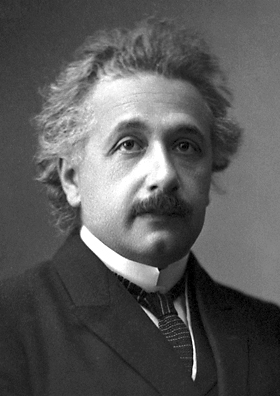
The photo on the right is a picture of Albert Einstein, shortly after receiving the Nobel Prize in 1921. The photo on the left shows how Einstein looked when he was very young (about three days old). The aim of this essay is to demonstrate on purely philosophical (i.e. non-religious) grounds that a human embryo is a person, who matters just as much as you or I do. I shall also attempt to explain exactly why an embryo is just as valuable as you or I. From this it follows that the embryo from which the adult Einstein developed had exactly the same moral worth (or intrinsic value) as Einstein the man, and that an outside party – for instance, the doctor who took care of Einstein’s mother while she was pregnant – would have been morally bound to treat the embryo Einstein as a fully-fledged human person, having the same inherent right to life as the great scientist whom the embryo later developed into. I have written this essay specifically for people with no religious beliefs, so I will be making use of purely secular arguments, based on uncontroversial scientific concepts, which should be familiar to anyone who has spent time studying the emergence and development of biological forms in the natural world. In the interests of full disclosure, I will state up-front that I am a Catholic, and that I am also a member of the Intelligent Design movement. However, I would like to emphasize that I am not claiming to speak on behalf of any group in writing this essay. The arguments put forward here represent my own personal views.

I am writing this essay in response to some arguments recently put forward by the “New Atheists,” most of whom would totally reject the notion that Einstein as an embryo had the same moral value as the adult Einstein. For instance, evolutionary biologist Professor Jerry Coyne has recently argued that a 100-cell blastocyst cannot be as valuable as an adult human being because it lacks thoughts and feelings, and concludes: “A blastocyst is no more what we think of as a ‘person’ than an acorn is the same thing as an oak tree.” For biologist P. Z. Myers, it is the height of absurdity to regard embryos as being just as valuable as adults (see here and here). Philosopher Sam Harris is utterly incredulous that anyone can still believe an embryo is a unique human person, given the fact that early embryos are susceptible to both fission and fusion (see here). Harris argues that “if our concern is about suffering in this universe, it is rather obvious that we should be more concerned about killing flies than about killing three-day-old embryos” – an odd remark for him to make, as neither flies nor three-day-old embryos are sentient (see here). And the evolutionary biologist Professor Richard Dawkins, after contrasting his “secular consequentialist” approach to ethics with “religiously absolute moral philosophies,” adds: “One school of thought cares about whether embryos can suffer. The other cares about whether they are human” (The God Delusion, Boston & New York: Houghton Mifflin Co., 2006, p. 297). It is an ethical axiom for Dawkins that only sentient beings matter: early embryos fall outside the scope of legitimate moral concern, because they are incapable of suffering. And even if some embryos turn out to be capable of suffering, “there is every reason to suppose that all embryos, whether human or not, suffer far less than adult cows or sheep in a slaughterhouse” (Dawkins, 2006, p. 297).

However, I believe in giving credit where credit is due, so I should mention that Christopher Hitchens is a noble exception to the generalization that New Atheists tend to be ardently pro-choice: unlike the other “New Atheists,” Hitchens openly refers to the embryo/fetus as an “unborn child,” although he does not go so far as to advocate the repeal of Roe v. Wade. And while Dr. Richard Carrier is generally pro-choice, he is also on the record as saying that he would oppose elective third trimester abortion as being identical to infanticide (see the Carrier-Roth Debate here).

In this essay, I shall endeavor to show that a strong intellectual case can be made, on non-religious grounds (i.e. without assuming the existence of God or an immaterial soul), for the pro-life view that a human person begins at the exact moment when the sperm cell penetrates the ovum (or oocyte, to use a more accurate medical term), and that a human embryo – even if it is severely deformed – has the same right to life as a fully rational human adult. In other words, I shall argue that if you grant that a rational human adult has a right to life, then you must also grant that an embryo or fetus has a right to life, too. What distinguishes this essay from other essays written in defense of unborn human life is that I shall endeavor to explain precisely why a human embryo is every bit as valuable as you or I. Moreover, my explanation makes no appeal to the merely potential qualities of the embryo; instead, I only invoke actual properties. Thus my argument is invulnerable to the philosopher Peter Singer’s criticism that a potential X does not necessarily have the rights of an actual X – for instance, a prince (who is a potential king) does not possess the same rights and privileges as an actual king. And unlike the philosopher Don Marquis, who argues that an embryo/fetus matters just as much as we do because it has a future like ours, my account of why a human embryo matters is based principally on its present characteristics. Finally, my explanation makes no appeal to the existence of an immaterial soul, although it is perfectly compatible with belief in one.

Later, I shall address the moral issue of abortion. In particular, I shall contend that Judith Jarvis Thomson’s argument for the morality of abortion is flawed, and I will show that the available evidence indicates that abortion harms women’s mental health, even in cases such as rape and incest. However, my principal aim in this online essay is to demonstrate that a human embryo is a person who matters just as much as an adult.

My argument in a nutshell

In brief, the essence of my argument is that a human embryo is a person, because it is a complete organism, embodying a developmental program by which it directs and controls its own development into a rational human adult, and in addition, it has already started assembling itself into a rational human adult. A human adult is not merely something the embryo/fetus is capable of becoming, in a passive sense; rather, it is the mature form of the organism that the embryo/fetus is currently assembling itself into, by executing the instructions contained in its developmental program, which has already started running. (In this respect, the embryo/fetus differs vitally from a potential king, who is legally incapable of doing anything to make himself king, and who has none of the rights that properly belong to a king.) I shall argue that it is reasonable to regard any biological organism which is currently assembling itself into a rational human adult through a process which is under its control, as being just as valuable as the adult it will become, and as therefore having the same right to life as an adult. I shall also contend that nothing is acquired by an embryo, fetus, newborn baby or child in the course of its development which would add to its inherent moral value in any way; hence a one-cell embryo must be just as valuable as you or I. Finally, I shall argue that a severely defective embryo, which has no hope of developing into a rational human adult, has the same right to life as a normal embryo, because the correction of its defects does not require the addition of any new instructions to its developmental program; all it requires is the repair of program flaws, and that this correction would in no way alter its identity as a human individual, or add to its inherent value. Given that a normal embryo has the same right to life as a rational human adult, it follows that a severely defective embryo (which is just as valuable as a normal one) has the same right to life as well.

Dedication and Acknowledgements

I would like to express my thanks at the outset to the Intelligent Design movement for alerting me to the ethical significance of the developmental programs which are found in living organisms. I’ll say more about these programs below.

Read the rest of the essay here.

Comments
Eigenstate, You can't be a prodigal son unless at some stage you've known your Father. From what Gil has posted previously, I gather that he didn't grow up in a religious family, so to describe him as being "on a long but glorious arc back toward the arms of God" would be a mistake. You write that "A Dawkins-style atheist would have been deeply disturbed at the implications of patterning young, impressionable, innocent minds in the supernatural superstitions you have apparently given yourself over to." I suggest that you might like to have a look at former atheist Jennifer Fulwiler's home page here . This post is very moving: Finding Rest . Here is a woman who grew up in a family that didn't believe in God, where books by leading atheists (such as Dawkins) were standard dinner table conversation, and who was so fervently atheistic that she used to regularly argue people into atheism. And yet all along, a part of her was deeply depressed about the soul-suffocating aspects of this worldview. Her personal story is here . Even Dawkins-style atheists can feel deeply ambivalent about whether - and to what degree - they should pass their beliefs onto their children. And in Jennifer Fulwiler's case, it was her realization that acknowledging the objective reality and transcendence of her love for her child was at odds with her materialistic worldview that brought her to belief in God. I'm not surprised to learn that Gil, despite his avowed atheism, was brought to belief in God in a similar fashion.vjtorley
November 11, 2011
November
11
Nov
11
11
2011
07:17 AM
7
07
17
AM
PDT
I play keyboards in a praise band at our church, so I've gained an appreciation for good rock music!GilDodgen
November 11, 2011
November
11
Nov
11
11
2011
07:16 AM
7
07
16
AM
PDT
It was for that daughter that I bought a cartoon video in 1994 entitled The Lion, The Witch and The Wardrobe. I had no idea who C.S. Lewis was, but figured out that the story was a Christian allegory. As it turned out, many years earlier a Christian friend of my wife had given her a copy of Mere Christianity for me to read, knowing that I was an atheist, but I never opened it, shelved it, and forgot all about it. Shortly after I viewed the cartoon video I discovered the book and read it. During that same period I was arguing with a Christian friend (who gave me a Bible, which I still have and take to church every Sunday) about Darwinism. He suggested I read Evolution: A Theory in Crisis by Michael Denton, which I did. A young child, a cartoon, three books, and a good friend -- everything went downhill rapidly after that! :-)GilDodgen
November 11, 2011
November
11
Nov
11
11
2011
07:08 AM
7
07
08
AM
PDT
Hi Gil, Thank you very much for your comment. I can definitely relate: parenthood does change your values. A child is a more powerful argument for the existence of God than a dozen philosophical arguments. I think what parents come to realize as they await the birth of their child is this: you have absolutely no right to expect things to work out well. Anything could go wrong. At any level of development you care to envisage - the unborn child's heartbeat, its developmental program which knits its body together, or even the laws of Nature which we all assume will keep running tomorrow - things could go horribly wrong, and it is a miracle that they don't go wrong far more often. In the end, you realize that we are all in the hands of God. That's what hit me, anyway. The other thing that hit me was the unexpected beauty of a child, and the joy of being a new parent. Then you have to ask yourself: what am I going to tell this child about Gauguin's "Big Three": "Whence came we? Who are we? Whither go we?" That's when you realize that some of the "answers" offered by our culture are things you could never say to a child, if you loved that child.vjtorley
November 11, 2011
November
11
Nov
11
11
2011
06:34 AM
6
06
34
AM
PDT
Hi NormO, Thank you for your comment. You write that "An embryo really isn't a complete organism because it lacks any ability to survive independently of the mother." By the same token, someone on dialysis (or even someone on a feeding tube) isn't a complete organism isn't a complete organism either, because he/she is incapable of surviving independently. And what about a newborn baby growing up in a poor Third World country where there's no infant formula, who happens to be allergic to all breast milk, except for its mother's? It can't survive independently of its mother, can it? For that matter, what about a five-year-old child growing up in a subsistence society, in which its parents are the only ones who are capable of feeding it, as all the other parents are too poor and too busy feeding their own children? That child can't survive independently of its parents, can it? The philosophical mistake you are making is that you are confusing a complete organism with an independent organism. The two concepts are fundamentally different. Here is what Professor Maureen Condic, Associate Professor of Neurobiology and Anatomy at the University of Utah School of Medicine, writes about organisms in her essay, Life: Defining the Beginning by the End :
Organisms are living beings composed of parts that have separate but mutually dependent functions. While organisms are made of living cells, living cells themselves do not necessarily constitute an organism. The critical difference between a collection of cells and a living organism is the ability of an organism to act in a coordinated manner for the continued health and maintenance of the body as a whole. .. From the earliest stages of development, human embryos clearly function as organisms. Embryos are not merely collections of human cells, but living creatures with all the properties that define any organism as distinct from a group of cells; embryos are capable of growing, maturing, maintaining a physiologic balance between various organ systems, adapting to changing circumstances, and repairing injury. Mere groups of human cells do nothing like this under any circumstances. The embryo generates and organizes distinct tissues that function in a coordinated manner to maintain the continued growth and health of the developing body. Even within the fertilized egg itself there are distinct "parts" that must work together - specialized regions of cytoplasm that will give rise to unique derivatives once the fertilized egg divides into separate cells. Embryos are in full possession of the very characteristic that distinguishes a living human being from a dead one: the ability of all cells in the body to function together as an organism, with all parts acting in an integrated manner for the continued life and health of the body as a whole.
In response to my claim that an embryo "directs and controls its own development into a rational human adult", you ask:
What is this "it" that's doing the directing and controlling? Are you suggesting the embryo is somehow controlling its own development?
Yes. Again, this is what biologists say. Maureen Condic, Associate Professor of Neurobiology and Anatomy at the University of Utah School of Medicine, explains why a one-cell embryo is a true organism, with its own developmental program, in an online paper titled, When Does Human Life Begin? A Scientific Perspective (White Paper, Volume 1, Number 1, October 2008, published by The Westchester Institute for Ethics and the Human Person):
A car is not a car until it rolls off the assembly line - until then it is a bunch of parts in the process of becoming a car, but not there yet. Similarly, a cake is not a cake until it comes out of the oven - until then it is a variously gooey mass of flour, sugar, eggs, and butter that is gradually becoming a cake. (p. 11) However, a profound difference exists between manufacturing and embryonic development. The difference is who (or what) is doing the "producing." The embryo is not something that is being passively built by the process of development, with some unspecified, external "builder" controlling the assembly of embryonic components. Rather, the embryo is manufacturing itself. The organized pattern of development doesn't produce the embryo; it is produced by the embryo as a consequence of the zygote's internal, self-organizing power. Indeed, this "totipotency," or the power of the zygote both to generate all the cells of the body and simultaneously to organize those cells into coherent, interacting bodily structures, is the defining feature of the embryo. (p. 11) From the moment of sperm-egg fusion, a human zygote acts as a complete whole, with all the parts of the zygote interacting in an orchestrated fashion to generate the structures and relationships required for the zygote to continue developing towards its mature state. Everything the sperm and egg do prior to their fusion is uniquely ordered towards promoting the binding of these two cells. Everything the zygote does from the point of sperm-egg fusion onward is uniquely ordered to prevent further binding of sperm and to promote the preservation and development of the zygote itself. The zygote acts immediately and decisively to initiate a program of development that will, if uninterrupted by accident, disease, or external intervention, proceed seamlessly through formation of the definitive body, birth, childhood, adolescence, maturity, and aging, ending with death. This coordinated behavior is the very hallmark of an organism. (p. 7) (Emphases mine - VJT.)
You then ask:
So, assuming I'm a rational human adult, does it make sense for me to say that I was assembled by an embryo?
Not quite. You were assembled by an organism running its developmental program. By "developmental program" I simply mean: a complete set of instructions within the cell(s) of an organism - especially within its genome - which direct and control its development from an embryo into a mature adult. The organism which assembled itself into you was once an embryo. The same organism is now an adult: you. And it still runs the same developmental program. You write:
One then wonders if perhaps the embryo should be the one with all the rights of personhood, and not we adults, who are merely the products of its assembly.
The organism is the repository of rights. Because I'm the same organism as the embryo I developed from, and because I embody the same developmental program, I have the same basic human rights as an embryo - among which is the right to life. Finally, you write that "There's no person or consciousness" involved in the embryo's self-assembly. I don't equate personhood with consciousness. To me, an organism that's its own program to develop into a conscious being is just as valuable as the conscious being it develops into. I can't see why you wouldn't call it a person. As I argue in my essay (see Part A, section (iv), Argument #2), it boils down to this equation: V + 0 = V (the organism's value as an adult). Nothing from outside adds any value to it during its development, so its value at conception must be V as well. That's why I believe an embryo is just as precious as you or I.vjtorley
November 11, 2011
November
11
Nov
11
11
2011
06:17 AM
6
06
17
AM
PDT
NormO, How's this for a definition of "complete organism"? Professor Maureen Condic, Associate Professor of Neurobiology and Anatomy at the University of Utah School of Medicine, writes in her essay, Life: Defining the Beginning by the End :
What does the nature of death tell us about the nature of human life? The medical and legal definition of death draws a clear distinction between living cells and living organisms. Organisms are living beings composed of parts that have separate but mutually dependent functions. While organisms are made of living cells, living cells themselves do not necessarily constitute an organism. The critical difference between a collection of cells and a living organism is the ability of an organism to act in a coordinated manner for the continued health and maintenance of the body as a whole. It is precisely this ability that breaks down at the moment of death, however death might occur. Dead bodies may have plenty of live cells, but their cells no longer function together in a coordinated manner. We can take living organs and cells from dead people for transplant to patients without a breach of ethics precisely because corpses are no longer living human beings. Human life is defined by the ability to function as an integrated whole-not by the mere presence of living human cells... What does the nature of death tell us about the beginning of human life? From the earliest stages of development, human embryos clearly function as organisms. Embryos are not merely collections of human cells, but living creatures with all the properties that define any organism as distinct from a group of cells; embryos are capable of growing, maturing, maintaining a physiologic balance between various organ systems, adapting to changing circumstances, and repairing injury. Mere groups of human cells do nothing like this under any circumstances. The embryo generates and organizes distinct tissues that function in a coordinated manner to maintain the continued growth and health of the developing body. Even within the fertilized egg itself there are distinct "parts" that must work together - specialized regions of cytoplasm that will give rise to unique derivatives once the fertilized egg divides into separate cells. Embryos are in full possession of the very characteristic that distinguishes a living human being from a dead one: the ability of all cells in the body to function together as an organism, with all parts acting in an integrated manner for the continued life and health of the body as a whole... [T]he loss of integrated bodily function, not the loss of higher mental ability, is the defining legal characteristic of death.... Embryos are genetically unique human organisms, fully possessing the integrated biologic function that defines human life at all stages of development, continuing throughout adulthood until death. The ability to act as an integrated whole is the only function that departs from our bodies in the moment of death, and is therefore the defining characteristic of "human life." This definition does not depend on religious belief or subjective judgment.
vjtorley
November 11, 2011
November
11
Nov
11
11
2011
05:45 AM
5
05
45
AM
PDT
Bruce David, Thank you for your post. I see from your comments that you are a Cartesian dualist, who regards the soul and body as two different things - which is why you have no problem with the concept of reincarnation. (On the Aristotelian view, the soul is the form of the body.) The chief difficulty I have with the Cartesian view is that it fails to take into account the unity of the human person - for instance, the fact that it is one and the same "I" who thinks about lunch, decides that it's time to eat, sees some edible food in the kitchen, makes it into a salad, eats and digests it, and enjoys it. Which of these operations do you attribute to the soul? For instance, does the soul see? And yet surely you cannot deny that the body sees too? Which is it? I am also a bit confused when you write that "each one of us is, in essence, a spiritual being, a soul", and in the next paragraph state that a human being is "a body mated with a soul". Again, which is it? You write that the soul cannot take up "residence in the body" until the third semester of pregnancy. But why? Let's grant that the fetus is not sentient until that date. So what? What's to stop the soul lying dormant until the body is sufficiently developed? Why can't it enter a fertilized ovum? You're willing to allow that the soul remains in the body of a hibernating animal, I presume, even while it's unconscious for several months. So why can't it remain inside a developing embryo for a few months? And if you're willing to ascribe a capacity to feel to a hibernating animal, why aren't you willing to ascribe it to an embryo which is currently running its own developmental program, which will make it into a sentient being in a few months? For that matter, how do you know that a newborn baby has a soul? Certainly it can feel, but it does not display rationality until the age of two or three. Or do you believe that all sentient beings are equal, and that "A rat is a pig is a dog is a boy", as PETA founder Ingrid Newkirk memorably put it? Finally, I am mystified as to how you can describe a fertilized egg as a human body, without conceding that it has a human soul as well. What sense does it make to speak of a living human body which lacks a soul? Why call it a human body then? As Dr. Feser puts it his book, Aquinas, "[A]n immature or damaged human being still has the form of a human being, and thus a soul, otherwise he or she wouldn't be human in the first place." I contend that whatever it is that controls our development is what makes us valuable. I cannot see why something that's programmed to acquire sentience or sapience should be any less valuable than a sentient or sapient being. Finally, I suggest you have a look at Part C of my essay (see here ) in order to see what's wrong with the sentientist view, and also a look at part D(vii) (see here ) to see why it is legitimate to speak of an embryo as possessing rationality even though it does not exercise it. You write that "To make abortion illegal is to impose a basically arbitrary definition of a human being on the larger population who clearly do not share it." There are many societies which hold that a baby isn't a human being until the age of two, and who tolerate infanticide until that date. So I say to you: by the same logic, to make infanticide illegal is to impose a basically arbitrary definition of a human being on the larger population who clearly do not share it. Do you believe that making infanticide illegal is "an unconscionable restriction of freedom"? No? Well, neither do I believe that making the killing of an embryo illegal is "an unconscionable restriction of freedom". Instead, I would see it as a defense of innocent human beings.vjtorley
November 11, 2011
November
11
Nov
11
11
2011
05:37 AM
5
05
37
AM
PDT
One morning we will all wake up in a global electronic ghetto where somebody will decide who will be allowed to breed. "1984" or the Communist caricature paradise will be laughable in comparison with this wonderful prospect. It is being done in the name of progress or, when translated into the human language, lust for pleasure, money and glory, the three temptations of the Christ. And Darwinism is the milestone on the way to everyone's happiness.Eugene S
November 11, 2011
November
11
Nov
11
11
2011
03:31 AM
3
03
31
AM
PDT
F/N: Great job, VJT, as usual. Let us also not forget the actual view of morality that may underlie objections -- i.e. a priori materialism-driven amorality [cf here and here], and how it sometimes leads some such to cynically manipulate our moral sensibilities. KFkairosfocus
November 11, 2011
November
11
Nov
11
11
2011
02:56 AM
2
02
56
AM
PDT
I can see you put a lot of thought and effort into your Prolife Page which I appreciate. I wish I got to read it more carefully before commenting, but I wanted to respond before this article got to pg 13 of UD. :-) "In brief, the essence of my argument is that a human embryo is a person, because it is a complete organism, embodying a developmental program by which it directs and controls its own development into a rational human adult, and in addition, it has already started assembling itself into a rational human adult." --While you say you will “make no appeal to the merely potential qualities of the embryo”, I believe you are indeed doing so. Having the “developmental program” to become a feeling, emotional, rational, thinking, sentient being is not the same as being a feeling, emotional, rational, thinking, sentient being. I agree with you that it’s a problem to argue from “potential qualities” (after all, to argue what it may become is to admit to what it isn't) but IMO you haven’t escaped the problem. The same goes for when you argue that no “inherent value” is added when we gain sentience, emotions, etc (higher brain functions) since the “instructions” for developing these qualities were already present beforehand and active – but again, the “instructions” for developing these qualities aren’t the same as the qualities themselves. It’s therefore also irrelevant IMO as to whether these qualities form from "within" or from a source "outside”. To me, the question is: what are the qualities that we treasure and value in humans? IMO, it’s not that we are a “complete organism” or our “developmental programs” or our “instructions” or our genes, or that we have a heartbeat - what we value is that we’re feeling, emotional, thinking, sentient beings (qualities that we begin to have around the end of the second trimester). I believe the weaknesses in your argument are displayed in statements such as: “Likewise, a rational Martian would certainly have rights as a Martian, but not human rights as such. On the other hand, a non-viable embryo satisfies this requirement.” So why SHOULDN’T a Martian that displays sentience and feelings and intelligence, etc, have the same rights as us humans? Because of a different genetic makeup or “developmental program”? Does it really seem reasonable to anyone that such a being should have less rights than a non-viable embryo? "Objection 10. Breast-feeding inhibits implantation, so if zygotes are human beings, breast-feeding mothers who have intercourse are guilty of murder. My reply: Murder is ordinarily defined as intentional killing. In this case, we are talking about a tiny human being whom the mother isn't even aware of. The objection is puerile." ---But the mother (at least in many cases) IS aware that a zygote MAY very well occur while having intercourse. So it sounds like it would at least be manslaughter. This side effect of breast feeding is well known. In fact, breast feeding is a common method of preventing pregnancy (and so, actually, it is often “intentional”). So this begs the question: Do you believe breast feeding should be outlawed? If not, why? "there is a total asymmetry between the appearance of brain waves in the developing embryo and the cessation of brain waves at brain death. Brain death also marks the end of a human being's life; whereas the appearance of brain waves does not mark the beginning of that life. The appearance of brain waves in the human embryo is simply an event in the life of an already existing human being, who is several weeks along its developmental trajectory… What has been lost at death is not merely the activity of the brain or the heart, but more importantly the ability of the body's parts (organs and cells) to function together as an integrated whole." --I seriously doubt that there's ANYONE who considers "brain death" as the end of a human being's life because of the loss of "the ability of the body's parts (organs and cells) to function together as an integrated whole". It doesn't even come into play. If it were discovered tomorrow that actually the organs DO still function as an "integrated whole" after brain death, would it change anyone's mind one iota as to whether "brain death" is death or not? If the person you used to know no longer feels, thinks, or is sentient, etc, and is declared “brain dead”, than you person you know is gone - there is no longer "personhood". That is why we say that the person is dead. I doubt anyone seriously cares at that point how well the small intestine and spleen are working together. (And actually, and I think this is beside the point since, as I said, I doubt anyone actually cares about the loss of an “integrated whole”, but this IS likely symmetrical to the embryonic state. There are organs in the embryo, and they are “functioning” to a degree, but aren’t accomplishing much, in part, because the brain and nervous system haven’t developed enough yet to coordinate everything. So even IF someone took the loss of an “integrated whole” argument seriously, it would be self-defeating.) “It is often asserted that the relevant feature of brain death is not the loss of integrated bodily function, but rather the loss of higher-order brain activities, including consciousness. However, this view does not reflect the current legal understanding of death.” --True, but the reasons given for that legal definition (at least from what I’ve seen) is that we’re still quite ignorant of what’s going on in such states. Is the coma REALLY irreversible? Is there REALLY no consciousness? As we learn more, the “legal understanding of death” may change, but currently the courts, understandably, play it safe, as I believe they should.goodusername
November 10, 2011
November
11
Nov
10
10
2011
10:14 PM
10
10
14
PM
PDT
I agree with VJTorley, since we are on topic regarding changing the world, I'd like to also mention the millions of animals that are slaughtered on a daily basis for mere convenience. Humans are designed to be vegetarians, and there is no need to slaughter millions of helpless animals.computerist
November 10, 2011
November
11
Nov
10
10
2011
09:54 PM
9
09
54
PM
PDT
Gil, I can't be the first to protest this, but just for the record, it's not even REMOTELY credible from you when you describe yourself as a "Dawkins-style atheist". A Dawkins-style atheist would have been deeply disturbed at the implications of patterning young, impressionable, innocent minds in the supernatural superstitions you have apparently given yourself over to. Which is not to say you weren't an atheist, or an agnostic, or unbeliever of some kind. But a "Dawkins-style atheist" claim by you is either to consider your readers fools, or to betray yourself as not even passingly familiar with the thinking of Richard Dawkins. Not only has your "born-againness" apparently effected a total transplant in psychology and demeanor, it has produced a profound amnesia as to what Dawkins-style atheism consists of, conceptually. You don't seem vaguely familiar with it, in the way young earth creationists who say "I used to be a hard core evolutionists" often go on to insist that evolutionary theory holds that humans descended from monkeys. As a long time Christian, I'm familiar with a description of atheists Christians are apt to apply in apologetic situations: this is an atheist who needs to crawl into God's lap so he can slap him in the face and spit in his eye. The clever polemic there being that the unwitting atheist has, in criticising God, inadvertantly confessed his reality, etc. That very much sounds like the kind of atheist you were. If I'm right, why not just own that, and stop pretending to the "street cred" that's putatively available to Christian converted from being "badass" in the style of Dawkins? Can't it be enough to say that was your rebellious period, where you were intent on spitting in God's face, a rebel, a prodigal son, on a long but glorious arc back toward the arms of God? THAT would be modestly credible, and would fit very much with your general narrative, especial posts like this particular one you have put up, here. The "Dawkins-style atheist" just is a non-starter.eigenstate
November 10, 2011
November
11
Nov
10
10
2011
08:55 PM
8
08
55
PM
PDT
VJTorley, This post is self-conflicting, or at least badly mistaken about the principle of potential in the mode of Pete Singer's and similar arguments. You say:
Moreover, my explanation makes no appeal to the merely potential qualities of the embryo; instead, I only invoke actual properties. Thus my argument is invulnerable to the philosopher Peter Singer’s criticism that a potential X does not necessarily have the rights of an actual X – for instance, a prince (who is a potential king) does not possess the same rights and privileges as an actual king.
And yet, your argument does precisely that -- see your "Part C - Why Sentience Is A Totally Inadequate Criterion for Deciding At What Stage Fetuses Possess a Right to Life", where you offer various (weak) critiques of sentientism, which is precisely what Singer is getting at with the "a prince as king-in-potentia does not have the rights of a king" argument. Your simply don't like the point Singer makes. Curiously, you suppose "Sentientism Mark I" is problem simply because "it's too vague", which if that were a problem, is no objection ON PRINCIPLE. If I ask you "how many grains of sand in a 'heap'?", you will have a hard time answering; there is no precise number of grains of sand that make a heap, a heap. Yet, even so -- despite the problem of vagueness here -- you (and I) will have no trouble agreeing that a single grain of sand does not constitute a heap, and a pile higher than your waist would indeed be a heap. This is known as the "heap problem", which I'd guess you are familiar with given a formal background in philosophy, but the more I read you, the more dubious I become on that... Anyway, you've done precisely what you said you were not doing, relied on just that thing you claimed you didn't need to rely on. You rely on the potential future, in precisely the same sense which Singer's criticism savages such claims. Your argument is perfectly vulnerable to Singer's counter, and I'm really not so concerned as to why you would disagree with Singer, but rather that you just don't even seem to grasp that your argument is PRECISELY that which Singer's point is lodged against. Or do you think your argument is invulnerable because you simple to do not embrace Singer's conclusion? You've said here: My arguments are invulnerable to critiques against arguments from potential futures, and yet my argument rests squarely on potential futures.eigenstate
November 10, 2011
November
11
Nov
10
10
2011
08:41 PM
8
08
41
PM
PDT
Dr. Torley, I accept that your argument is persuasive to you, but it isn't to me. This demonstration doesn't even come close to the irrefutability of, say, the mathematical proof that from the Peano axioms it follows that multiplication is commutative. The point at which a human sperm and egg become a human being is essentially a decision which each person must make for him or herself. There is no argument that can prove any particular point of view without a priori assumptions having been made. For example, in my philosophy, each one of us is, in essence, a spiritual being, a soul, if you will, a part of God made by Him from Himself in His image and likeness. We incarnate into human bodies many, many times. (yes, I am, dare I say it, a believer in reincarnation.) In my view, the fetus becomes a human being at the point when the soul takes up residence in the body. However, this cannot happen until the brain is sufficiently developed, which occurs sometime during the third trimester. Thus, to me, a fertilized egg is not a human being. It is a human BODY in process of development, granted, but a human being is not just a body, it is a body mated with a soul, and an embryo is definitely not that. I have said this before but I am going to repeat it here: To make abortion illegal is to impose a basically arbitrary definition of a human being on the larger population who clearly do not share it. If they did, then abortion would be no more tolerated in our society than is murder. This to me is an unconscionable restriction of freedom. If you believe as Dr. Torley does, then don't have an abortion, and don't perform one, but to impose that on the entire population is tyranny.Bruce David
November 10, 2011
November
11
Nov
10
10
2011
08:31 PM
8
08
31
PM
PDT
Gil, I know you probably are not much of a rocker, but this song is right on target for what you just expressed: Live - Heaven (official video) http://www.youtube.com/watch?v=Ff3NUP-xzqQbornagain77
November 10, 2011
November
11
Nov
10
10
2011
08:21 PM
8
08
21
PM
PDT
My wife and I went through a very long infertility ordeal. We took every test in the book, but never found out the problem. After many years my first daughter was born, at which time I was a Dawkins-style atheist. Something very profound happened. I began to sink into a period of angst about my atheistic-materialistic worldview, what it ultimately meant, and what it would mean if I passed on this worldview to my beloved child. But I was still convinced that "science" had it all figured out, and that my infinitely beloved child (whom I adored with an indescribable passion from the moment I knew she was conceived) was just the result of random mutations and natural selection that did not have her mind. As a result of many influences, including the works of ID authors, I realized that the "random mutations and natural selection as an explanation for everything" crap was way beyond crap -- it was an attempt to refute the transparent evidence of design that contemporary legitimate science is progressively upholding with evermore evidence and analysis. Call me an IDiot if you like, but the birth of my first daughter taught me more than anything else about both science and all that matters in life.GilDodgen
November 10, 2011
November
11
Nov
10
10
2011
07:40 PM
7
07
40
PM
PDT
Regarding "complete organism". What does that term really mean? Can someone define that for me? Until such time, I will retract my comment about it because on further reflection, I think this term is meaningless.NormO
November 10, 2011
November
11
Nov
10
10
2011
07:37 PM
7
07
37
PM
PDT
Nancy Pearcey in a recent interview posted here...: https://uncommondescent.com/intelligent-design/nancy-pearcey-on-richard-dawkins-new-childrens-book/ ...made pretty much the same argument of personhood. NormO, I think other's have addressed the issue you have with an embryo being a complete organism. However, you might want to consider the issue of personhood and where that demarkation in human development can be made if at all. We don't now allow partial birth abortions. Is that because the fetus is now a person? What's the rationale for that either way? Another issue is intrinsic value: Some mothers would never have an abortion because they want children. So they value what they will eventually give birth to. Are we of value because of the value placed upon us by our parents, siblings, others? Or do we have intrinsic value apart from what others may value in us? It would appear that those who don't have a problem with abortion believe that human value is not intrinsic, but endowed upon a person by others. Yet very few live consistently by such an ethic. Intrinsic value seems to be what we base our laws on such that Einstein is just as, but no more valuable than a poor Ethiopian woman of no renown. Why should the issue of intrinsic value be any different in the womb? The dependency issue doesn't seem to cut it, as we are all dependent upon something other than ourselves to sustain life.CannuckianYankee
November 10, 2011
November
11
Nov
10
10
2011
06:36 PM
6
06
36
PM
PDT
VJTorley, I just wanto to say thank you for this essay. I have always argued the case for life along the same lines you are doing, by using logic and reason, no emotional appeals, or religious views. I am very glad to see you have 'assembled' this type of argument for life. You are sizzling VJ. Btw, make sure you leave the top a wee bit askew to let off just enough steam so the pot keeps boiling but the top won't blast off. :)Steve
November 10, 2011
November
11
Nov
10
10
2011
05:26 PM
5
05
26
PM
PDT
The embryo has started to assemble itself!? So, assuming I’m a rational human adult, does it make sense for me to say that I was assembled by an embryo?
Embryo is simply the name given to a stage of development. You were an idea first, then the process began with copulation, then a fertilized egg, then a blastocyte, an embryo, a fetus, now an adult, then to be a spirit.
So again, a human adult is what the embryo assembles! One then wonders if perhaps the embryo should be the one with all the rights of personhood, and not we adults, who are merely the products of its assembly.
As VJTorley is saying, you cannot decouple the adult from the embryo as they are part of a seamless process of development. Pro-abortionists want to decouple each phase by labeling the stages, and giving separate qualities to each stage, giving the appearance that the person and the embryo are different objects. But we know this is not the case. An acorn is like an egg in an ovary. we do not consider an egg a person. However, when you but the acorn in the ground and it sprouts, do we still call it an acorn? Of course not. We call it an oak tree, albeit a lil' oak tree. By the same token, when sperm find the egg, it is no longer an egg but a lil' person.Steve
November 10, 2011
November
11
Nov
10
10
2011
05:14 PM
5
05
14
PM
PDT
An embryo really isn’t a complete organism because it lacks any ability to survive independently of the mother.
Normo, different animals. Drawing nutrients from the mother is the same as adult humans drawing nutrients from the environment. We do not say that humans are incomplete organisms.
It directs and controls? What is this “it” that’s doing the directing and controlling? Are you suggesting the embryo is somehow controlling its own development?
That is what science is endeavoring to find out. How does an organism in fact direct and control? Only a neo-darwinist would protest the use of these words to describe what an organism is actually doing. I would presume this protest is mainly due to those neo-darwinists that are atheists or if they are religious believe giving intelligent qualities to organisms at all levels 'somehow' boxes God in.Steve
November 10, 2011
November
11
Nov
10
10
2011
05:04 PM
5
05
04
PM
PDT
Pops is dependent on insulin to survive, doesn't make him any less human.IDunno
November 10, 2011
November
11
Nov
10
10
2011
05:02 PM
5
05
02
PM
PDT
vjtorley, I haven't read your full essay yet but regarding this:
a human embryo is a person, because it is a complete organism
An embryo really isn't a complete organism because it lacks any ability to survive independently of the mother. And this:
it directs and controls its own development into a rational human adult
It directs and controls? What is this "it" that's doing the directing and controlling? Are you suggesting the embryo is somehow controlling its own development? Similarly here:
it has already started assembling itself into a rational human adult
The embryo has started to assemble itself!? So, assuming I'm a rational human adult, does it make sense for me to say that I was assembled by an embryo? And here:
A human adult ... is the mature form of the organism that the embryo/fetus is currently assembling itself into
So again, a human adult is what the embryo assembles! One then wonders if perhaps the embryo should be the one with all the rights of personhood, and not we adults, who are merely the products of its assembly. I don't think an embryo assembles itself toward adulthood any more than I will disassemble myself when I die. There's no person or consciousness involved in either case.NormO
November 10, 2011
November
11
Nov
10
10
2011
03:40 PM
3
03
40
PM
PDT
1 2 3 4

Leave a Reply