Uncommon Descent Serving The Intelligent Design Community
Month

June 2011

Average child has 60 genetic mutations?

From “We Are All Mutants: First Direct Whole-Genome Measure of Human Mutation Predicts 60 New Mutations in Each of Us,” (ScienceDaily, June 12, 2011), a study involving four adults and one child, we learn: Each one of us receives approximately 60 new mutations in our genome from our parents. This striking value is reported in the first-ever direct measure of new mutations coming from mother and father in whole human genomes.[ … ] Mutations that occur in sperm or egg cells will be ‘new’ mutations not seen in our parents. Although most of our variety comes from reshuffling of genes from our parents, new mutations are the ultimate source from which new variation is drawn. Finding new mutations is extremely Read More ›

Can bacteria be smart?

File:Paenibacillus fig 1.tif
Paenibacillus vortex/Eshel Ben-Jacob

At Scientific American, Anna Kuchment tells us about “The Smartest Bacteria on Earth” (June 2011)

One species of soil microbe makes unusually wise communal decisions

The team identified this relative intelligence by comparing the P. vortex genome with that of 502 different bacterial species whose genomes were known and, based on that comparison, calculating what Ben-Jacob calls the bugs’ “social IQ score.” The researchers counted genes associated with social function, such as those allowing bacteria to communicate and process environmental information and to synthesize chemicals that are useful when competing with other organisms. P. vortex and two other Paenibacillus strains have more of those genes than any of the other 499 bacteria Ben-Jacob studied, including pathogenic bacteria such as Escherichia coli, indicating a capacity for “exceptionally brilliant social skills.”

(You have to pay to read the article.)

Does this

a) violate Darwinist language laws Read More ›

Recent papers confirm that genetic entropy decreases fitness

Over at Creation-Evolution Headlines, Dave Coppedge reports that two recent journal article’s have confirmed Cornell’s John Sanford’s “genetic entropy”: An accumulation of mutations always decreases fitness (contrary to neo-Darwinists’ hopes): For mutations under epistasis to produce innovation, there must be a way for them to work together (synergistic epistasis). This is often assumed but has not been observed. Most experiments have shown beneficial mutations working against each other (antagonistic epistasis; see 12/14/2006), or causing even less fitness than if they acted alone (decompensatory epistasis; see 10/19/2004). In a new paper in Science,3 Khan et al, working with Richard Lenski [Michigan State], leader of the longest-running experiment on evolution of E. coli, found a law of diminishing returns with beneficial mutations Read More ›

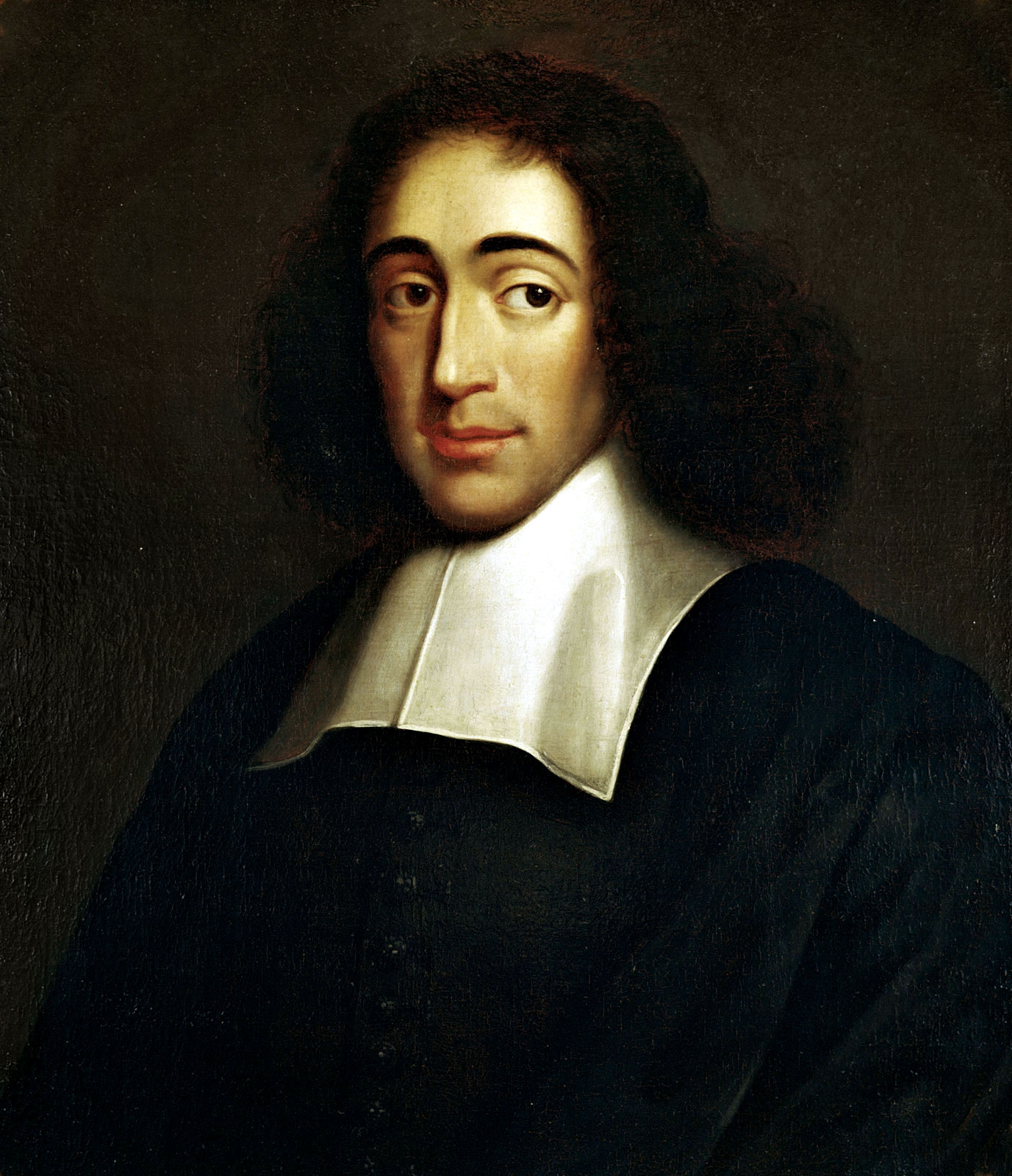
What does it mean for the design debate if Spinoza outsells Heidegger?

File:Spinoza.jpg
Baruch de Spinoza (1632-1677)

What does it mean for the design debate if Spinoza outsells Heidegger?

In Prospect (25 May 2011), Rebecca Goldstein advises us to “Sell Descartes, buy Spinoza,” because “Investors, take note: this Dutch rationalist is a hot stock.”She starts out taking a swipe at glitterate airheads,

Thinking of buying shares in a great philosopher? The first question you need to ask is whether you’re interested in long or short-term investment. If you are looking long-term, then prepare yourself for serious scholarship. Alternatively, short-term investment could merely involve comparing the battle over women’s hemlines on catwalks in Milan and New York to Wittgenstein’s language-games. Investors must also keep in mind a philosopher’s obscurity, as this allows room for interpretation. Counter-intuitive shock appeal is also a plus.

But then, because she really is tired of post-modernism’s “whatever”, she gets serious: Read More ›

Origin of life: “I could do this work, but I couldn’t publish it”

In “Science Papers Challenge Claims that ‘Alien’ Bacteria use Arsenic Instead of Phosphorous,” Casey Luskin (Evolution News & Views, June 11, 2011) discusses the recent challenges to the claim that bacteria have been found that are so far out that they may shed light on extraterrestrial organisms. The science media loved the story; another step to proving the naturalistic origin of life in outer space:

the paper had reported “arsenic-based life” which is “very alien in terms of how it’s put together” and “NASA has, in a very real sense, discovered a form of alien life” (io9)

“you can potentially cross phosphorus off the list of elements required for life” (Nature)

But

soon after the original Science paper was published, credible scientists began critiquing the paper’s claims. In the June 3, 2011 issue of Science, several of those scientists have published comments critiquing the original paper. Many of their criticisms focus on the claim that the original paper did not establish or rule out the possibility that the bacteria are not still living off of phosphorous.

He offers a review of the criticisms, observing that no other lab has offered to try to replicate the findings. Read More ›

Can Evolution’s God revive liberal churches?

Michael Dowd, of Thank God for Evolution! fame, has had a vision, brethren. Of how to revive liberal churches, by holding emotionally charged “evolution” revivals. But let him tell it:

It all began when a friend alerted us to an interview with Harvard’s esteemed biologist and Pulitzer Prize-winning author: Edward O. Wilson. Wilson’s book, The Creation, had just been released. Here is an excerpt from an interview that appeared in The Washington Post:

It’s hard to picture, if you know him only by his scientific reputation, but E.O. Wilson confesses it freely: He loves watching preachers on television. Read More ›

PZ open cut quote mines

PZ has a lot to say. I present some gems below for your education. I’m sure that I have some irrational beliefs of my own. I have no idea what they are. It’s not holding irrational beliefs that makes you an idiot. It’s holding the irrational beliefs and demanding that those be imposed on everyone else. Nobody has convinced me that God exists. That’s not going to happen. Science is the answer. I’m sorry; you may be a very devout religious person, but praying is not going to solve the world’s problems. It never has.  We’re living in an enlightenment, which is fuelled by rational thinking and science. Science is the answer. I’m buddies with a lot of the big Read More ›

You know Big Media are tanking when their readers must do their investigative journalism …

Bio_Symposium_033.jpg
credit Laszlo Bencze

Here’s an interesting reflection on the accelerating collapse of legacy mainstream media: A curious fact emerged from the frenzied search through U.S. politician Sarah Palin’s e-mails (which turned up nothing much), that the Big Media had enlisted their readers’ help in goingthrough the boxes of administrivia. In which case:

One embarrassing aspect of this episode, among several, is that major newspapers like the Times and the Post don’t seem to have the resources to review a few boxes of emails to determine whether there is anything there of interest. Otherwise, why would they solicit help from hundreds of readers? In my business, litigation, it is not unusual for parties to produce tens of millions of documents. A production of 13,000 emails would be considered minuscule. That our major newspapers evidently don’t have staff to do this minimal amount of work speaks volumes about their decline. – “Another embarrassment for the legacy media,” (Powerline June 10, 2011)

It’s not only people who vote for Palin’s party who have noticed. This story flew in Canada.

In the past, that level of reader collaboration with a story was usually impossible, quite apart from the fact that, to former media culture, it would be unthinkable. While these measures may stave off a specific stage of decline, they mostly demonstrate why the decline must proceed.

How will this stage of the decline of nanny media affect the design controversy? Read More ›

He doubted Darwin’s tree of life, but he was just a creationist. Then …

A topic that (in 1997) was largely the province of one lonely ID philosopher of biology, namely, How would we know if the theory of universal common descent were false? began to bubble away in the literature. Carl Woese published his broadside “The universal ancestor” in PNAS in 1998, saying there never was such an organism, and then the hydrant opened. [ … ] W. Ford Doolitle, Michael Syvanen, Elliott Sober, Malcolm Gordon (at UCLA), and others said, in major publications, “Hey, what if there never was a single Tree of Life? What then?” And the genomics revolution turned up an array of anomalies wholly unanticipated when I started on my dissertation (e.g., the appearance of widespread lateral gene transfer, Read More ›

This guy knows exactly what happened early in the history of life on Earth …

File:Mitochondrion 186.jpg
mitochondrian (micrograph)/NIH

Except that he doesn’t. In “Slaves to evolution,” (ABC Science 06/09/2011) Bernie Hobbs explains it all for you:

Two billion-odd years ago, one of the most important meals in history took place. One bacterium swallowed another one. But instead of being digested, the swallowee survived. And it kept doing what it had always done: using oxygen to rip apart food molecules, and then using the energy released to make ATP. So the bacteria that did the swallowing suddenly had this little lump inside it that leaked ATP, which the swallower could use to power its own cellular reactions. It was a match made in thermodynamic heaven.

And this crazy hybrid was the great (x10n) grandmother cell that all eukaryotic cells evolved from. The mitochondria in your cells, mine and every plant, animal and fungi on the planet are descendents of that meal. It’s like slavery, but with benefits. Read More ›

Animal rights philosopher Peter Singer expands on why he is backing away from his famous philosophy

Thumbnail for version as of 17:32, 24 January 2011
Credit Bbsrock

In The Guardian (25 May 2011), Mark Vernon reports on Princeton’s Peter Singer’s gradual coming round to the view that, if there is no objective truth, morality – and specifically the immorality of ignoring climate change – cannot be grounded in anything. Speaking to a group of Christian ethicists at Oxford, Singer said that his current focus is climate change, but he sees that the “preference utilitarianism” he was previously comfortable with,

… runs into problems because climate change requires that we consider the preferences not only of existing human beings, but of those yet to come. And we can have no confidence about that, when it comes to generations far into the future. Perhaps they won’t much care about Earth because the consumptive delights of life on other planets will be even greater. Perhaps they won’t much care because a virtual life, with its brilliant fantasies, will seem far more preferable than a real one. What this adds up to is that preference utilitarianism can provide good arguments not to worry about climate change, as well as arguments to do so.

Worse, some would add,

(See also: “Ed Feser on Peter Singer’s shift, and “Objective morality and Peter Singer.”)

Read More ›

A tale of two students: The “rebel” who knows the Establishment is right vs. the “problem” kid who wants to think critically

Some think them a mirror of contemporary American society.

Recently, the Clergy Letter Project‘s Michael Zimmerman (getting the clergy to help sell Darwinism to their congregations) was publicizing Louisiana student Zack Kopplin’s effort to repeal Louisiana’s “discussion allowed” law on controversial issues in science: Read More ›

FEA and Darwinian Computer Simulations

In my work as a software engineer in aerospace R&D I use what is arguably the most sophisticated, universally applicable, finite-element analysis program ever devised by the most brilliant people in field, refined and tested for 35 years since its inception in the mid-1970s for the development of variable-yield nuclear weapons at Lawrence Livermore National Laboratory. It is called LS-DYNA (LS for Livermore Software, and DYNA for the evaluation of dynamic, nonlinear, transient systems). A finite element is an attempt to descretize on a macro level what occurs at a molecular level in a physical system, so that a result is amenable to a practical computational solution. The learning curve for the use of this sophisticated technology is extremely steep, Read More ›

When the politics of climate change clash with the politics of Darwinism, expect a big fight – but which wins?

copepod Tigriopus californicus/Morgan Kelly, UC Davis

An interesting clash is shaping up between the truisms of Darwinian evolution and those of climate change, as reported in “Can Evolution Outpace Climate Change? Tiny Seashore Animal Suggests Not”, (ScienceDaily, June 9, 2011):

Animals and plants may not be able to evolve their way out of the threat posed by climate change, according to a UC Davis study of a tiny seashore animal. The research is published in the journal Proceedings of the Royal Society B.The tide pool copepod Tigriopus californicus is found from Alaska to Baja California — but in a unique lab study, the animals showed little ability to evolve heat tolerance. Read More ›