Uncommon Descent Serving The Intelligent Design Community

Darwinism: Why its failed predictions don’t matter

Categories
Culture
Darwinism
Intelligent Design
Science
Share
Facebook
Twitter/X
LinkedIn
Flipboard
Print
Email

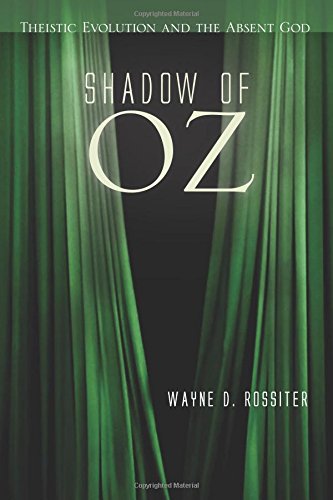
From Wayne Rossiter, author of Shadow of Oz: Theistic Evolution and the Absent God: at his book blog:

It’s an odd pattern. It was this problem that came to mind as I recently revisited Living with Darwin: Evolution, Design and the Future of Faith, by Philip Kitcher. Kitcher is a philosopher at Columbia University, and he specializes on biology. His book was published by Oxford University Press, and was the recipient of the 2008 Lannan Notable Book Award. We should take his views seriously.

His book begins with a forceful assertion: “From the perspective of almost the entire community of natural scientists world-wide, this continued resistance to Darwin is absurd. Biologists confidently proclaim that Darwin’s theory of evolution by natural selection is as well established as any of the major theories in contemporary science.”

This is not really a prediction. But, it is a statement that was wrong even before it was penned. More.

People who are committed to intellectual integrity in their own work often miss this central point: Once a bully pulpit like Darwinism has been established the occupant does not need to be correct, accurate or even useful. He can be a drag on the system. He can lead the march into degenerate science. He can, incidentally, fix you good if you try to offer an alternative view however grounded.

Bullies are not dislodged by being shown to be wrong, only by being successful opposed. Efforts so far have been commendable but quite honestly, more is needed.

See also: Biologist Wayne Rossiter on Joshua Swamidass’ claim that entropy = information

Follow UD News at Twitter!

Comments
#283: I do not begrudge the interest itself jdk. But my eyebrows go up when this is used as a means against the design inference. Let me put symbols on some cards...Upright BiPed
June 3, 2017
June
06
Jun
3
03
2017
08:15 AM
8
08
15
AM
PDT
wd400: @275. Very good! And it points out that whether dealing, or simply picking up cards from a table top, are the same. I think you mentioned that in the prior post. Very helpful, and thoughtful.PaV
June 3, 2017
June
06
Jun
3
03
2017
08:14 AM
8
08
14
AM
PDT
FWIW: I have lots of other interests also, but there may not be much overlap between mine and yours.jdk
June 3, 2017
June
06
Jun
3
03
2017
07:59 AM
7
07
59
AM
PDT
most certainlyUpright BiPed
June 3, 2017
June
06
Jun
3
03
2017
07:44 AM
7
07
44
AM
PDT
re 280: I like probability theory. Maybe you don't. Different strokes for different folks, you know.jdk
June 3, 2017
June
06
Jun
3
03
2017
07:35 AM
7
07
35
AM
PDT
#279 Really? This is what captures your fancy?Upright BiPed
June 3, 2017
June
06
Jun
3
03
2017
07:29 AM
7
07
29
AM
PDT
In case Eric actually wants to get involved here, I'd like to summarize the situation, and my position. 1. I have no interest in Kircher: either what use he makes of probability in his book or the way he phrased this situation. I am interested in the probability theory. 2. The situation is to deal 13 cards from a 52 card deck, in order. Since order is being considered, this is a permutation, sometimes written 52 permute 13 or 52 pick 13. The formula for this is 52/39!. Thus, there are 4 x 10^21 possible hands. Let S = the set of all possible hands. This is the sample space. Let n = 4 x 10^21. This is the number of elements in the sample space. You are dealt a hand. (It makes no difference how you get it: first 13 cards off the top of the deck, selected randomly from the deck, 13 cards dealt to 4 people around a table, etc.) The probability of your getting the particular hand you get is 1/n, a very small number (2.5 x 10^-22). Therefore, an event of very low probability occurred. Events of very low probability happen all the time. Even in bridge, where order doesn't count, the number of hands is 635 billion, so when you are dealt a hand is likely that that hand has never been dealt before because the probability of that hand is so low.jdk
June 3, 2017
June
06
Jun
3
03
2017
07:00 AM
7
07
00
AM
PDT
re 273 and 274: This is wrong, PaV. However the only way I know to explain to you would be to consider a much smaller deck of cards and go through the number where we can visualize the actual hands. But I'll briefly try, anyway. You write,
It’s NOT that the improbability of any individual hand changes, rather, there’s just more hands that you can form.
The probability for each each is nothing but the reciprocal of the number of hands. If there are 4 x 10^21 possible hands, then the probability of each is 1 out of 4 x 10^21. If you increase the number of possible hands, you decrease the probability of each. Also, the number 4 x 10^21 is the number of ordered hands: the number of permutations. There is only one way for an ordered hand to exist. There are 13! different permutations that can be made by rearranging the cards in a single combination. That is why there are more permutations than combinations. Just to be clear: The number 52!/39! is 4 x 10^21, the number of permutations, which is what we are studying The number 52!/(39!•13!) is 6.35 x 10^11, the number of combinations, which is a different issue. You can think of it as exactly the same situation as above, getting 13 of 52 cards, but, since you don't care about order, rearranding them anyway you wish, as when people sort a bridge hand. Any one combination can be obtained from 13! different permutaions. There are much fewer combinations, therefore each particular combination is more probable than a particular permutation. Also, you are confused about reciprocals: 1 out of 4 x 10^21 is not 4 x 10^-21, because you have to reciprocate the 4 also. The probability of any particular permutation is 1/4 x 10^-21 = 2.5 x 10^-22. Last, I am not clear, and I am not sure you are either, when you write,
or a probability of (13!)(39!)/(52!). So the total number of hands is (52!)/(39!)(13!).
I think you mean (52!/39!)•13! which is wrong, as I have explained, but you might mean 52!/(39!•13!). The first of those, which creates a number bigger than 4 x 10^21 is wrong, as I have explained. The second is the correct formula for the number of combinations, which is less than the number of permutations, which I have also explainedjdk
June 3, 2017
June
06
Jun
3
03
2017
06:02 AM
6
06
02
AM
PDT
PaV, I think you're using a conditional probability calculation here when it's not appropriate. Consider the simplified example where just the 4 kings are dealt. The 4 cards are shuffled then dealt to the 4 players. It's clear that each player has probability 1/4 of getting any particular king. However, I think that you would say the probabilities of of the players getting the cards they were dealt are 1/4, 1/3, 1/2, and 1/1 (in order going from player 1 to player 4). These numbers could be interpreted as conditional probabilities, but that's not what we're talking about. Even player 4 has probability 1/4 of getting any particular king.daveS
June 3, 2017
June
06
Jun
3
03
2017
06:02 AM
6
06
02
AM
PDT
Eric Anderson @271
Eric Anderson: .... (2) his [Kitcher's] lack of understanding of the probability arguments, which he seriously botches ...
Eric, would you care to expand on that a little? And could you perhaps say a few words on the following:
Kitcher: “Consider the humdrum phenomenon suggested by [Michael] Behe’s analogy with bridge. You take a standard deck of cards and deal 13 to yourself. What is the probability that you get exactly those cards in exactly that order? The answer is one in 4 x 10^21…But you did, and you have witnesses to testify that your records are correct.”
Origenes
June 3, 2017
June
06
Jun
3
03
2017
02:38 AM
2
02
38
AM
PDT
Do your calculation for the second position. Then it’s 1/52 x 1/50 x 1/46 x 1/42...
No. What are the odds the second player gets the Ace of Spaces then the King of Spades? The first card to player has to be anything other than those two cards (50/52), the first card player two gets must be the AoS and there are 51 cards left so 1/51. Player 3's first can't can't be the King of Spades (49/50 remaining cards are fine)... All told you get: (50/52 * 1/51 * 49/50 * 48/49 * 47/48 * 1/47) (1/52 * 50/51 * 49/50 * 48/49 * 1/48 ) = (1/52 * 1/51) The distinction you are trying to make exists only in your misunderstanding of probability. All that you have to do is use the combination formula when order matters, the permutation one otherwise.wd400
June 3, 2017
June
06
Jun
3
03
2017
01:34 AM
1
01
34
AM
PDT
The last part of my last post reads better this way: However, if any combination is allowed, there are then 13! more possible hands, and so the final probability including combinations is 13! x 4 x 10^-21: that is, 13! hands, EACH having a probability of 4 x 10^-21, or a probability of (13!)(39!)/(52!). So the total number of hands is (52!)/(39!)(13!). It's NOT that the improbability of any individual hand changes, rather, there's just more hands that you can form.PaV
June 3, 2017
June
06
Jun
3
03
2017
12:24 AM
12
12
24
AM
PDT
wd400:
i.e. the chance of getting any two cards dealt to you in order is the same, no matter if they are taken from the top of the deck or deal around a table.
This is true for each position of the deal; but this isn't to say that all four positions have equal probabilities calculated in this fashion. Do your calculation for the second position. Then it's 1/52 x 1/50 x 1/46 x 1/42, etc. (I'm assuming that, e.g., the 50/51 represents the probability that the second hand will receive some card, and not any particular card, from the shuffled deck, and so forth.) jdk:
If you consider the cards in the order you get them, the number of possible hands you can get is 4 x 10^21.
But it is here where all the subtlety lies. All combinations of any ordered Bridge hand also have the probability of being chosen of 1 in 4 x 10^21. However, if any combination is allowed, there are then 13! more possible hands, and so the final probability including combinations is 13! x 4 x 10^-21: that is, 13! hands, EACH having a probability of 4 x 10^-21. It's NOT that the improbability of any individual hand changes, rather, there's just more hands that you can form. Though subtle, I think this distinction is crucial.PaV
June 3, 2017
June
06
Jun
3
03
2017
12:00 AM
12
12
00
AM
PDT
nmdaveS
June 2, 2017
June
06
Jun
2
02
2017
11:01 PM
11
11
01
PM
PDT
Living with Darwin: Evolution, Design and the Future of Faith, by Philip Kitcher.
Quick drive-by comment as I just noticed the above. Coincidentally, I just finished reading Kitcher's book yesterday. Did not do a review on Amazon yet, but if I do it will probably receive 1 or 2 stars. 1 star for content. Perhaps 1 more star because he seems to be a nice guy and does at least offer a partially-sincere olive branch of sorts at the end of his lengthy final diatribe chapter against all traditional religion. Kitcher makes some interesting points about challenges to certain theological positions and has a few thoughts worth considering. Unfortunately, his book is seriously marred by: (1) his lack of understanding of intelligent design, his critique of which was apparently the main impetus for the book, (2) his lack of understanding of the probability arguments, which he seriously botches, and (3) his naive and simplistic assertions that Darwinism has the answers and that the serious and deep flaws in the Darwinian narrative are but minor hiccups that can be ignored or will be resolved soon enough.Eric Anderson
June 2, 2017
June
06
Jun
2
02
2017
10:53 PM
10
10
53
PM
PDT
So NONE of those hands would have a probability of 1/52 x 1/51 x 1/50 x 1/49, which is the case of the hand I held forth as an example.
Another way to see this can't be right is to consider the fact that after the deck is shuffled, any particular permutation of the entire deck, say: C1, C2, C3, C4, C5, C6, C7, C8, ..., C49, C50, C51, C52 has exactly the same chance of occurring as the following three other permutations: C2, C3, C4, C1, C6, C7, C8, C5, ..., C50, C51, C52, C49 C3, C4, C1, C2, C7, C8, C5, C6, ..., C51, C52, C49, C50 C4, C1, C2, C3, C8, C5, C6, C7, ..., C52, C49, C50, C51 (where groups of 4 cards are cyclically permuted themselves). If these four distinct permutations of the deck are dealt successively, dealing to player 1 first each time, then the four 13-card hands/permutations "rotate around the table". Since each player is equally likely to get either of these four particular hands, it must be true that they are each equally likely to get any particular hand. As there are about 4 x 10^21 of them, the chance is always 1 in 4 x 10^21 of getting any particular hand.daveS
June 2, 2017
June
06
Jun
2
02
2017
08:23 PM
8
08
23
PM
PDT
Very good, wd400.jdk
June 2, 2017
June
06
Jun
2
02
2017
07:11 PM
7
07
11
PM
PDT
You normally deal out cards to four players with the first player receiving the 1st, 5th,9th, 13th card, etc. This is subtily different than dealing one person the first thirteen cards. You’ll notice that the odds of getting your hand in a regular game of Bridge involves, for the first player dealt a hand: 1/52 for the first card, 1/47 for the second card, 1/43 for the third card, etc. So NONE of those hands would have a probability of 1/52 x 1/51 x 1/50 x 1/49, which is the case of the hand I held forth as an example.
For you to get the second hand you received it had to not be dealt 2nd, 3rd or 4th. You will find that (1/52 * 50/51 * 49/50 * 48/49 * 1/48 ) = (1/52 * 1/51) i.e. the chance of getting any two cards dealt to you in order is the same, no matter if they are taken from the top of the deck or deal around a table.wd400
June 2, 2017
June
06
Jun
2
02
2017
06:24 PM
6
06
24
PM
PDT
PaV, I don't agree. It makes no difference whether you get 13 cards dealt straight off the top of the deck, or get one of the hands dealt in the normal way in a game of bridge, or you or the girl picks 13 cards randomly from the deck. If you consider the cards in the order you get them, the number of possible hands you can get is 4 x 10^21. The distinctions you make about how you get the cards don't make any difference.jdk
June 2, 2017
June
06
Jun
2
02
2017
05:33 PM
5
05
33
PM
PDT
Phinehas at 262: That is well-stated, i think, although I would very substitute "very close to" for "virtually identical." One reason is that, as you recognize, significance is a gray area. In 100 rolls, would 12 6's right in the middle count as significant? There are lots of judgments calls that affect the situation.jdk
June 2, 2017
June
06
Jun
2
02
2017
05:24 PM
5
05
24
PM
PDT
jdk:
In your example, once you sate you are going to take 13 cards from a 52 card deck (clarifying whether order does or does not count) you create a sample space of all possible hands that can happen, and you can then calculate the probability of each one of them happening.
I understand this, and appreciate it; yet, there seems to be a distinction that can be made between the example I gave, and the example Kitcher gave. Kitcher gives an example of a hand, naming the cards, and then says the probability is 1 in 4 x 10^21 after saying "if order is important," or something along those lines. In my example---and this is a fine distinction, but, nevertheless a distinction---I say that thirteen cards are dealt, without specifying them, and then, along the line, to further clarify what I meant, I presumed that it was the first thirteen cards from the top of the deck, and worked out the probability that way. This is a different scenario, though to some degree related, to Kitcher's scenario. I objected to saying that 'order' was important because I felt that there already was an order: that is, the actual dealing of the cards: 1st, 2nd, and so forth. This isn't how cards are normally dealt. You normally deal out cards to four players with the first player receiving the 1st, 5th,9th, 13th card, etc. This is subtily different than dealing one person the first thirteen cards. You'll notice that the odds of getting your hand in a regular game of Bridge involves, for the first player dealt a hand: 1/52 for the first card, 1/47 for the second card, 1/43 for the third card, etc. So NONE of those hands would have a probability of 1/52 x 1/51 x 1/50 x 1/49, which is the case of the hand I held forth as an example. That is, if the girl had 52 cards, face down on a table, and then dealt them out to four people, we would NOT encounter the same probability for each hand as we do in the case of the single, straightforward deal of the top thirteen cards, which corresponds to the young girl selecting 13 cards out of the deck, in an order of first to last, and giving them to one person (one pile). I think you have to acknowledge that, or, better yet, would agree to that. I think this is the reason for my hesitation, and why I said that a permutation formula is being forced onto the scenario I proposed. Normally, you would not work out the 'probability' of each person receiving their hand in the way I did above, in the case of a four-handed deal. What is supposed is this: each person ends up with thirteen cards, and when we compare hands, then we see that the probability of each hand of 13 is 1 in 4 x 10^21 "if order is important," or 1 in (52)!/(39)!(13)! "if it's not." I think these are two different ways of looking at the hand: my way, which looks at raw probabilities associated with how many cards remain when the selection is made; and, the normal way of looking at hands, which is independent of any probabilities associated with dealing. IOW, it is not said that the probability of Bridge hand is THIS if you were the first player to be dealt a hand, and THAT if you were the second player. There's an "independence" present that is NOT present in my scenario. It is a distinction, I believe.PaV
June 2, 2017
June
06
Jun
2
02
2017
05:16 PM
5
05
16
PM
PDT
Phinehas: I noticed this pattern for: 3, 4, 6, 9, 12, 15, 18
I did not notice position 4. That ruins the pattern. Bad design!Origenes
June 2, 2017
June
06
Jun
2
02
2017
05:01 PM
5
05
01
PM
PDT
Origenes:
However the numbers at position 3, 6, 9, .. and so forth are the sum of the two numbers that precede them. Did you notice? If not, what is your verdict now: randomness or design?
I noticed this pattern for: 3, 4, 6, 9, 12, 15, 18 Base on your last post and the emerging pattern, I'm guessing position 4 was accidental. Which means it wasn't by design. Which likely means your sequence is a combination of randomness and design, probably by design. Which reveals that their are layers to this thing we call design. Which makes me want to take a nap. :)Phinehas
June 2, 2017
June
06
Jun
2
02
2017
03:52 PM
3
03
52
PM
PDT
jdk: What I mean is this: With three dice, you thought there might be something like 10% of the possible combinations that could be considered significant. With 10 dice, you thought this percentage would likely go down quite a bit. If this trend continues, then moving to 100 dice would result in even less of a percentage of the possible configurations being significant. Eventually, as you continue to add dice, the number of significant combinations compared to the total number of combinations would be so small that the probability of getting one of the significant combinations would be virtually identical to the probability of getting a pre-specified configuration. Does this make sense?Phinehas
June 2, 2017
June
06
Jun
2
02
2017
03:46 PM
3
03
46
PM
PDT
Phinehas:
Origenes:
2, 1, 3, 4, 2, 6, 5, 1, 6, 2, 3, 5, 3, 1, 4, 1, 1, 2, 4, 2, 6
Is this sequence best explained by design or e.g. the throw of a die?
Having looked at your numbers, though I see some things that could indicate a pattern, I can’t figure out anything that would explain the numbers all the way through. So, I’d probably go with the throw of a die.
You are correct Phinehas. Not every number can be explained by design. However the numbers at position 3, 6, 9, .. and so forth are the sum of the two numbers that precede them. Did you notice? If not, what is your verdict now: randomness or design?Origenes
June 2, 2017
June
06
Jun
2
02
2017
03:27 PM
3
03
27
PM
PDT
Thanks, Phinehas, for even reading and thinking about those lengthy posts. I think a key distinction is one that PaV brought up, although I'll put it in my own words. Probability as a subject of pure mathematics is not interested in significance. Significance is something added by our human cognitive ability to recognize and ascribe meaning to patterns: an ability that is at the heart of our ability to create knowledge that goes far beyond issues of probability. As I pointed out several times, if you have a situation where the elements already exhibit a pattern, such as in a deck of cards, we will see more significance in particular hands than we would if we had 52 cards with 52 symbols that had no intrinsic patterns of order or categorization. You write,
Further, though significance will always be greater than probability, as probability lowers significance appears to approach probability. Do you agree with this?
I'm afraid this sentence doesn't make sense to me, but my writing time is up, so perhaps I'll have time to think about it later.jdk
June 2, 2017
June
06
Jun
2
02
2017
02:57 PM
2
02
57
PM
PDT
jdk: Thank you for your posts @105 and @192. I think they get to the heart of the issue for me. I especially found this part interesting:
Without going through any more analysis, I am virtaully certain that the ratio of throws that exhibit a pattern in comparison to the total 60 million possible throws would be much, much smaller than with three dice. That is, there would be a much larger percentage of total hands that did not exhibit much, if any, pattern: they would be 1’s on our significance scale.
This seems intuitive to me as well. If this is the case, would it be fair to say that a discussion of significance* is not completely divorced from a discussion of probability? In other words, significance is not orthogonal to probability. Further, though significance will always be greater than probability, as probability lowers significance appears to approach probability. Do you agree with this? ***** * Where "significance" means the probability of getting a significant hand (based on some arbitrary cutoff on your admittedly grey significance scale).Phinehas
June 2, 2017
June
06
Jun
2
02
2017
02:44 PM
2
02
44
PM
PDT
Origenes:
Is this sequence best explained by design or e.g. the throw of a die?
Having looked at your numbers, though I see some things that could indicate a pattern, I can't figure out anything that would explain the numbers all the way through. So, I'd probably go with the throw of a die. Interestingly, a pattern that I do not currently perceive could be pointed out to me that would immediately and forcefully put me over in the design camp. Also interestingly, once in the design camp because a pattern had been revealed, I expect no new information would be able to put me back into the throw of a die camp.Phinehas
June 2, 2017
June
06
Jun
2
02
2017
02:28 PM
2
02
28
PM
PDT
You can only have a probability, in the mathematical sense we are discussing, if you describe unambiguously, the parameters that produce the events: for example, flip a fair coin three times in a row. One you have those parameters, then you also have a sample space, because the parameters define the possible events. Then you can discuss the probabilities of the individual events, and the sum of all probabilities must equal 1. Therefore, in mathematical probability, all events have to be a part of a defined sample space. In your example, once you sate you are going to take 13 cards from a 52 card deck (clarifying whether order does or does not count) you create a sample space of all possible hands that can happen, and you can then calculate the probability of each one of them happening. I appreciate it that you are "mulling things over." Probability is a very slippery subject.jdk
June 2, 2017
June
06
Jun
2
02
2017
11:34 AM
11
11
34
AM
PDT
Why is it that a random process (shuffling of cards, throw of a fair die) is assumed to be responsible for e.g. the 13 cards? Isn't that the wrong approach to the issue? To me it makes more sense to present a bridge hand, or a sequence of numbers and then ask: what is the best explanation, randomness or design? And why? For instance this sequence:
2, 1, 3, 4, 2, 6, 5, 1, 6, 2, 3, 5, 3, 1, 4, 1, 1, 2, 4, 2, 6
Is this sequence best explained by design or e.g. the throw of a die?Origenes
June 2, 2017
June
06
Jun
2
02
2017
11:28 AM
11
11
28
AM
PDT
1 4 5 6 7 8 15

Leave a Reply