Uncommon Descent Serving The Intelligent Design Community
Category

Religion

He said it: Prof Lewontin’s strawman “justification” for imposing a priori materialist censorship on origins science

Yesterday, in the P Z Myers quote-mining and distortion thread, I happened to cite Lewontin’s infamous 1997 remark in his NYRB article, “Billions and Billions of Demons,” on a priori imposition of materialist censorship on origins science, which reads in the crucial part:

It is not that the methods and institutions of science somehow compel us to accept a material explanation of the phenomenal world, but, on the contrary, that we are forced by our a priori adherence to material causes to create an apparatus of investigation and a set of concepts that produce material explanations, no matter how counter-intuitive, no matter how mystifying to the uninitiated. Moreover, that materialism is absolute, for we cannot allow a Divine Foot in the door.

To my astonishment, I was promptly accused of quote-mining and even academic malpractice, because I omitted the following two sentences, which — strange as it may seem —  some evidently view as justifying the above censoring imposition:

The eminent Kant scholar Lewis Beck used to say that anyone who could believe in God could believe in anything. To appeal to an omnipotent deity is to allow that at any moment the regularities of nature may be ruptured, that miracles may happen.

To my mind, instead, these last two sentences are such a sad reflection of bias and ignorance, that their omission is an act of charity to a distinguished professor. Read More ›

A.C. Grayling does a Dawkins on debating William Lane Craig

Here (06/09/2011), Wintery Knight pursues the question of why AC Grayling, as well as Richard Dawkins won’t debate William Lane Craig, complete with clips. Grayling gives as his reasons:

Having been invited to debate Craig, Professor Grayling replied: 

I am not interested in debating Professor Craig, though if he would like to co-opt me for the publicity for his tour – I would be happy to debate him on the question of the existence of fairies and water-nymphs. But as for the very uninteresting matter of whether there is just one god or goddess and that it can be debated despite the claim that it is transcendently ineffable and unknowable – that is an empty prospect, hence my declining the invitation. –

Which prompted this response from a popular British TV presenter: Read More ›

“No God Needed” CalTech physicist responds to Uncommon Descent’s questions

white3-m.jpg
Sean Carroll

Recently, Uncommon Descent’s vjtorley posed seven questions to physicist Sean Carroll, Senior Research Associate in Physics at the California Institute of Technology. Carroll had written an article, “Does the Universe need God?” for The Blackwell Companion to Science and Christianity. Now Carroll has answered the questions, and given us permission to post his response here:

1. In your article, you’ve argued that the ultimate explanation of why events happen is that things are simply obeying the laws of nature – in particular, the laws of physics. What do you mean by the term “law of nature”? Specifically, are the laws of nature (a) rules which prescribe the behavior of objects, or (b) mere regularities which describe the behavior of objects?

To this and the other questions, Carroll responds:

I wanted to thank Vincent Torley and Denyse O’Leary for the opportunity to write a guest blog post, and apologize for how long it’s taken me to do so. I’ve written an article for the forthcoming Blackwell Companion to Science and Christianity, entitled Does the Universe Need God?, in which I argued that the answer is “no.” Vincent posed a list of questions in response. After thinking about it, I decided that my answers would be more clear if I simply wrote a coherent argument, rather than addressing the questions individually. Read More ›

Why “Christian evolution” leads to euthanasia

Bio_Symposium_033.jpg
credit Laszlo Bencze

Some were surprised when I linked Christianity Today’s new semi-simian Adam and Eve with involuntary euthanasia. But the link is much more direct than some suppose.

There is, first, the whole, huge question of adjusting our thinking from the idea that we are descended from Adam and Eve to the idea that we are ascended from them. That is essentially a different religion from Christianity, and I was indeed surprised that Christianity Today failed to observe the fact. Would they have given over their pages to the proposition that perhaps Christians should be Buddhists? It would make more sense. Buddhism is not a dishonorable creed; far from it. Christians don’t think that Buddhism reflects ultimate reality. But there is world of difference between, say, Buddhism and Darwinism. Darwinism not only doesn’t reflect ultimate reality, it defaces it.

But here I want to focus on the argument for euthanasia. It was succinctly captured in the title of a movie some years back: They Shoot Horses, Don’t They?

I rarely meet a convinced Darwinist who does not support euthanasia (and abortion, and human embryonic stem cell research).

I rarely meet Read More ›

Prediction: Based on Christianity Today’s article on Darwin-friendly Adam and Eve

Genome mapper Francis Collins, who founded BioLogos, is hailed in the June 2011 article as “one of the most eminent scientists ever to identify as an evangelical Christian.”

An unexpected paean – and one that furrowed my brow (p. 23).   Read More ›

Christianity Today article on the Biologos vs orthodoxy “crisis”

Or so some paint it. I’ve now had a chance to read Christianity Today’s “The Search for the Historical Adam” by Richard N. Ostling (June 2011). Recommended to all. I’m not sure re crisis. I think it comes down to a simple choice. Linked here. Some notes follow: Read More ›

Why lots of smart people don’t agree with Stephen Hawking that

… death ends all – my current MercatorNet article (26 May 2011):

… most people have not assumed that we survive death because they are “afraid of the dark,” as Hawking supposes. On the contrary, the oldest beliefs usually include ancestor worship, which includes propitiating the continuing spirits of unpleasant ancestors for fear they will otherwise harm us. Or, as Beauregard and I put it [in The The Spiritual Brain] , in such a society the problem isn’t that everyone dies, but that no one does. (p. 48)  Read More ›

Catholics who dissent from spiritualized Darwinism may face lonely trek

Photo of Jacques Maritain It’s not the Church, exactly; it’s the fashions in who speaks for the church.

The work of biologists and astronomers “had no more ardent supporter” than Jacques Maritain (1882-1973), but

Although he was a giant of twentieth-century philosophy and (according to Pope Paul VI) a seminal influence on the Second Vatican Council, Maritain’s stock among Catholic thinkers was already in sharp decline at the time of his death. Deal Hudson has argued that the cause of this seemingly inexplicable neglect was the scathing critique of Teilhard de Chardin in one of Maritain’s last books, The peasant of the Garonne (1967). Read More ›

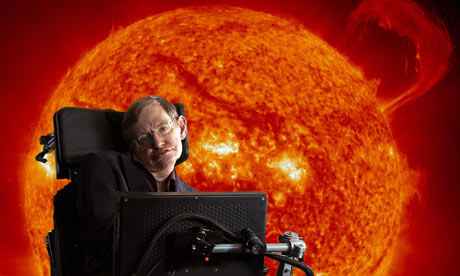
What does Stephen Hawking mean here?

In a general disquisition on death as the final end, he responds to Ian Sample for Britain’s Guardian (15 May 2011), What is the value in knowing “Why are we here?”The universe is governed by science. But science tells us that we can’t solve the equations, directly in the abstract. We need to use the effective theory of Darwinian natural selection of those societies most likely to survive. We assign them higher value. Who assigns them higher value? Is there a way of determining which societies are most likely to survive, absent details? History has frequently produced societies “most likely to survive” that experience little freedom and low quality of life. Why should “we” (?) assign them higher value? Thoughts? Read More ›

National Geographic: Site shows religion, not agriculture, prehistoric organizing force

File:GobeklitepeHeykel.jpg
stele with animal in high relief

Charles C. Mann reports at National Geographic (June 2011):

We used to think agriculture gave rise to cities and later to writing, art, and religion. Now the world’s oldest temple suggests the urge to worship sparked civilization.

He is referring to Gobekli Tepe,

Before them are dozens of massive stone pillars arranged into a set of rings, one mashed up against the next. Known as Göbekli Tepe (pronounced Guh-behk-LEE TEH-peh), the site is vaguely reminiscent of Stonehenge, except that Göbekli Tepe was built much earlier and is made not from roughly hewn blocks but from cleanly carved limestone pillars splashed with bas-reliefs of animals—a cavalcade of gazelles, snakes, foxes, scorpions, and ferocious wild boars. The assemblage was built some 11,600 years ago, seven millennia before the Great Pyramid of Giza. It contains the oldest known temple. Indeed, Göbekli Tepe is the oldest known example of monumental architecture—the first structure human beings put together that was bigger and more complicated than a hut. When these pillars were erected, so far as we know, nothing of comparable scale existed in the world.

This site, older than Stonehenge, was constructed, archaeologists think, before writing, metal, pottery, or wheels, and – along with other recent finds – has changed the way archaeologists see prehistoric peoples.

Briefly, Mann says that the site has dealt a heavy blow to the reigning theory that sees agriculture as the organizing principle of prehistoric society, because the massive structures point so clearly to religion. The level of organization required is much greater than that required for village-level subsistence agriculture, and the consensus is that concern about a greater reality is the only plausible reason people fell led to bother. Incidentally, the site appears to have been purely ceremonial; no town grew up in its midst.

For the archaeologists, Read More ›

Get your head evolutionized here

“Thank God for Michael Dowd and Connie Barlow!”

—Francisco J. Ayala

2010 Templeton Prize-winner; Past President of the AAAS (American Association for the Advancement of Science)

He and other luminaries recommend you get saved by evolutionizing your life here.

The science of how to decode human behavior, eliminate self-judgment, and create a big-hearted life of purpose and joyful integrity.

Benefits include

You’ll no longer feel empty or flat from the service you provide others. It will be as if the Universe has put its stamp of approval on your life, and you will know the thrill of living in right relationship to reality and in alignment with your highest values.

In other news: Believing that “the Universe has put its stamp of approval on your life” is the surest route to being a world class shothead. Read More ›

Video: Alvin Plantinga’s Bellingham Lectures

Here. Plantinga, Alvin Plantinga, Professor Emeritus of Philosophy at the University of Notre Dame, talks about “God and Evolution: Where the Conflict Really Lies.” (May 10 and 12, 2011) Note: Plantinga was one of the two Christian philosophers who complained about the hit job on colleague Frank Beckwith in Synthese, incorrectly tagging Beckwith as ID, and in general as one bad dude.

When ID types go – to church …

A friend insists that this song by Oklahoma’s Carrie Underwood underscores and responds to design in the universe: This performance occurred several weeks ago, and then went viral. Five and a half million hits on YouTube; I’m sure some of you must have seen and heard it. The lyrics in the first stanza are certainly relevant to the design inference. Your mileage may vary. Check it out. One response was “I am not religous at all…but it is impossible after hearing this song? not to feel something… truly unbelievable.” Song’s history here. A classic, very influential rendition here. Lyrics here.

Paul Davies 2007: Taking Science on Faith

I offer up this great 2007 op-ed by Paul Davies, in part because it remains very relevant and likely will remain so for a very long time. Submitted with minimal comment for now, though here is an excerpt: When I was a student, the laws of physics were regarded as completely off limits. The job of the scientist, we were told, is to discover the laws and apply them, not inquire into their provenance. The laws were treated as “given” — imprinted on the universe like a maker’s mark at the moment of cosmic birth — and fixed forevermore. Therefore, to be a scientist, you had to have faith that the universe is governed by dependable, immutable, absolute, universal, mathematical Read More ›